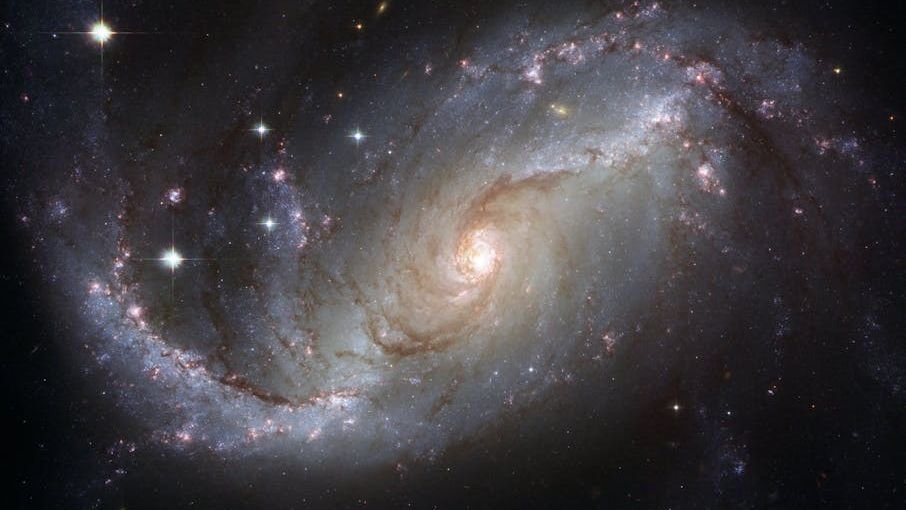
Most of us grow up with a pretty simple idea of gravity: things fall down, planets orbit the sun, and that’s that. But over the last few decades, and especially in the 2020s, gravity has quietly become one of the most unsettling mysteries in physics. The deeper scientists look into the universe, the more it seems that the familiar schoolbook story might only be a small part of a much weirder truth.
I still remember the first time I read that most of the universe might be made of something we can’t see and don’t really understand, and that gravity is our main clue. It felt like being told that everything I thought I knew about the ground under my feet was only a thin wooden floor hiding a vast basement. If gravity is our guide to the hidden architecture of the cosmos, it may be pointing at something bigger, stranger, and more flexible than the neat diagrams in textbooks suggest.
Why Einstein’s Picture of Gravity Was Already a Radical Break
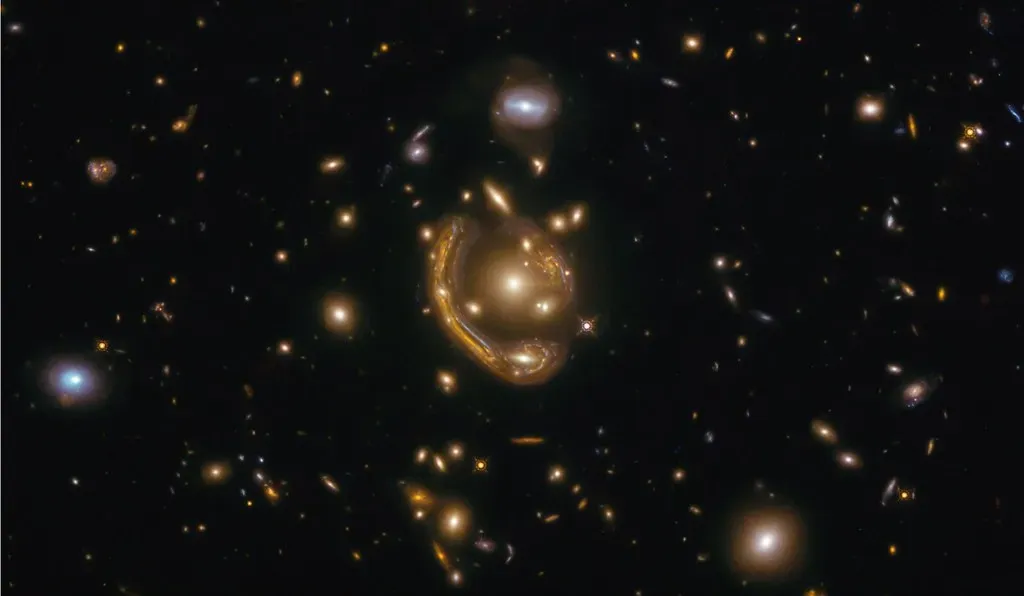
It helps to remember that our “modern” view of gravity is already a rebellion against an older idea. For centuries, gravity was described the way Isaac Newton framed it: an invisible force pulling objects toward one another, acting across empty space. In that picture, the universe is like a huge stage where objects tug on each other through an unseen thread.
Einstein flipped that story in the early twentieth century with general relativity, saying gravity isn’t a force at all but the bending of space and time themselves. Massive objects like stars and planets curve spacetime, and smaller objects simply follow the straightest possible paths through that curved landscape. It’s like marbles rolling around on a stretched rubber sheet with a heavy ball in the center. This idea has been tested again and again: from the way light bends around the sun to the way GPS satellites need Einstein’s equations to stay accurate. But even though it’s stunningly successful, the last few decades have revealed cracks at the edges.
The Dark Matter Problem: Is Gravity Lying to Us on Galactic Scales?
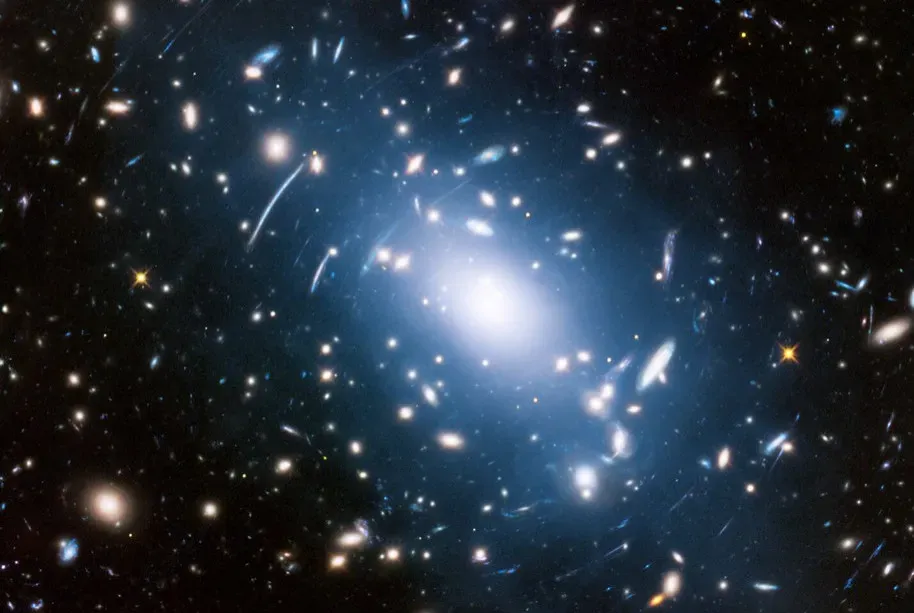
One of the most troubling signs that gravity might not behave as we think comes from how galaxies move. When astronomers measure how fast stars orbit the centers of galaxies, they find that the visible matter we see – stars, gas, dust – is nowhere near enough to provide the gravitational pull required to keep those stars bound. If our current gravity equations are right, those galaxies should simply fly apart.
To fix this mismatch, scientists proposed dark matter: some kind of invisible mass that doesn’t emit light but does create gravity. Over time, dark matter has gone from a wild idea to a central pillar of modern cosmology. Yet despite decades of searching with ever more sensitive detectors deep underground and in space, no one has definitively found a dark matter particle. This leaves an uncomfortable possibility on the table: maybe there isn’t extra invisible stuff at all – maybe our law of gravity changes its behavior on very large scales, the way a rubber band stretches differently once you pull it far enough.
Some researchers have tried to modify Einstein’s equations in clever ways to explain galaxy motions without dark matter, creating frameworks often grouped under “modified gravity.” These theories adjust how gravity behaves at extremely low accelerations or over very long distances, aiming to match the same observations with fewer invisible ingredients. While none have replaced the standard model so far, the mere fact that serious scientists are exploring them shows how open the question still is. Our galaxies might be whispering that we’re using the right language but the wrong grammar for gravity.
Dark Energy and the Strange Case of a Universe That Won’t Slow Down
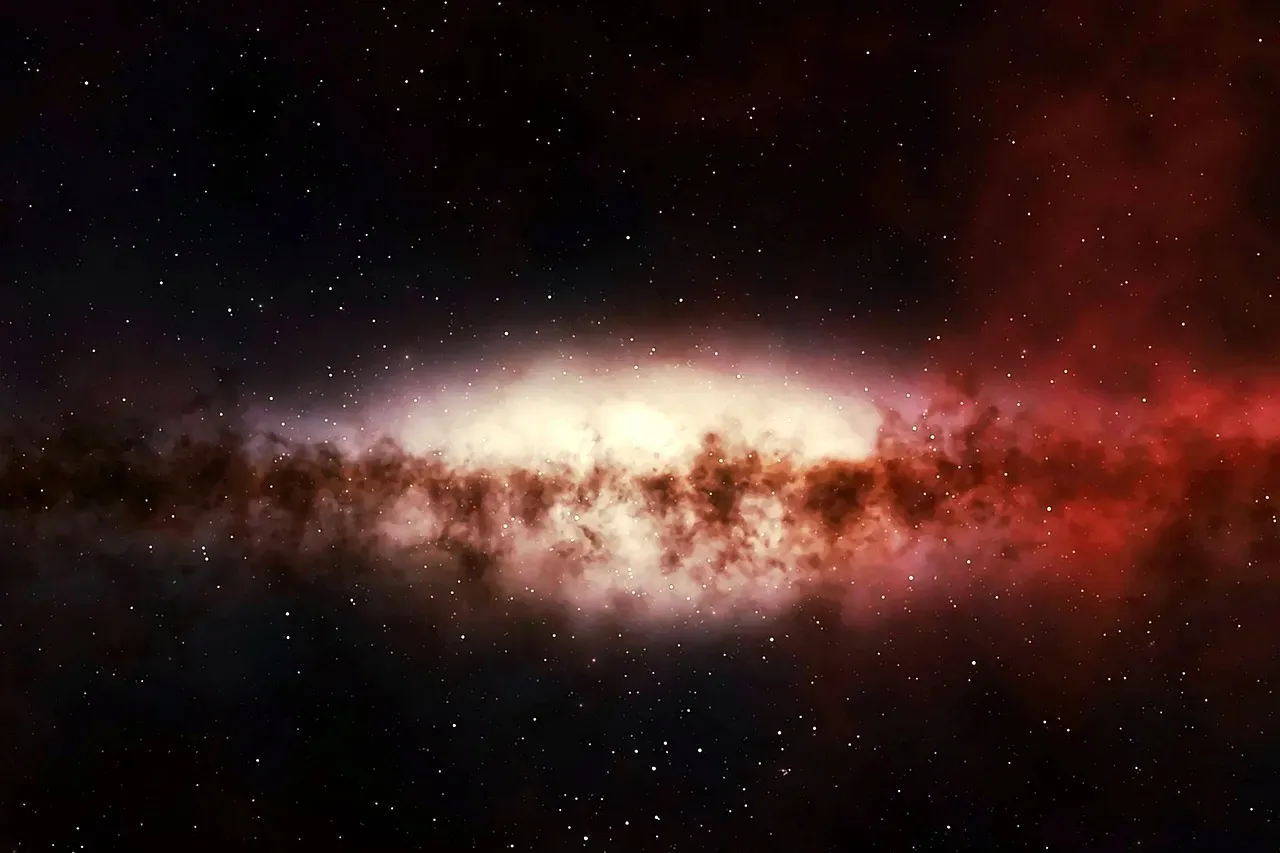
As if dark matter wasn’t enough of a headache, the late twentieth century brought another shock: the expansion of the universe is speeding up, not slowing down. In everyday life, things that explode outward eventually decelerate as gravity pulls them back. Cosmologists expected something similar for the universe – an expansion gently slowing over billions of years. Instead, measurements of distant supernovae showed the opposite: the expansion is accelerating.
To make sense of this, scientists added yet another mysterious ingredient to the cosmic recipe, called dark energy. In the simplest version, it’s treated as a property of empty space that pushes everything apart, counteracting gravity on the largest scales. But this fix raises a haunting question: are we really discovering new cosmic substances, or are we patching over the fact that our understanding of gravity might be incomplete? Some alternative theories attempt to tweak gravity so that it naturally produces cosmic acceleration without invoking a separate dark energy. So far, observations from the cosmic microwave background, galaxy surveys, and gravitational lensing tend to favor the standard model, but tensions and odd discrepancies in the data keep the door open to deeper changes.
Quantum Physics vs. Gravity: Two Theories That Refuse to Shake Hands
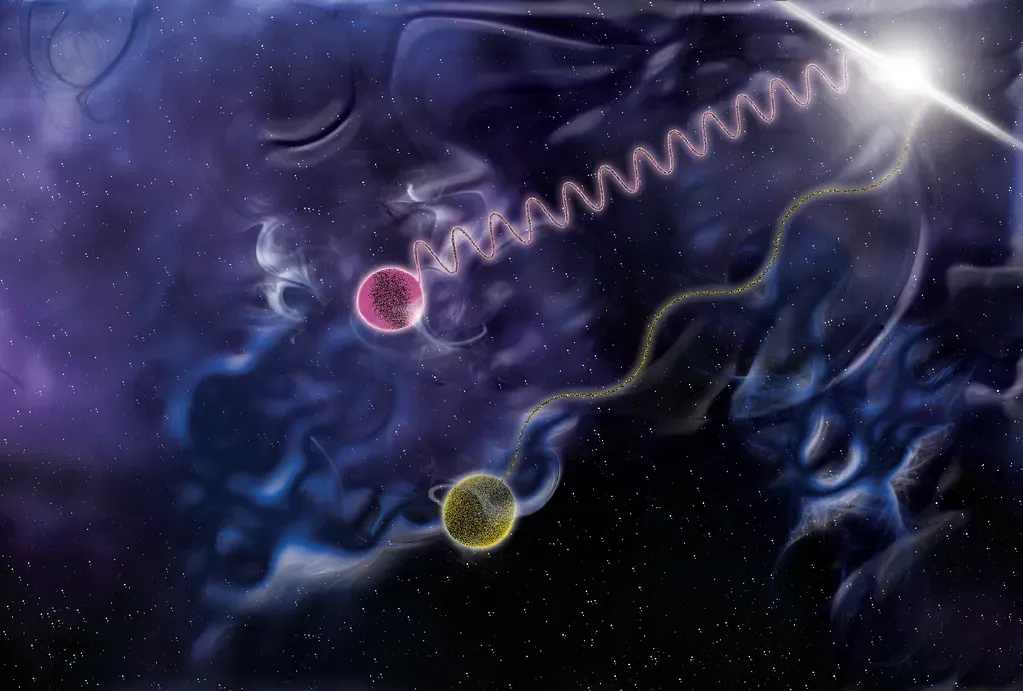
Another sign that gravity might not work the way we think shows up when we try to combine it with quantum physics. Quantum theory is stunningly accurate at describing atoms, particles, and the subatomic world, while general relativity is superb at explaining planets, stars, and galaxies. But when you try to make them both apply at once – for example, inside black holes or at the Big Bang – things fall apart mathematically.
This conflict is one of the biggest unresolved problems in physics. Efforts like string theory and loop quantum gravity aim to create a single framework where gravity emerges from more fundamental quantum ingredients. In some of these ideas, space and time themselves may be made of tiny discrete elements, or gravity might be a kind of collective effect, like temperature is for atoms. If any of these directions are right, then what we call gravity could be more like a large-scale illusion arising from deeper rules, the way a wave on the ocean is not a separate thing but a pattern in the water.
Emergent Gravity and the Idea That Spacetime Has a Hidden Microstructure
One especially intriguing line of thought is that gravity might be an emergent phenomenon. Imagine how a crowd at a concert can move in waves: no single person is “the wave,” but together they create something new that looks and behaves as if it were its own entity. Some physicists suspect spacetime and gravity might work similarly, emerging from countless microscopic bits of information or quantum processes we don’t yet fully grasp.
Hints of this come from how black holes behave. Their surface areas, rather than volumes, seem to encode information in a way that resembles the behavior of thermodynamic systems, like gases in a box. This has led to the idea that the geometry of space might be closely tied to information and entropy at a fundamental level. If gravity arises from statistical tendencies of unknown microscopic degrees of freedom, then our classical picture of a smooth, continuous spacetime could be like mist seen from far away – real in one sense, but missing the grit and granularity underneath.
Cosmic Tensions: Are New Observations Forcing a Rethink of Gravity?
In recent years, precision surveys of the universe have started to uncover subtle mismatches that could be early signs of gravity acting differently than expected. For instance, different methods of measuring how fast the universe is expanding today give slightly different answers, a puzzle known as the Hubble tension. Separately, measurements of how structures like galaxy clusters grow over time sometimes appear a bit off compared to what the standard picture predicts.
Individually, these discrepancies might be explained by measurement errors or incomplete data. But taken together, they tempt some researchers to ask whether the root of the problem lies in our assumptions about gravity. Large projects mapping millions of galaxies, tracking gravitational lensing, and time-delay measurements of distant quasars are all being scrutinized with this in mind. In a way, the universe is behaving like a story where tiny continuity errors hint that an earlier draft of the script looked a little different, and readers are starting to notice.
What It Would Mean for Our Everyday Understanding of “Down”
Here’s the unsettling part: even if gravity turns out to be much stranger than we thought on cosmic or quantum scales, your coffee mug is still going to fall off the table in the morning. Any new theory of gravity has to reproduce the familiar successes of Newton and Einstein in the everyday world. That means for most practical purposes – buildings, cars, satellites, even most space missions – the old equations will remain good approximations, just like how we still use Newton’s laws to design bridges even though we know relativity is more accurate in extreme cases.
Where the new understanding would really matter is in how we see ourselves in the universe. If gravity is emergent, or behaves differently across scales, then our picture of what space, time, and matter fundamentally are could shift. It might change how we think about the beginning and end of the universe, what happens inside black holes, or whether spacetime itself can be manipulated in novel ways. It’s less about objects falling and more about the stage on which every physical drama plays out being far stranger than the set pieces suggest.
Conclusion: Living with an Unfinished Theory of the Force That Shapes Everything
Gravity has gone from a simple downward pull to a chameleon-like phenomenon that looks different depending on how closely and from what distance we examine it. On the scale of apples and airplanes, it behaves in comforting, predictable ways; on the scale of galaxies, black holes, and the early universe, it seems to hint at missing ingredients or deeper rules. That tension between reliability and mystery is what keeps gravity at the center of some of the most ambitious research in physics today.
We might be living at the awkward middle chapter of the gravity story, where older explanations still work most of the time but stubborn anomalies keep piling up at the fringes. Whether the future brings proof of dark matter and dark energy as real substances, or a sweeping revision of the law of gravity itself, our understanding of “what holds everything together” is almost certainly going to change. If the ground beneath your feet is part of a vast, unfinished puzzle, what else in your everyday world might be hiding a deeper layer of reality you haven’t met yet?