

If you’ve ever had the feeling that something about life is off – like the world is a stage set and you’re catching glimpses behind the curtains – quantum physics is the field that comes along and says, “You’re not imagining it.” It doesn’t just tweak a few details about how reality works; it pulls the rug out from under many things we’ve taken for granted for centuries. Solid objects, fixed causes, a single shared reality… quantum theory questions all of that.
What makes it even more unsettling is that this isn’t fringe speculation. It’s the most tested, most successful theory we have in all of science, quietly running under the hood of modern technology: smartphones, lasers, MRI machines, computer chips. The same rules that let your phone work also say a particle can be in two places at once and that “reality” sometimes depends on whether you look at it. Once you let that sink in, the world you thought you knew doesn’t look so solid anymore.
The Quantum World: Where Common Sense Breaks Down
Imagine dropping a ball: you know exactly where it is and how fast it’s falling, and you trust gravity to do its thing. That’s the comfortable, everyday world of classical physics, where objects have definite properties whether you measure them or not. But shrink down to the scale of atoms and electrons, and this certainty evaporates. Instead of neat, predictable trajectories, you get fuzzy clouds of possibility, like the world is written in pencil, not ink.
Quantum physics says that, on the smallest scales, particles don’t behave like tiny billiard balls. They act more like waves of probability, spread out over space, only “choosing” a specific position or momentum when you measure them. Before that, asking where a particle “really” is can be like asking what a die roll “really” is before you throw it. It’s not that the answer is hidden from you; the theory suggests the answer simply doesn’t exist yet in the everyday sense we’re used to.
Particles That Are Waves (And Why That Matters)
One of the most shocking discoveries in physics is that matter and light behave both like particles and like waves. In the famous double-slit experiment, single particles such as electrons are fired at a screen through two narrow slits. If they were just little bullets, you’d expect them to land in two bands. Instead, over time they build up a wave-like interference pattern, as if each particle somehow goes through both slits and interferes with itself.
But when you set up a detector to check which slit a particle actually goes through, the interference pattern disappears, and the results suddenly look particle-like again. It’s as if the act of trying to “peek” at what happens forces the system to choose one version of events. This weird particle-wave duality isn’t just a laboratory curiosity; it’s built into the structure of reality and shows up in technologies like electron microscopes and semiconductor devices. The world we see as solid and definite is stitched together from things that refuse to be pinned down so easily.
Superposition: Existing in Many States at Once
Superposition is the idea that a quantum system can exist in multiple possible states at the same time until it is measured. The classic way this is explained is with the cartoonishly dark thought experiment of a cat in a box, both alive and not alive until observed. It sounds absurd, and that’s the point: it exposes how strange quantum rules look when you try to apply them to everyday objects. In the math, a particle can be here and there, spin this way and that way, all at once.
In the lab, this is more than just theory. Physicists have put atoms, molecules, and even tiny mechanical devices into states of superposition, where they behave as though they are in different configurations simultaneously. Quantum computers are being built on this principle: a quantum bit, or qubit, isn’t just zero or one but can be both at once, allowing massively parallel calculations. On the level of intuition, though, superposition is a slap in the face to our usual idea that things must “really” be one way or the other at any given moment.
Entanglement: Spooky Connections Across Space
Entanglement is where quantum physics starts to feel almost supernatural, even though it’s a thoroughly physical phenomenon. When two particles interact in just the right way, they can become entangled, meaning their properties are correlated so deeply that they behave like a single system, no matter how far apart they later travel. Change the state of one, and the other responds instantly, even if it’s on the other side of the planet. This isn’t information traveling faster than light, but it does blow up the old notion that objects are completely separate and independent chunks of reality.
Experiments over the past decades have repeatedly confirmed entanglement, closing loopholes and strengthening the case that this isn’t just a trick of incomplete knowledge. The results show that the universe doesn’t respect the classic idea of local realism – the belief that objects have definite properties determined by nearby causes only. Instead, the world seems woven together by nonlocal relationships that ignore distance. Technologies like quantum cryptography, which promises ultra-secure communication, are already harnessing this strange connectedness in practical ways.
The Observer Problem: Does Reality Depend On Measurement?
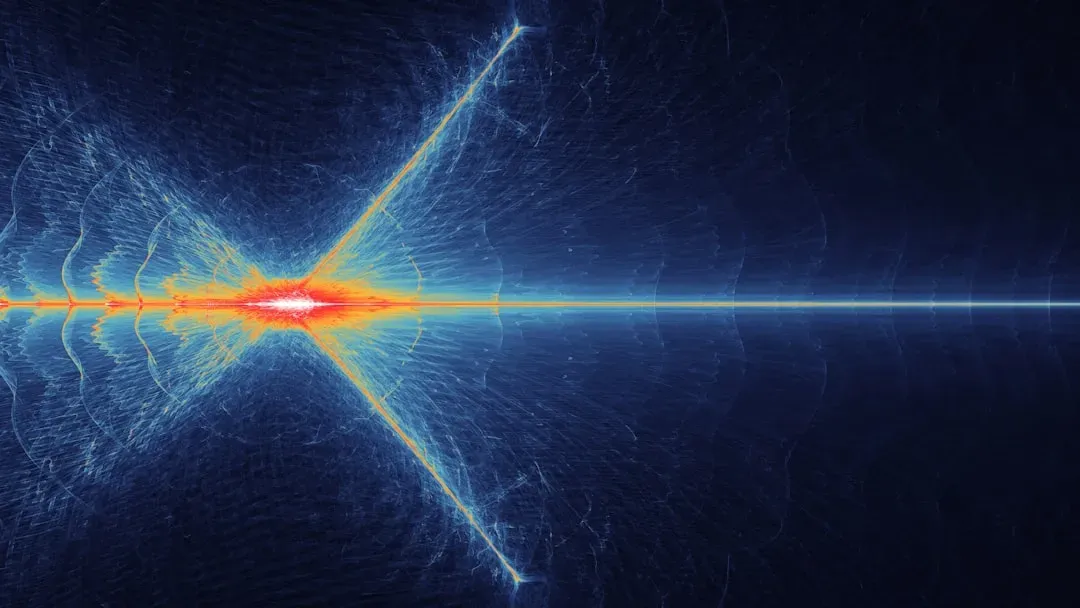
One of the most disturbing implications of quantum theory is that how you choose to measure something can shape the outcome in a fundamental way. It’s not simply that your instruments disturb what you’re trying to measure, like sticking a thermometer in your mouth. In many quantum experiments, different setups lead to incompatible but equally valid descriptions of what “happened.” Before measurement, outcomes exist only as probabilities, and the act of measuring seems to determine which of those potential realities becomes the one you actually see.
This has led to a long-running debate: is consciousness somehow special in collapsing possibilities into a single result, or is “measurement” just any interaction that leaves a trace in the environment? Many physicists favor explanations that keep minds out of the basic equations, but no single interpretation has won universal acceptance. What’s clear is that the old idea of a completely observer-independent reality – a world just sitting out there with all its properties fixed – is hard to defend once you take the quantum evidence seriously. In a very real sense, what you ask of nature influences what answers you can get.
Many Worlds and Other Wild Interpretations
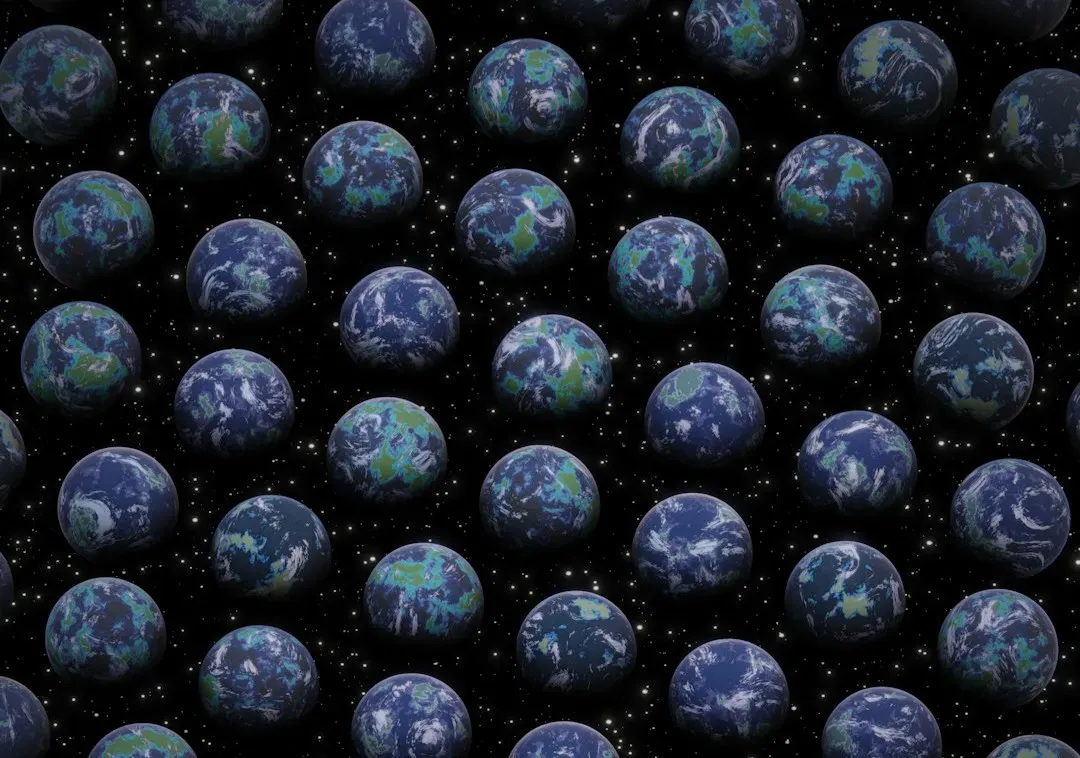
Faced with all this weirdness, physicists have come up with different interpretations of what quantum theory is really telling us about reality. One radical idea, the many-worlds interpretation, suggests that every possible outcome of a quantum event actually happens – just in different, branching versions of the universe. In this view, when a particle might go left or right, the universe splits, and both possibilities occur, each in its own branch. You only ever experience one branch, so it feels like a single outcome, but behind the scenes the cosmos is constantly multiplying.
Other approaches try to avoid this slippery multiverse picture. Some propose hidden variables that restore definite properties but in ways that are deeply nonlocal. Others treat the wave function – the mathematical object that encodes quantum probabilities – as a real physical field, while some see it as just a tool for predicting measurement results. None of these interpretations change the experimental predictions, which is both fascinating and frustrating. We have equations that work astonishingly well, but when we ask what they “really mean,” the universe meets us with a shrug and several conflicting answers.
Quantum Reality And Your Everyday Life
It’s easy to think all this belongs in a physics lab, far away from everyday concerns, but quantum theory is shaping the world you live in more than you might realize. Modern electronics rely on quantum behaviors inside materials, like electrons tunneling through barriers they shouldn’t be able to cross in a classical world. Lasers, GPS systems, and medical imaging all depend on quantum principles in ways that would have seemed like fantasy to earlier generations. The strange rules of the microscopic world are already baked into your daily routine, whether you notice them or not.
Beyond gadgets, quantum ideas quietly challenge how we think about ourselves. If reality is built from entities that don’t have definite properties until they interact, the line between “observer” and “observed” starts to blur. The universe looks less like a machine of rigid cogs and more like an unfolding network of relationships and possibilities. When I first wrestled with this as a student, it felt like discovering that the floor I’d been walking on my whole life was made of clouds – not because it wasn’t real, but because it was more subtle, strange, and interconnected than I had ever imagined.
Conclusion: Living With A Stranger Universe

Quantum physics shows that reality is not the straightforward, clockwork stage we once believed it to be. On the smallest scales, the world is governed by probabilities, superpositions, and nonlocal connections that clash with our everyday intuitions. Our familiar notions of objects with fixed properties, separate from observers and from each other, simply do not survive close inspection. Instead, reality looks layered, relational, and in some ways unfinished until interactions occur.
None of this means the world is an illusion; it means the picture in our heads was too simple. The devices we use, the experiments we run, and the theories that guide them all point in the same direction: underneath the surface of ordinary experience lies a framework that behaves in ways we were never taught to expect. The challenge now is learning to live in a universe that is far stranger than it appears, without pretending it is simpler than it is.