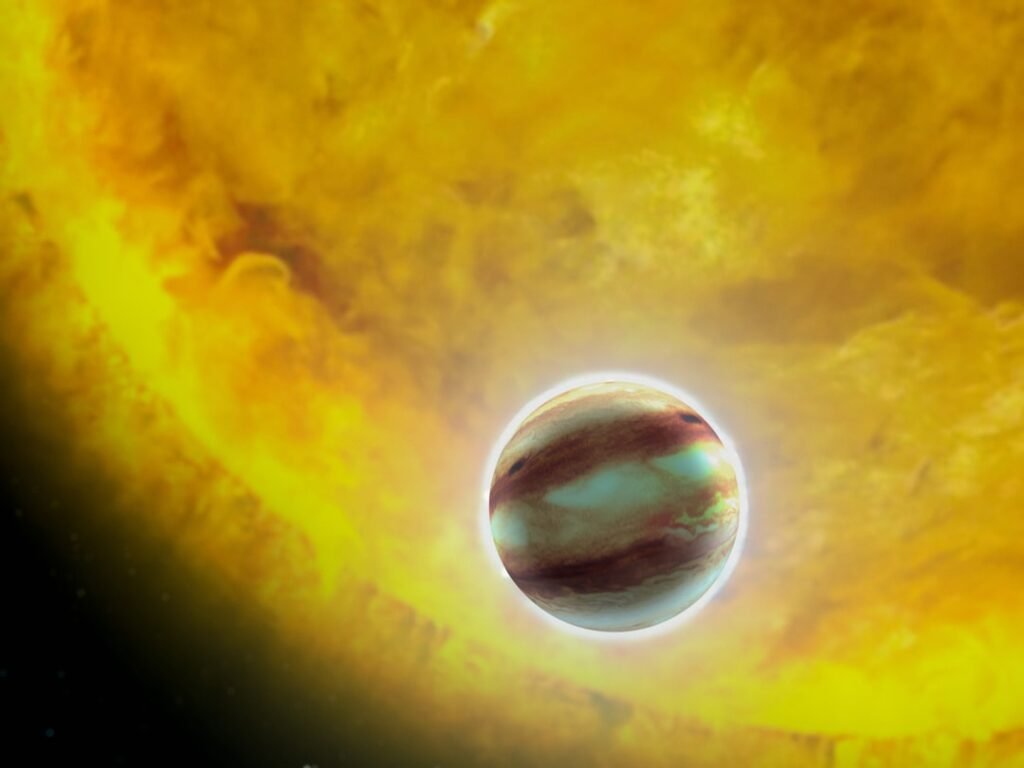
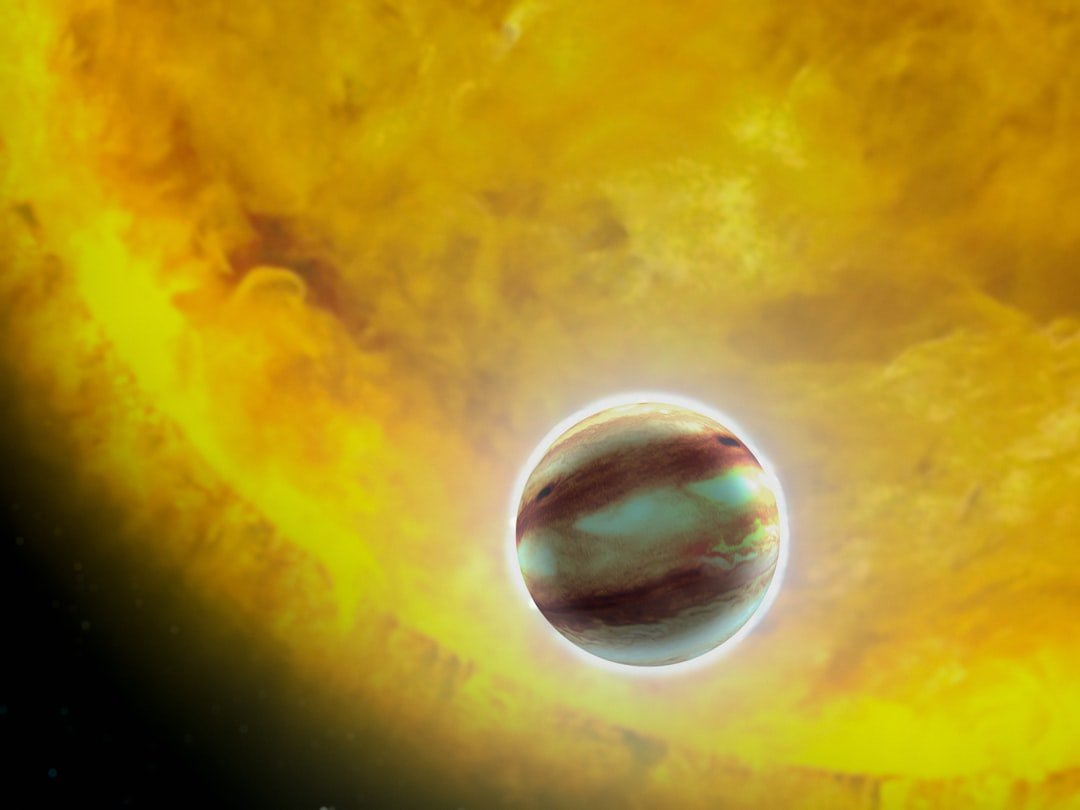
A Double Breakthrough in Direct Imaging (Image Credits: Unsplash)
Astronomers captured direct images of two gas giant planets emerging from a vast disk of gas and dust around the young star WISPIT 2, located 437 light-years away in the constellation Aquila. This discovery marks only the second time scientists have observed multiple planets in the act of formation around the same host star, after the PDS 70 system.[1][2] The extended protoplanetary disk, riddled with gaps and rings, provides a stunning snapshot of how systems like our own Solar System may have developed billions of years ago.
A Double Breakthrough in Direct Imaging
Researchers first spotted WISPIT 2b last year, a gas giant nearly five times more massive than Jupiter and orbiting at about 60 times the Earth-Sun distance.[1] That finding already excited the astronomy community, but hints of a second object closer to the star prompted further scrutiny. Now, follow-up observations confirmed WISPIT 2c, which circles the star at roughly 15 astronomical units and boasts twice the mass of its outer companion – around 10 Jupiter masses.[3]
Lead author Chloe Lawlor, a Ph.D. student at the University of Galway, described the system as “the best look into our own past that we have to date.”[1] Both planets reside in prominent gaps within the disk, evidence of their gravitational influence sculpting the surrounding material. This rare dual detection underscores the rapid progress in exoplanet imaging technology.
The Architecture of a Protoplanetary Disk
The disk around WISPIT 2 spans up to 380 astronomical units, featuring multiple rings and at least three gaps carved by emerging planets.[3] Dust particles in the disk clump together, drawn by gravity into planetary embryos that clear paths as they grow, leaving bright rings of leftover material. WISPIT 2b occupies a wide gap at around 60 AU, while WISPIT 2c sits in an inner cavity nearer the star.
A narrower, shallower gap farther out hints at yet another world, possibly Saturn-sized, according to the team.[4] Such substructures offer clues to the dynamic processes driving planet formation.
- Extended disk reaching 380 AU with four prominent rings.
- Three confirmed gaps, two hosting imaged planets.
- Inner cavity suggesting early clearing near the star.
- Potential for additional undetected planets in outer regions.
ESO Telescopes Deliver Crystal-Clear Views
The confirmation relied on the European Southern Observatory’s Very Large Telescope (VLT) in Chile, equipped with the SPHERE instrument. SPHERE blocks the overwhelming starlight and corrects atmospheric distortion to reveal faint planetary glows.[5] Complementary data came from the VLT Interferometer (VLTI) using the upgraded GRAVITY+ instrument, which precisely measured the inner planet’s orbit and nature.
“Critically, our study made use of the recent upgrade to GRAVITY+, without which we would not have been able to get such a clear detection of the planet so close to its star,” noted co-author Guillaume Bourdarot from the Max Planck Institute for Extraterrestrial Physics.[1] Initial hints of WISPIT 2c emerged from U.S. telescopes like Arizona’s Magellan and Large Binocular Telescope. These tools combined to produce composite images showing both planets against the disk’s backdrop.
| Planet | Mass (Jupiter masses) | Orbit (AU) |
|---|---|---|
| WISPIT 2b | ~5 | ~60 |
| WISPIT 2c | ~10 | ~15 |
Bridging the Gap to Our Solar Origins
WISPIT 2, a 5-million-year-old star resembling a youthful Sun, hosts gas giants akin to Jupiter and Saturn in our outer Solar System.[3] Co-author Christian Ginski called it “a critical laboratory not just to observe the formation of a single planet but an entire planetary system.”[1] By studying these processes, scientists refine models of how dust evolved into the diverse worlds we know today.
Future observations with ESO’s Extremely Large Telescope could image smaller planets or track orbital motions, revealing more about the system’s evolution. Richelle van Capelleveen, who led the initial WISPIT 2b detection, praised the “amazing potential of our current instrumentation.”[4]
Key Takeaways
- WISPIT 2 is only the second system with two directly imaged forming planets.
- Its vast, structured disk suggests multiple worlds under construction.
- Advanced ESO tools like SPHERE and GRAVITY+ enable these breakthroughs.
This discovery illuminates the chaotic beauty of planetary birth, reminding us that our stable Solar System once swirled in similar dust storms. As telescopes grow more powerful, WISPIT 2 promises deeper revelations. What do you think this tells us about Earth’s distant origins? Tell us in the comments.