
Imagine standing at the edge of a vast, ice-age world where Asia and North America are not two separate continents divided by churning ocean waters, but a single, continuous landmass. No Bering Strait. No barrier. Just open, frozen tundra stretching hundreds of miles in every direction, teeming with woolly mammoths, ancient bison, and a handful of extraordinary humans walking into the unknown.
This is the story of the Bering Land Bridge, one of the most pivotal geographic features in human history. It shaped who we are, where we live, and how the Americas were first discovered by human beings long before any European ever set sail. The details are more surprising, more contested, and honestly more dramatic than most history books will ever tell you. Let’s dive in.
What Was the Bering Land Bridge, and How Did It Form?
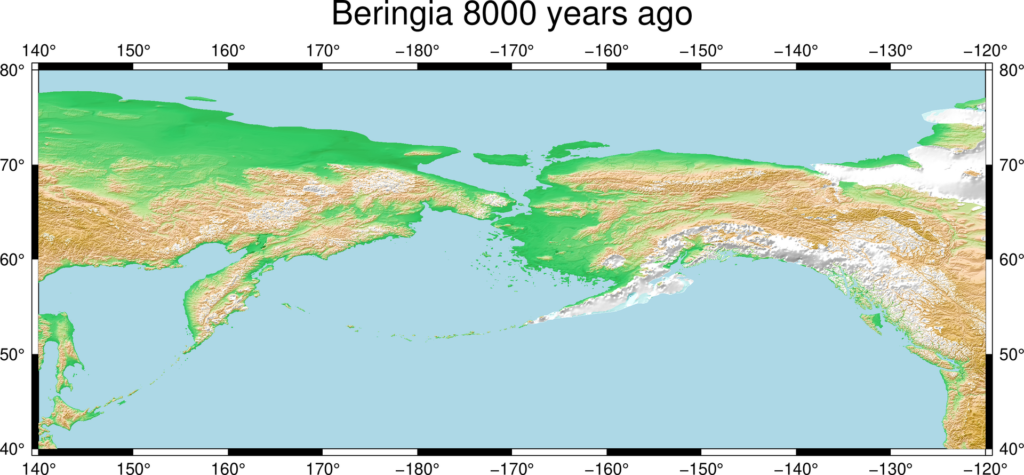
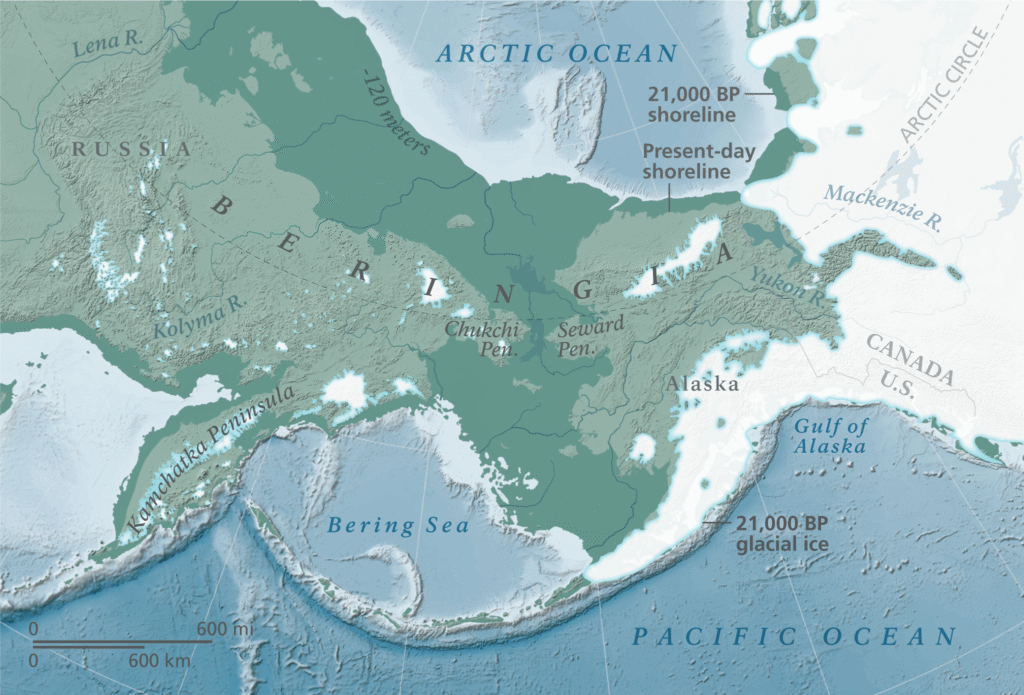
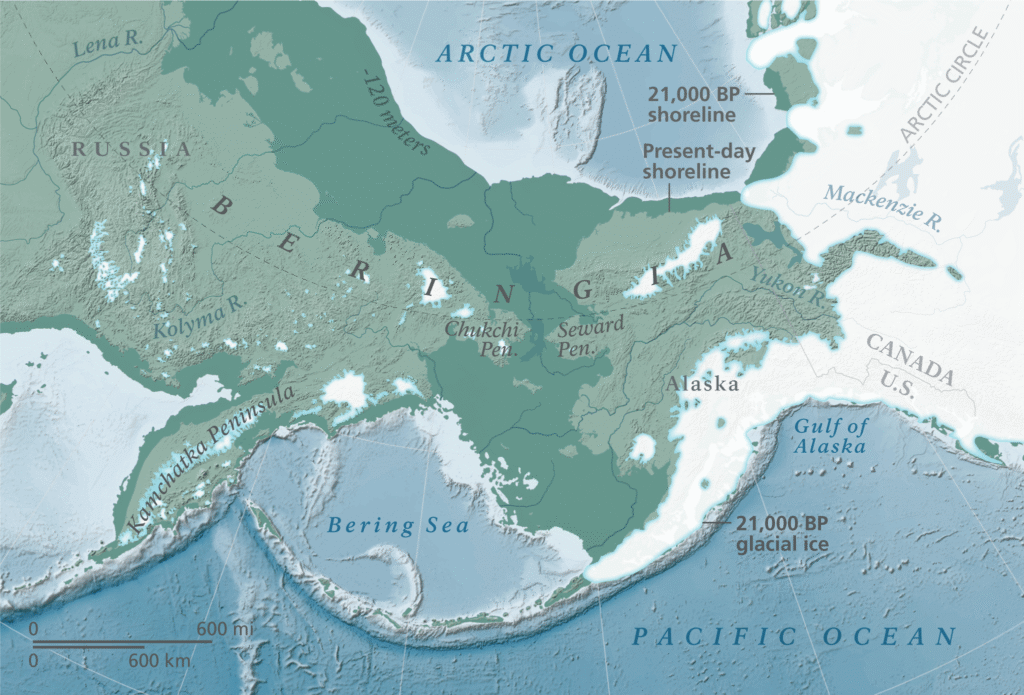
Beringia refers to any in a series of landforms that once existed periodically and in various configurations between northeastern Asia and northwestern North America, associated with periods of worldwide glaciation and subsequent lowering of sea levels. Think of it less as a narrow bridge and more as an entire subcontinent that rose and sank with the rhythms of the ice ages. It was not a thin sliver of land you could walk across in an afternoon. It was genuinely vast.
At various times, the land bridge was up to 1,000 km (620 mi) wide at its greatest extent, covering an area as large as British Columbia and Alberta together, totaling about 1.6 million square kilometers, allowing biological dispersal to occur between Asia and North America. During the Pleistocene epoch, global cooling led periodically to the expansion of glaciers and the lowering of sea levels, and today, the average water depth of the Bering Strait is just 40 to 50 meters, meaning the land bridge opened when sea levels dropped more than 50 meters below current levels. In other words, the ocean floor you would cross today in a plane window seat was once solid ground where ancient peoples walked, hunted, and lived.
When Did the Land Bridge Actually Appear?
Here is where things get genuinely fascinating, and where science has recently pulled the rug out from under decades of assumptions. For a long time, researchers believed the Bering Land Bridge emerged about 70,000 years ago, giving humans a wide, comfortable window to migrate. Turns out, that estimate was significantly off.
Princeton scientists found that the Bering Land Bridge was flooded until about 35,700 years ago, with its full emergence occurring only shortly before the migration of humans into the Americas, and a new study showed the land bridge emerged far later during the last ice age than previously thought, dramatically shortening the window of time that humans could have first migrated from Asia to the Americas. Genetic studies tell us that ancestral Native American populations diverged from Asian populations about 36,000 years ago, roughly the same time researchers found the Bering Land Bridge emerged. The timing is, quite frankly, startling. It suggests that as soon as dry land appeared, people were ready and moving.
Life in Beringia: Not the Frozen Wasteland You Picture
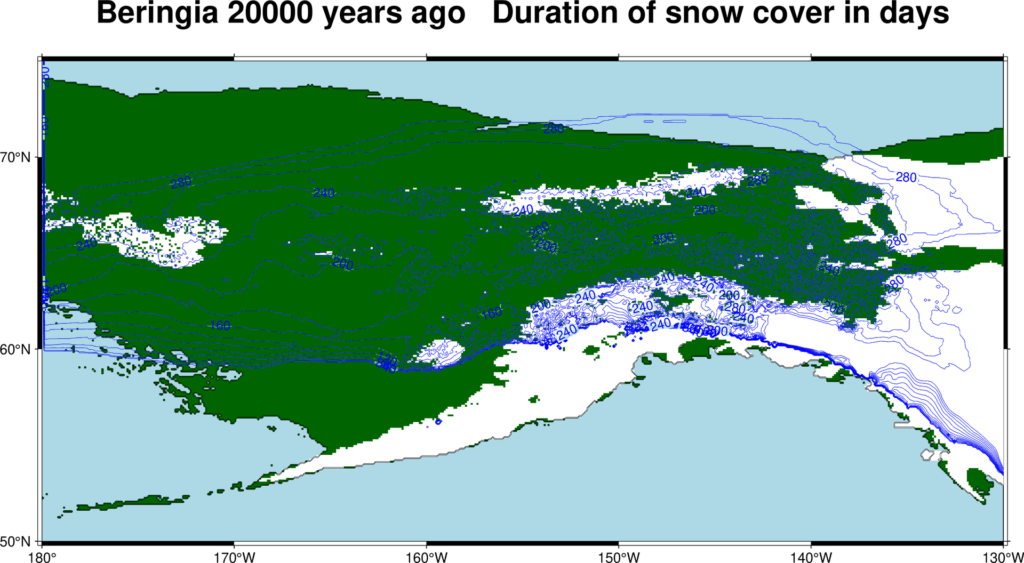
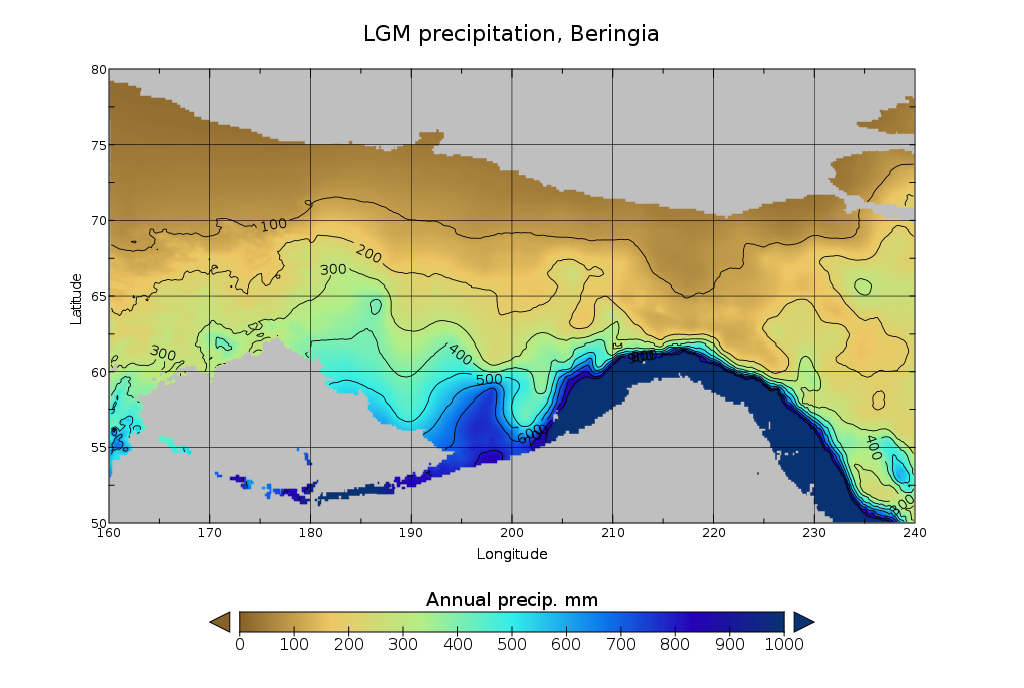
Most people, when they imagine Ice Age Beringia, picture a bleak, howling, empty tundra where nothing could possibly survive for long. I think that mental image is both understandable and almost completely wrong. The reality was far more nuanced, and far more livable.
Paleoecologists who drilled sediment cores from the Bering Sea and Alaskan bogs found pollen, plant, and insect fossils suggesting the Bering Land Bridge was not just barren, grassy tundra steppe but was dotted by refugia, or refuges, where there were brushy shrubs and even trees such as spruce, birch, willow, and alder. Other research indicates that much of Beringia, particularly the lowlands, appears to have had average summer temperatures nearly identical, or only slightly cooler in some regions, to those in the region today, and the local environments were likely not as daunting as many had assumed for years. So rather than a death march across frozen emptiness, crossing Beringia may have looked more like a slow, generational drift through a cold but functional landscape rich enough to sustain entire communities.
The Beringian Standstill: A 10,000-Year Pause in the Journey
Here is a detail that surprises almost everyone who hears it for the first time. The ancestors of Native Americans did not simply walk briskly from Asia to the Americas. According to a fascinating body of genetic and environmental evidence, they stopped. For thousands of years.
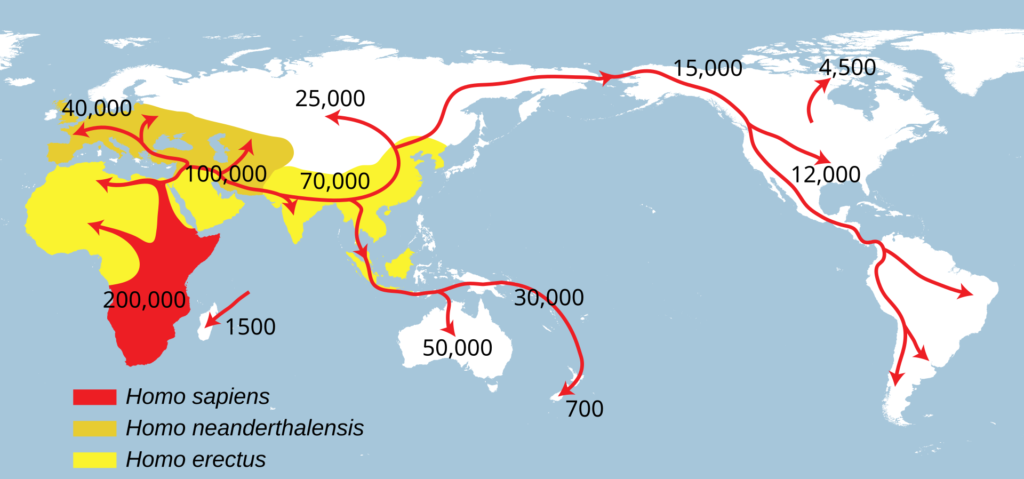
Cumulative evidence indicates that the ancestors of Native Americans lived on the Bering land bridge for roughly 10,000 years, from approximately 25,000 years ago until they began moving into the Americas about 15,000 years ago, once glacial ice sheets melted and opened migration routes. The Beringian Standstill Hypothesis arises from the fact that today Native American DNA is quite different from Asian DNA, a clear indication of genetic drift of such magnitude that it can only have happened over long periods of time in nearly complete isolation from the Asian source population. Think of it like a whole civilization pressing pause on a road trip, setting up camp, having children, and developing a distinct genetic identity, all before the final leg of the journey even began.
Routes Into the Americas: The Debate Over How They Got South
Once the ancestors of Native Americans were ready to push south, they faced another enormous obstacle: enormous walls of ice. Two massive glacial sheets, the Laurentide and the Cordilleran, covered most of what is now Canada. Getting around or through them was no small feat, and researchers are still debating precisely how it happened.
Human dispersal pathways from Beringia into North America continue to be debated, with prevailing ideas including a coastal route and an interior route via an ice-free corridor between the Laurentide and Cordilleran ice sheets. The coastal migration hypothesis is one of two leading theories, proposing one or more migration routes involving watercraft, via the Kuril island chain, along the coast of Beringia and the archipelagos off the Alaskan and British Columbian coast, continuing down the coast to Central and South America. Honestly, it’s hard to say for sure which route, or combination of routes, was most commonly used. The most likely answer is probably both, used by different groups at different times.
Pre-Clovis People and the Footprints That Rewrote History
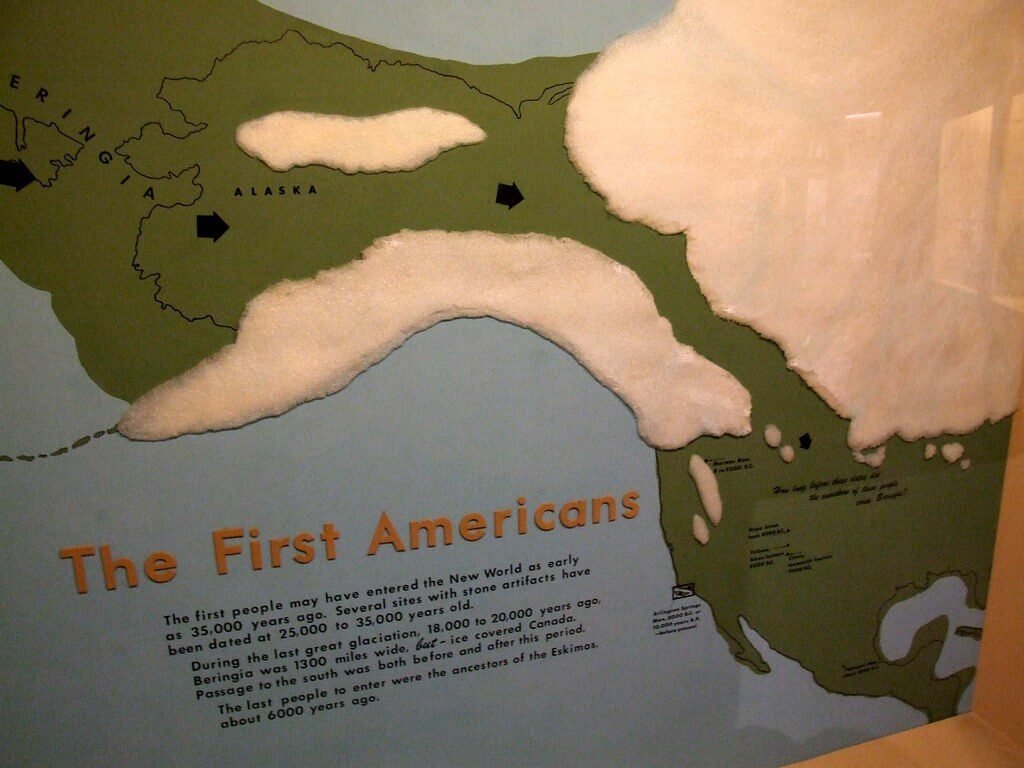
For most of the 20th century, archaeologists believed the Clovis culture represented the very first Americans, a group of skilled hunters who arrived in North America roughly 13,500 years ago. Then came the discoveries that completely shattered that idea, piece by piece.
At White Sands in New Mexico, excavated surfaces uncovered multiple in situ human footprints that were stratigraphically located between layers of material radiocarbon dated to between 21,000 and 23,000 years ago. With multiple dating methods and separate lab confirmations now supporting the timeline, the White Sands footprints offer compelling evidence that humans came to the Americas far earlier than had been believed. Since the beginning of the 21st century, the Clovis-first hypothesis has been abandoned by most researchers, as several widely accepted sites, notably Monte Verde II in Chile at around 14,500 years before present, Paisley Caves in Oregon at around 14,200 years before present, and Cooper’s Ferry in Idaho at around 15,800 years before present, are considerably older than the oldest Clovis sites. The story of the first Americans is not a single origin story. It is a layered, complex puzzle that keeps revealing new pieces.
Conclusion: A Journey That Still Echoes Today
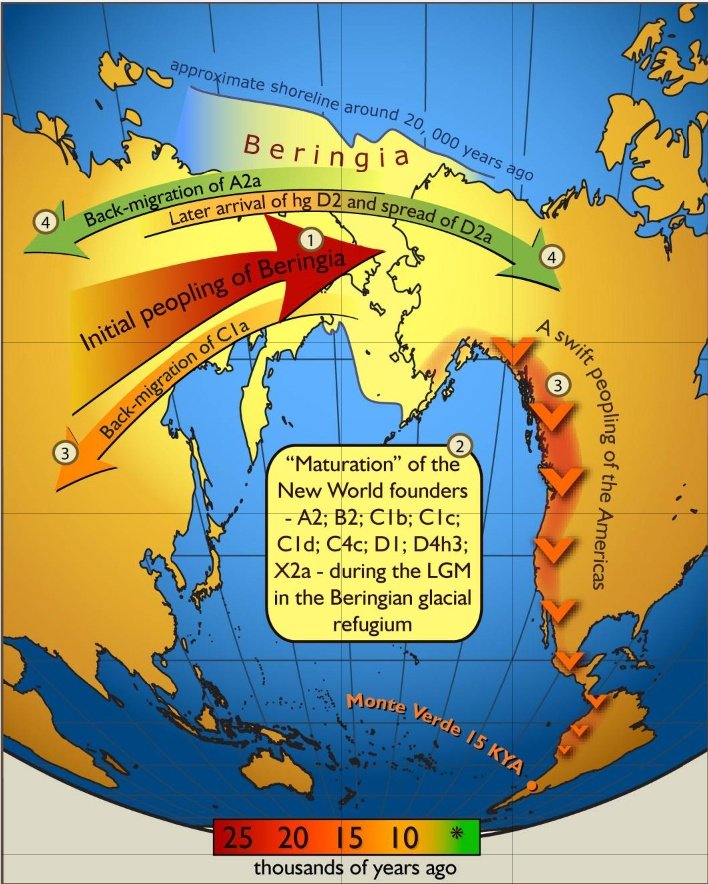
The Bering Land Bridge is no longer above the surface of the ocean. It disappeared beneath the waves roughly 11,000 years ago as the last ice age ended and sea levels climbed. But its legacy is everywhere. It lives in the genetics of every Indigenous American, in the archaeological sites still being excavated across two continents, and in the ongoing scientific debates that continue to rewrite what we think we know about prehistory.
Once early peoples reached North America, these populations spread out across the continent, leading to diverse cultural developments over thousands of years, and genetic studies have shown that modern Native American populations can trace their ancestry back to these early migrants from Asia. The precise date for the peopling of the Americas remains a long-standing open question, and while advances in archaeology, Pleistocene geology, physical anthropology, and DNA analysis have progressively shed more light on the subject, significant questions remain unresolved.
What is remarkable is not just how much we have discovered, but how much remains hidden, likely beneath the cold, dark waters of the Bering Sea itself. Every new footprint unearthed, every ancient genome sequenced, brings us closer to understanding one of humanity’s most extraordinary journeys. What would you have guessed, knowing now that the first Americans may have been walking across New Mexico during the height of the last ice age, thousands of years before the world ever thought to look for them?