
Earth is not the quiet, stable rock beneath your feet that it might seem on a calm Tuesday morning. Beneath the soil, the oceans, and the mountain ranges you admire lies a planet that has been violently, dramatically, and relentlessly remaking itself for over four billion years. Some of those transformations happened so slowly you could live a thousand lifetimes without noticing. Others happened in what geology considers a blink, rearranging continents, poisoning skies, and wiping out nearly everything that breathed.
What you are about to discover are six geological events so extreme, so unprecedented, that the Earth you live on today simply would not exist without them. Each one is a reminder that this planet is not a passive backdrop to life, it is an active, churning force that has shaped every coastline, every mountain, and every living thing on it. So buckle up, because this story goes deep.
The Breakup of Pangaea: When One World Became Many
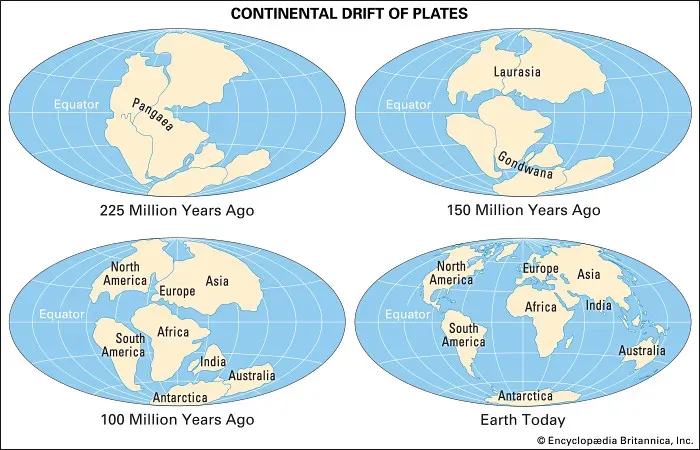
Imagine a single, enormous landmass so vast it stretched from pole to pole, containing every continent you know today pressed together like puzzle pieces. That was Pangaea. The continents recombined to form Pannotia between 600 and 540 million years ago, then finally formed Pangaea, which broke apart roughly 200 million years ago. The sheer scale of this breakup is almost impossible to wrap your head around.
During the early Jurassic period, the supercontinent Pangaea broke up into the northern supercontinent Laurasia and the southern supercontinent Gondwana, and the Gulf of Mexico opened in the new rift between North America and what is now Mexico’s Yucatan Peninsula. That rifting process was not a quick snap. It was a slow, grinding divorce that lasted tens of millions of years, and it produced every ocean basin, every separated landmass, and every unique ecosystem you see today.
The collision of the Indo-Australian Plate with the Eurasian Plate resulted in the formation of the Himalayas, one of the world’s most majestic mountain ranges. Additionally, the separation of the African and South American continents along the Mid-Atlantic Ridge created the vast Atlantic Ocean basin. Honestly, if you have ever marveled at a world map and thought the continents look like they belong together, you were absolutely right.
The Chicxulub Asteroid Impact: When a Rock From Space Rewrote Life on Earth
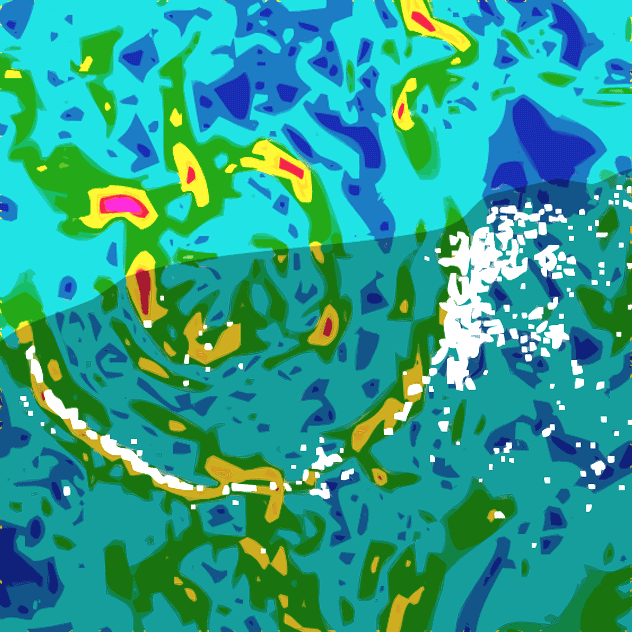
Few geological events carry the sheer, gut-punching drama of what happened roughly 66 million years ago near the Yucatan Peninsula of Mexico. Approximately 66 million years ago, an asteroid nearly 10 kilometers across hit the Earth near what is now the Yucatan Peninsula, striking at an estimated speed of 20 kilometers per second at a relatively steep angle of between 45 and 60 degrees to the Earth’s surface. The impact produced as much explosive energy as 100 teratons of TNT, roughly 4.5 billion times the explosive power of the Hiroshima atomic bomb.
Upon impact, it released the energy equivalent of 100 trillion tons of TNT and punched a hole in Earth several miles deep, instantly vaporizing thousands of miles of rock. The asteroid triggered a fireball that incinerated anything within hundreds of miles and released a powerful tsunami that may have reached a height of more than 1,000 feet. The impact gouged out so much of the planet’s surface that it forced large amounts of dust, steam, and ash into the atmosphere. The consequences were catastrophic and lasting.
The environmental upheaval caused by the impact resulted in the extinction of roughly three quarters of all species on Earth, notably including all non-avian dinosaurs, which had dominated terrestrial ecosystems for approximately 160 million years. Here’s the thing, though: as devastating as this was, it also cleared the ecological stage for mammals to rise. Without that impact, there is a very real chance you would not be reading this today.
The Siberian Traps Eruption: A Million Years of Volcanic Fury
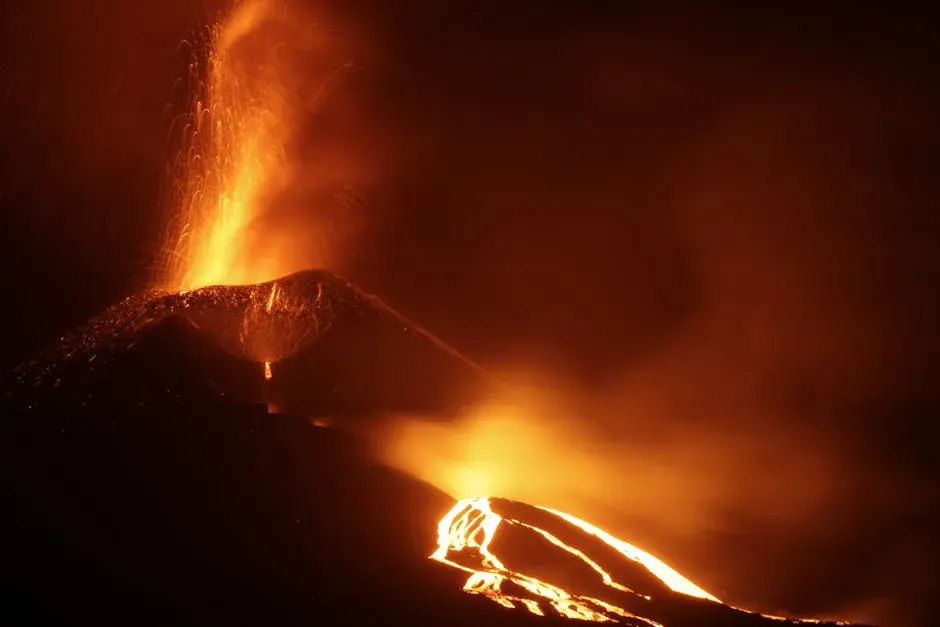
Most people think of a volcanic eruption as something that lasts a few weeks, maybe months. Now try to imagine a volcanic event that lasted roughly two million years. Large volumes of basaltic lava covered a large expanse of Siberia in a flood basalt event. This massive eruptive event is one of the largest known volcanic events in the last 500 million years. The eruptions continued for roughly two million years and spanned the Permian–Triassic boundary, which occurred around 251.9 million years ago.
The emission of large magnitudes of CO2, SO2, halogens, and metals by the eruptions led to global warming, oceanic anoxia, oceanic acidification, ozone reduction, acid rain, and metal poisoning, triggering major extinctions in terrestrial and marine ecosystems. The scale of destruction was unlike anything before or since. The end-Permian mass extinction, which occurred about 252 million years ago, was the most severe biotic crisis in the Phanerozoic Eon, eliminating more than 90% of marine and 75% of terrestrial species. Scientists call it the “Great Dying,” and honestly, that name does not even feel dramatic enough.
The Great Oxygenation Event: When Tiny Bacteria Changed Everything
Not every geological game-changer arrives as a fiery asteroid or a volcanic apocalypse. Sometimes it comes from something so small you need a microscope to see it. Between roughly 2.5 billion and 2.3 billion years ago, life on Earth was largely confined to the oceans. Around that time, a massive bloom of an algae-like bacteria called cyanobacteria appeared, saturating the Earth in oxygen. Because most bacteria at the time did not metabolize oxygen, many bacteria species died out. The abundance of oxygen helped reduce the levels of methane in the atmosphere, cooling the Earth down significantly.
Photosynthesis by microbial organisms, such as single-celled cyanobacteria, had been slowly adding oxygen to the oceans. As cyanobacteria evolved into multicellular organisms, they completely transformed the oceans and later the atmosphere by adding massive amounts of free oxygen gas and initiated what is called the Great Oxygenation Event. This drastic environmental change decimated the anaerobic bacteria, which could not survive in the presence of free oxygen. Think of it like this: a microscopic bacterium essentially terraformed an entire planet, permanently. No oxygen event, no complex life, no us.
Snowball Earth: When the Entire Planet Froze Over
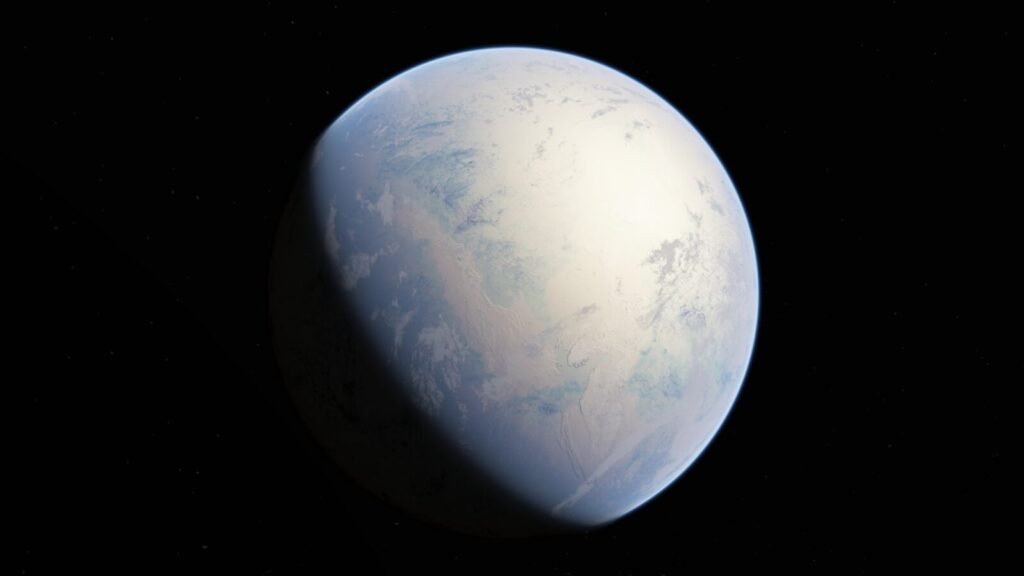
You have seen ice storms. You have heard about ice ages. But here is something that makes those sound like a light frost. During the Neoproterozoic and Paleoproterozoic eras, geological evidence points to several “Snowball Earth” episodes when most of Earth’s surface was covered in ice. These global-scale glaciations represent the most marked climate changes in Earth’s history. Essentially, the entire planet became a frozen ball drifting through space, wrapped in ice from pole to equator.
The erosion happened when most of the Earth’s surface was covered in ice during a severe glaciation, dubbed ‘Snowball Earth’, that lasted over 50 million years. Fifty million years of global ice. Let that sink in for a moment. This process reconfigured the Earth’s surface and paved the way for the origin of animal life during the Cambrian era, known as the ‘Cambrian Explosion’, by changing the shape and chemical composition of the oceans, giving animals the environments and nutrients they needed to evolve. It is one of history’s most stunning reversals: a total planetary freeze eventually gave birth to the explosion of complex animal life.
The Collision That Formed the Moon: Earth’s Most Violent Birth Story
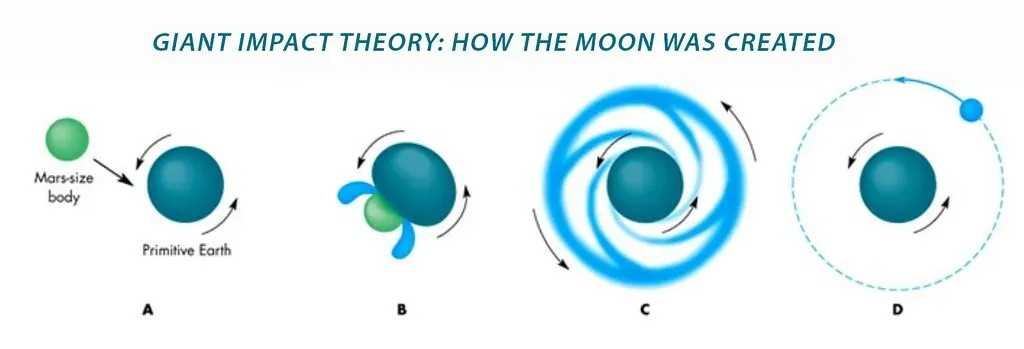
You might not think of the Moon as a geological event, but its formation is arguably the single most violent and consequential thing that ever happened to our planet. According to the prevailing theory on the Moon’s origin, roughly 4.5 billion years ago, the relatively young Earth, just 100 million years old at that point, collided with a Mars-sized planet-like object called Theia. The sheer scope of that collision is genuinely mind-boggling. A planet, colliding with our planet.
The Moon formed soon afterwards, possibly as a result of the impact of a large planetoid with Earth. More recent potassium isotopic studies suggest that the Moon was formed by a smaller, high-energy, high-angular-momentum giant impact cleaving off a significant portion of Earth. Some of this object’s mass merged with Earth, significantly altering its internal composition, and a portion was ejected into space. Some of the material survived to form the orbiting Moon. The effects on Earth’s surface were permanent and profound. The collision of what formed the Moon into Earth significantly impacted climate, oceans, and life on Earth, and the Moon’s orbit dragging Earth slowed Earth’s rotation significantly from 6-hour days to 24 hours. Without that ancient cosmic crash, Earth would spin at a dizzying rate, and the planet we call home would be nearly unrecognizable.
Conclusion: A Planet That Has Always Been Reinventing Itself
Every mountain range you have ever stood beneath, every ocean you have ever crossed, every breath you draw was shaped by geological forces so immense they dwarf anything humans have ever built or destroyed. The six events explored here were not mere footnotes in Earth’s history. They were the defining moments that wrote it.
What makes this all especially humbling is that the planet is not done. Earth is a constantly changing planet, and each era has its own unique geological history and events. The tectonic plates are still moving, and the forces that shaped Earth over billions of years are still quietly at work beneath your feet right now. The story of Earth’s surface is not finished. It is just in a quieter chapter.
Next time you look out at a canyon, a mountain, or even a flat coastline, ask yourself: what colossal, unimaginable event do I have to thank for this view? The answer is almost certainly more dramatic than you’d ever expect.