
If you could press rewind on the universe, galaxies would seem to rush toward each other, the cosmos shrinking into something unimaginably dense and hot. Press play again, and they race apart, faster and faster, as if some invisible hand is pushing everything away. That invisible something is what scientists call dark energy, and right now, it is quietly deciding the ultimate fate of everything that exists.
What makes this so unsettling is that we can’t touch dark energy, can’t see it, and don’t even really know what it is. We only know it must be there, because without it, the universe’s behavior simply doesn’t make sense. Trying to understand dark energy feels a bit like trying to figure out the rules of a game while it’s already in progress and the playing field itself keeps stretching underneath your feet.
The Shocking Discovery: The Universe Is Speeding Up
For most of the twentieth century, astronomers assumed cosmic expansion was slowing down, dragged by gravity, the way a ball thrown upward eventually falls back to Earth. The big question used to be whether the universe would expand forever but more slowly, or collapse back in a so‑called “Big Crunch.” Then, in the late nineteen‑nineties, two independent research teams studied exploding stars called Type Ia supernovae, which act like cosmic lighthouses with fairly predictable brightness.
By comparing how bright these supernovae appeared with their redshift – the stretching of their light due to cosmic expansion – astronomers realized something astonishing: distant galaxies were dimmer than expected, meaning they were farther away than predicted. The only way this made sense was if the expansion of the universe had actually sped up over time instead of slowing down. It was as if you tossed that ball into the air and, instead of decelerating, it suddenly rocketed upward faster. That bizarre twist is what forced scientists to introduce the idea of dark energy.
What Exactly Is Expanding, Anyway?
When people picture the universe expanding, they often imagine galaxies flying through empty space like shrapnel from a cosmic explosion. That mental picture is misleading. It’s not galaxies rushing through space so much as space itself stretching, and the galaxies are mostly just being carried along for the ride. A favorite analogy is a raisin loaf rising in the oven: the dough is space, and the raisins are galaxies; as the dough expands, every raisin sees other raisins move away.
Here’s the really mind‑bending part: there isn’t an “outside” that the universe is expanding into, at least not in any way we can meaningfully describe. The expansion is an internal change in the distances between objects within the universe, governed by general relativity. When we say the universe is expanding, we mean that on the largest scales, the metric that defines distances is changing over time. So asking where the universe is going can be a bit like asking where the surface of a balloon is going as it inflates; it’s getting larger, but not traveling through some extra two‑dimensional space you can point to.
Dark Energy: A Name for Our Ignorance
Dark energy is, in a very real sense, a label slapped on a mystery. It’s the term used for whatever is causing the accelerated expansion, but it doesn’t tell us what that “whatever” actually is. Observations suggest that dark energy makes up the vast majority of the total energy content of the universe, far outweighing both regular matter – the stuff that makes stars, planets, and people – and dark matter, which itself is already invisible and puzzling.
What we do know comes mostly from the way the universe behaves on the largest scales. The pattern of tiny temperature variations in the cosmic microwave background, the distribution of galaxies across cosmic time, and the brightness of distant supernovae all point toward a cosmos dominated by some smooth, repulsive energy component. It doesn’t clump into stars or galaxies, and it seems to fill all of space rather uniformly. In other words, dark energy is everywhere, even in the room you’re sitting in right now, though at a level that is utterly swamped by the masses of everyday objects.
The Cosmological Constant: Einstein’s Old Idea Returns
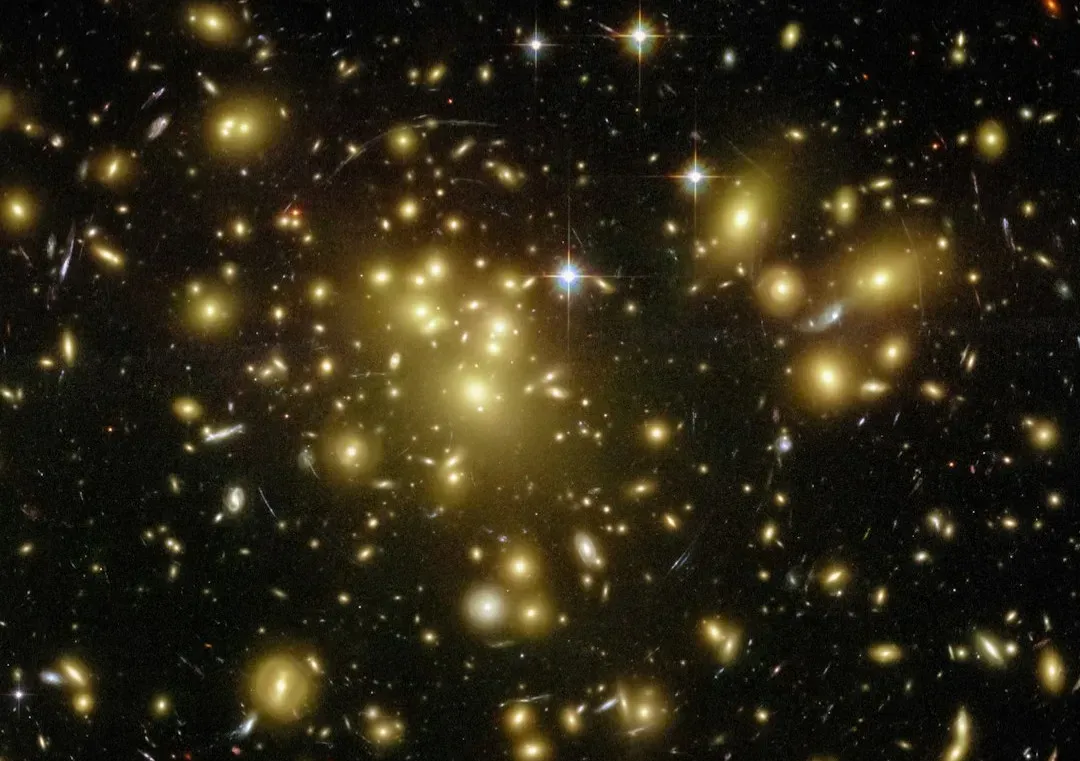
One of the leading explanations for dark energy is surprisingly old: the cosmological constant, often written as the Greek letter lambda. Einstein originally introduced this term into his equations of general relativity as a kind of cosmic balancing act, to keep the universe static. When astronomers discovered that the universe was in fact expanding, he reportedly abandoned the idea, considering it a mistake. Decades later, lambda made a comeback, this time as a candidate for dark energy.
In modern terms, the cosmological constant is often thought of as vacuum energy: an energy associated with empty space itself. The key property of this form of energy is that it doesn’t dilute as the universe expands; double the size of space and you simply have more vacuum, with the same energy density everywhere. That creates a persistent, repulsive pressure that drives acceleration. The big problem is that attempts to calculate this vacuum energy from quantum physics give answers wildly larger than the value inferred from observations – a mismatch so dramatic that some physicists call it one of the worst prediction failures in science.
Could Dark Energy Be Something Dynamical?
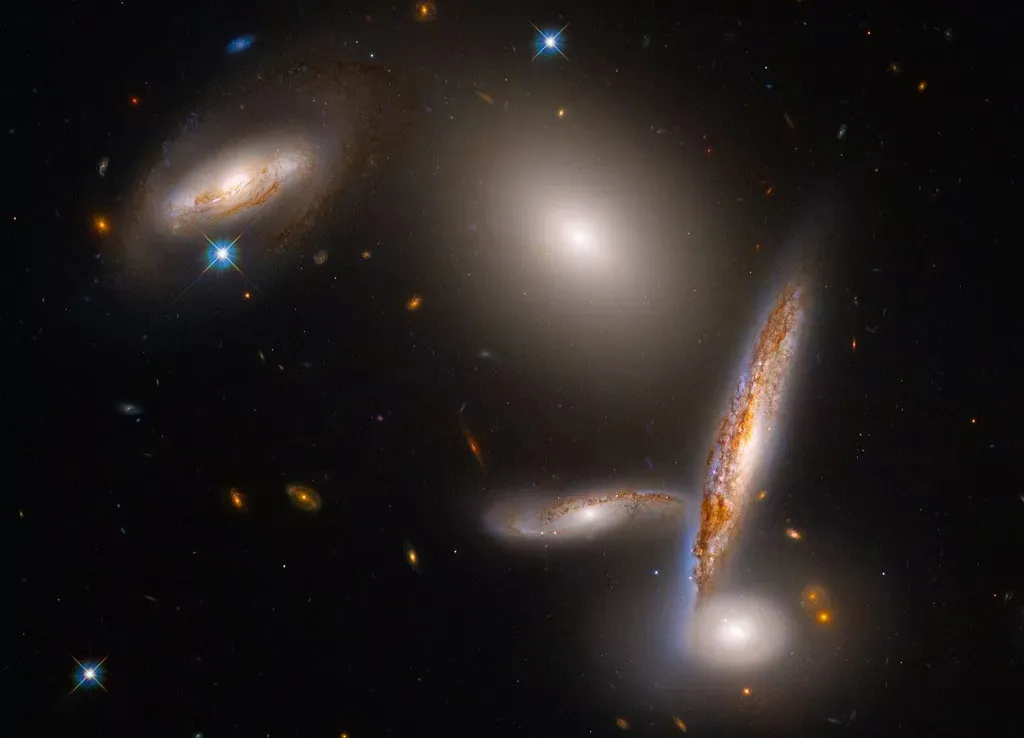
Because the cosmological constant explanation comes with such severe theoretical headaches, some researchers think dark energy might be something more flexible and evolving instead of a fixed property of space. One popular family of ideas goes under names like “quintessence,” imagining a new kind of field permeating the universe that changes slowly over time. Unlike a rigid cosmological constant, this field could have a density and pressure that shift as the universe grows older.
If dark energy is dynamical, its influence on the cosmic expansion might not be constant either; acceleration could strengthen, weaken, or even, in some speculative scenarios, reverse far in the future. Astronomers try to test these possibilities by measuring how the expansion rate has changed across different eras of cosmic history, using tools like galaxy surveys and gravitational lensing. So far, the simplest cosmological constant picture keeps fitting the data remarkably well, which is both comforting and frustrating – comforting because it’s easy to describe, frustrating because it deepens the mystery of why the number has the value it does at all.
Where Is the Universe Going? Possible Cosmic Fates
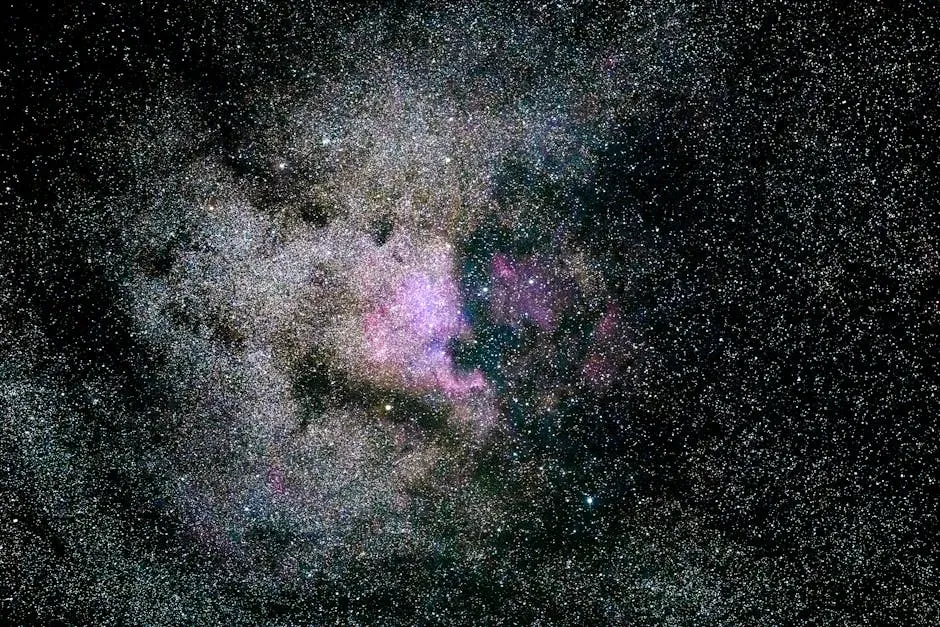
If dark energy keeps behaving as it appears to today, the universe’s future looks eerily calm and lonely. Galaxies not gravitationally bound to us will keep receding, eventually slipping beyond our observable horizon as their light can no longer reach us. The night sky, billions of years from now, would grow emptier in distant vistas, dominated mostly by the stars of our own local group, eventually merging into a single giant galaxy. On unimaginably longer timescales, stars will burn out, leaving a universe of dim embers, cold gas, and black holes.
More extreme possibilities exist if dark energy doesn’t stay constant. In some speculative models, its repulsive effect grows stronger over time, leading to a scenario sometimes called the “Big Rip,” where even galaxy clusters, galaxies, solar systems, and finally atoms themselves are torn apart as space expands faster than structures can hold together. Other ideas allow for dark energy to weaken or even change sign, possibly ending in a “Big Crunch” or a bounce into a new expansion phase. Right now, the best data we have leans toward a gently accelerating “Big Freeze,” but our confidence is still limited, and the door to stranger endings hasn’t been completely closed.
How We’re Probing Dark Energy Right Now
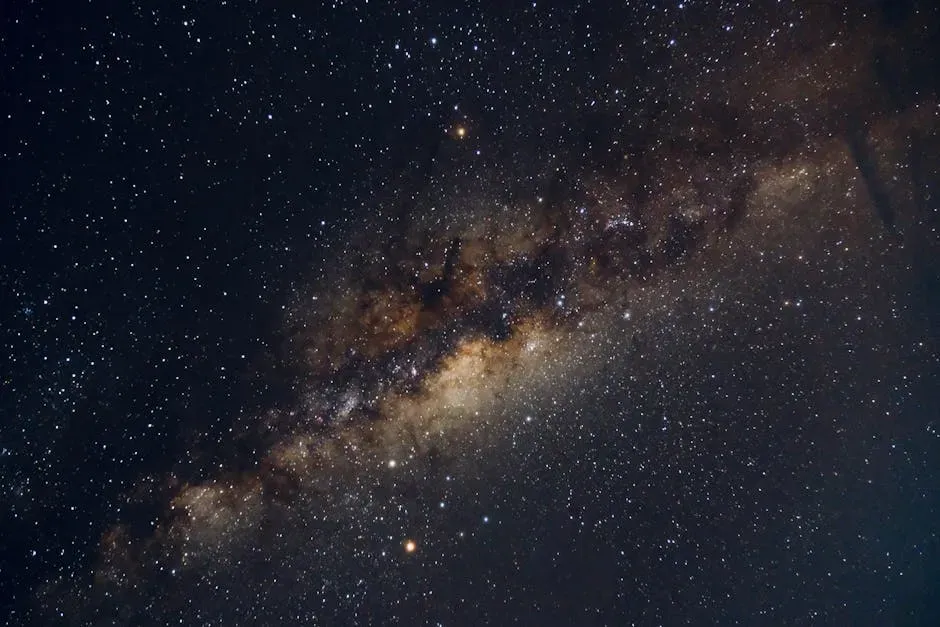
Because we can’t bottle dark energy in a lab, we study it by watching the universe act as its own experiment. New space missions and ground‑based surveys are mapping the cosmos in enormous detail, tracking how structures grow over billions of years. By measuring how galaxies cluster together, how light is bent by massive objects, and how the expansion rate varies with distance, scientists carve out the parameter space that different dark energy models are allowed to occupy.
In recent years, precision measurements of the cosmic expansion rate have even uncovered tensions between different methods, such as comparing nearby supernova distances to early‑universe signals. Some researchers wonder whether those discrepancies might be subtle clues that our model of dark energy – or even gravity itself – is incomplete. Others suspect unaccounted‑for systematics in the data. Either way, the push to resolve these puzzles is driving a flood of new observations and sharper analyses, turning the universe into an ever more detailed testbed for ideas about what dark energy could be.
Why This Mystery Matters for Us
It’s tempting to see dark energy as a remote curiosity with no bearing on everyday life, but at a deeper level, it cuts right into how we think about reality. Dark energy shapes the entire story of the cosmos, from the formation of galaxies to the ultimate horizon of what will ever be visible. It also exposes a clash between our two greatest physical theories: quantum mechanics, which excels in the very small, and general relativity, which rules the very large. Where they overlap in the question of vacuum energy, they stubbornly refuse to agree.
On a more personal note, when I first learned that most of the universe is made of something we don’t understand at all, it was both unsettling and oddly liberating. It’s a reminder that our current knowledge, impressive as it is, may still be just the first few pages of a much thicker book. The fact that the universe is expanding faster and faster, driven by an invisible component we can only infer indirectly, turns existence itself into an open question waiting to be explored. In a universe propelled by this mysterious energy, what new ways of thinking will we need to even begin to understand where it is all truly going?