Something extraordinary is happening underground, and most of us have no idea. Right beneath the grass, the concrete, the hiking trails we walk every day, there lives an invisible world so complex and so consequential that scientists are only now beginning to grasp its full importance.
We’re talking about soil microbes. Bacteria, fungi, archaea, and other microscopic organisms that exist in staggering numbers, think billions per teaspoon of healthy soil, quietly shaping the chemical balance of the entire planet. What researchers are now uncovering is both fascinating and sobering. Let’s dive in.
A Hidden World With Enormous Power
Honestly, it’s hard to wrap your head around just how much life exists in a handful of dirt. Soil is arguably the most biologically dense habitat on Earth, and the microbes living there don’t just sit around. They breathe, they reproduce, they consume organic matter, and in doing so, they release gases that travel all the way up into the atmosphere.
Here’s the thing: those gases include carbon dioxide and methane, two of the most significant greenhouse gases we know of. What microbes do with carbon, whether they lock it into the soil or release it into the air, has a direct impact on how fast the climate changes. Scientists are starting to treat soil microbial activity not as a footnote in climate science, but as a central chapter.
What the Research Is Actually Finding
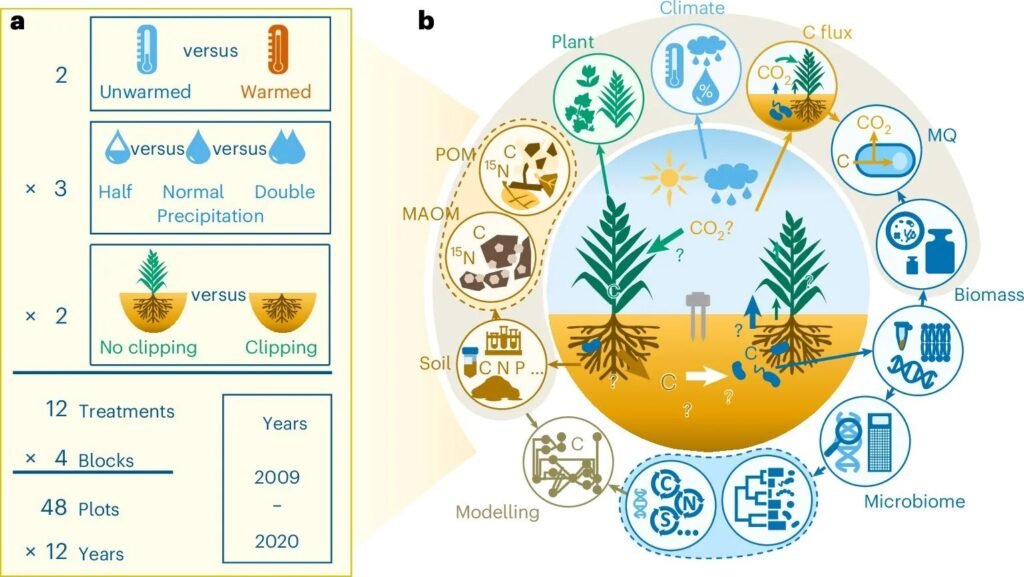
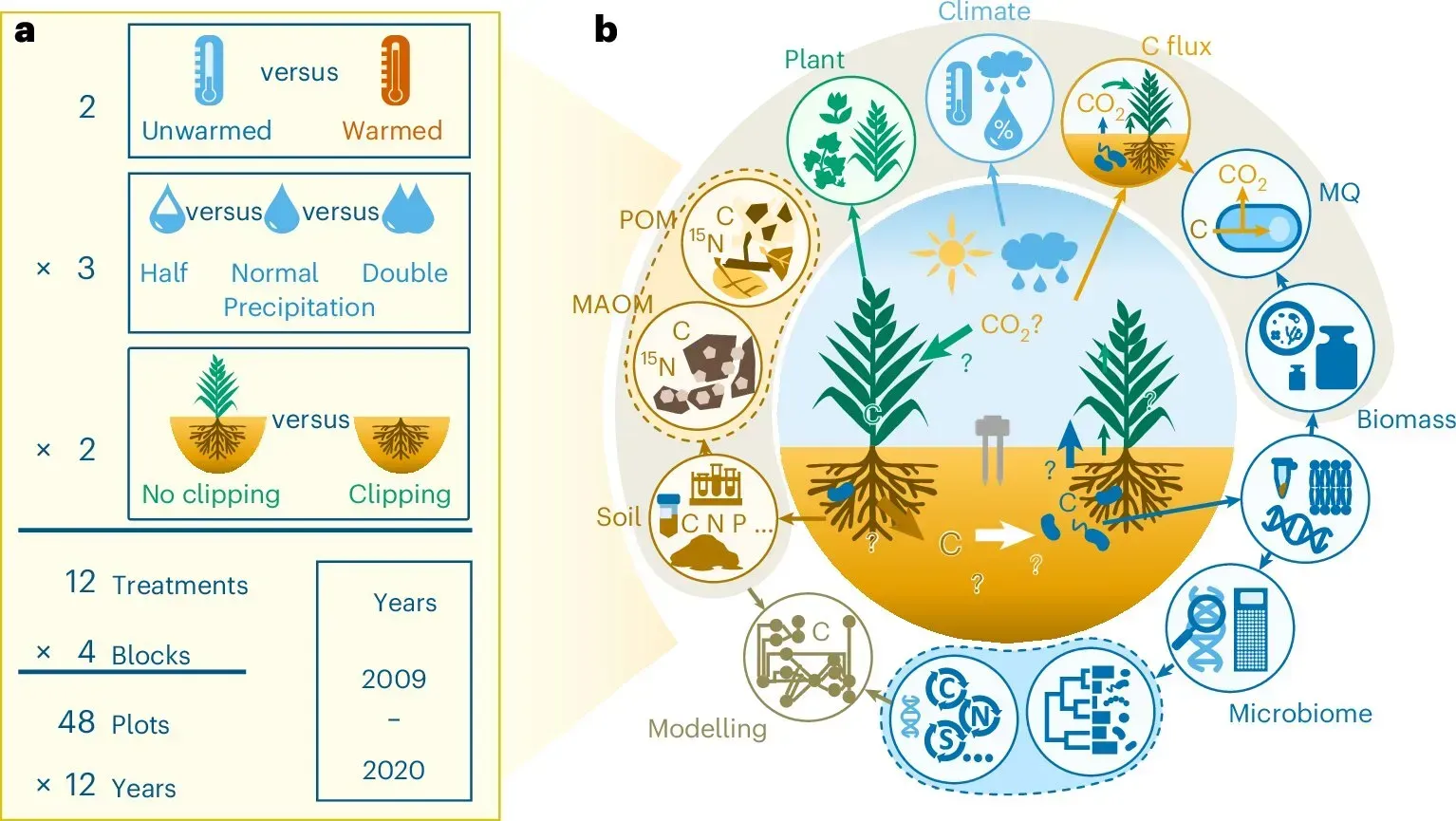
Recent research is making it increasingly clear that soil microbes respond to temperature changes in ways that could either help or seriously worsen global warming. When soils warm up, microbial communities tend to become more active. That increased activity means more organic matter being broken down, and more carbon dioxide being pumped into the atmosphere as a result.
It’s a bit like turning up the heat under a pot of water. The reaction accelerates. What worries scientists is that this creates a feedback loop: warming temperatures stimulate microbes, microbes release more carbon, which drives more warming. Some researchers describe this cycle as a “runaway” risk if we don’t understand and account for it properly.
Why Soil Carbon Matters More Than Most People Realize
Let’s put this in perspective. The world’s soils store roughly three times more carbon than the entire atmosphere. That’s not a typo. If even a fraction of that stored carbon were released due to microbial activity accelerated by warming, the consequences for global temperature targets would be enormous.
This is why soil science has suddenly become one of the hottest areas in climate research. For decades, carbon modeling focused heavily on what happens above ground, forests, fossil fuels, industrial emissions. Now researchers are recognizing that what’s happening below the surface might matter just as much, possibly more.
Not All Microbes Are the Same, and That Distinction Is Crucial
One of the more nuanced discoveries coming out of current research is that different microbial communities behave very differently under stress. Some communities are remarkably resilient, bouncing back after drought or heat events and continuing to function. Others are far more fragile, and when they collapse, so does the soil’s ability to store carbon effectively.
Think of it like an orchestra. If you lose the string section, the whole performance changes. Soil ecosystems depend on a diversity of microbial “players,” and disrupting that balance, through land overuse, chemical inputs, or temperature extremes, can fundamentally alter what that soil does with carbon. Scientists are increasingly trying to map which communities exist where, and how stable they actually are.
Human Activity Is Already Changing the Microbial Balance
Agriculture, deforestation, urban expansion. All of these activities physically disturb soil and shift the microbial communities living within it. Industrial farming in particular, with heavy tillage and chemical fertilizers, tends to reduce microbial diversity significantly over time. Less diversity often means less resilience, and less resilience means a soil that’s more vulnerable to releasing carbon rather than storing it.
There’s also the issue of drying soils in some regions and waterlogged soils in others, both linked to shifting precipitation patterns. Waterlogged soils, interestingly, are hotbeds for methane production because oxygen-depleted conditions favor a specific group of microbes called methanogens. It’s a layer of complexity that climate models have historically struggled to capture, but that scientists are now working hard to incorporate.
Can We Actually Use Microbes to Fight Climate Change?
This is where things get genuinely exciting. A growing number of researchers believe we could potentially manage soil microbial communities in ways that enhance carbon storage rather than undermine it. Practices like cover cropping, reduced tillage, and adding compost or biochar to soils have all shown promise in shifting the microbial balance toward carbon retention.
Some scientists are even exploring more direct interventions, like introducing specific microbial strains known to promote carbon sequestration. It’s early days, and I think we should be cautious about overpromising here. Microbial ecosystems are extraordinarily complex, and tinkering without full understanding carries real risks. Still, the potential is real, and the field is moving fast.
The Urgency of Getting This Right
Climate models that ignore or underestimate soil microbial dynamics are almost certainly getting the numbers wrong. That matters enormously when governments and international bodies are making policy decisions based on those models. If soil carbon release is more significant than current projections suggest, our existing emissions targets may not be nearly ambitious enough.
Scientists are calling for more comprehensive global monitoring of soil microbial activity, better funding for soil ecology research, and much closer collaboration between microbiologists and climate modelers. The goal is to build a clearer, more complete picture of what’s actually happening underfoot. Because if the tiny organisms living beneath us are quietly tipping the climate balance, we need to know about it, and we need to know now.
Conclusion: The Ground Beneath Us Is Trying to Tell Us Something
We spend so much time looking up at carbon dioxide in the sky or out at melting glaciers on the horizon. It makes sense, those are visible, dramatic, easy to photograph. Soil microbes are none of those things. They’re invisible, slow-moving by human standards, and deeply unglamorous. Yet they may hold more influence over Earth’s climate future than almost anything else we can point to.
Personally, I find something almost poetic about it. The fate of a warming planet, at least in part, resting on organisms too small to see. What this research ultimately demands is humility. Humility about how much we still don’t understand, and urgency about learning it before we run out of time. The soil is speaking. The real question is whether we’re paying enough attention to listen.
What do you think? Could managing soil health become one of the most powerful tools we have against climate change? Share your thoughts in the comments below.