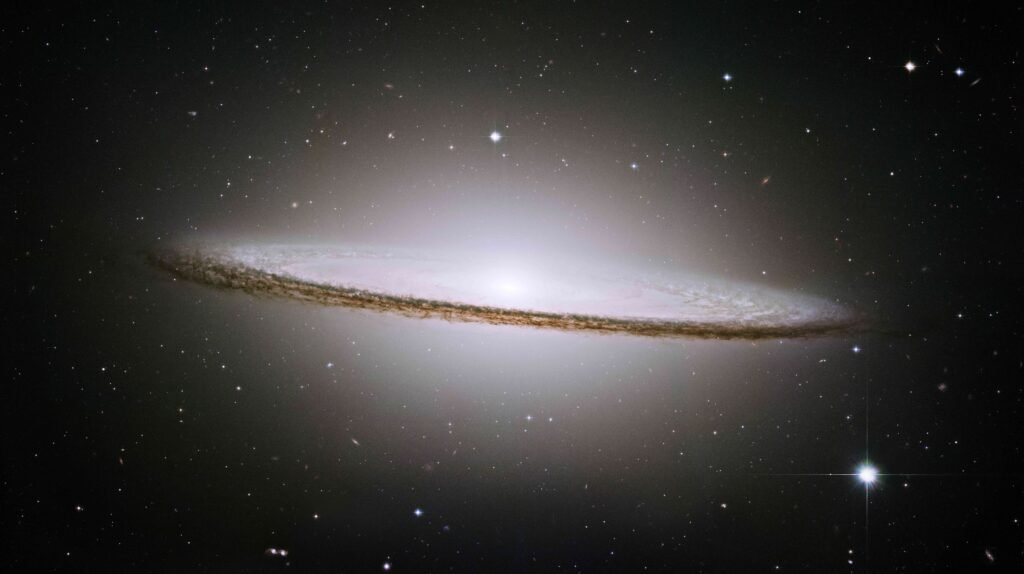
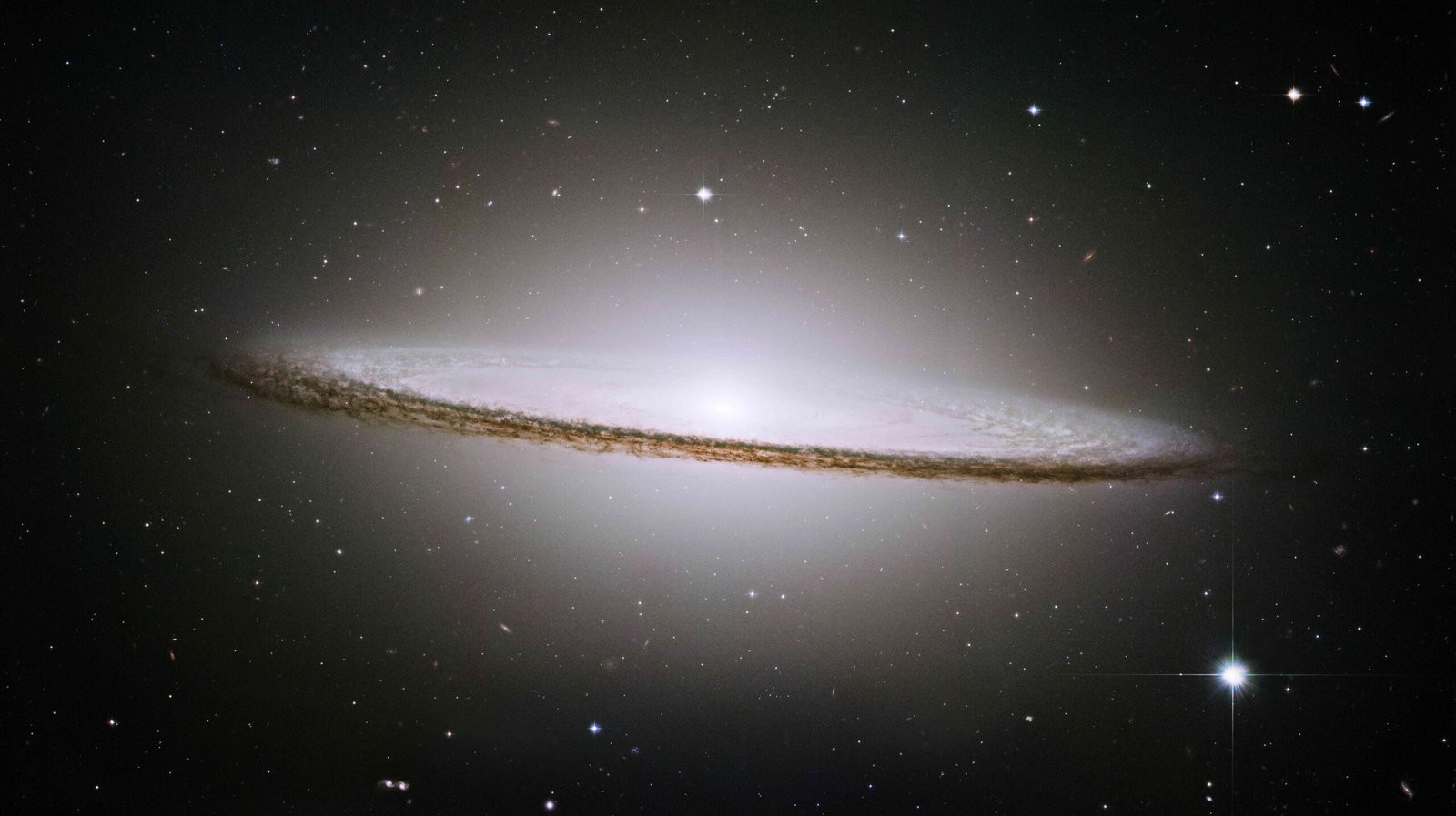
Overwhelmed by Data: Telescopes Demand AI Intervention (Image Credits: Upload.wikimedia.org)
Astronomers face an unprecedented flood of data from cutting-edge telescopes scanning the night sky. Powerful instruments like the Vera C. Rubin Observatory in Chile promise to generate petabytes of information nightly, far beyond what human teams can process alone.[1][2] Artificial intelligence steps in as a vital partner, sifting through vast datasets to reveal patterns and anomalies that reshape our cosmic understanding. This collaboration marks a pivotal shift, accelerating discoveries that once took years.
Overwhelmed by Data: Telescopes Demand AI Intervention
The Vera C. Rubin Observatory stands poised to map the entire visible sky every few nights, producing around 60 petabytes of raw data over a decade.[1] Traditional analysis methods fall short against such volumes. AI algorithms now classify galaxies, detect exoplanets, and identify exploding stars in real time, often before researchers review the files.[3]
Projects like the Square Kilometre Array and the Event Horizon Telescope also generate overwhelming streams of information. AI handles deblending crowded images, distinguishing real events from artifacts with remarkable speed.[2] Researchers at institutions such as AstroAI develop specialized neural networks tailored for astrophysics, turning raw observations into actionable science.
Pinpointing Cosmic Wonders: AI’s Detection Prowess
AI excels at uncovering hidden gems in telescope data, such as rare supernovae. In one case, machine learning identified a new type of stellar explosion by processing feeds from advanced observatories.[4] These systems learn from minimal examples – just 15 images sufficed for Google’s Gemini model to spot genuine cosmic transients amid noise.[5]
Exoplanet hunts benefit immensely too. Algorithms analyze light curves from missions like Kepler and TESS, flagging potential worlds with greater precision than manual scans. Tools like DeepDISC segment images to isolate stars and galaxies, estimating distances via redshift in crowded fields.[6] This efficiency uncovers thousands more candidates annually.
- Exoplanet detection through transit signal analysis
- Supernova classification in real-time alerts
- Galaxy morphology sorting for large surveys
- Gravitational lens identification in deep fields
- Variable star monitoring across sky patches
Reviving Archives and Sharpening Visions
AI breathes new life into old data troves. A recent effort scoured the Hubble Space Telescope archive, revealing hundreds of previously unknown cosmic anomalies using advanced pattern recognition.[7] Such techniques recover overlooked phenomena without new observations.
Iconic images gain clarity through AI refinement. The Event Horizon Telescope team enhanced the 2019 black hole portrait of M87*, depicting it larger and darker by filling data gaps with trained models.[8] In gravitational wave detection, Deep Loop Shaping cut noise in LIGO’s feedback systems by factors of 30 to 100, boosting sensitivity to universe-shaking events.[9]
Charting Tomorrow’s Skies: AI’s Expanding Role
Beyond observation, AI drives theoretical advances. It simulates star formation and galaxy evolution, accelerating computations that once demanded supercomputers for days.[10] NASA’s Science Discovery Engine employs AI to link disparate datasets, fostering unexpected connections in astrobiology and beyond.[11]
Future applications span SETI signal processing – now 600 times faster – and autonomous rovers on other worlds. Conferences like Cosmic Horizons highlight trustworthy AI methods, ensuring robust results.[12][13] Astronomers emphasize that AI augments human ingenuity, not replaces it.
| Challenge | Human Approach | AI Advantage |
|---|---|---|
| Data Volume | Manual review | Processes petabytes in hours |
| Rare Events | Targeted searches | Detects with few examples |
| Image Noise | Filtering algorithms | Reduces by 100x |
Key Takeaways
- AI manages data overload from next-gen telescopes, enabling nightly sky maps.
- Machine learning spots exoplanets, supernovae, and anomalies faster and more accurately.
- Human-AI teams promise deeper theoretical models and real-time cosmic alerts.
The fusion of AI and astronomy heralds discoveries that illuminate the universe’s grandest mysteries. As tools evolve, expect revelations from distant galaxies to our solar backyard. What cosmic secret do you hope AI uncovers next? Share your thoughts in the comments.