
Somewhere out there, if certain physicists are right, a version of you just made a completely different decision. You chose a different job, a different city, maybe even a different life. The universe you live in might be just one tiny chapter in a much larger cosmic story, one filled with infinite realities branching off in directions you will never be able to see or touch.
It sounds like science fiction. Honestly, it felt like pure fantasy not long ago. Yet today, in 2026, some of the most brilliant minds in theoretical physics take this idea seriously enough to devote entire careers to it. The question of whether parallel universes exist has migrated from the pages of comic books into the laboratories and equations of real science. Let’s dive in.
The Ancient Dream That Became a Scientific Hypothesis

Humanity has always ached to know whether other realities lurk just beyond our reach. Long before quantum mechanics existed, ancient myths spoke of layered heavens, shadow realms, and parallel worlds hidden just beyond reach, and philosophers debated whether infinite variations of existence might coexist, each with its own truths. It is a deeply human impulse. We are wired to wonder about the road not taken.
What is genuinely surprising is how seriously modern science now treats this ancient intuition. The idea of parallel universes, or the multiverse, has long been a staple of science fiction, but in 2026, it’s also a serious area of inquiry for theoretical physicists, fueled by groundbreaking concepts in quantum mechanics and cosmology. The dream did not die. It just found better math to back it up.
Quantum Mechanics and the Many-Worlds Interpretation
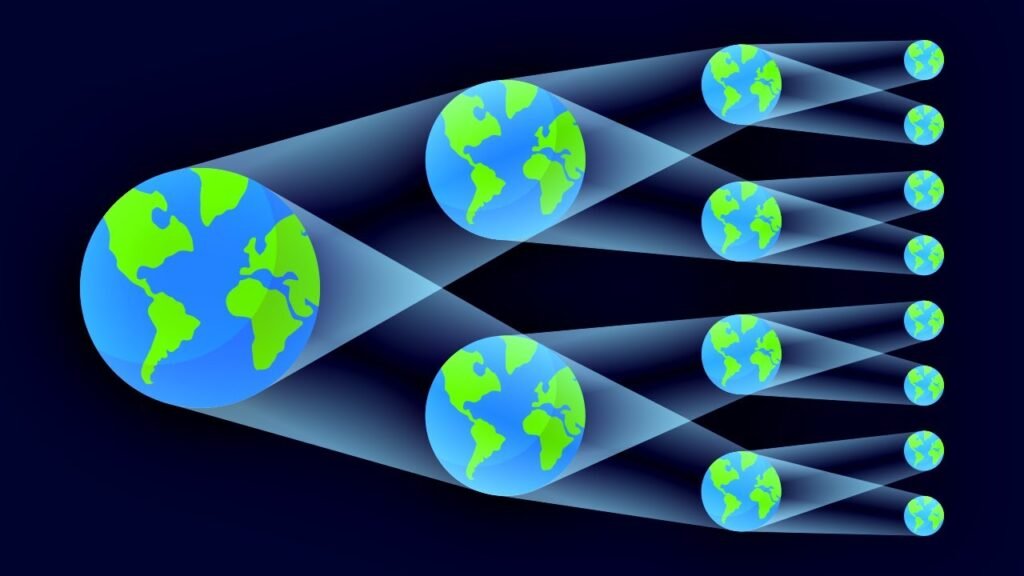
Here’s the thing: the scientific case for parallel universes did not begin with grand cosmic telescope observations. It started at the smallest imaginable scale, in the bizarre world of quantum mechanics. One of the most prominent theories is the Many-Worlds Interpretation (MWI) of quantum mechanics, proposed by Hugh Everett in 1957, which suggests that every quantum event branches into separate realities, creating an infinite number of parallel universes where different outcomes occur.
Think of it this way: imagine flipping a coin. In the everyday world you know, it lands heads or tails. In the Many-Worlds picture, the universe itself splits into two, with one version of you seeing each outcome. The fundamental idea of the MWI is that there are myriads of worlds in the universe in addition to the world we are aware of, and in particular, every time a quantum experiment with different possible outcomes is performed, all outcomes are obtained, each in a different newly created world. I know it sounds crazy, but the equations actually support it.
Could There Really Be Another ‘You’ Out There?

This is the question that keeps both physicists and ordinary people awake at night. Under the Many-Worlds framework, the answer is a startling yes, at least in principle. As physicist Bryce DeWitt described, every quantum transition in every corner of the universe is splitting our local world into myriads of copies, and after a measurement takes place, there are two or more versions of the observer where before there was one. Making a decision causes a person to split into multiple copies, and both copies experience a unique, smoothly changing reality that they are convinced is the real world.
Yet here is where it gets philosophically thorny. Your “other self” in a parallel branch would have no memory of this one. They would feel just as real, just as singular, and just as convinced that their world is the only one. The MWI’s main conclusion is that the universe is composed of a quantum superposition of an uncountable number of increasingly divergent, non-communicating parallel universes or quantum worlds, and sometimes dubbed Everett worlds, each is an internally consistent and actualized alternative history or timeline. They are not echoes. They are full realities.
The Inflationary Multiverse: Bubble Universes Beyond Our Horizon
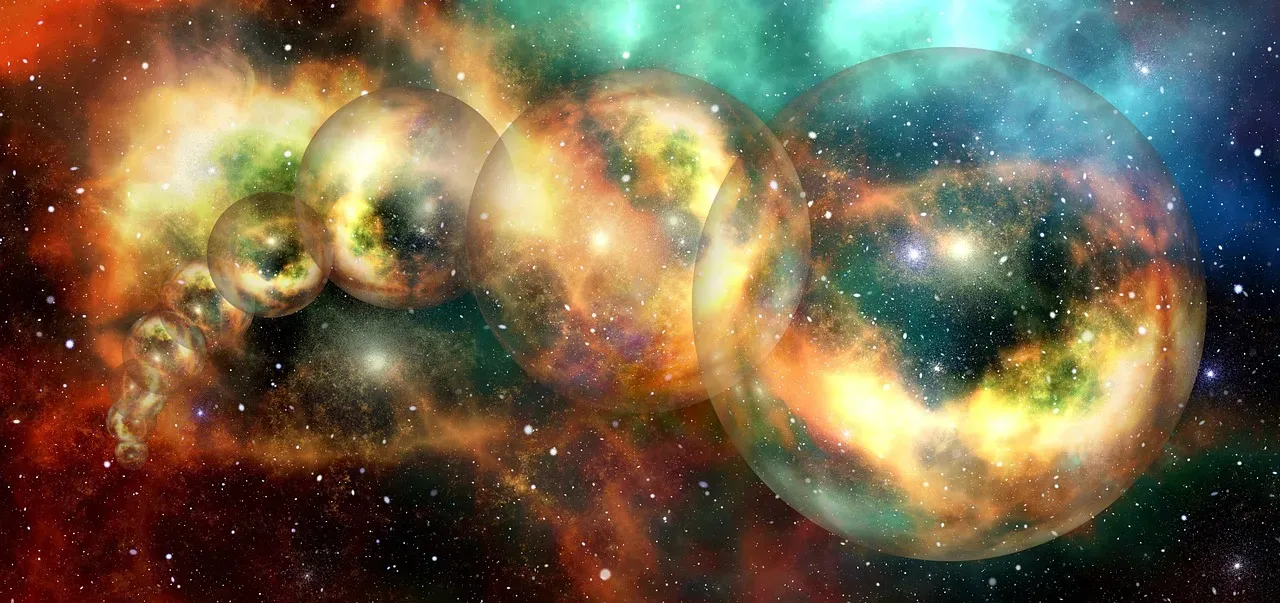
The quantum argument is only one road into the multiverse. Cosmology offers a completely different route, and it is just as mind-bending. The idea of cosmic inflation, first proposed by Alan Guth in the 1980s, describes a rapid expansion of the universe following the Big Bang, and some models of inflation suggest that this expansion could lead to the formation of multiple separate regions, so-called bubble universes, that are entirely detached from one another, each with different physical constants and structures.
Eternal inflation produces a hypothetically infinite multiverse, in which only an insignificant fractal volume ends inflation. Picture a cosmic ocean that never stops churning, endlessly producing bubble after bubble, each one a universe in its own right. Each bubble universe may undergo its own Big Bang and subsequent evolution, possibly leading to the formation of galaxies, stars, and planets. You might be living inside one of those bubbles right now, completely unable to see the others.
String Theory and the Brane Multiverse
If cosmic inflation gives you one flavor of the multiverse, string theory serves up an entirely different dish. The concept of a multiverse is not new, but string theory provides a possible framework for its existence, suggesting that our universe is just one “brane” or “membrane” in a higher-dimensional space known as the “bulk,” with other branes potentially existing in the bulk, each with its universe, meaning an infinite number of parallel universes each with different physical laws and constants.
The really wild part of this theory is what it implies about proximity. These branes might collide or interact, producing phenomena such as new Big Bangs, and in this scenario, parallel universes may not be infinitely distant but only a small dimension away, hidden from us because we are trapped on our own brane. So another universe might not be billions of light-years away. It could be right next to you, separated only by a dimension your senses cannot detect. That analogy alone should give you chills.
The Fine-Tuning Problem: Why the Multiverse Actually Makes Sense
One of the most compelling reasons physicists take the multiverse seriously is not its poetry but its explanatory power. Our universe looks suspicious. It is almost too perfectly calibrated for life to exist. One of the strongest motivations for the multiverse lies in the question of fine-tuning, because our universe’s laws seem exquisitely adjusted to allow for the existence of stars, chemistry, and life. If the cosmological constant were slightly larger, the universe would expand too quickly for galaxies to form, and if the strong nuclear force were slightly weaker, atoms heavier than hydrogen could not exist.
The multiverse offers an elegant way out of this puzzle. Because eternal inflation predicts an infinite number of bubble universes, it also provides a framework for understanding why our universe appears so finely tuned. If countless universes exist, each with its own physical properties, then it is not surprising that at least one has the right conditions for life, and the constants of nature are not uniquely fine-tuned but rather a consequence of cosmic variation across an ever-expanding multiversal landscape. Think of it as a cosmic lottery. With enough tickets sold, someone wins.
The Hard Problem: Can We Ever Actually Test This?
Here is where even enthusiastic multiverse supporters have to take a breath. Despite the intriguing possibilities suggested by multiple theories, concrete evidence supporting the existence of parallel universes remains elusive, and much of the discussion surrounding the multiverse stems from theoretical models rather than direct observation, as testing these ideas presents significant challenges. This is the uncomfortable truth lurking beneath all the excitement.
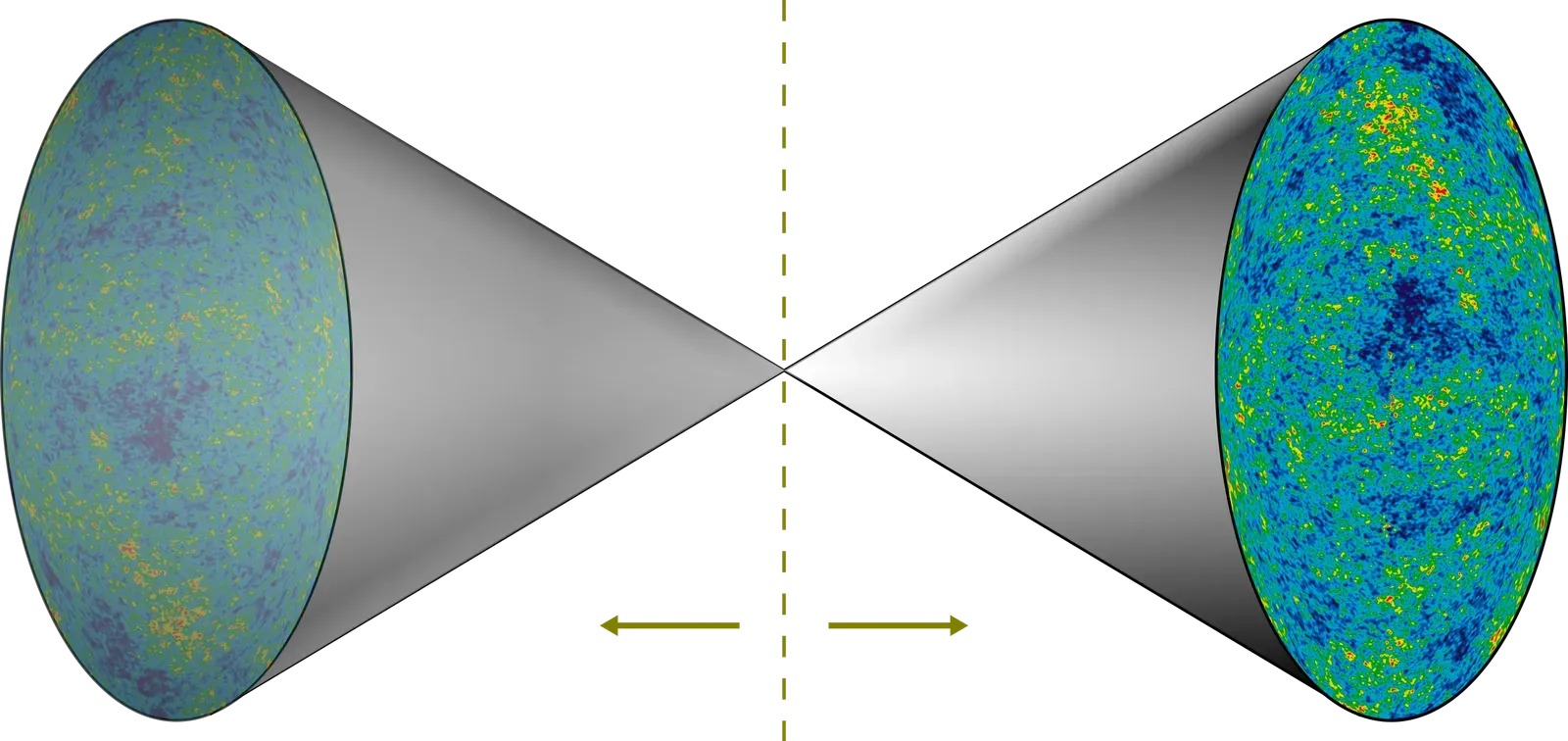
Still, not every door is locked. Some researchers are working on ways to detect signs of bubble universe collisions in the cosmic microwave background. The real significance of this work is as a proof of principle: it shows that the multiverse can be testable. In other words, if we are living in a bubble universe, we might actually be able to tell, and researchers are now able to say that some models predict something we should be able to see, and since we don’t see it, we can rule those models out. Progress is slow. But it is real.
Conclusion: The Question That Changes Everything
The paradox of parallel universes is not just a physics puzzle. It is a deeply human one. Confirmation of a multiverse would profoundly impact philosophy, cosmology, physics, and our understanding of consciousness. It would challenge traditional notions of reality and identity, prompting philosophical inquiries into free will and causality, and in cosmology, it could explain cosmic mysteries and reshape our understanding of the universe’s origin and fate.
There is something both humbling and strangely freeing about the possibility that you are not the only version of yourself navigating existence. Regret is often rooted in the belief that you made the wrong choice and are now stuck with the consequences. Many-Worlds reframes that, because if every path you could have taken still exists in some branch of the multiverse, then regret becomes less about loss and more about conscious selection. You did not eliminate the other path. You just tuned into one. Whether that is science or philosophy, honestly, it feels worth thinking about.
We are standing at the edge of one of the greatest questions ever asked in human history. The math is extraordinary. The theories are daring. The evidence is still building. So here is the thought to sit with: if another version of you is out there somewhere, making all the choices you did not, living the life you did not choose, what does that say about the life you are living right now? What would you do differently, knowing that every choice matters, in this universe and possibly all the others?