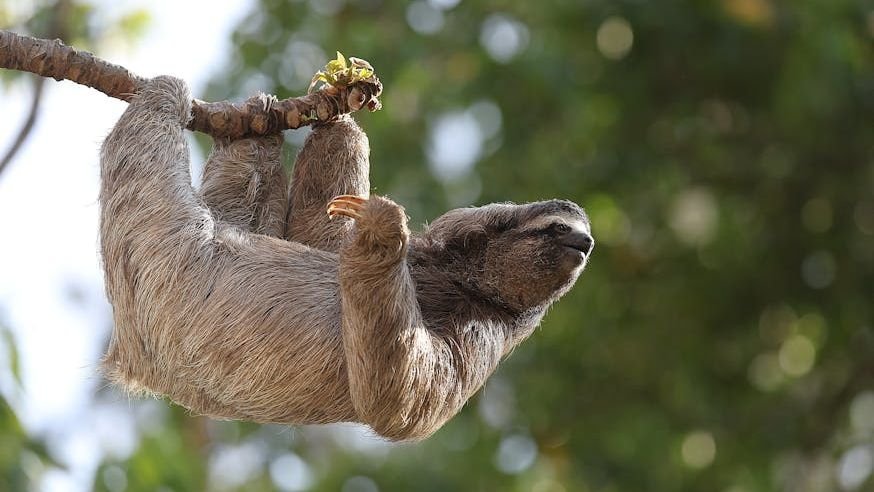
You’ve probably seen them dangling from a branch, their eyes half-closed, moving so slowly that the world seems to blur right past them. Sloths look like the universe’s most relaxed creatures, and honestly, that image is not entirely wrong. Still, there is so much more going on beneath that unhurried exterior than most people ever take the time to discover.
These animals have been quietly mastering survival in the tropical rainforests of Central and South America for millions of years, and the secrets hidden in their biology, behavior, and even their fur are nothing short of extraordinary. Prepare to see sloths in a completely different light. Let’s dive in.
Ancient Origins: Descendants of Giants
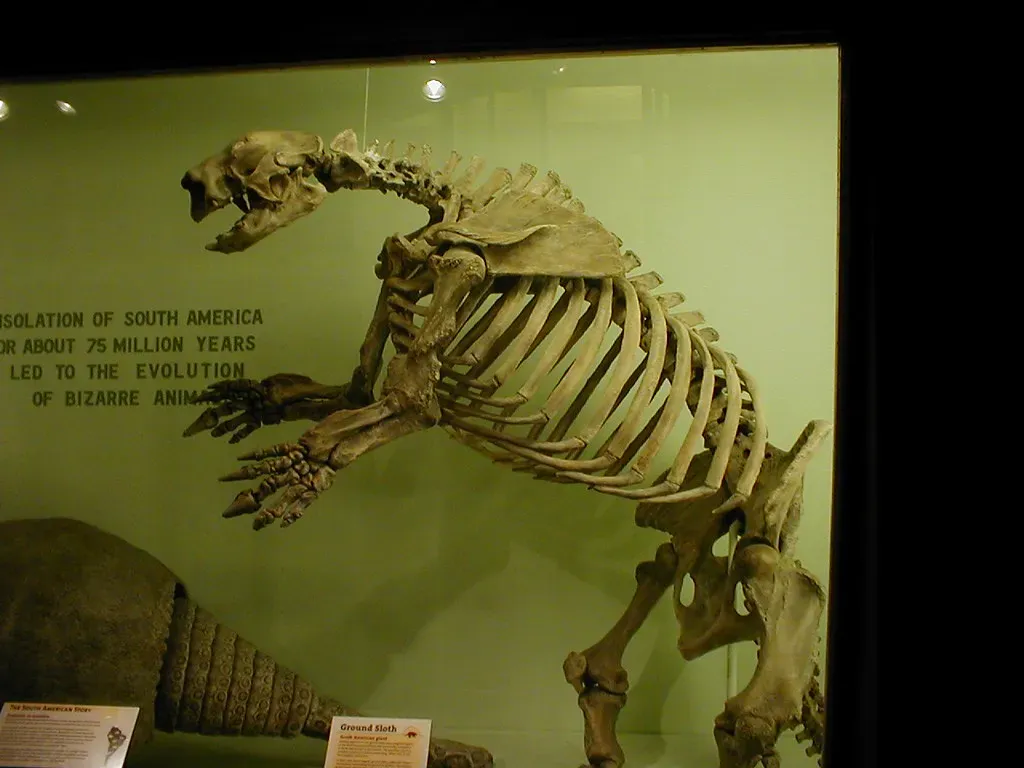
Here’s something that might completely reframe your image of the sloth. The gentle, pocket-sized creatures you picture hanging lazily from a branch are the modern descendants of prehistoric giants. Millions of years ago, giant ground sloths the size of elephants roamed the planet, some nearly 20 feet long from snout to tail, with massive claws for pulling tree branches down to eat. I know it sounds crazy, but these creatures once shared the earth with mammoths.
All seven species of tree-climbing sloths that exist today evolved from giant sloths, and there were thought to be over 80 different types, with the largest reaching over 19 feet in height. Sloths belong to the xenarthran mammals and have been a species relatively unchanged for over 26 million years. That kind of evolutionary endurance is worth a pause and a moment of genuine respect.
Two Types, Six Species: Understanding the Sloth Family Tree
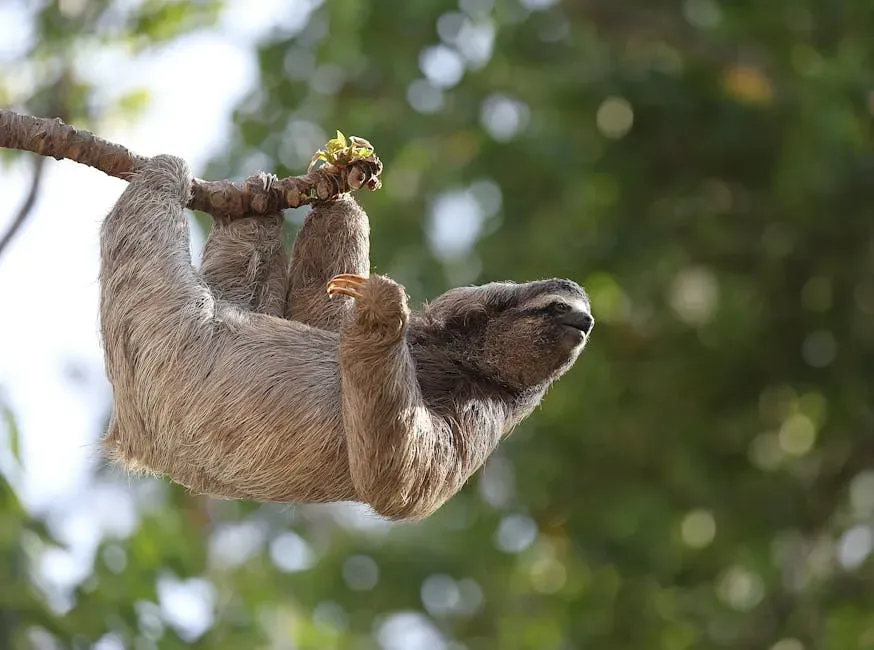
Altogether, there are six sloth species found in the Americas, mainly in the tropical rainforests of Central and South America. You might assume they all look and behave the same, but that is far from the truth. Sloths are categorized into two groups based on the number of claws on their forelimbs, two-toed and three-toed, and despite their similar appearance, these groups belong to different taxonomic families and have distinct behavioral and physiological traits.
Aside from the number of claws, the two types can also be distinguished via their faces. Two-toed sloths have bigger eyes and a lighter, more tousled coat, while three-toed sloths have the famous dark facial markings that make it look like they’re always smiling. Two-toed sloths are nocturnal, which enables them to avoid daytime predators, while three-toed sloths, though capable of both, are primarily inactive during the day. Think of them as cousins who share a family name but live very different daily lives.
The Slowest Metabolism on the Planet
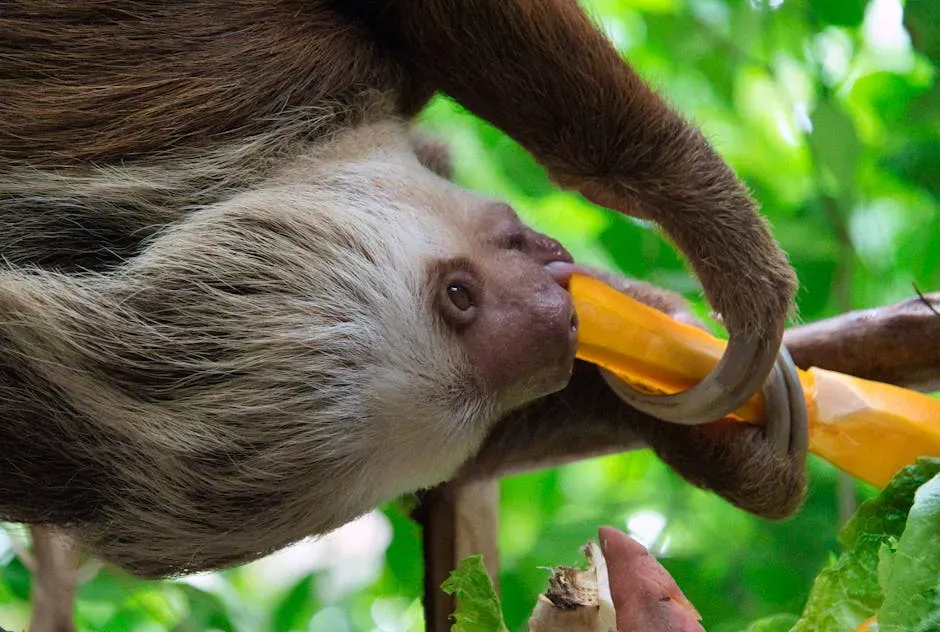
Sloths have the slowest metabolism among mammals, allowing them to conserve energy and survive on a low-nutrient diet, and their digestive process can take up to a month to fully process food. To put that in perspective, imagine eating a salad today and still digesting it on next month’s calendar. That is the sloth’s reality, every single day.
Sloths have an extremely slow metabolic rate, up to 40 to 50 percent slower than other mammals of similar size. Their heart rate is also very slow, often beating just 30 to 40 times per minute, matching their slow lifestyle. Because of their low-calorie diet of leaves, sloths are always low on energy, so they need to be conservative in how they use it, moving slowly, staying within a small home range, and only relieving themselves once a week. Every single action is a careful energy transaction.
That Fur Is an Entire Ecosystem
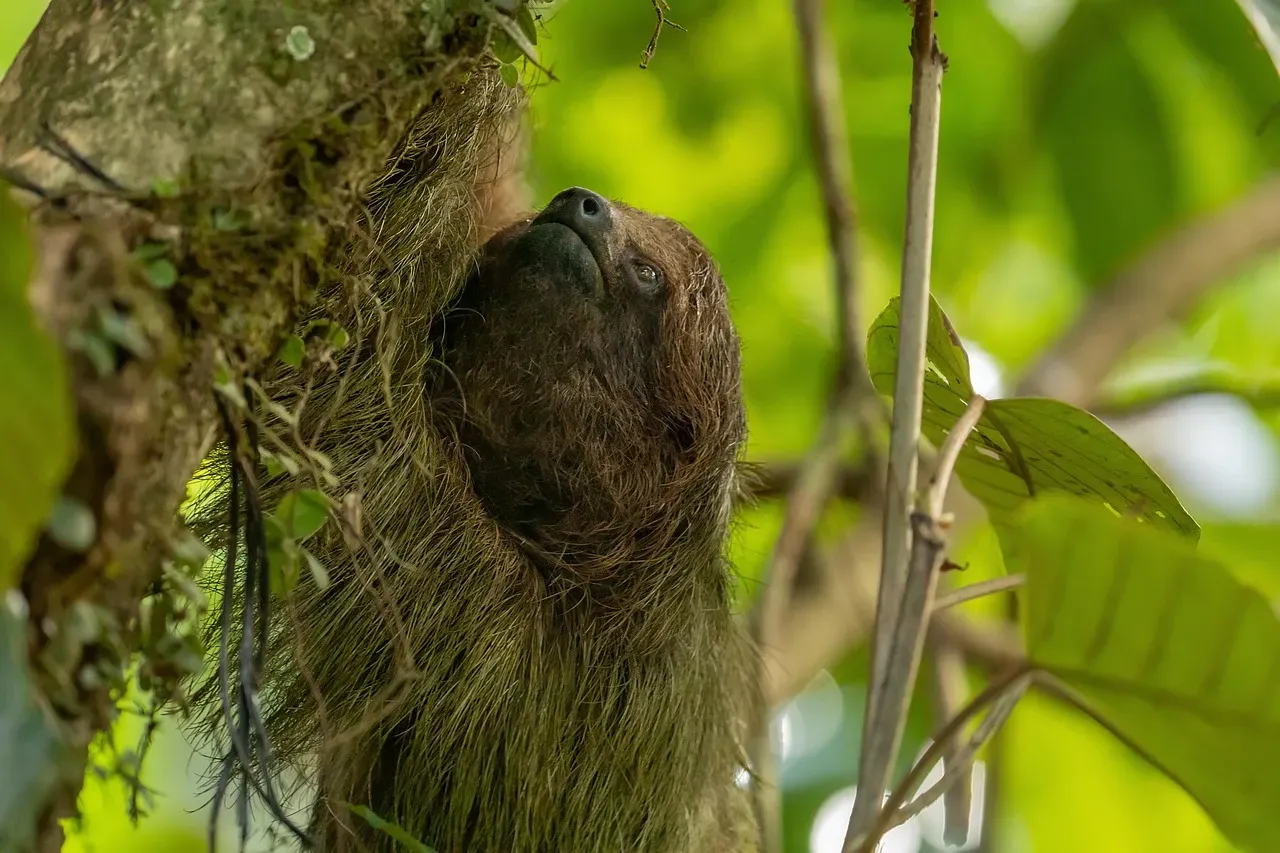
You might think of fur as just a coat, something that keeps an animal warm. For sloths, it is something far wilder and more wonderful than that. Each strand of a sloth’s coarse fur has grooves that run from top to bottom where two types of blue-green algae grow, and the green tint of the algae helps sloths blend in to their leafy surroundings, but it also invites ticks, mites, beetles, moths and other insects to the party, creating such a unique little ecosystem that some species, like the sloth moth, live exclusively on sloth fur.
Just one sloth can have up to 950 moths and beetles living in its fur. Honestly, that number is staggering. Sloth fur has a unique ecosystem of algae, fungi, and insects, giving it a greenish tint that acts as camouflage, and some fungi found in sloth fur have antimicrobial and medicinal properties, potentially useful in treating diseases. The sloth is not just an animal. It is a living, breathing habitat.
Hanging Upside Down: A Structural Masterpiece
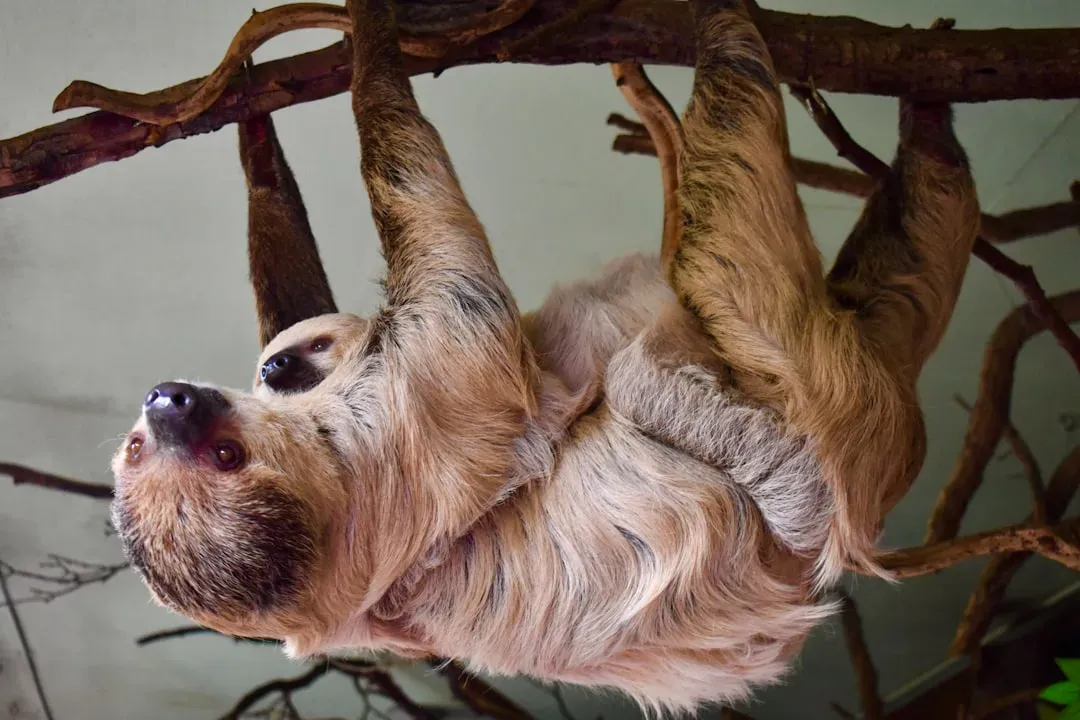
Think about how exhausting it would be to hang from a bar for even five minutes. Your arms ache, your grip weakens, your body screams for you to let go. Sloths do this their entire lives and feel nothing of the sort. They have a highly specialized muscle arrangement that can produce enough strength to withstand the force of a jaguar trying to rip them from the tree, and specialized tendons in the sloth’s hands and feet lock into place, allowing them to hang upside down for long periods of time without wasting any energy. This unique locking mechanism is also how sloths are able to sleep while hanging from a tree branch.
Sloths spend almost all of their time hanging upside down, eating, sleeping, and even giving birth while suspended from branches, and their bodies are perfectly adapted for this unusual lifestyle. Hanging upside down also means their heart sits below their limbs, so sloths have naturally high blood pressure to pump blood up into their arms and legs and prevent them from fainting. It is the kind of biological engineering that would impress any architect.
Nearly Blind but Surprisingly Resourceful
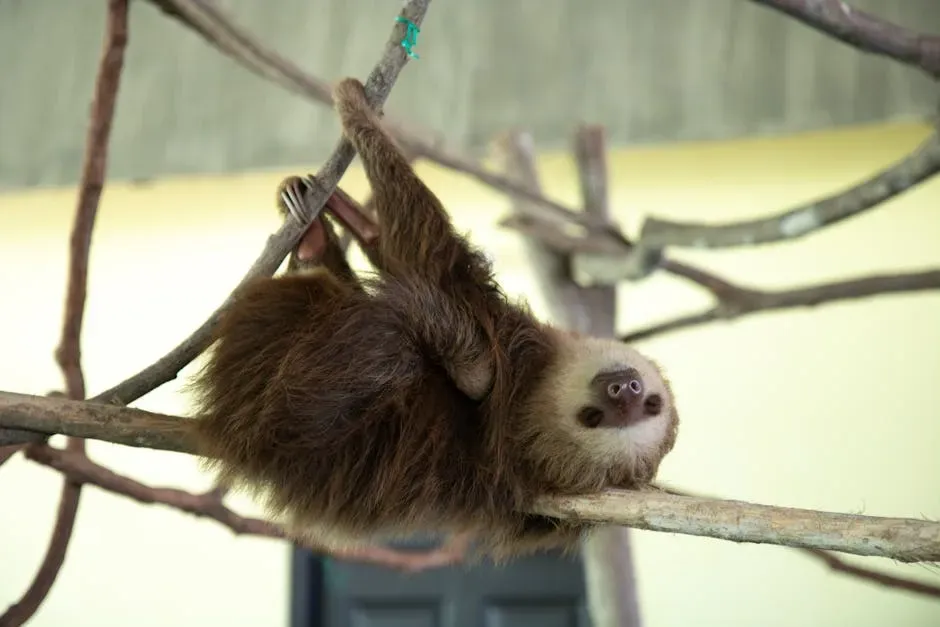
Here is one of the more poignant facts about sloths. They have a very rare condition called rod monochromacy, which means they completely lack cone cells in their eyes. As a result, sloth eyes are color-blind, and they can only see poorly in dim light and are completely blind in bright daylight. Living in the vibrant green canopy of a rainforest while essentially blind is a challenge most animals would not survive.
Thankfully, sloths compensate for such poor vision by having a phenomenal sense of smell and a great spatial memory, and their bad eyesight also plays a key role in the sloth’s slowness, since you can’t run around in the trees if you can’t see where you are going. Sloths fall from trees around once a week, but luckily, they can fall up to 100 feet without getting injured. Nature, it seems, gave them a built-in safety net too.
Surprisingly Strong Swimmers
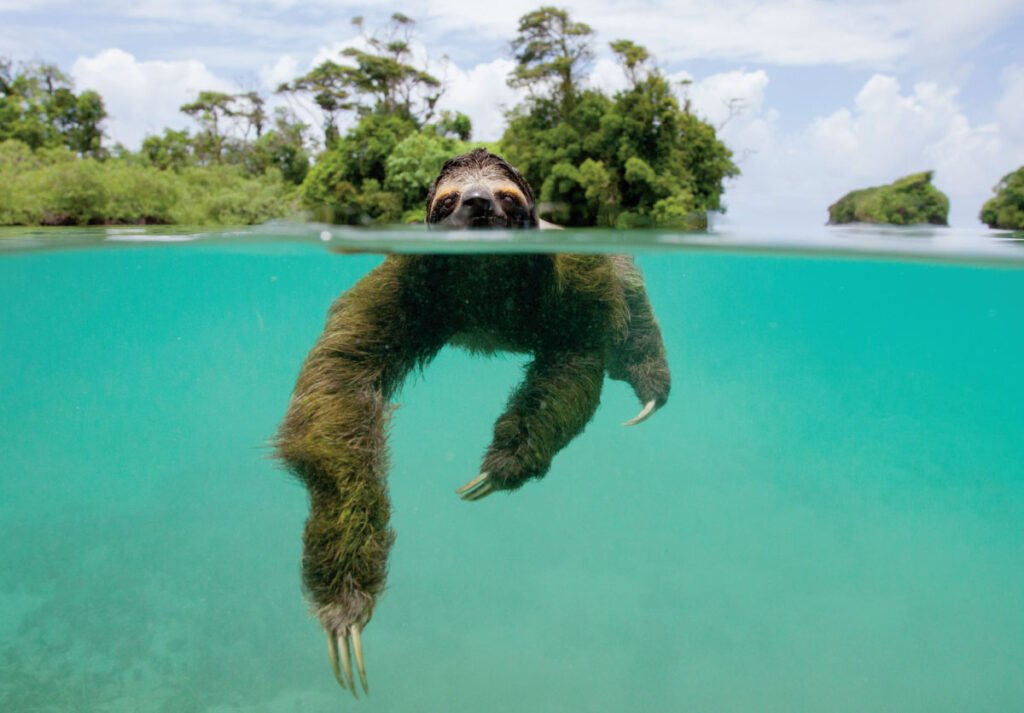
Most people assume a slow, upside-down tree-dweller would be a disaster in water. Sloths, once again, defy every expectation you have for them. Although they spend most of their time in the trees, sloths are surprisingly good swimmers, and they can swim through water three times faster than they can move on the ground. That feels almost unfair, given how they move on land.
Sloth species living near mangroves or rivers sometimes drop into water bodies and swim large distances in a short amount of time when searching for potential mating partners or seeking new territory. Three-fingered sloths have two more neck vertebrae than any other mammal, which allows them to turn their heads through 270 degrees and effortlessly keep their nose above water when swimming. They are, put simply, more capable than they appear on all fronts.
The Weekly Bathroom Mystery
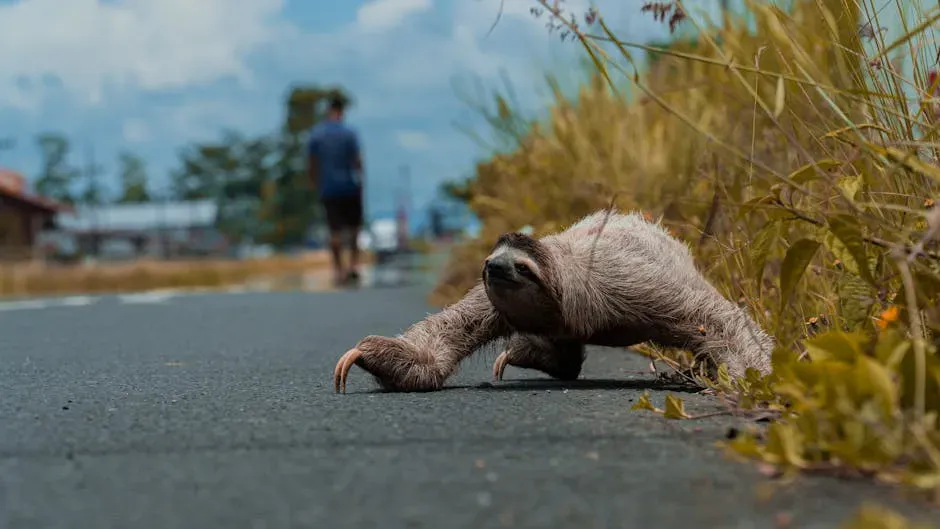
Let’s be real. When you first hear this, it sounds almost too strange to be true. Sloths are famous for their characteristic bathroom habits. They will only relieve themselves once a week and can lose up to a third of their body weight in one sitting, and they will only do it on the ground after wiggling around the base of a tree to dig a little hole. This weird weekly routine remains one of the biggest mysteries surrounding sloth behavior.
In the wild, sloths make a slow, arduous journey from the tree canopy to the bottom of the same tree in order to defecate or urinate on the forest floor, and life can be difficult on the ground for them since their long clawed arms and shorter, weak hind legs make it impossible to stand on all fours. Scientists still do not fully agree on why they bother making this risky trip down to the forest floor rather than simply going from the treetops. It’s hard to say for sure, but it is one of nature’s more entertaining unsolved puzzles.
Sloths, Conservation, and Their Place in the Future
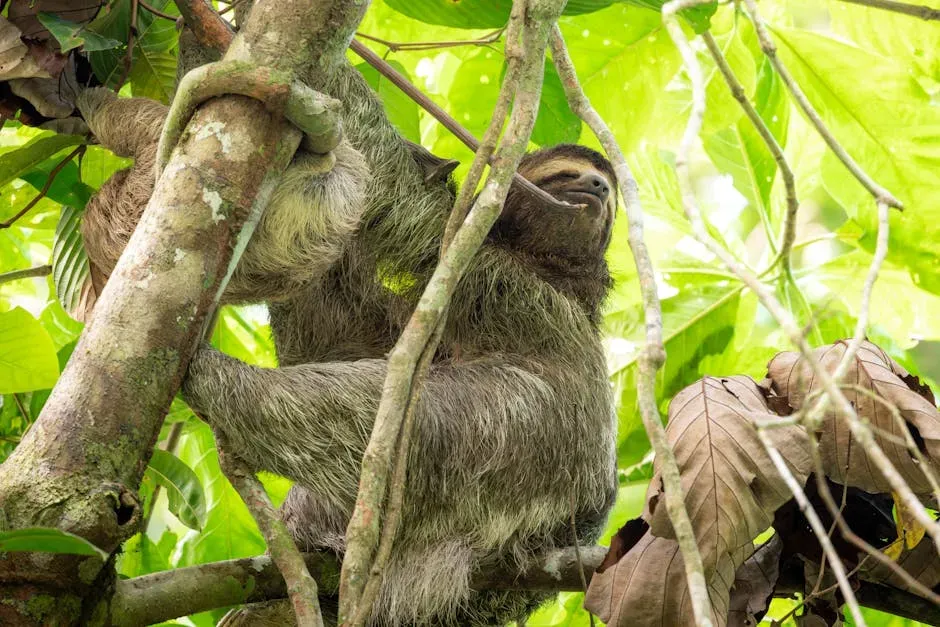
At present, four sloth species are listed as least concern on the IUCN Red List of threatened species. The maned three-toed sloth is vulnerable, while the pygmy three-toed sloth is critically endangered and the sloth species at greatest risk of extinction. Habitat loss is quietly dismantling the world these animals have called home for millions of years.
Some sloths may see relief from trafficking thanks to a proposal discussed at the CITES convention, with Brazil, Costa Rica, and Panama having proposed listing two species, Hoffmann’s two-toed sloth and Linnaeus’ two-toed sloth, under CITES Appendix II, which would restrict international trade in these species and their parts. Sloths play an integral part in the survival of some of their rainforest neighbors. Their fur is home to a whole ecosystem of tiny insects, and the algae growing in their fur sustains a range of species like moths, beetles, cockroaches, and worms, with hundreds of individuals found living on one sloth. Protecting sloths, in a very real sense, means protecting entire micro-worlds that depend on them.
Conclusion
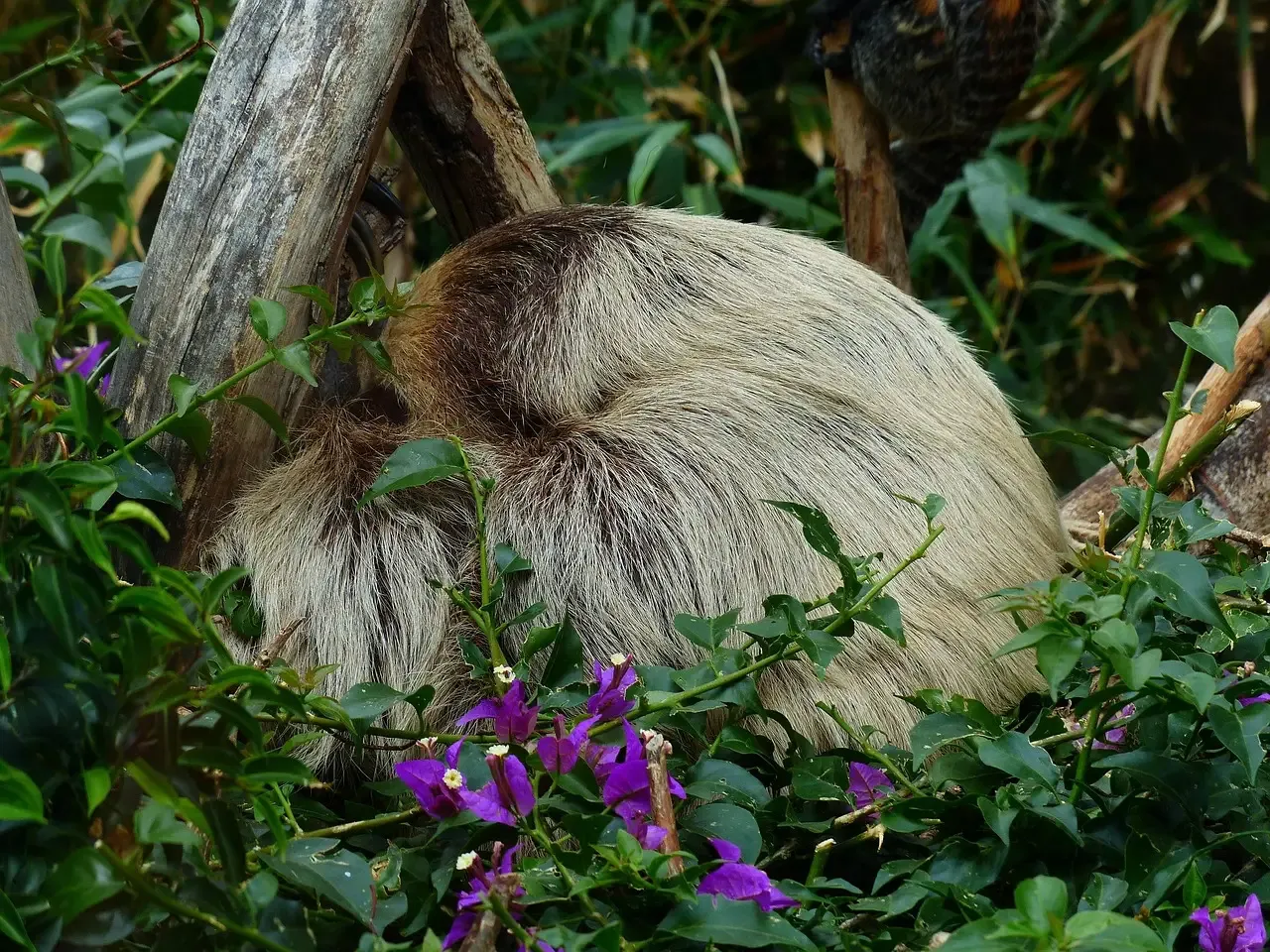
Sloths are one of those rare animals that genuinely reward curiosity. The more you look, the more you find: ancient lineages, engineered anatomies, invisible ecosystems, and behavioral mysteries that science has yet to crack wide open. They move slowly, yes, but they have outlasted, outsurvived, and out-adapted countless species across millions of years.
There is a lesson buried somewhere in all of that unhurried brilliance. Maybe doing less, more intentionally, is its own kind of genius. So, the next time you spot a sloth in a nature documentary, barely blinking from its branch, perhaps resist the urge to call it lazy. It knows exactly what it is doing. What part of the sloth’s story surprised you most? Tell us in the comments below.