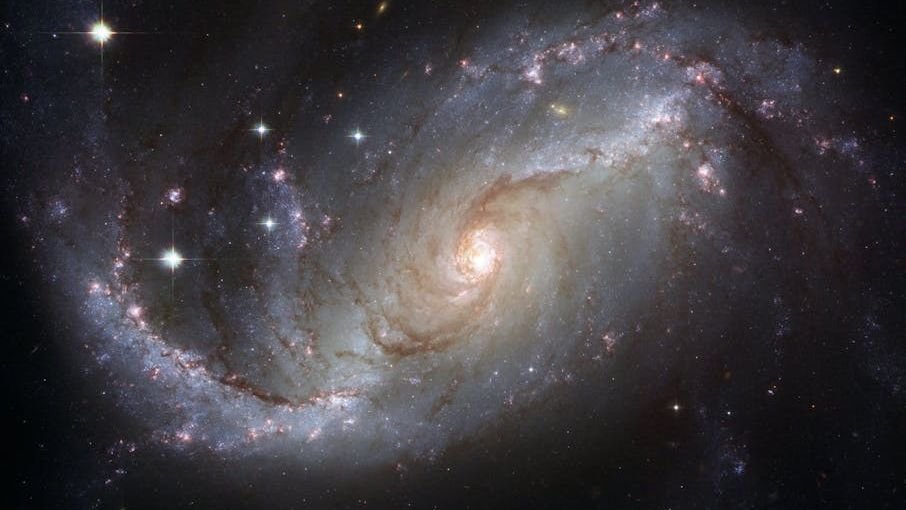

Space is enormous. Incomprehensibly, humbling enormous. You might think that after centuries of stargazing, followed by decades of space telescopes, powerful radio arrays, and gravitational wave detectors, scientists would have figured most of it out by now. Spoiler: they really haven’t.
In fact, the more powerful our instruments become, the stranger the universe looks. Some phenomena seem to flat-out defy the laws of physics as we understand them. Others whisper hints of answers before vanishing into silence. A few, honestly, make even the most level-headed astronomers scratch their heads and quietly wonder if their models are missing something fundamental.
So buckle up. Here are twelve of the most baffling celestial phenomena that continue to stump the smartest minds in the world – and a few of them might genuinely keep you up at night.
1. Fast Radio Bursts: The Universe’s Most Mysterious Flickers
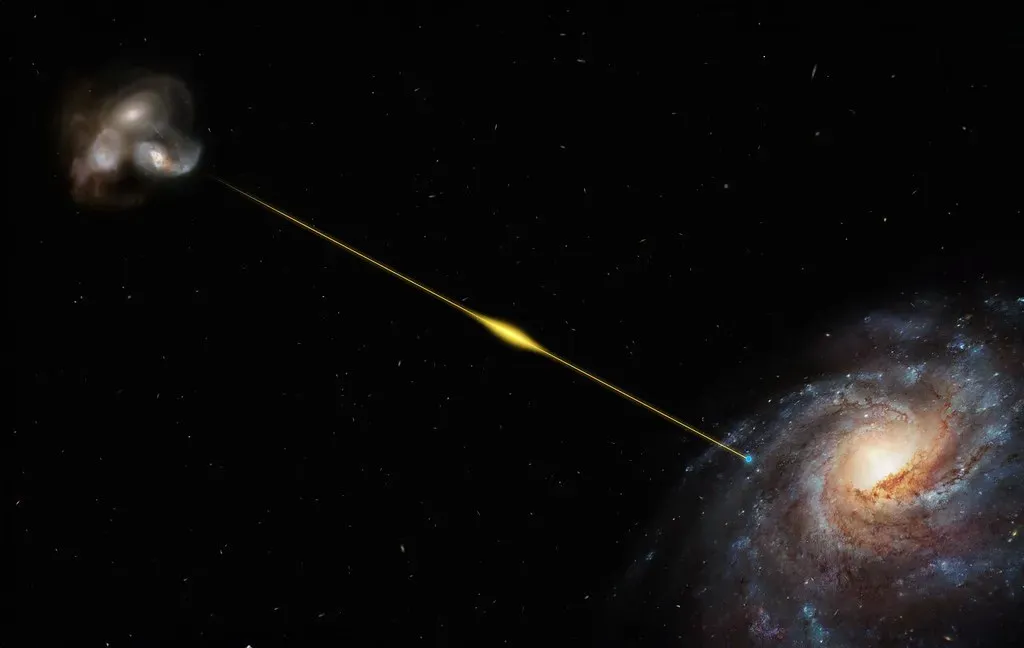
Imagine a flash of energy so brief it lasts only a fraction of a second, yet releases roughly as much power as your Sun produces in several days. That is exactly what a Fast Radio Burst, or FRB, is. In radio astronomy, an FRB is a transient radio wave lasting from a fraction of a millisecond to about three seconds, caused by a high-energy astrophysical process that is not yet fully understood, and astronomers estimate the average FRB releases as much energy in a millisecond as the Sun puts out in three days.
Often originating billions of light-years away, these extremely bright, extremely brief bursts of radio waves have defied explanation since they were first spotted in 2007. Some are one-off events, while others repeat in strange, seemingly regular patterns, with theories ranging from magnetars to exotic cosmic structures, but no single explanation fits all known cases. The mystery deepens when you realize certain FRBs have been traced to ancient stellar graveyards called globular clusters, which are among the last places you’d ever expect to find them.
2. Tabby’s Star: The Dimmer That Defies Logic
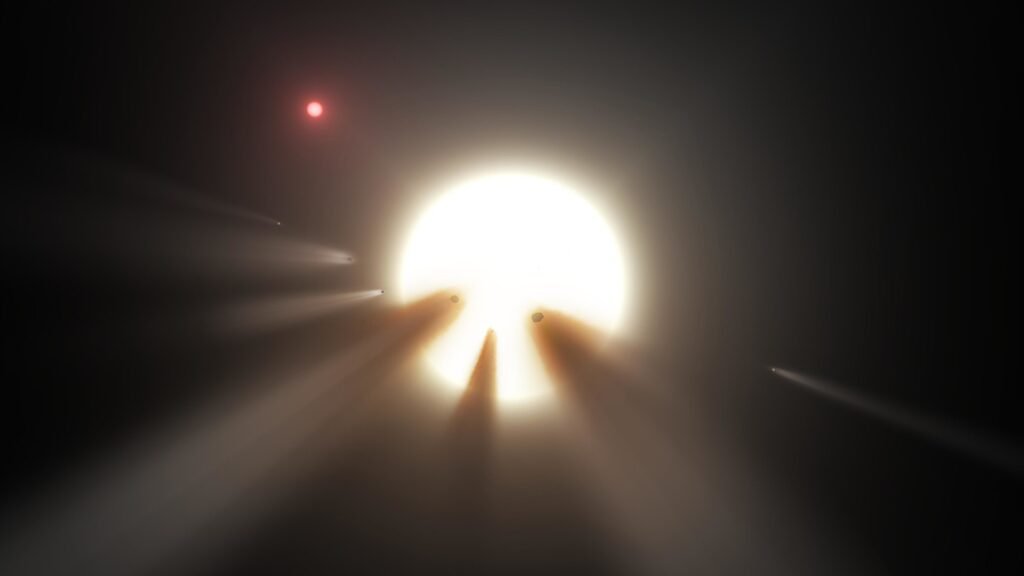
You might think a star either shines or it doesn’t. Tabby’s Star disagrees with that entirely. Located roughly 1,470 light-years away in the constellation Cygnus, this F-type star exhibits the most bizarre behavior astronomers have ever recorded, dimming by up to twenty-two percent in completely unpredictable patterns, unlike typical planetary transits that block less than one percent of starlight. That is a staggering difference, like someone randomly pulling the blinds on a lighthouse.
The erratic brightness drops lack any consistent timing, and some evidence suggests the star has been gradually dimming over the past century. While scientists favor explanations involving circumstellar dust from colliding asteroids or disrupted moons, no single theory fully accounts for these dramatic, irregular light variations. Honestly, the early suggestion of an alien megastructure was wild, but given how bizarre the data looks, it’s not hard to see why someone floated it.
3. The Wow! Signal: 72 Seconds of Cosmic Silence That Followed
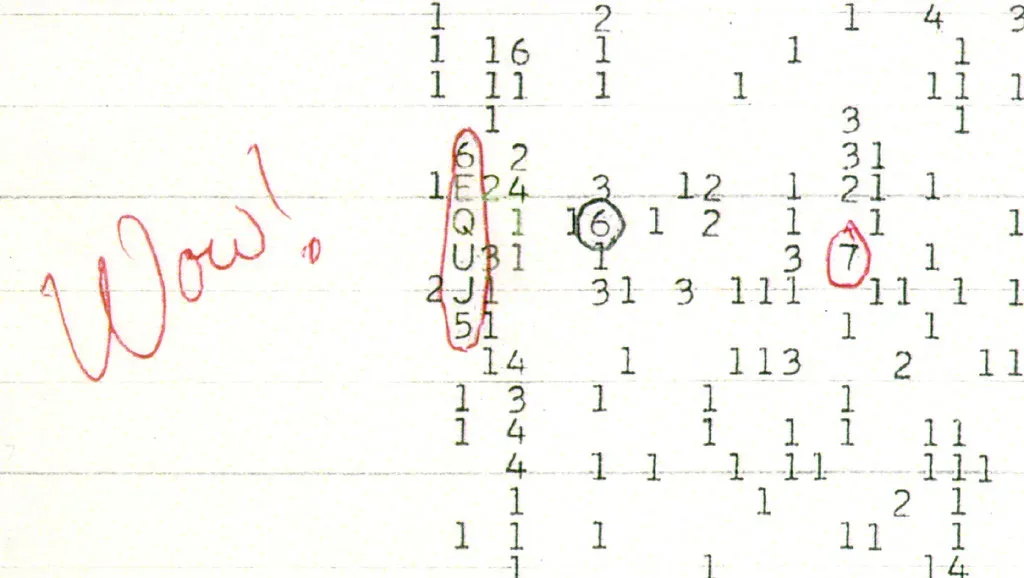
On the night of August 15, 1977, something screamed across the universe at a very specific radio frequency and then was never heard from again. The Big Ear Observatory at Ohio State University picked up a mysterious deep space signal that was right where SETI researchers had been looking, recorded over the course of seventy-two seconds, but then it disappeared into the night. Astronomer Jerry Ehman discovered the anomaly a few days later while reviewing recorded data, circling the signal’s intensity reading and writing the word “Wow!” beside it, which gave the event its now-famous name.
Despite numerous follow-up searches and hypotheses including brief consideration of reflections from space debris, interstellar scintillation, and comet hydrogen clouds, the signal has never recurred and no explanation, terrestrial or otherwise, has been confirmed. While some researchers have suggested it could represent an extraterrestrial transmission, its single occurrence and lack of replication limit the strength of this interpretation. The most recent hypothesis suggests a magnetar flare may have illuminated a cold hydrogen cloud, with researchers proposing the signal was caused by a sudden brightening of the hydrogen line in interstellar clouds, triggered by a powerful transient radiation source such as a magnetar flare or soft gamma repeater.
4. The Hubble Tension: When the Universe Can’t Agree on Itself
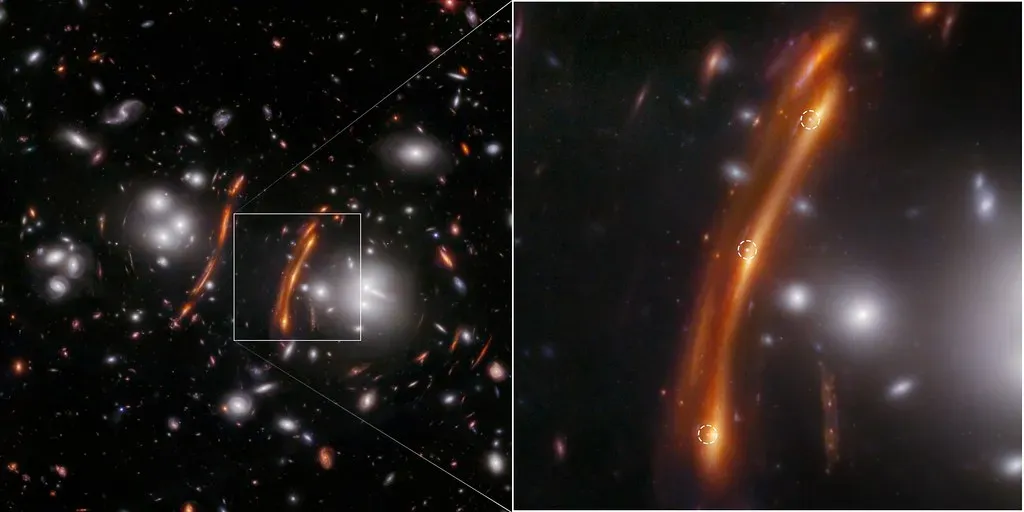
Here’s the thing about the universe expanding: everyone should at least agree on how fast. Except they don’t. The well-known Hubble tension is a persistent discrepancy between early and late universe determinations of the Hubble constant, and it challenges the very foundations of our baseline cosmological model. Think of it like two groups of scientists measuring the same highway and getting dramatically different speed limits, using completely valid methods, and neither being able to explain why.
Over the past decade, the disparity between the cosmic expansion rate determined directly from measurements of distance and redshift versus that determined from the standard cosmological model calibrated by early universe measurements has grown to a level of significance requiring a real solution. Researchers have found that dynamical dark energy alone may not be sufficient to fully explain the Hubble constant tension, potentially indicating the presence of new physics beyond the standard cosmological model. That last phrase, “new physics,” is scientist-speak for “we genuinely do not know what is going on.”
5. Dark Matter: The Invisible Glue Holding Everything Together
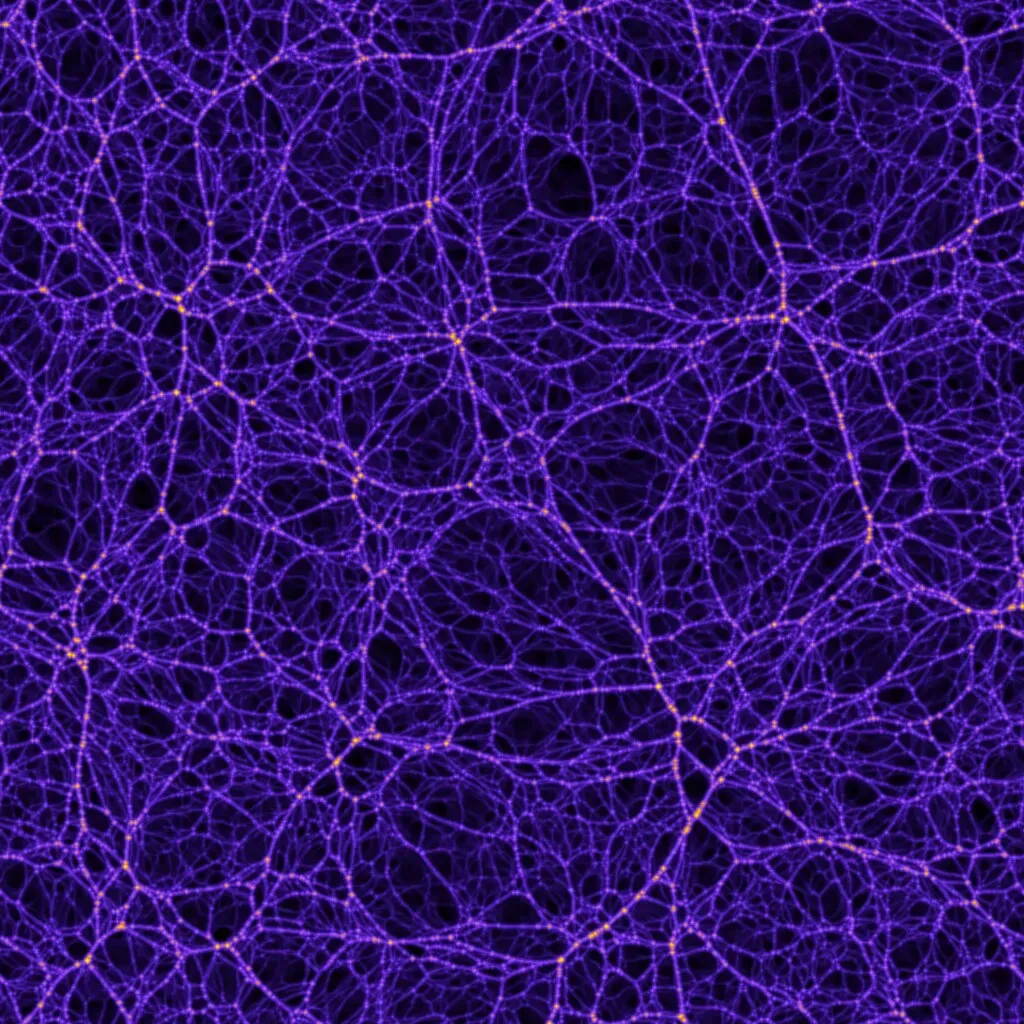
You can’t see it, you can’t touch it, and no detector has directly confirmed it. Yet dark matter is thought to make up roughly a quarter of everything in the entire universe. With the knowledge that our universe is made of approximately seventy percent dark energy, twenty-five percent dark matter, and only five percent normal matter, along with a tiny fraction of radiation and neutrinos, cosmologists have built a surprisingly consistent picture of modern cosmology. The problem is that the remaining ninety-five percent is either invisible or baffling.
Scientists continue to debate whether the phenomena attributed to dark matter actually point to an extension of gravity rather than some other type of matter. That is a remarkable thing to still be unsure about in 2026. It’s a bit like building an entire house and then discovering that you’re not actually sure if the walls are made of wood or air, but the house is still standing regardless.
6. Dark Energy: The Cosmic Accelerator Nobody Understands

In 1998, astronomers made one of the most shocking discoveries in modern science: the universe isn’t just expanding. It’s accelerating. The Hubble Space Telescope studied distant supernovas and found that the universe was expanding more slowly a long time ago compared to the pace of its expansion today, a groundbreaking discovery that puzzled scientists who had long thought gravity would gradually slow the expansion. The invisible force driving this acceleration was named dark energy, and it remains deeply mysterious to this day.
Dark energy is the non-matter, non-radiation form of energy that doesn’t just exist in our universe but actually represents the majority of the energy presently in it, and all other forms of energy would lead to a distant galaxy slowing in its apparent recession speed from us, but with dark energy, it appears to recede at ever-increasing speeds, faster and faster, as time goes on. Recent data demonstrates that dark energy may actually evolve with cosmic time, directly challenging the cosmological constant model.
7. Saturn’s Perfect Hexagonal Storm: Nature’s Impossible Geometry
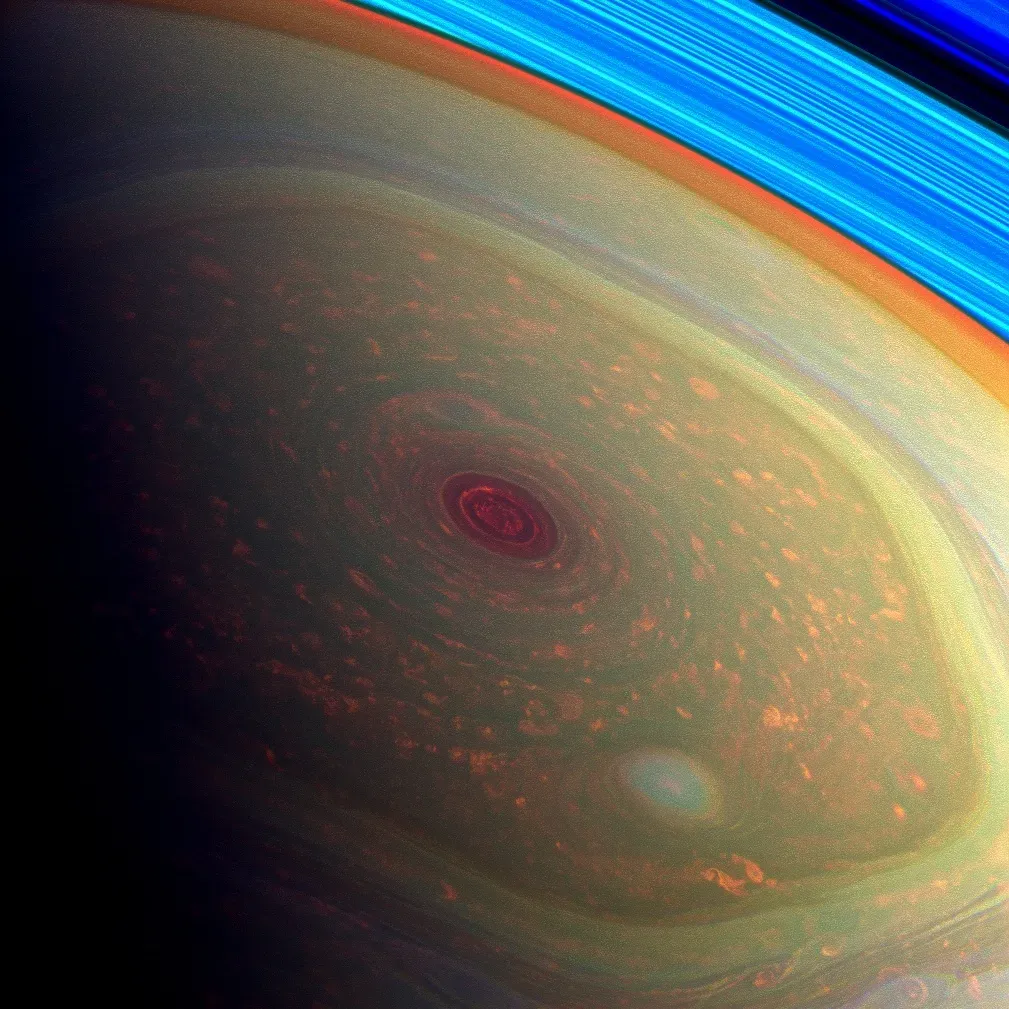
A hexagon is a beautiful shape when drawn by a human hand. When it appears as a planet-sized storm spinning for decades without any clear reason, it crosses from beautiful into genuinely unsettling. At Saturn’s north pole, a bizarre six-sided storm has been spinning for decades and no one knows why; this perfectly geometric weather pattern defies known atmospheric dynamics and has baffled scientists since it was first spotted by the Voyager mission, with the storm being so enormous it could swallow Earth whole.
Think about that scale for a moment. A geometric storm larger than an entire planet, sustained for decades, producing a shape that looks like something you’d find in a high school geometry textbook. It’s as if nature picked up a ruler and a compass and started drawing just to confuse us. No similar permanent geometric structure has been documented in any other known planetary atmosphere, making Saturn’s hexagon a one-of-a-kind oddity in our solar system.
8. The Fermi Bubbles: Giant Ghost Structures Above Our Galaxy
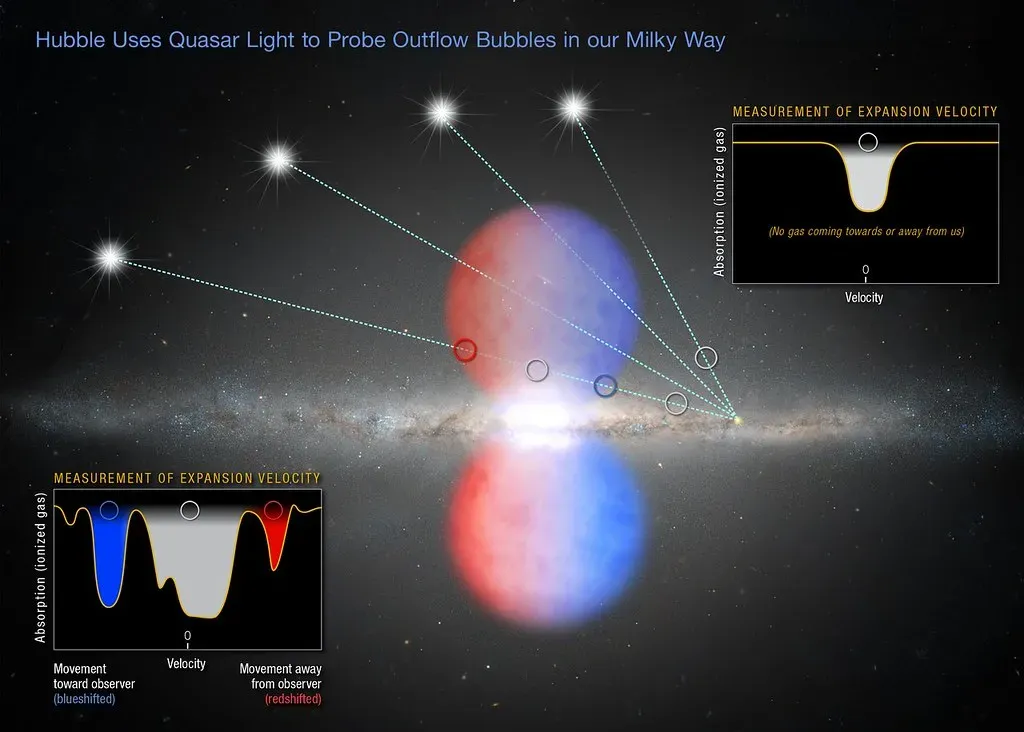
Our galaxy has a secret. Two enormous energy bubbles extend both above and below the Milky Way’s center, so large and so powerful that their mere existence raises urgent questions. Two enormous lobes of high-energy gamma radiation extend 25,000 light-years above and below the Milky Way’s center, invisible to human eyes but blazing brightly in gamma-ray observations, with sharp well-defined edges that suggest a sudden powerful explosion rather than gradual stellar activity, and the leading suspects include violent outbursts from our galaxy’s central supermassive black hole or intense bursts of star formation near the galactic core.
The Fermi bubbles were first discovered in 2010 when data from NASA’s Fermi Gamma-ray Space Telescope spotted this massive and mysterious structure in our galaxy, resembling a pair of bubbles extending above and below the galaxy’s structure, with scientists suspecting they are remnants of a massive burst of star formation, though no one knows for sure. The sheer scale of these structures makes them almost impossible to ignore, and yet for years, telescopes had simply missed them. That alone should make you wonder what else we might be overlooking.
9. Odd Radio Circles: The Universe’s Strangest New Discovery
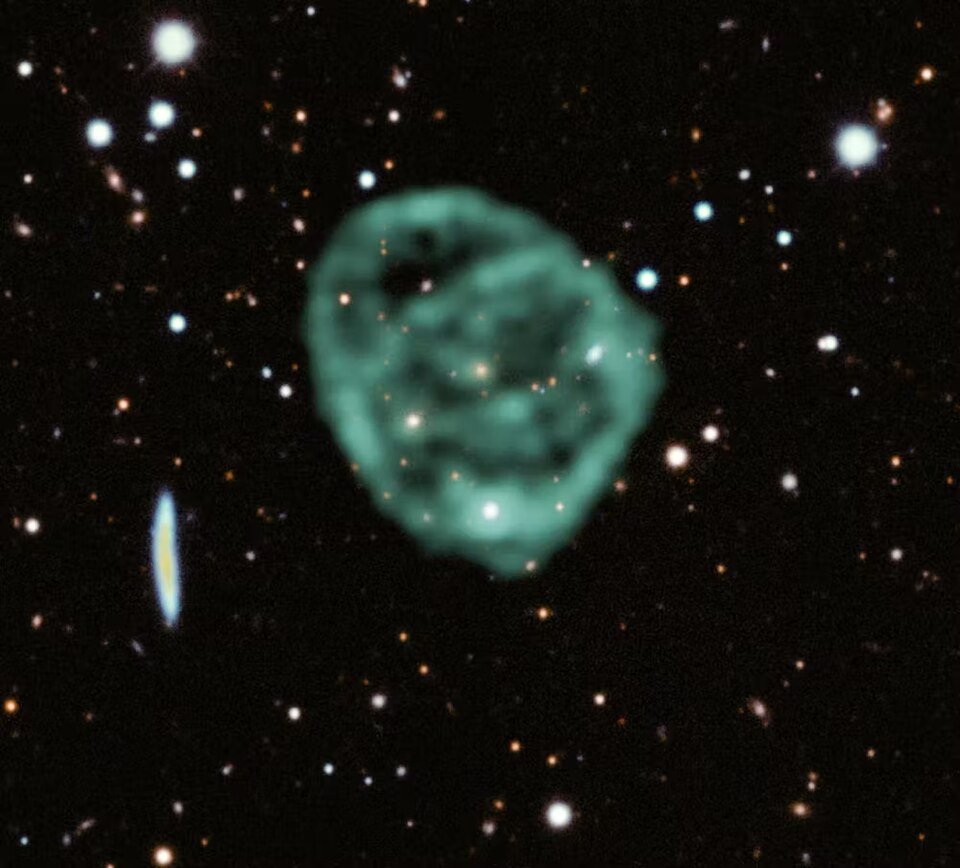
Sometimes astronomy throws you a curveball so strange that seasoned researchers simply stare at the data and wonder if something went wrong with the instruments. Odd Radio Circles, or ORCs, are exactly that kind of curveball. These enormous ring-shaped structures span roughly one million light-years across and emit exclusively in radio wavelengths, making them invisible to optical telescopes. First spotted in 2019, these perfectly circular halos don’t match any known cosmic phenomena, and their clean symmetric appearance suggests powerful shockwaves from unknown energetic events, possibly involving supermassive black hole mergers or galaxy collisions, with only a handful identified so far.
One million light-years across. Let that number sit with you. These rings are so large they would contain entire groups of galaxies inside their circumference, yet they only reveal themselves to radio telescopes, hiding from every other instrument we point at the sky. Scientists are actively debating whether ORCs are rare cosmic accidents, the echoes of ancient catastrophic events, or possibly even a common feature of the universe that we simply lacked the technology to notice before now.
10. Runaway Black Holes: When Gravity’s Anchors Go Rogue
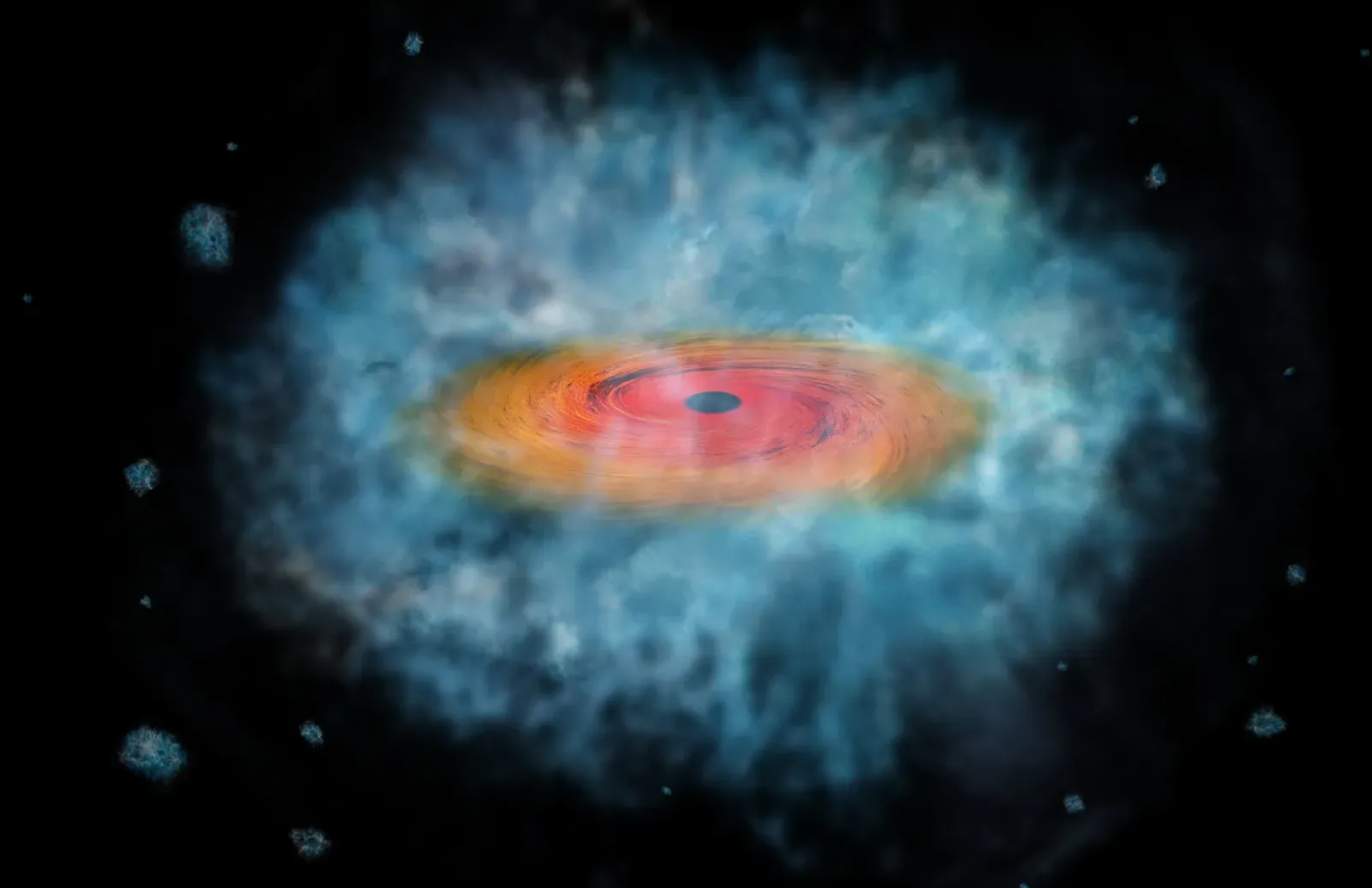
Black holes are supposed to sit at the centers of galaxies. They are gravity’s ultimate anchor, pulling everything around them into a slow, eternal orbit. What happens when one breaks free? In 2023, astronomers discovered a supermassive black hole weighing twenty million solar masses racing through intergalactic space at 4,500 times the speed of sound, likely ejected from its home galaxy through a three-way gravitational dance involving multiple black holes during a galactic merger, dragging along a trail of stars stretching over 200,000 light-years and creating a unique system never before observed.
While computer simulations had predicted such ejections were theoretically possible, this represents the first clear evidence that black holes can achieve escape velocity and go rogue. A black hole moving at 4,500 times the speed of sound, trailing a glittering ribbon of stars like a cosmic comet tail. It sounds like science fiction, and yet there it is. The question now is how many more of these cosmic fugitives might be silently hurtling through the dark between galaxies, too faint and too fast for even our best telescopes to catch.
11. Dark Flow: Something Pulling From Beyond the Observable Universe
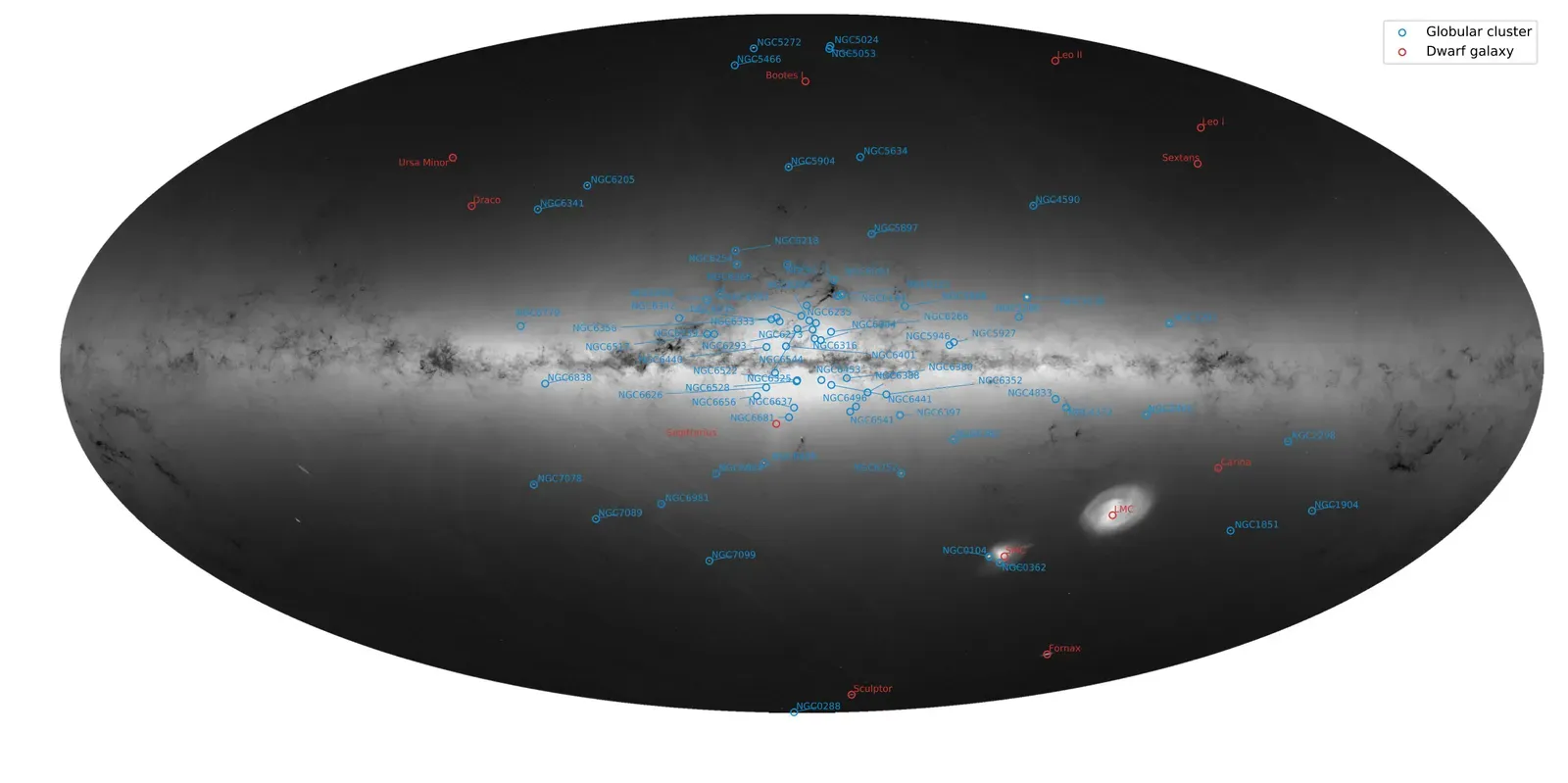
Most galaxies, from our perspective, should be moving more or less randomly as the universe expands. Except for one deeply strange pattern that has kept cosmologists arguing for years. Galaxies in a vast region of space appear to be moving in the same direction at high speed, drawn by a force beyond the observable universe, and this unexplained motion called “dark flow” contradicts our understanding of cosmic expansion, with some believing it hints at another universe beyond our own.
It’s hard to say for sure whether dark flow is a confirmed phenomenon or a measurement artifact, and that debate itself is part of what makes it fascinating. If real, it would mean that something unimaginably massive lurks beyond the edge of the observable universe, pulling galaxies toward it like a hand dragging a tablecloth across a dining table. Think of the observable universe as your entire world, and then imagine feeling a tug from something that exists completely outside of it.
12. The Vanishing Star of 2020: A Giant That Simply Disappeared
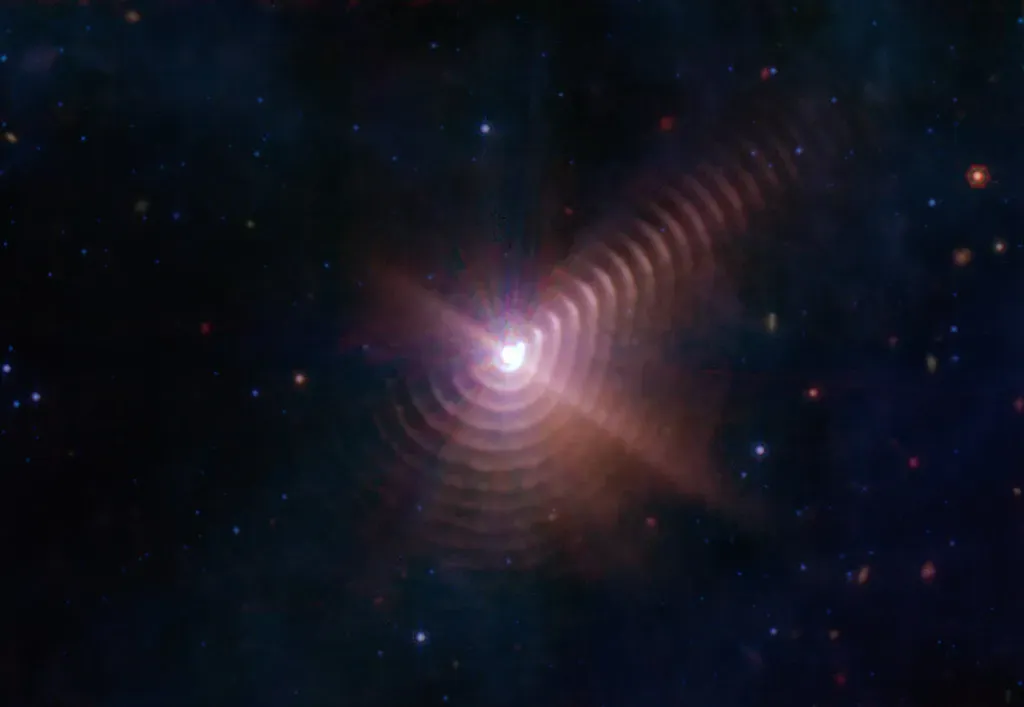
Stars don’t just vanish. You expect them to explode as supernovas, or fade gracefully into white dwarfs, or collapse into neutron stars. What you do not expect is for a massive star to simply cease to exist with no explosion, no flash, no signal at all. In 2020, a giant star in a distant galaxy appeared to vanish completely. Astronomers who had been studying it looked back and found nothing where a large, luminous star had once been. No bang. No burst. Just silence where a star used to be.
The leading theory is that the star may have collapsed directly into a black hole without producing a supernova, essentially skipping the most dramatic finale in stellar physics entirely. It’s like watching a building demolition where the countdown reaches zero and the building simply isn’t there anymore, with no dust cloud or debris. The universe continues to surprise us with phenomena that challenge our understanding of physics and astronomy, and despite years of advanced technology and scientific research, some cosmic mysteries remain stubbornly unsolved. This vanishing act is one of the most unnerving reminders of that truth.
Conclusion: The Sky Is Still Asking Questions We Cannot Answer
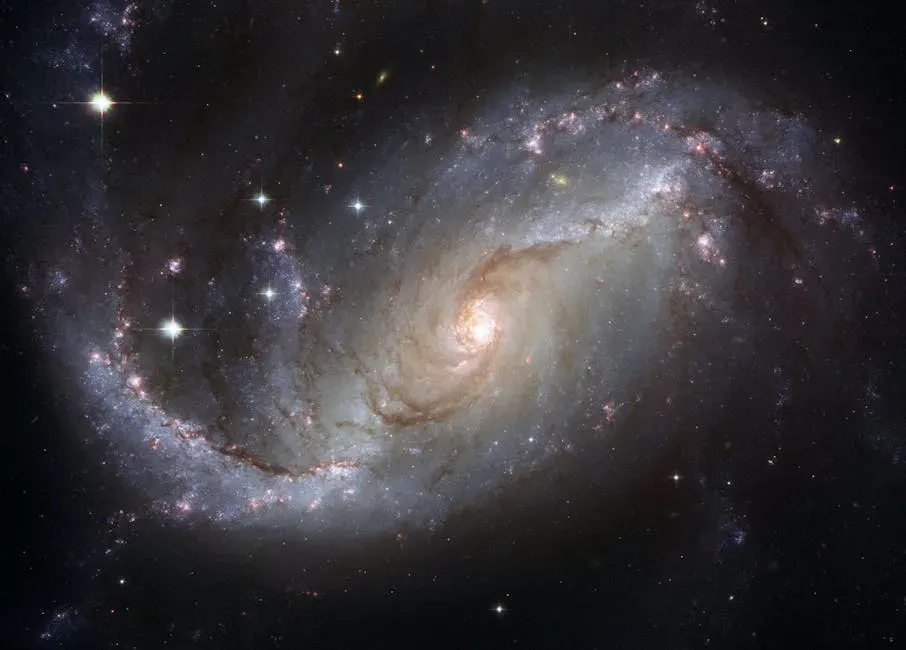
If this list has done anything, I hope it’s made you feel two things at once: wonderfully small and impossibly curious. The universe is not running out of surprises. If anything, every new generation of telescopes and detectors seems to deepen the mystery rather than resolve it. Fast radio bursts that last milliseconds. A signal from 1977 that was never heard again. Hexagonal storms on planets. Galaxies being tugged by something we cannot even see or measure.
Here’s what I find genuinely thrilling about all of this: science doesn’t treat uncertainty as failure. These open questions are the fuel that drives the next generation of discoveries. The James Webb Space Telescope is already reshaping what we know about the early universe, and next-generation radio arrays are detecting more anomalies than ever before. Every mystery on this list was, at some point, invisible to us. The ones we haven’t even discovered yet are probably even stranger.
The cosmos is patient. It has been keeping its secrets for over thirteen billion years, and it’s in no hurry to give them all up. The real question isn’t whether the universe is strange enough to still surprise you. It absolutely is. The question is whether you’re paying close enough attention. Which of these mysteries surprises you the most? Let us know in the comments.