
We grow up thinking time is simple: it moves forward, ticks steadily, never slows down, never speeds up. Then you learn just a bit of modern physics and that picture shatters like glass. Time stretches, bends, and even almost stops in extreme conditions, and the wild part is that we can actually measure this happening in real life, not just in sci‑fi movies.
Once you see how strange time really is, everyday life starts to feel different. A plane flight, a GPS signal, the way your brain remembers breakfast: they all carry traces of time’s weirdness. In a way, understanding time is like pulling a loose thread in reality; keep tugging and you realize the whole sweater of “common sense” was never as solid as it looked.
Time Is Not Universal: Your “Now” Is Not Mine

Imagine you and a friend clap your hands at the same moment, at least from where you stand. For you, those claps are perfectly synchronized, but for someone racing past in a fast spaceship, they might not line up at all. Modern physics says there’s no single universal “now” that everyone in the universe shares; what counts as “simultaneous” actually depends on how you’re moving.
This idea, born from special relativity, is quietly explosive. It means time is not some rigid, master clock that rules everything in the same way. Instead, it’s tangled up with motion and perspective, like different camera angles on the same scene. Once you accept that, the idea that time could “flow” differently for different observers stops being absurd and starts becoming inevitable.
Speed Can Slow Time: The Twin Paradox Is Real Physics
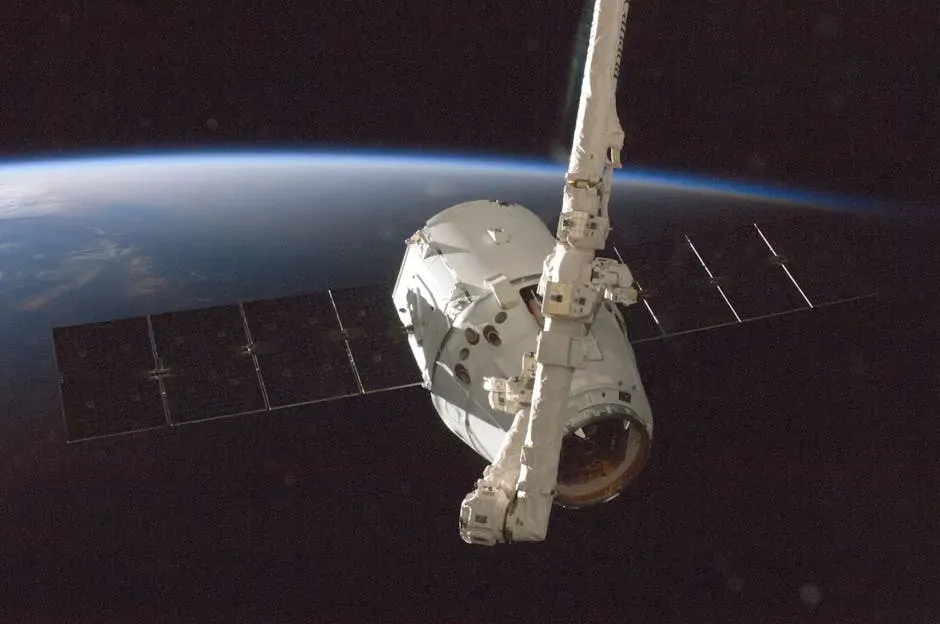
Think about the famous “twin” scenario: one twin stays on Earth, the other rockets off at incredible speed and then returns. When they reunite, the traveling twin is younger. This isn’t a thought experiment anymore; we’ve actually seen similar effects using atomic clocks on jets and satellites. Moving very fast literally changes how much time passes for you, compared to someone standing still.
On the surface, that sounds like cheating aging by just going fast enough, but there’s a catch: you need speeds close to light, far beyond what we can do with human passengers right now. Still, the fact that we can detect the difference even at airplane speeds shows that time’s “flow” is flexible, not fixed. In a very real sense, every high‑speed journey is a tiny experiment in time manipulation.
Gravity Warps Time: Clocks Run Differently at Different Heights
Here’s a quieter, but even more shocking, time trick: gravity changes the rate of time. A clock at the top of a skyscraper ticks slightly faster than a clock on the sidewalk below. It’s not a poetic metaphor; precision atomic clocks confirm this. The stronger the gravity field you’re in, the slower time passes for you.
That means time moves more slowly near Earth’s surface than farther out in space. GPS satellites have to account for this or your navigation would slowly go off track. The fact that your phone’s map works is proof that time is not uniform across space; engineers literally adjust for the way gravity stretches and squeezes time, like a soft rubber band wrapped around the planet.
We Can Measure Time Dilation in the Lab
You might think all this stretching and bending of time only happens next to black holes or in theoretical thought experiments. But physicists have measured time dilation in everyday conditions, using beams of fast‑moving particles and ultra‑precise clocks on Earth. When particles move close to light speed, they “live” longer than identical particles at rest, because their internal clocks tick more slowly.
On a more practical level, time dilation is so real that high‑precision lab clocks can detect differences in altitude of just a few dozen centimeters. Move a clock up a shelf, and in principle, it ticks at a slightly different rate. The idea that you can “see” time changing by lifting an object sounds absurd, yet that’s exactly what our best instruments tell us, over and over again.
Entanglement and the Weirdness of Quantum Time
Zoom down to the level of atoms and particles, and time gets even stranger. In quantum experiments, particles can become entangled so that measuring one appears to instantly affect the other, no matter how far apart they are. That doesn’t mean information travels faster than light, but it does mess with our tidy picture of events unfolding in a neat, ordered timeline.
Some researchers explore ideas where, at the quantum scale, the order of events can be fuzzy rather than strictly before or after. It’s like asking whether you poured coffee before adding milk, and the universe replying, “Well, sort of both.” We’re still far from having a clear, agreed‑upon picture of what time truly looks like at that scale, but it’s obvious that our everyday intuition is, at best, a rough sketch.
Your Brain Manufactures the Feeling of Flow

Beyond physics, there’s another twist: the “flow” of time you feel is something your brain builds, not something it simply receives. Neuroscience studies suggest that your mind stitches together snapshots of sensory information into a smooth story of “now,” “just happened,” and “about to happen.” That continuous feeling is more like a movie your brain is playing than a raw feed from reality.
When you’re terrified, a moment can feel endlessly stretched; when you’re fully immersed in something you love, hours vanish. Nothing out there in the universe actually sped up or slowed down; what changed was how your brain framed and stored the experience. In that sense, you manipulate time every day, not by warping spacetime, but by changing attention, emotion, and memory.
Using Time’s Flexibility in Technology and Imagination
The fact that time can be manipulated and observed is not just philosophical; it shapes technology. Communication satellites, navigation systems, and even some experiments in fundamental physics all rely on tracking tiny differences in how time passes in different places and conditions. Without correcting for relativity, modern infrastructure would quietly drift out of sync with reality.
On a more personal level, knowing time is flexible changes how you think about the future. The idea of traveling far into the future by moving close to light speed is not fantasy; it’s a logical consequence of relativity. We’re nowhere near doing that with human missions, but the underlying physics is solid. When you put all of this together, it becomes hard to see time as a simple river flowing evenly forward; it looks more like a landscape, shaped and twisted, that we can explore and, in subtle ways, bend to our needs.
Conclusion: Living Inside a Flexible Time
Once you realize that time’s rate depends on speed, gravity, quantum rules, and even your own brain, the old picture of a single, rigid timeline starts to feel almost childlike. We live in a universe where two people can honestly disagree on how much time has passed for them and both be right, because their paths through spacetime are genuinely different. Time is not a uniform drumbeat in the background; it’s tangled with everything we do and everywhere we go.
At the same time, that complexity doesn’t make everyday life meaningless; it just makes it richer. Your watch is still useful, even if it’s only an approximation of a deeper, elastic reality. Maybe the most important shift is simply noticing that the feeling of time slipping away is only part of the story. Knowing that time is something we can measure, shape, and even slightly manipulate opens up a new question: what will you do with the slice of spacetime you happen to occupy?