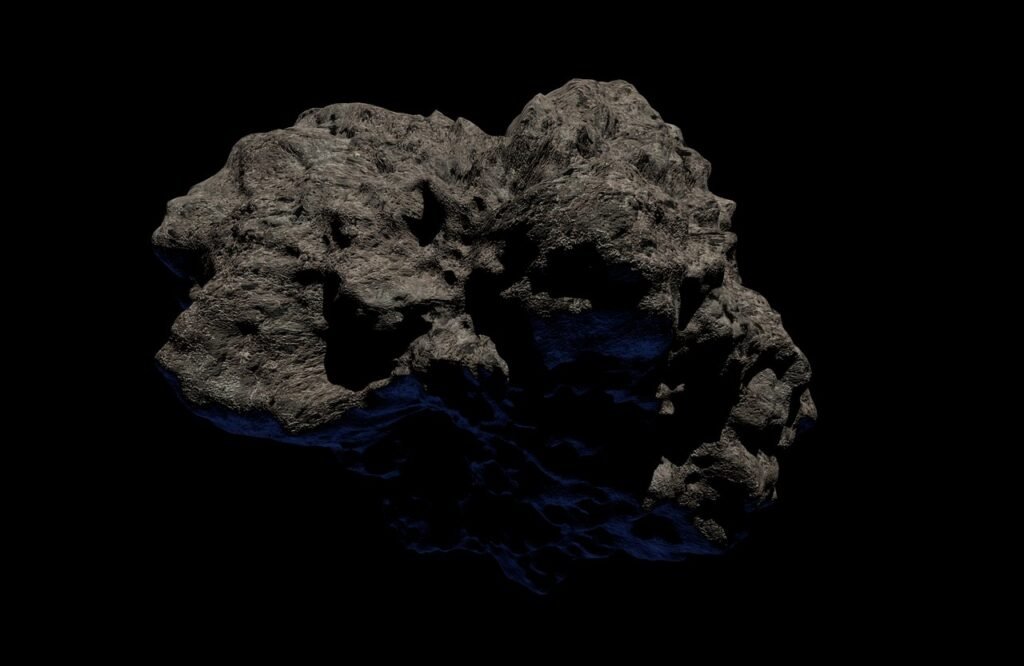
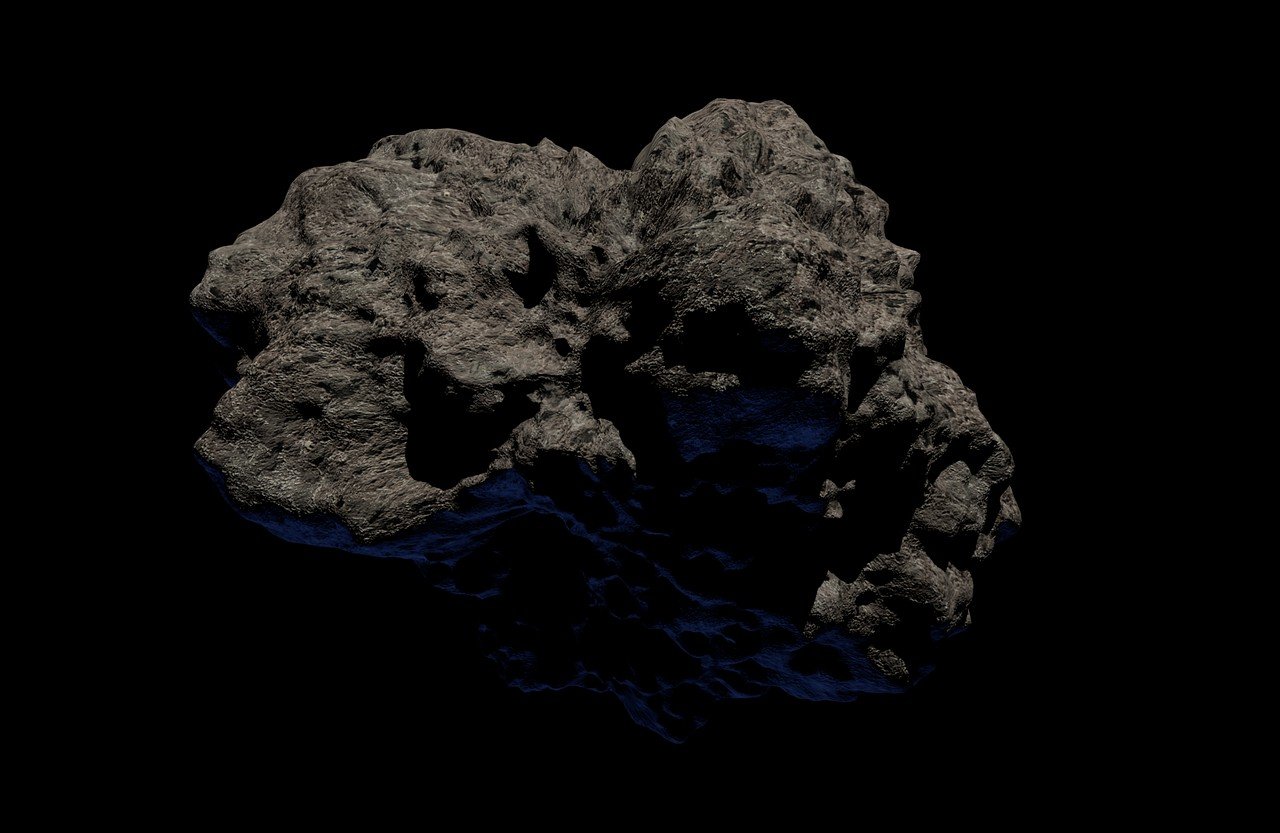
Early Triumph for Rubin Observatory (Image Credits: Pixabay)
Chile – Astronomers using the NSF–DOE Vera C. Rubin Observatory have uncovered asteroid 2025 MN45, a 710-meter-wide object in the main asteroid belt that completes a full rotation every 1.88 minutes.[1][2] This speed sets a new benchmark for asteroids larger than 500 meters, raising questions about their internal structure and strength. The discovery emerged from early test images captured by the observatory’s LSST Camera, the world’s largest digital camera.[3]
Early Triumph for Rubin Observatory
The Vera C. Rubin Observatory on Cerro Pachón captured data over about 10 hours across seven nights in April and May 2025 during its commissioning phase. This marked the first peer-reviewed study to utilize images from the LSST Camera.[1] A team led by Sarah Greenstreet, an astronomer at NSF NOIRLab and the University of Washington, analyzed light curves from roughly 340,000 asteroids. They confirmed rotation periods for 76 objects, including 19 that rotate unusually fast.
Greenstreet’s group presented findings at the 247th American Astronomical Society meeting in Phoenix and published them in The Astrophysical Journal Letters.[2] The observatory’s ability to image the sky every 40 seconds proved crucial for detecting these rapid changes in brightness. Previously, such faint main-belt asteroids proved difficult to monitor from Earth-based telescopes.
Breaching the Spin Barrier
Asteroids larger than 150 meters face a theoretical limit known as the 2.2-hour spin barrier. Beyond this, centrifugal forces should exceed gravity in rubble-pile structures, causing fragmentation.[4] Most asteroids consist of loosely bound rocks and debris formed during solar system collisions. Yet 2025 MN45, at 710 meters across, spins more than 70 times faster than this threshold.
“Clearly, this asteroid must be made of material that has very high strength in order to keep it in one piece as it spins so rapidly,” Greenstreet said. She noted its cohesive strength rivals solid rock, unusual for objects thought to be rubble piles.[1] This challenges models from the 1990s and early 2000s that predicted few large, fast rotators.
Insights into Ancient Collisions
Rapid spins often stem from glancing blows with other asteroids billions of years ago. Such impacts can accelerate rotation while preserving fragments with enhanced density or internal cohesion. The main asteroid belt, between Mars and Jupiter, holds pristine records of these early events.
2025 MN45 resides about 200 million miles from Earth, posing no collision risk. Its survival suggests rarer monolithic compositions or unexpected tensile properties. Future missions could probe similar bodies up close to test these ideas.
Rubin’s 10-year Legacy Survey of Space and Time will scan the southern sky nightly, promising thousands more such discoveries. Astronomers anticipate revelations about solar system formation and evolution.
Companions in Speed
The study revealed 16 super-fast rotators with periods from 13 minutes to 2.2 hours, plus two other ultra-fast ones under five minutes. All exceed a football field’s length, with most in the main belt.
- 2025 MJ71: 1.9-minute period (near-Earth object)
- 2025 MK41: 3.8-minute period
- 2025 MV71: 13-minute period
- 2025 MG56: 16-minute period
These findings shift focus from near-Earth objects, where fast rotators dominate observations.[3] Rubin’s sensitivity unlocks fainter targets, expanding the catalog dramatically.
Key Takeaways
- 2025 MN45 holds the record for fastest rotation among asteroids over 500 meters, at 1.88 minutes.
- It implies stronger-than-expected structures, defying rubble-pile assumptions.
- Rubin Observatory’s early data heralds an era of unprecedented solar system mapping.
Co-author Mario Jurić, a University of Washington professor, emphasized the potential: “In the next two years, Rubin will discover a thousand times as many asteroids as were presented here.” This discovery underscores how advanced tools rewrite textbooks. What secrets might the asteroid belt yield next? Share your thoughts in the comments.