

If you could watch two clocks, one on Earth and one high above the planet, you’d see something quietly mind‑bending: the one in space would tick a little faster. Not by much, not enough for you to feel it in your bones, but enough that our technology has to correct for it every single day. Time really is elastic, and we’re no longer just taking Einstein’s word for it – we’re engineering our entire modern world around that fact.
What sounds like a trippy science fiction idea is now a routine, almost boring, part of physics and engineering. Satellites, particle accelerators, even atomic clocks in labs are constantly proving that time doesn’t flow the same everywhere. It bends and stretches with speed and gravity. Once you understand that, you can’t look at something as simple as “one second” in quite the same way again.
Einstein’s Shocking Claim: Time Is Not the Same Everywhere
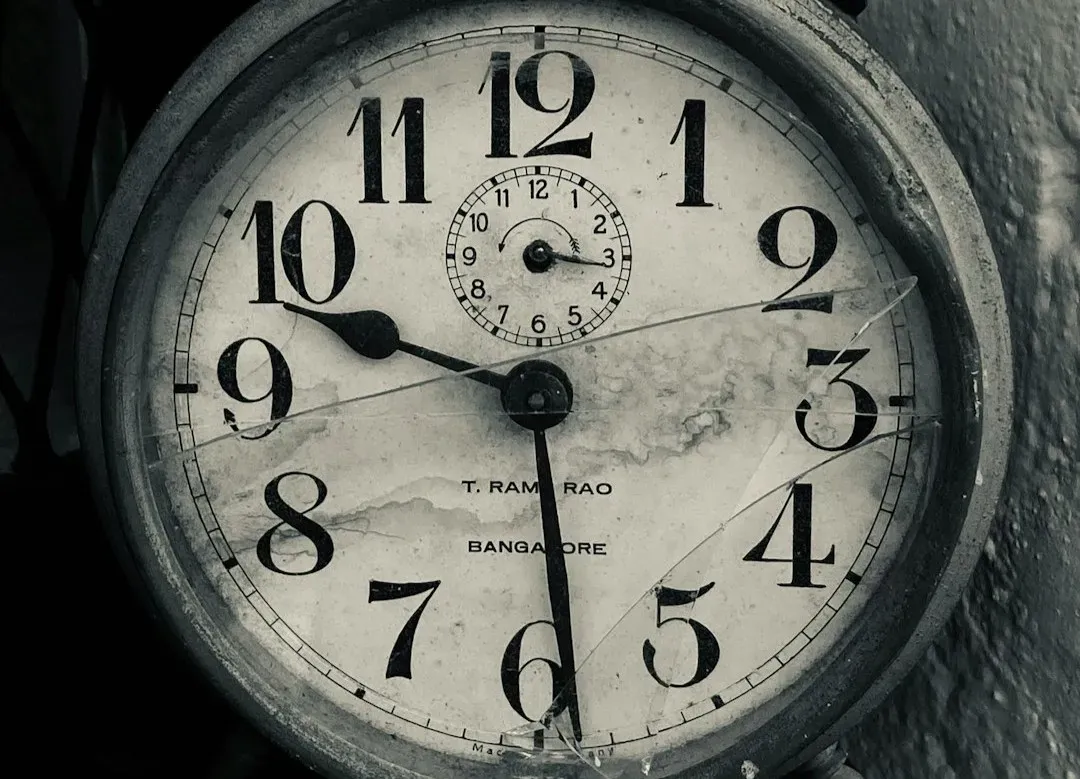
Imagine being told that the minutes you spend sitting on your couch are literally not the same length as the minutes ticking away on a satellite flying above your head. When Einstein developed special relativity and later general relativity, that’s essentially what he was saying: time is not absolute, it’s woven together with space and can change depending on how fast you’re moving and how strong gravity is around you. For people in the early twentieth century, used to thinking of time as a universal metronome, this was outrageous.
Instead of one master clock for the universe, Einstein described a world where every observer carries their own clock, and all of those clocks can disagree in subtle but very real ways. It’s like learning that everyone has slightly different rulers and watches, yet physics still works perfectly. As weird as that sounds, these ideas have held up against every test thrown at them for more than a century, from tiny particles racing near light speed to spacecraft coasting through the outer solar system.
Why Gravity Makes Time Run Slower on Earth

One of the most counterintuitive pieces of Einstein’s work is that gravity doesn’t just pull on things, it warps time itself. The closer you are to a massive object like Earth, the more slowly time passes for you compared with someone farther away. So, in a very literal sense, your feet age ever so slightly more slowly than your head, because they’re a bit closer to the center of the planet’s gravity. The difference is tiny, but it’s not zero.
A strong gravitational field acts like a thick syrup that time has to push through, slowing the rate at which seconds unfold. That’s why clocks on Earth tick a bit more slowly than identical clocks on satellites in higher, weaker gravity. This isn’t just mathematical decoration; engineers have to build these effects into real hardware. Gravity’s grip on time is now as practical a concern as wind resistance on a plane or friction in an engine.
GPS: Your Phone Works Because Space-Time Is Weird
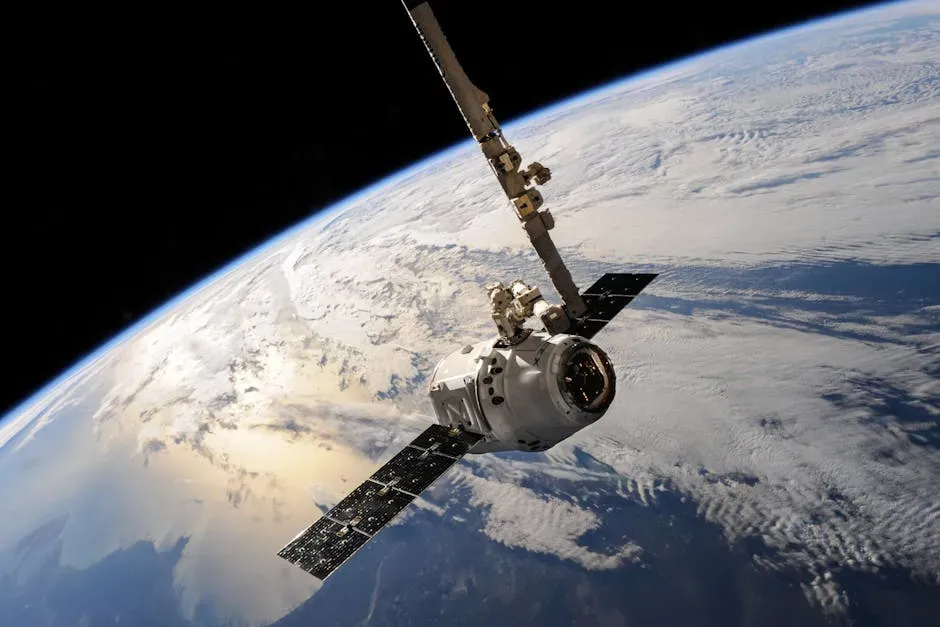
The clearest everyday proof that time runs faster in space is probably sitting in your pocket. Global Positioning System satellites orbit Earth with ultra-precise atomic clocks on board, constantly sending timing signals down to receivers on the ground. Because those satellites are higher up in weaker gravity, their clocks naturally tick faster than identical clocks on Earth’s surface. On top of that, they’re moving quickly, which slightly slows their time down in a different relativistic effect.
When you combine those influences, the net outcome is that the satellite clocks would drift ahead of Earth clocks by tens of microseconds every day if we didn’t adjust for relativity. That sounds tiny until you remember that GPS positioning relies on timing measured in billionths of a second. Without correcting for Einstein’s theories, your location could be off by kilometers within a single day. The fact that map apps reliably guide you to the right coffee shop is quiet, relentless proof that space-time really behaves the way Einstein predicted.
Atomic Clocks: Moving a Meter Can Change Your Time
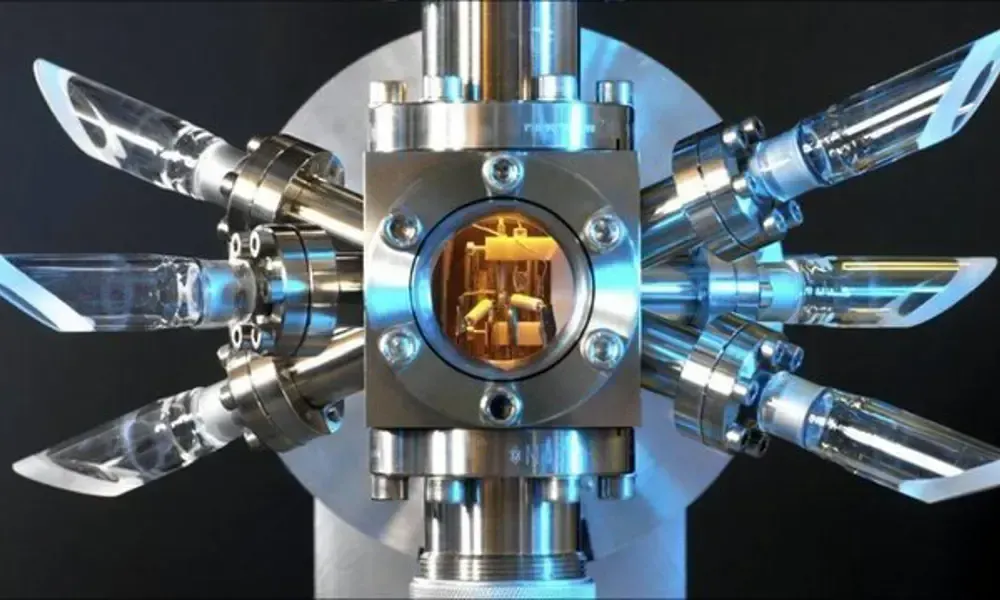
Modern atomic clocks are so insanely precise that scientists can now measure time shifts caused by just changing height in the same building. Experiments have shown that if you place one clock on a table and an identical one on the floor, after a while they fall out of sync in exactly the way general relativity predicts. The clock slightly higher from Earth’s center, in marginally weaker gravity, runs faster. We’re not talking about years in space, just a couple of meters of altitude making a measurable difference.
Physicists have even flown atomic clocks on airplanes, comparing them to reference clocks left on the ground, and found the same relativistic shifts from both motion and altitude. It’s like the universe is constantly whispering, in the tiniest differences between ticks, that time is not rigid. As these clocks become even more sensitive, they’re turning into tools that can feel the shape of gravity itself, mapping small changes in Earth’s gravitational field through the way time speeds up or slows down.
Astronauts, the ISS, and Who Ages Faster
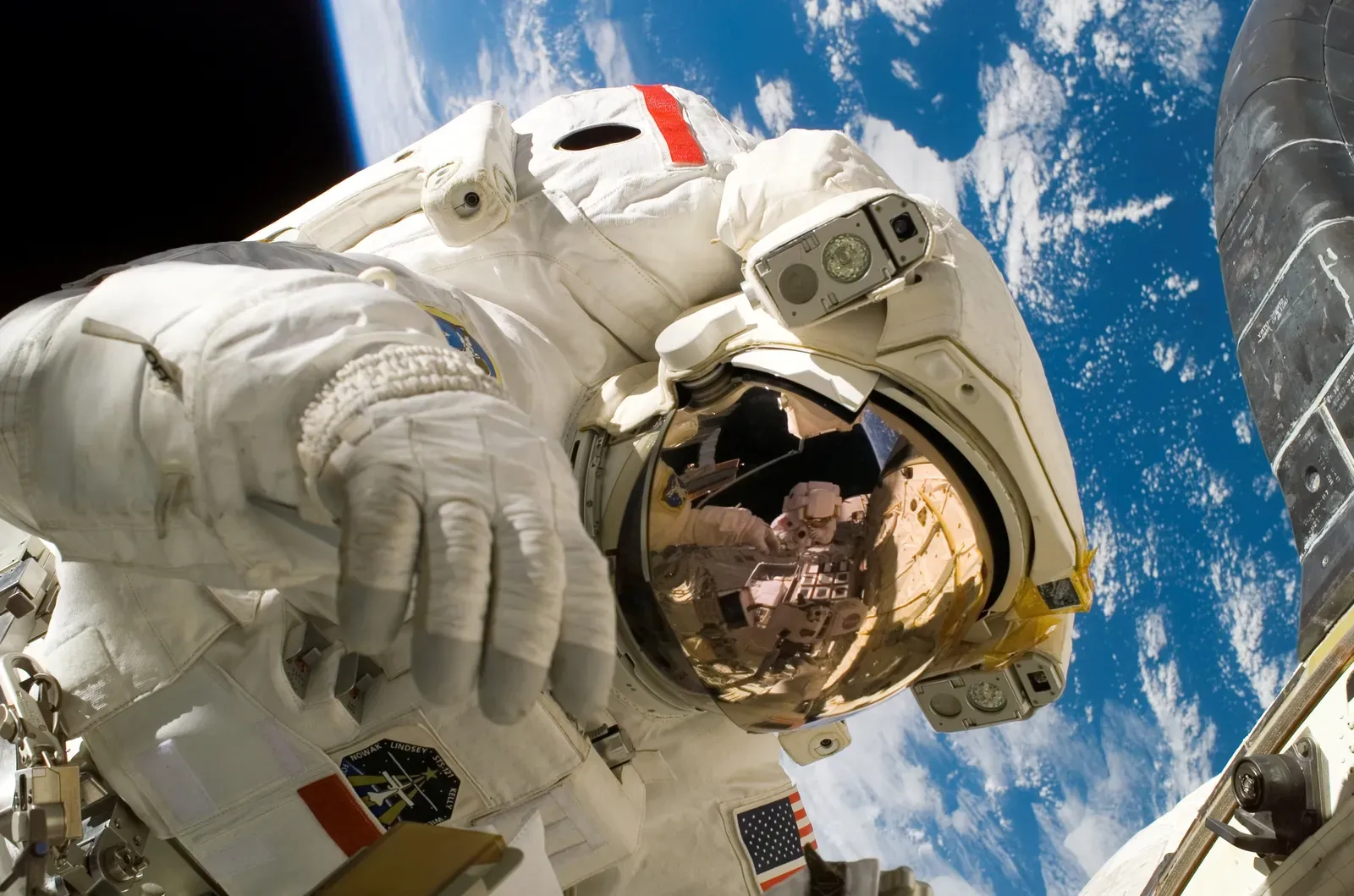
People love to say that astronauts come back younger because of relativity, and technically there’s a grain of truth there, but reality is messier and much more interesting. On the International Space Station, astronauts are moving extremely fast relative to Earth, and that motion makes their personal time run slightly slower. At the same time, they’re higher up in weaker gravity, which should make their time run faster. Both effects push in opposite directions.
For the ISS’s particular orbit, the slowing effect of speed wins out by a small margin, so the astronauts age a tiny bit less than they would have on Earth. We’re talking about milliseconds over long missions, nowhere near the dramatic science fiction idea of someone returning decades younger than their twin. Yet the fact that we can calculate and measure this tiny difference shows how deeply embedded relativity is in how we understand human spaceflight. Even our sense of getting older is now tied to where you are and how you move in the universe.
Black Holes and the Extreme Edge of Time Dilation
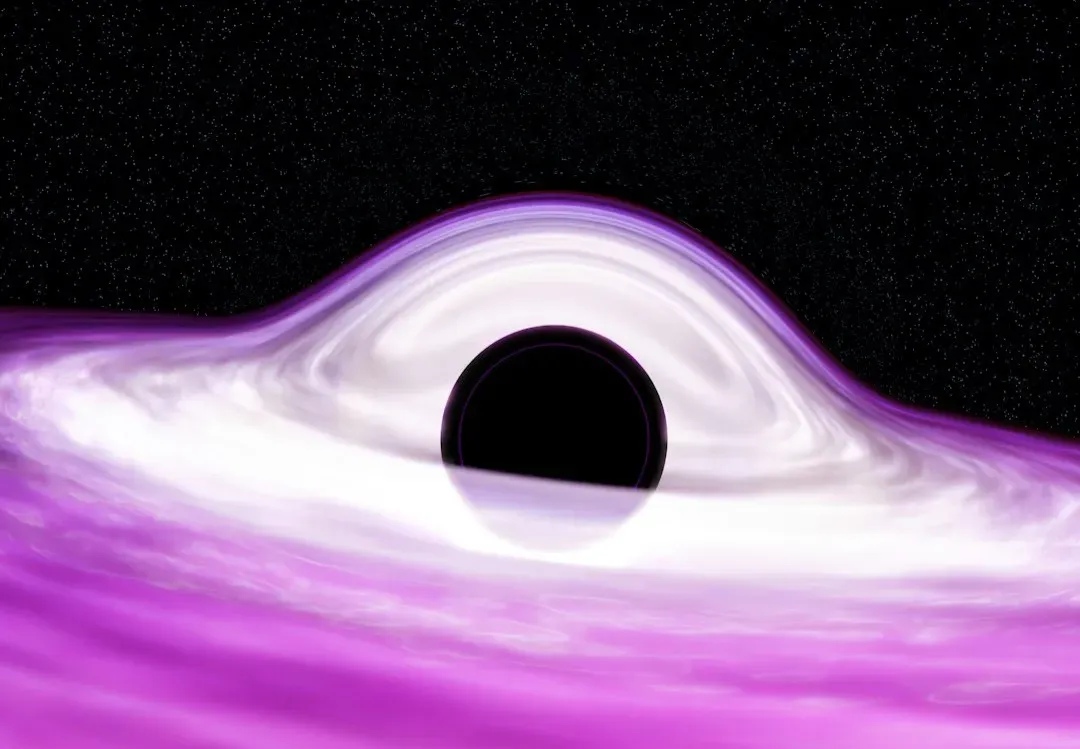
If you want to see what happens when you crank Einstein’s ideas to the max, look at black holes. Near a black hole, gravity becomes so intense that time dilation turns from a lab curiosity into a wild, life-or-death effect. For a distant observer, anything approaching the edge of a black hole appears to slow down, stretch out, and almost freeze in time as it gets closer to the point of no return. The object itself doesn’t feel its own time stopping, but from far away, it’s as if it gets stuck in slow motion forever.
Around real black holes observed by telescopes and gravitational-wave detectors, this time distortion is not just theoretical coloring. The way matter spirals inward, heats up, and emits radiation is shaped by how warped time and space are near the event horizon. These regions are so extreme that they serve as brutal testing grounds for general relativity. So far, every observation, from how stars orbit our galaxy’s central black hole to how colliding black holes ring like cosmic bells, has lined up with Einstein’s predictions of how time should behave.
Daily Life in a Universe Where Time Is Flexible

What makes all of this so strangely beautiful is that these wild distortions of time are happening right now, all around us, and we usually just ignore them. Your watch, the satellite overhead, an experiment in a lab, and a star skimming past a black hole are all keeping slightly different versions of time, yet we stitch their stories together into a single reality. It’s like a choir where every singer is slightly off in tempo, but the song still somehow works. Our brains are wired to feel time as simple and steady, even when physics tells us it’s anything but.
Once you really let it sink in that time runs faster in space and slower in strong gravity, a lot of things start to feel different. Standing on Earth becomes a little like standing at the bottom of a very gentle time well. Looking up at the night sky stops being just about distance and light and becomes about when, not just where. Knowing that Einstein’s strange ideas are being quietly confirmed every day by your phone, by satellites, and by clocks makes the universe feel less abstract and more personal, as if you’re part of a giant, ongoing experiment you never realized you’d joined.
Conclusion: Living Inside Einstein’s Universe

Time moving faster in space isn’t a quirky footnote in physics, it’s the operating system our entire high-tech world runs on. GPS navigation, deep-space missions, ultra-precise measurements of Earth, even planning for long-term human travel beyond our planet all depend on the idea that time bends with speed and gravity. What once sounded like pure philosophy has hardened into engineering specs and mission checklists. Whether we notice or not, we’re all now citizens of Einstein’s universe.
There’s something oddly humbling and empowering about that. Humbling, because our everyday intuition about time being simple and universal turns out to be wrong. Empowering, because we’ve learned to measure, predict, and even use these distortions in practical ways. The next time your map app snaps you onto the right street, you’re watching proof that time flows differently up there than it does down here. Knowing that, doesn’t every second suddenly feel a little stranger?