
You wake up one ordinary morning, pour your coffee, and stare out the window at a world overflowing with things. Trees, birds, clouds, the distant hum of a city. Completely normal. Then, out of nowhere, a thought strikes you like a rogue wave: why does any of this exist at all? Why is there a universe, a window, a cup, a you – instead of simply nothing?
This is arguably one of the most disorienting questions a human mind can attempt to hold. It sits at the collision point of philosophy, physics, theology, and pure bewilderment. It doesn’t care how educated you are. It has humbled geniuses and haunted ordinary people equally. So let’s dive in, because the answers – and the beautiful dead ends – are more fascinating than you might expect.
The Question That Broke Philosophy Wide Open
Most questions have a starting point you can grab onto. This one does not. “Why is there anything at all?” or “” is a question about the reason for basic existence, raised by a range of philosophers and physicists including Gottfried Wilhelm Leibniz, Ludwig Wittgenstein, and Martin Heidegger, who called it “the fundamental question of metaphysics.” That framing alone should stop you in your tracks. The single most fundamental question in all of philosophy isn’t about consciousness, God, or morality. It’s about whether anything should exist in the first place.
The historical honor of first raising the question “” is usually attributed to G. W. Leibniz, in his 1697 essay “On the Ultimate Origination of Things.” What makes this especially remarkable is that Leibniz was the same mind who gave us calculus and the binary system, the very language your devices now speak. Many earlier thinkers had asked why our universe is the way it is, but Leibniz went a step further, wondering why there is a universe at all. That single step changed the entire landscape of human thought.
Leibniz, God, and the Necessity of Existence
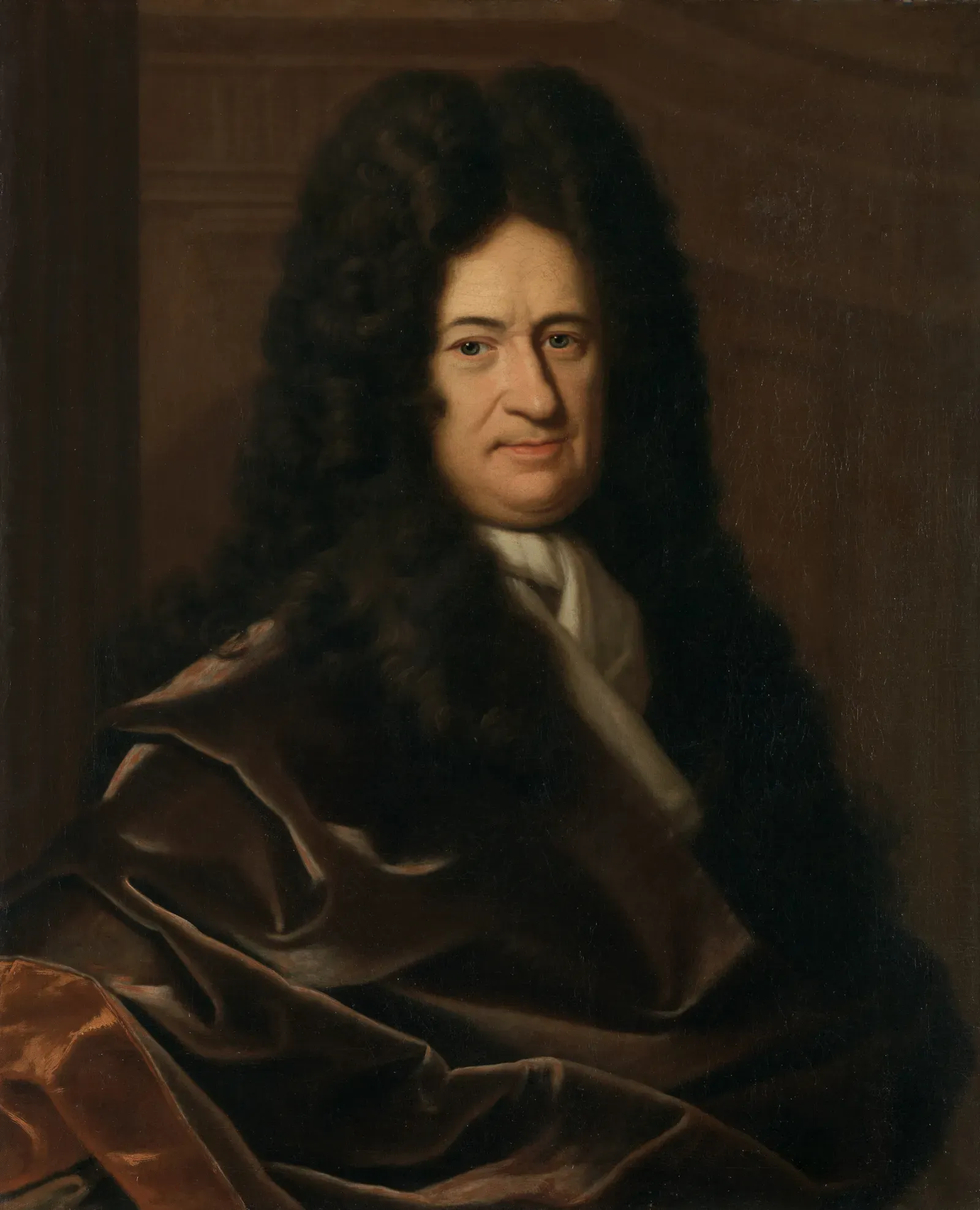
Leibniz thought that the fact that there is something and not nothing requires an explanation. The explanation he gave was that God wanted to create a universe, the best one possible, which makes God the simple reason that there is something rather than nothing. It’s elegant, admittedly. Almost too clean. Think of it like asking why a painting exists and answering: because a painter chose to paint. The logic is tight. The painting exists because the painter decided it should.
Leibniz’s theophilosophical solution, appealing to God’s goodness and creative will, does not satisfy everyone, particularly those who would include God, if God exists, in the category of “something rather than nothing” whose existence also needs to be explained. That’s the trap, isn’t it? You solve the mystery of why the universe exists by pointing to God, but then you’ve simply pushed the mystery back one step. Now you have to explain why God exists rather than nothing. It’s like pulling a carpet only to find another carpet underneath.
Heidegger’s Challenge: You’re Asking the Wrong Question

Heidegger takes up the question in his 1935 lectures at the University of Freiburg in Breisgau, later published as “An Introduction to Metaphysics,” as part of his broader preoccupation with all aspects of the question of being. For Heidegger, this wasn’t just a philosophical puzzle to be solved and shelved. It was the foundational act of philosophical inquiry itself. Heidegger claimed that philosophy itself is at stake in this question, and that to really ask it means a daring attempt to fathom this unfathomable question, pushing our questioning to the very end. Where such an attempt occurs, there is philosophy.
Here’s the thing, though: Heidegger wasn’t entirely trying to answer the question. He was questioning the question. “” is not about the origin of the world, according to Heidegger. Increasing the scientific respectability of the creation story – as with the Big Bang hypothesis – would still leave him objecting that the wrong question is being addressed. In other words, even if physicists hand you a complete timeline from the Big Bang to today, you still haven’t explained why the Big Bang was allowed to happen at all. That’s a deeply unsettling thought.
The Big Bang: When Science Enters the Room
You might think physics has this covered. After all, around 13.8 billion years ago, the universe expanded faster than the speed of light for a fraction of a second, a period called cosmic inflation. We have maps of the cosmic microwave background. We have evidence, hard data, and brilliant equations. In 1964, radio astronomers discovered a bath of microwave radiation filling the sky, the Big Bang’s afterglow, comprising particles of light emitted some 380,000 years after the universe’s birth. This cosmic microwave background radiation not only made the Big Bang idea almost inescapable but has proved to be the richest source of information for astronomers studying the very early universe.
Impressive. Truly. Yet here is the honest limitation that physicists themselves acknowledge: the Big Bang theory of cosmology successfully describes 13.7 billion years of evolutionary history of our universe. However, it is known that the current Big Bang theory cannot self-consistently explain its initial conditions. Think of it like finding a detailed instruction manual for assembling a car, but with no explanation of where the parts came from or why the factory exists. The manual is accurate. The factory remains a mystery.
The Quantum Vacuum: Something Hiding Inside Nothing
This is where modern physics gets genuinely strange. When scientists started looking closely at “empty” space, they discovered it isn’t empty at all. In quantum physics, a quantum fluctuation is the temporary random change in the amount of energy in a point in space, as prescribed by Werner Heisenberg’s uncertainty principle. Imagine you thought your bank account was at zero, but every time you checked, there were tiny, fleeting transactions happening on their own. That’s roughly the energy situation of the quantum vacuum.
Particles are created with the help of energy present in vacuums. To say that vacuums have energy and that energy is convertible into mass is to deny that vacuums are empty. Many physicists revel in the discovery that vacuums are far from empty. Some thinkers took this idea to its logical extreme. Physicist Edward Tryon reasoned that if all that existed was a quantum vacuum, a bubble-like energy fluctuation out of this vacuum could have given rise to the universe. Honestly, I find this one of the most mind-bending ideas in all of science. The universe as a spontaneous blip in a pre-existing field of quantum potential. Not planned. Not chosen. Just statistically inevitable.
The Brute Fact Argument: Maybe There’s No Answer and That’s Okay
Not everyone thinks this question deserves a cosmic answer. Some of the greatest minds took a much more pragmatic stance. In philosophy, the brute fact approach proposes that some facts cannot be explained in terms of a deeper, more “fundamental” fact. Bertrand Russell took this position, and Sean Carroll similarly concluded that “any attempt to account for the existence of something rather than nothing must ultimately bottom out in a set of brute facts; the universe simply is, without ultimate cause or explanation.” Blunt. A little unsatisfying. But refreshingly honest.
There’s something intellectually brave about accepting that some things simply are. Those who believe that our universe is part of a larger multiverse also take this line, suggesting that the multiverse and hence our universe has no ultimate explanation. Although it is now a popular response to say the universe is ultimately inexplicable, it does have the drawback of being intellectually unsatisfying. Let’s be real: “it just is” feels like giving up. Yet it might also be the most rigorous position available when you’re genuinely at the limits of what logic and observation can reach.
The Probability Angle: Nothing Was Never the Likely Outcome
Here’s a perspective that I find surprisingly compelling. Although there is only one possible “nothing,” there are an infinite number of possible “somethings.” Thus the initial probability of there being nothing rather than something is one divided by infinity, which is next to nothing – a virtual zero. Conversely, the probability of there being something is as close to one as you can get. In other words, nothing was never actually the likely outcome. Something was always statistically almost certain, in the same way that any specific lottery number is unlikely, yet someone always wins.
The fact that the universe exists should not be a surprise in the context of what we know about quantum physics. The uncertainty and unpredictability of the quantum world is manifested in the fact that whatever can happen, does happen – this is often called the principle of totalitarianism, meaning that if a quantum mechanical process is not strictly forbidden, it must occur. Existence, under this framing, isn’t a miracle. It’s the default. Nothingness would have been the real anomaly. It’s hard to say for sure whether that resolves the mystery, but it genuinely reframes it in a way that feels both bold and grounded.
New Cosmological Theories Challenging the Beginning
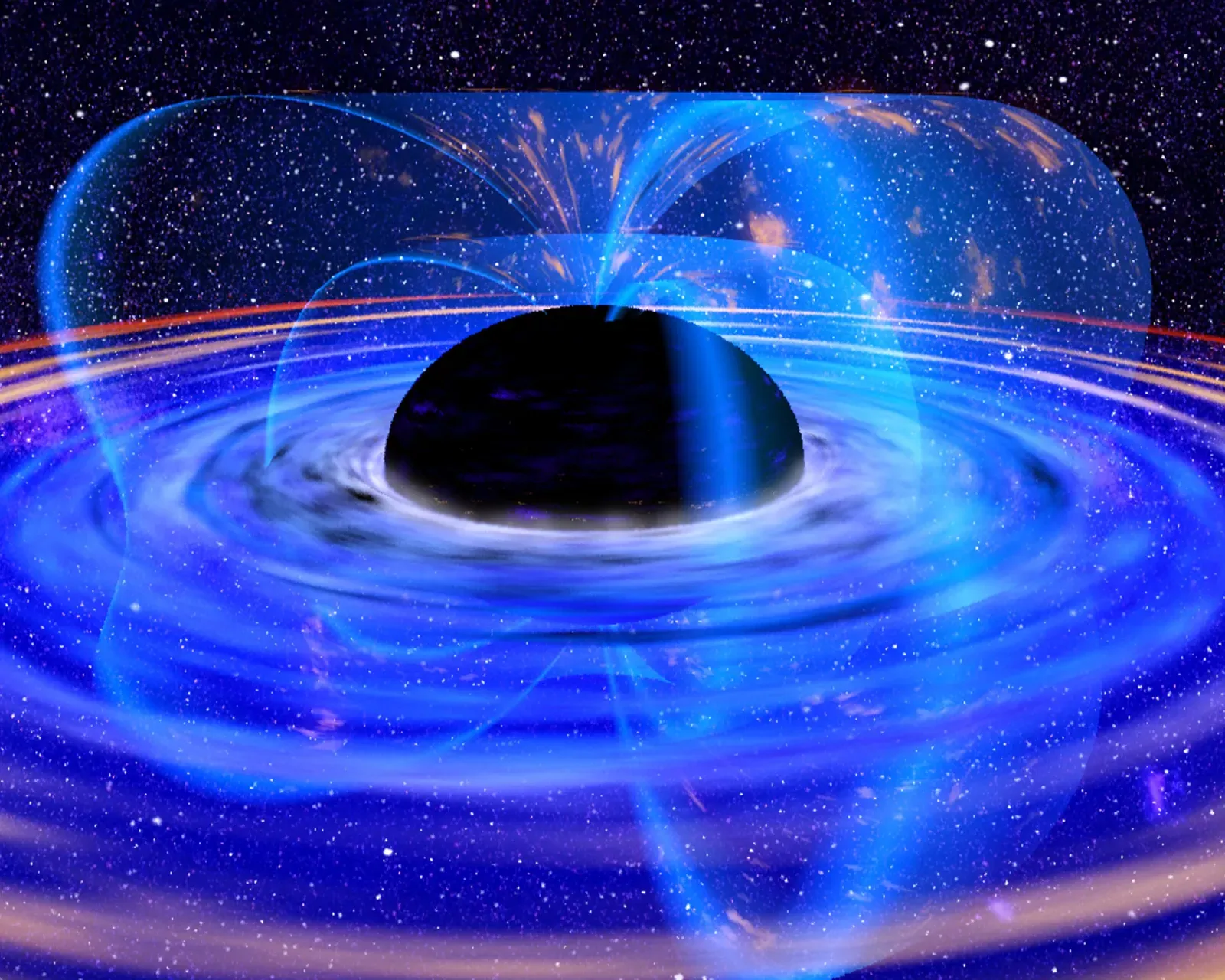
You might assume the scientific community reached consensus long ago. Think again. An international team of physicists led by Professor Enrique Gaztañaga from the University of Portsmouth’s Institute of Cosmology and Gravitation have challenged the concept that the universe was started by the Big Bang. In a paper published in Physical Review D, the researchers propose a new model claiming that the universe’s formation is the result of a gravitational collapse that generated a massive black hole, followed by a “bounce” inside, suggesting our universe may have emerged from the interior of a black hole formed within a larger parent universe.
The paper suggests that rather than the birth of the universe being from nothing, it is the continuation of a cosmic cycle, one shaped by gravity, quantum mechanics, and the deep interconnections between them. Separately, a team of scientists led by Raúl Jiménez at the University of Barcelona’s Institute of Cosmos Sciences presented a revolutionary theory about the origins of the universe, published in Physical Review Research, introducing a radical change in understanding the first moments after the Big Bang without relying on speculative assumptions. The picture emerging in 2026 is one of genuine scientific humility: we are revising our deepest stories about cosmic origins, not because we were wrong before, but because the universe is stranger than any single theory has yet captured.
Conclusion: Living Inside the Greatest Mystery
After all of this – the philosophers, the physicists, the quantum fluctuations, the black hole universes, and the brute facts – we find ourselves right back at the beginning. Staring at the universe, coffee in hand, genuinely unsure why any of this is here. This question, which has fueled centuries of metaphysical reflection, seems simple in form but conceals a complexity that transcends both experience and reason. It cannot be answered empirically, nor exhausted within the limits of language or logic. Paradoxically, it can only be asked from within consciousness, from something that may itself be a fleeting manifestation of nothingness.
You stand inside the very mystery you are trying to solve. Your brain, your curiosity, your capacity to even ask this question – all of it is made of the same inexplicable “something” that shouldn’t, by any logical default, be here. Maybe that’s the secret worth sitting with: not the answer, but the astonishing fact that you’re here to ask. Understanding the origin of the universe is not just a philosophical question, but helps us answer fundamental questions about who we are and where we come from. So the next time the world feels ordinary, remember – it’s not. It never was.
What do you think: is the universe here because it had to be, because something made it, or simply because nothing wasn’t as stable as we assumed? Drop your thoughts in the comments.