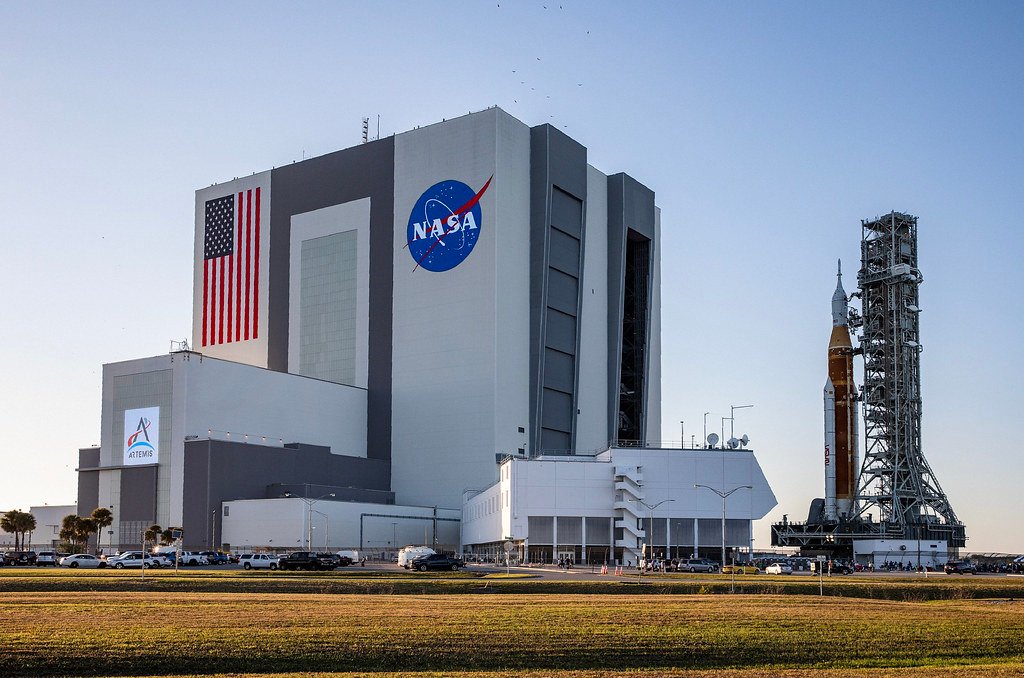
A Methodical Trek Resumes Historic Momentum (Image Credits: Flickr)
Kennedy Space Center, Florida – NASA’s Space Launch System rocket, fully stacked with the Orion spacecraft, reached Launch Pad 39B at 11:21 a.m. EDT on Friday, March 20.[1] The 322-foot structure completed a deliberate 4-mile crawl from the Vehicle Assembly Building, overcoming prior technical setbacks. This milestone positions the agency for the Artemis II crewed lunar flyby, the first human deep-space mission since Apollo 17 over five decades ago.[2]
A Methodical Trek Resumes Historic Momentum
Crawling at a top speed of just 0.82 mph, NASA’s crawler-transporter 2 hauled the massive rocket assembly starting at 12:20 a.m. EDT on March 20.[1] The journey spanned roughly 11 hours, navigating the grounds of Kennedy Space Center with precision. High winds earlier delayed the operation, but teams pressed forward once conditions improved.[3]
This rollout echoed iconic launches from Pad 39B, once home to the Space Shuttle and Saturn V. Engineers secured the rocket to its mobile launcher inside the Vehicle Assembly Building before departure. All surrounding work platforms retracted smoothly. The effort underscores the meticulous pace required for such complex hardware.[3]
Repairs Pave the Way for Return
Teams identified a helium flow problem in the rocket’s upper stage during post-rehearsal checks. The issue affected the Interim Cryogenic Propulsion Stage after a successful wet dress rehearsal on February 21.[4] NASA opted to roll the stack back to the Vehicle Assembly Building on February 25 for diagnosis and fixes.
Technicians erected platforms around the upper stage to resolve the anomaly. Ground crews completed the work ahead of schedule, enabling the recent rollout. This proactive approach minimized delays while prioritizing reliability. The rocket now stands ready for pad-based preparations.[4]
The Four Astronauts Ready for Deep Space
Artemis II features a quartet of seasoned explorers, each bringing unique expertise to the flight. The crew entered quarantine as the rocket mobilized, aligning human and hardware timelines.[1] Their selection emphasizes teamwork under pressure.
- Commander: Reid Wiseman (NASA)
- Pilot: Victor Glover (NASA)
- Mission Specialist: Christina Koch (NASA)
- Mission Specialist: Jeremy Hansen (Canadian Space Agency)
These astronauts will test Orion’s life support and navigation systems during the voyage. International collaboration shines through Hansen’s participation.[5]
Charting a Lunar Flyby Trajectory
The mission follows a free-return path around the Moon, lasting about 10 days. Astronauts will skim roughly 6,400 miles from the lunar surface, validating deep-space operations.[5] SLS Block 1 provides the thrust for this ambitious profile, marking its second flight overall.
Objectives center on crew safety and vehicle performance in cislunar space. NASA describes it as a foundational step. “The first crewed Artemis flight marks a key step toward long-term return to the Moon and future missions to Mars,” the agency states.[2] For details, visit NASA’s Artemis II mission page.[2]
Launch Preparations Hit High Gear
With the rocket in place, technicians now focus on final integrations and tests. Propellant loading rehearsals and countdown simulations lie ahead. The launch window opens April 1 at 6:24 p.m. EDT, extending through April 6.[1]
| Date | Launch Opportunity (EDT) |
|---|---|
| April 1 | 6:24 p.m. |
| April 2-6 | Multiple windows |
Solar activity monitoring protects the crew during transit. Success here builds toward Artemis III lunar landings.[2]
Key Takeaways
- SLS and Orion arrived at Pad 39B on March 20 after repairs to a helium flow issue.
- Artemis II launches NET April 1 for a 10-day lunar flyby with four astronauts.
- This flight tests deep-space systems, paving the way for Moon surface missions.
The return to the pad signals NASA’s commitment to reliable exploration. As final checks unfold, anticipation builds for humanity’s next lunar chapter. What do you think about this step toward the Moon? Tell us in the comments.