
Imagine zooming out from your backyard, past the Moon, past the Sun, past the Milky Way, past entire clusters of galaxies – until you reach a scale so enormous that galaxies themselves look like tiny glowing dots threaded along invisible strings. That is exactly what the universe looks like from the outside. Not a random scatter of stars and galaxies, but a structured, interconnected masterpiece stretching across billions of light-years. Honestly, it’s one of the most humbling things science has ever revealed to us.
You might have heard the universe described as “vast” or “infinite,” but what you probably haven’t heard enough about is the intricate architecture holding it all together. There is a hidden framework, a network of threads and nodes and empty voids, that governs where galaxies live and how they grow. It’s called the cosmic web, and it is the single largest known structure in existence. Curious to know how it works and what it means for our place in the universe? Let’s dive in.
What Exactly Is the Cosmic Web?
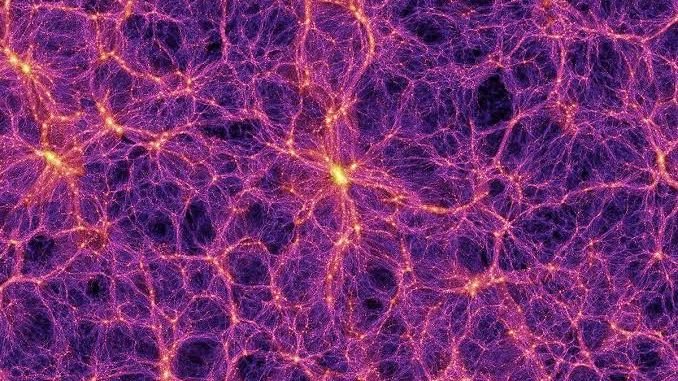
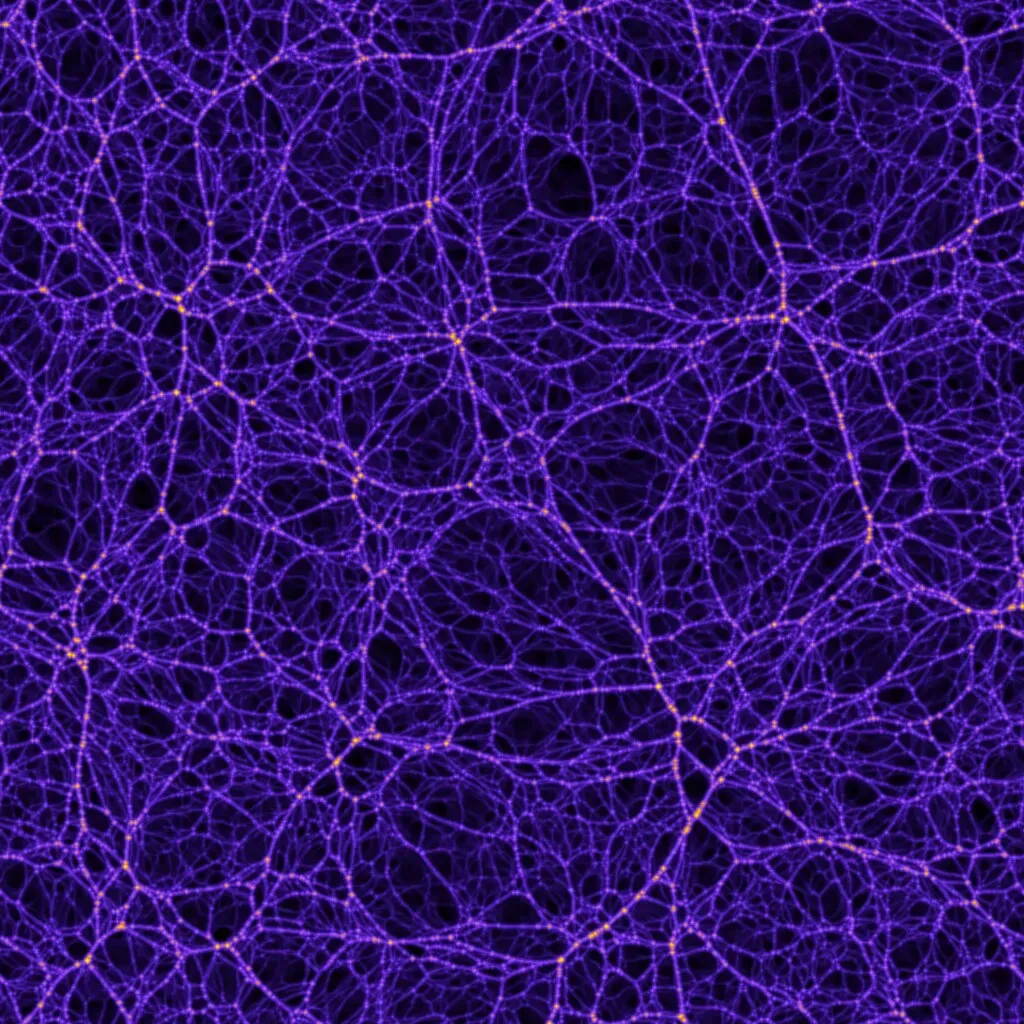
The Cosmic Web is the largest known coherent pattern of structures, pervading the entire known observable universe, integrating and connecting gravitationally bound physical structures such as galaxy clusters. Think of it as the skeleton of reality itself. Not poetic exaggeration – that is genuinely what it is.
The web-like distribution of matter presents a huge variety of galaxy systems from the galaxy clusters as nodes of the cosmic web, connected by elongated filaments of groups and single galaxies, and separated by huge underdense regions with almost no visible matter. You’re essentially looking at a universe that resembles a vast, three-dimensional sponge or spider’s web, where almost everything meaningful happens along the strands and at the intersections.
How the Cosmic Web Was Born: The Big Bang Connection
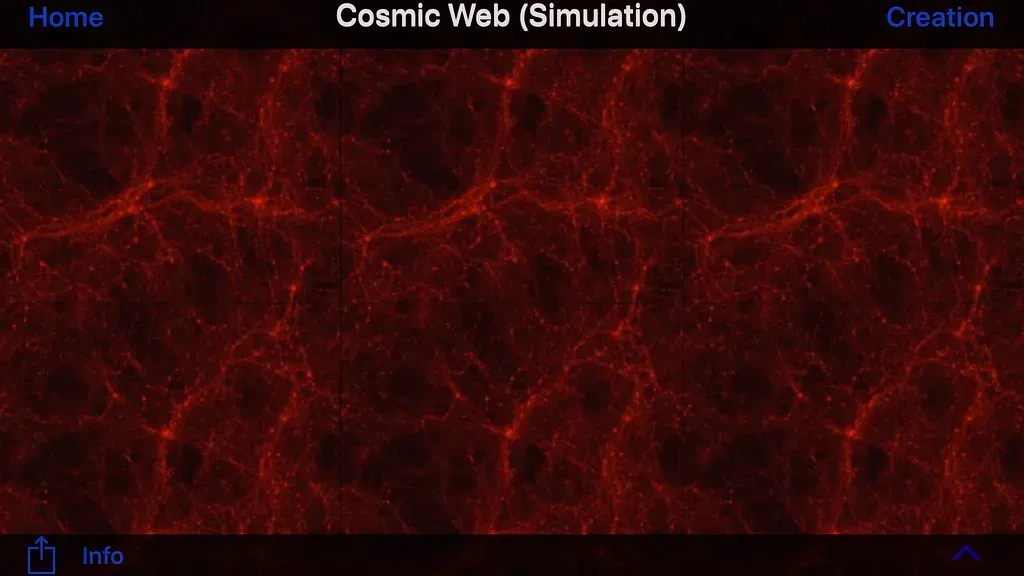
Astronomers theorize that the early universe was very smooth, and that the distribution of matter was uniform with tiny variations in density that grew into a web-like pattern. These areas of slightly higher density also had slightly more gravity to attract more matter. Over time, the universe evolved into a web of filaments and vast sheets, largely made of dark matter, which form the structure of the universe today. It’s a bit like how a tiny crack in a sidewalk slowly branches out into a whole network of fractures over years. Small imperfections, massive consequences.
The gravitational interaction continues in hierarchical structure formation: the smaller gravitationally bound structures such as the first stars and stellar clusters form, then galaxies, followed by groups, clusters and superclusters of galaxies. What’s remarkable is that this entire elaborate, breathtaking structure grew from fluctuations smaller than anything you could see with the naked eye, seeded in the first moments after the Big Bang.
The Filaments: The Universe’s Invisible Highways
In cosmology, galaxy filaments are the largest known structures in the universe, consisting of walls of galactic superclusters. These colossal threads act as the connective tissue between everything. These massive, thread-like formations can commonly reach 50 to 80 megaparsecs in length – with the largest found to date being Quipu at 400 megaparsecs, and possibly the still unconfirmed Hercules-Corona Borealis Great Wall at around 3 gigaparsecs in length – and form the boundaries between voids.
These filaments act like highways, funneling gas to galaxies and aiding star formation. The gas within them serves as a reservoir, supplying material for galaxies to grow and form stars. As galaxies use this gas, they evolve and shape the universe’s structure. Here’s the thing – without these filaments feeding galaxies with raw material, you wouldn’t have new stars forming anywhere. No new stars means no new planetary systems, and ultimately, no new possibilities for life.
Dark Matter: The Invisible Architect Behind It All
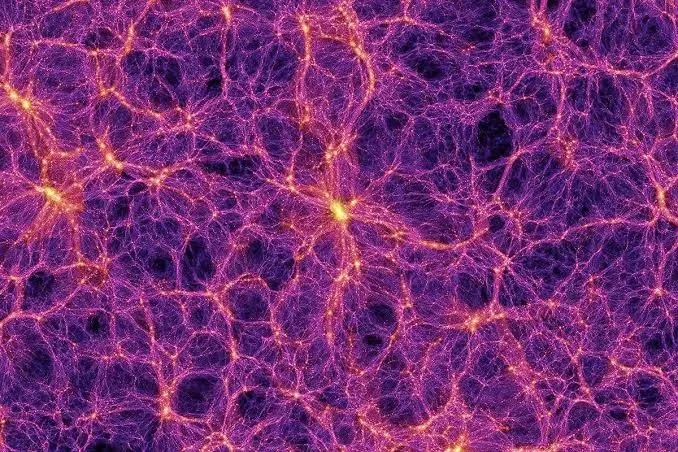
A pillar of modern cosmology is the existence of dark matter, which constitutes about 85% of all matter in the Universe. Under the influence of gravity, dark matter forms an intricate cosmic web composed of filaments, at whose intersections the brightest galaxies emerge. This cosmic web acts as the scaffolding on which all visible structures in the Universe are built: within the filaments, gas flows to fuel star formation in galaxies.
We see galaxies in filaments or clusters only because dark matter has formed these structures, while the luminous matter simply follows dark matter’s gravitational attraction. In other words, every galaxy you’ve ever seen in a photo of space – every swirling spiral, every glowing elliptical – is essentially just riding the scaffolding that invisible dark matter built. It’s hard to say for sure exactly what dark matter is, but its gravitational fingerprints are unmistakably everywhere.
Superclusters and Voids: The Peaks and Valleys of the Universe
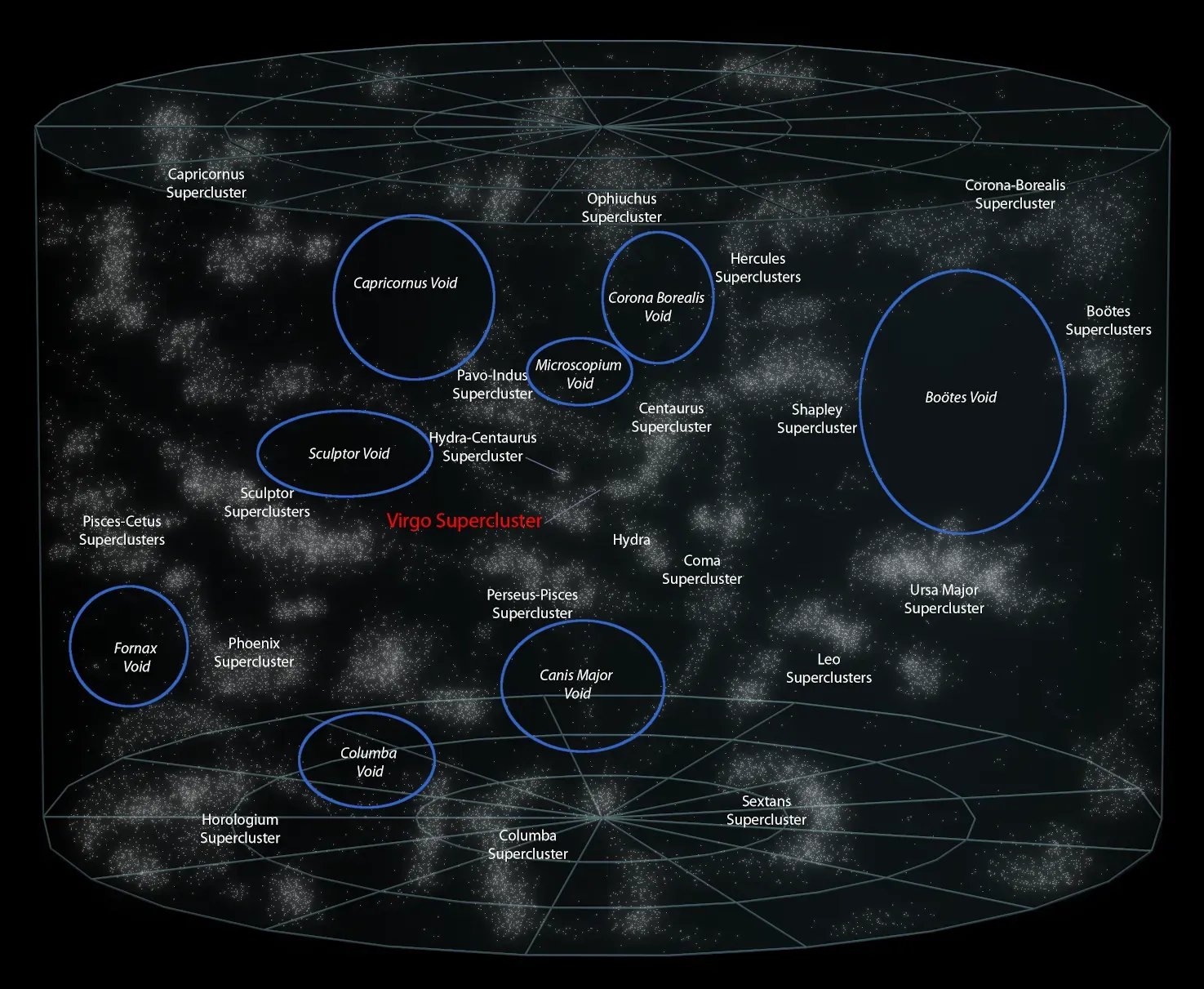
The richest and largest structures in the cosmic web are galaxy superclusters, their complexes, and planes. Our own Milky Way is not exempt from this grand structure. The Milky Way galaxy is part of the Laniakea supercluster, an enormous structure made up of about 100,000 galaxies spread across 520 million light-years. The name “Laniakea” comes from Hawaiian and means “immense heaven” – a name that somehow feels exactly right.
On the flip side of these dense superclusters lie the cosmic voids. The vast open spaces between these filaments are called cosmic voids. Voids were initially discovered by scientists in the 1970s by means of redshift surveys of galaxies. Their sizes can vary from 10 to 100 megaparsecs and make up most of the volume of the universe, roughly 80%. Voids are defined as areas in space with a very low number of galaxies that are distributed far from one another. So while the web gets all the attention, the voids are actually the dominant feature by volume – empty, quiet, and vast.
First Direct Images and Groundbreaking Observations
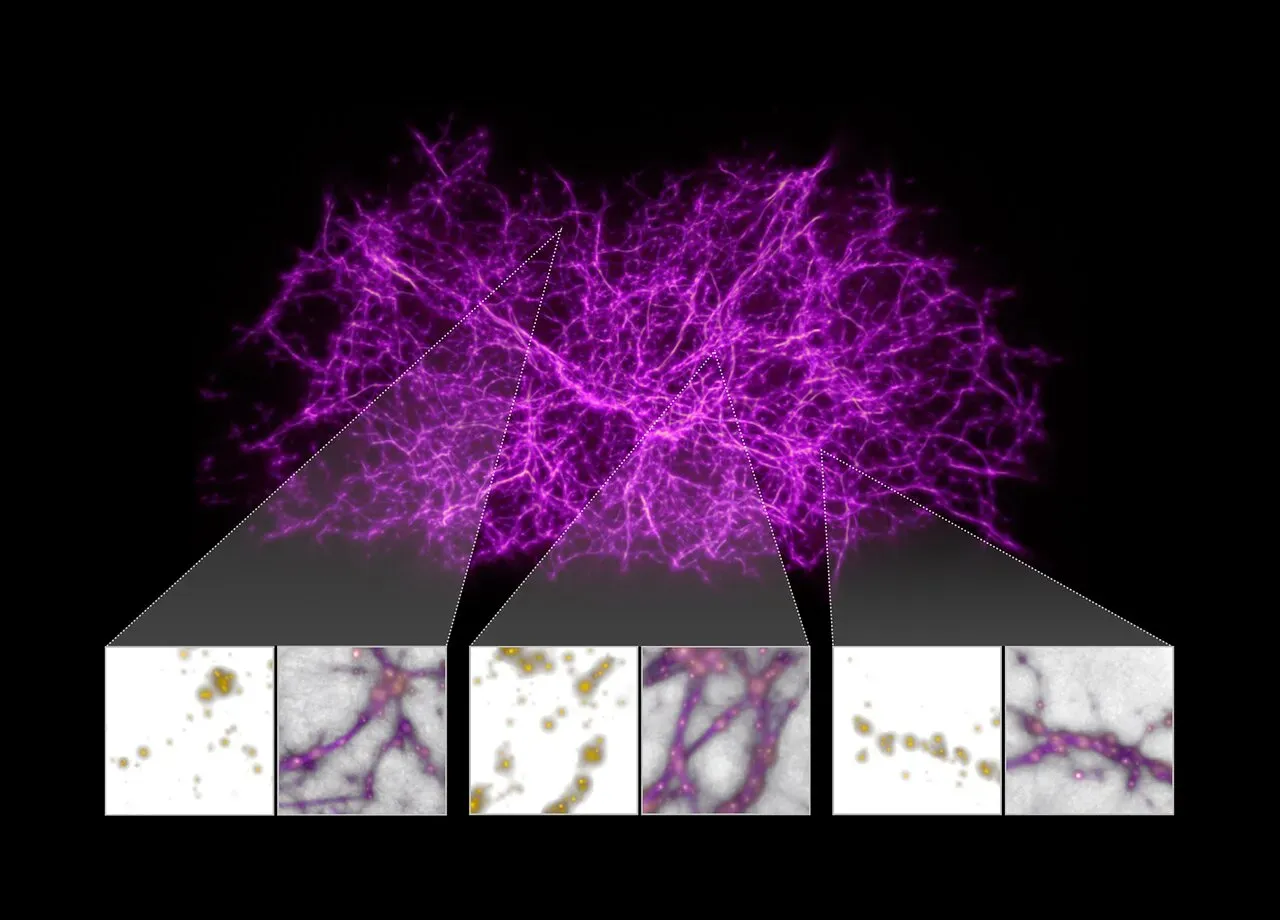
For a long time, the cosmic web was more of a theoretical prediction than something anyone could point a telescope at and photograph. That changed dramatically. With hundreds of hours of observations, an international team of researchers has now obtained an unprecedented high-definition image of a cosmic filament inside this web, connecting two active forming galaxies – dating back to when the Universe was about 2 billion years old. That image, captured using the MUSE instrument at ESO’s Very Large Telescope in Chile, was nothing short of jaw-dropping.
The image reveals a single ancient filament of the cosmic web, with diffuse gas connecting two galaxies over an enormous distance of roughly 3 million light-years. Even the most abundant element, hydrogen, emits only a faint glow, making it basically impossible for instruments of the previous generation to directly observe such gas. The fact that we can now see this at all is a testament to how far telescope technology has come. Let’s be real – capturing light that traveled nearly 12 billion years to reach a detector on Earth is almost impossibly audacious, and yet it worked.
Mapping the Cosmic Web: DESI and the New Era of Discovery
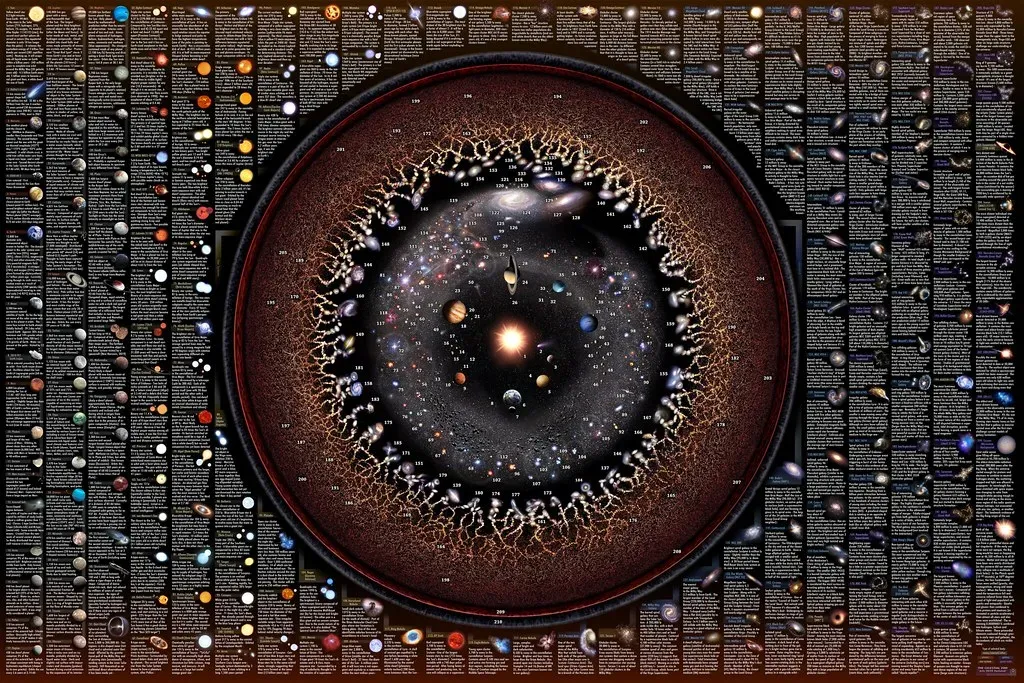
The effort to fully map the cosmic web is accelerating faster than ever before. The Dark Energy Spectroscopic Instrument (DESI) will measure the effect of dark energy on the expansion of the universe, obtaining optical spectra for tens of millions of galaxies and quasars, constructing a 3D map spanning the nearby universe to 11 billion light years. That map is already transforming what we know about large-scale structure.
In March 2025, DESI released the largest dataset of its kind, with information on 4 million stars, 13.1 million galaxies, and 1.6 million quasars. With this new data, DESI has achieved the remarkable feat of building the largest 3D map of our universe to date. Located at the top of Kitt Peak, about 50 miles southwest of Tucson, Arizona, DESI and its 5,000 tiny robots have already measured the distances to 40 million galaxies. The map that the instrument is creating allows scientists to see how the structure of the universe evolved over time. Honestly, the scale of this achievement is difficult to comprehend. We are essentially drawing a map of a structure that contains everything that has ever existed.
Conclusion: You Are a Part of the Cosmic Web
The cosmic web isn’t just an abstract concept for astronomers to debate at conferences. It is the framework of existence itself. Since the Big Bang, a mysterious force called dark energy has been stretching the overall geometry of the web very quickly. At the same time, gravitational forces operating on the galaxies are pulling matter closer together, albeit at a slower rate than we would expect due to the counter-effect of dark energy. That tension, that cosmic tug-of-war between expansion and gravity, is what keeps the web alive and dynamic.
Every atom in your body was once part of a star, and that star was once part of a gas cloud that formed along one of these invisible filaments. Due to the accelerating expansion of the universe, the individual clusters of gravitationally bound galaxies that make up galaxy filaments are moving away from each other at an accelerated rate; in the far future they will dissolve. Nothing lasts forever – not even the universe’s grandest architecture. The cosmic web is being pulled apart, slowly but surely, by the very dark energy we’re still working to understand.
The universe built something staggeringly beautiful out of almost nothing, using just gravity, time, and a handful of invisible ingredients. What does it say about reality that its largest structure looks uncannily like the neural network of a human brain, or the threads of a spider’s web, or even the mycelium beneath a forest floor? Perhaps the same fundamental logic of networks and connections runs deeper than we imagine. What do you think – does knowing you are part of the cosmic web change how you see your place in the universe? Share your thoughts in the comments.