
If you’d told most doctors a few decades ago that the weird world of quantum mechanics would one day influence how we diagnose disease or design drugs, they would’ve probably smiled politely and changed the subject. Quantum theory was that abstract, almost mystical thing physicists argued about late at night, not something you’d expect to see in a hospital ward. Yet here we are in 2026, and some of the most exciting changes in medicine are quietly emerging from the very same rules that govern subatomic particles.
What makes this so fascinating is that quantum mechanics does not just make things a little faster or a bit more precise. In some areas, it’s forcing us to rethink what is even possible in biology: how enzymes work, how we image the brain, how we simulate molecules, and how we might someday personalize treatments. It’s like discovering a hidden “advanced settings” menu in the laws of nature that we didn’t know we could access – and medicine is just starting to explore it.
Quantum Imaging: Seeing Inside the Body with Unprecedented Clarity
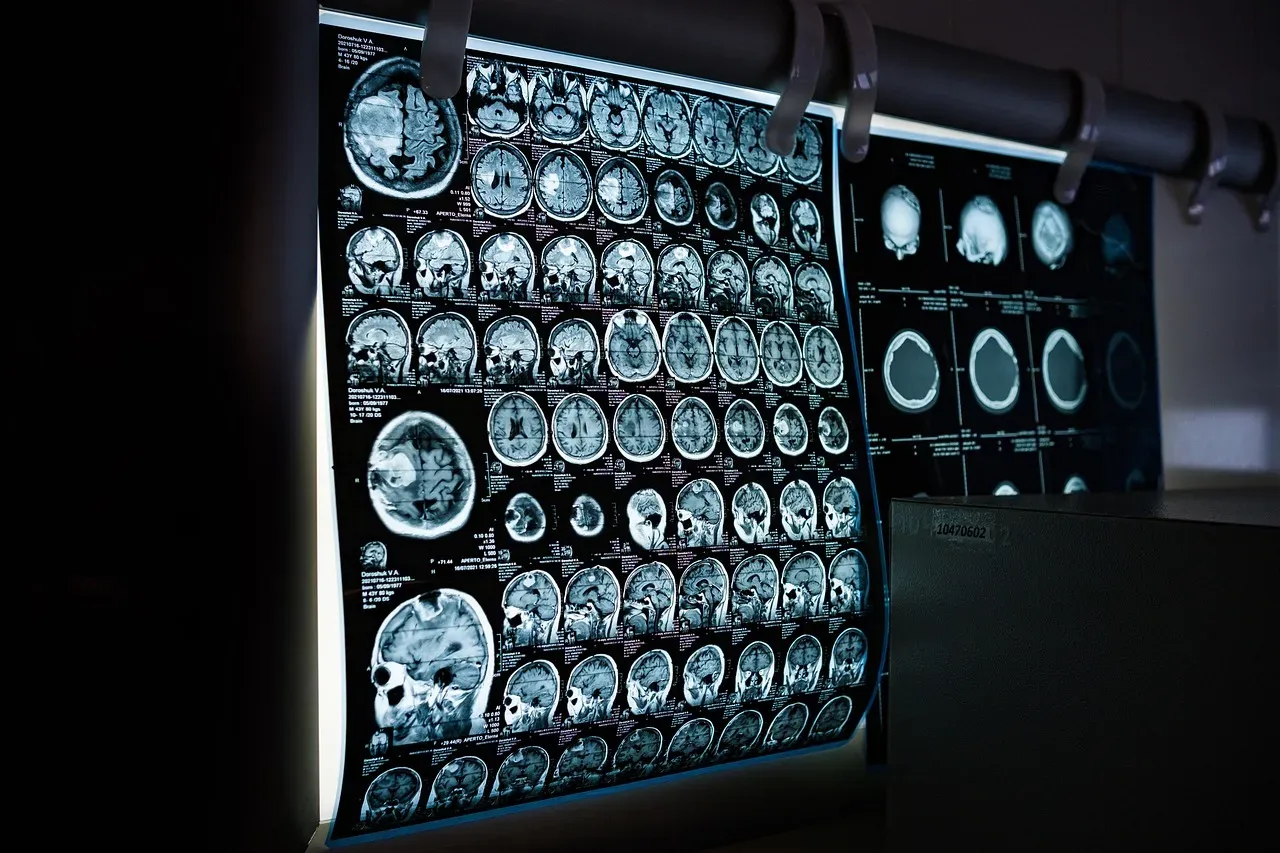
Imagine being able to see structures inside the body that are smaller, softer, and more delicate than anything traditional scanners can handle – without cutting into a single cell. That’s the promise of quantum-enhanced imaging, which uses the strange properties of photons and entanglement to push past the usual limits of resolution and noise. Researchers are developing quantum versions of familiar tools, such as MRI and optical imaging, that can detect incredibly subtle changes in tissues, sometimes with fewer harmful side effects.
One big advantage is that quantum techniques can squeeze more information out of each photon of light or unit of magnetic signal, almost like turning up the sharpness on reality itself. For example, quantum sensors that use atomic spins are being explored for ultra-sensitive brain imaging, potentially capturing tiny magnetic fields from neuronal activity that current scanners blur out. While most of these systems are still in research labs, the direction is clear: in the coming years, diagnoses may rely on images that reveal early signs of disease far sooner – and far more gently – than today’s machines can manage.
Quantum Sensors in the Body: From Wearables to “Unseeable” Signals
Quantum sensors are already creeping into medicine in less obvious ways than oversized machines in hospital basements. These sensors exploit quantum properties – such as the spin states of electrons or the energy levels of atoms – to detect extremely small changes in temperature, magnetic fields, or chemical environments. Diamond-based quantum sensors, for instance, are being studied for their ability to pick up faint magnetic signals at room temperature, raising the possibility of compact, ultra-precise devices that could one day monitor organs or tumors in real time.
Think of it like upgrading from a regular thermometer to something that can feel the whisper of a single molecule reacting. Some research teams are exploring implantable or minimally invasive quantum sensors that might track oxygen levels, metabolic activity, or even neurotransmitters in living tissue with astonishing precision. If those ideas pan out, doctors would no longer have to guess based on rough averages; they’d be able to watch the body’s internal conversations in near real time and adjust treatments on the fly, a bit like a pilot watching an ultra-detailed cockpit dashboard instead of a couple of basic gauges.
Quantum Biology: When Living Systems Start to Look Quantum Weird
For a long time, many scientists quietly assumed that quantum effects were mostly irrelevant in warm, wet, noisy environments like the human body. But accumulating evidence in areas such as photosynthesis, avian navigation, and enzyme activity has shaken that belief. In some biological processes, quantum coherence and tunneling appear to help reactions happen faster or more efficiently than classical physics would predict, hinting that evolution may have quietly learned to harness quantum tricks.
This matters for medicine because the fundamental reactions inside our cells – like how enzymes speed up chemical changes or how receptors recognize molecules – might rely in part on quantum phenomena. In drug design, for example, better understanding quantum tunneling in enzymes could explain why some molecules work brilliantly and others fail, even when they look nearly identical on paper. While the field of quantum biology is still young and almost deliberately cautious, it’s already nudging researchers to revisit some “settled” assumptions about how life works, which in turn can open new angles for treating disease at its most basic chemical roots.
Quantum Computing and Drug Discovery: Compressing Years into Days
Simulating molecules accurately is brutally hard with classical computers, especially when electrons interact in complex ways inside large drug candidates or protein targets. Quantum computers, in theory, are built to handle exactly that kind of problem, because they work with quantum bits that obey the same rules as the particles they’re trying to model. Over the last few years, there’s been rapid progress in early quantum algorithms that can approximate molecular energies or reaction pathways in ways classical machines struggle to match, especially as systems scale up.
Pharmaceutical companies and research groups are already experimenting with hybrid approaches that pair quantum chips with classical supercomputers. The goal is not sci‑fi magic, but shaving months or even years off the early drug discovery pipeline by narrowing down promising candidates more intelligently. Instead of blindly screening huge libraries, scientists can use quantum-inspired models to predict which molecules are most likely to bind to a target, resist mutations, or avoid toxic interactions. The technology is still limited by noisy hardware and small system sizes, but even partial gains in accuracy or speed could have a massive impact on how quickly new treatments reach the clinic.
Quantum Randomness and Medical AI: Better Predictions, Less Hidden Bias
At first glance, quantum randomness sounds like the last thing you’d want in medicine, where predictability and control are everything. But truly random numbers – generated by quantum processes rather than algorithms – are surprisingly valuable when training and testing medical AI systems. They allow for more honest shuffling of data, more robust simulations, and stronger privacy protections, which helps reduce subtle patterns and biases that can creep in when randomness is only simulated.
On top of that, quantum-inspired optimization methods are being explored to help AI systems search through enormous spaces of possible treatment plans, resource allocations, or diagnostic rules. In complex health systems, there are far too many variables for a human planner to juggle, but AI guided by these advanced algorithms can hunt for better solutions more efficiently. It’s not that quantum mechanics suddenly turns AI into a medical oracle; it’s that it gives us sharper mathematical tools to design, test, and secure these systems, hopefully making them fairer and more reliable when real lives are on the line.
Conclusion: A New Layer of Reality for Medicine to Explore
Quantum mechanics isn’t replacing existing medical science; it’s adding a deeper layer underneath it, like discovering that a familiar city has an entire hidden subway system you never knew about. Imaging, sensors, biology, drug discovery, and AI are all being quietly rewired by quantum ideas, even if the equipment still looks ordinary on the surface. Some of these advances are already entering practical use, while others are still emerging from the lab, where engineers, physicists, biologists, and clinicians are learning to speak each other’s language.
What ties all of this together is a shift in mindset: instead of treating the quantum world as a theoretical curiosity, medicine is starting to treat it as a toolkit. The more comfortable we get with that toolkit, the more likely it is that today’s “strange” physics will become tomorrow’s standard of care, woven into scans, drugs, and devices that just seem miraculously better. As this quiet revolution continues, it’s worth asking yourself: when you walk into a hospital ten years from now, how much of what’s saving your life will be running on rules you never see but that govern the tiniest pieces of reality?