Mars has always felt like a tantalizing mystery sitting right next door. We’ve sent rovers, orbiters, and landers, and yet the planet still manages to surprise us. A new discovery is now reshaping what scientists think about the Red Planet’s watery past, and honestly, it might be the most exciting Mars news in years.
A recently identified river delta formation is turning heads in the scientific community, not just because of its size or age, but because of what it might be hiding beneath its dusty surface. If you think Mars exploration has been running out of fresh angles, think again. Let’s dive in.
A Delta That Rewrites the Story of Martian Water
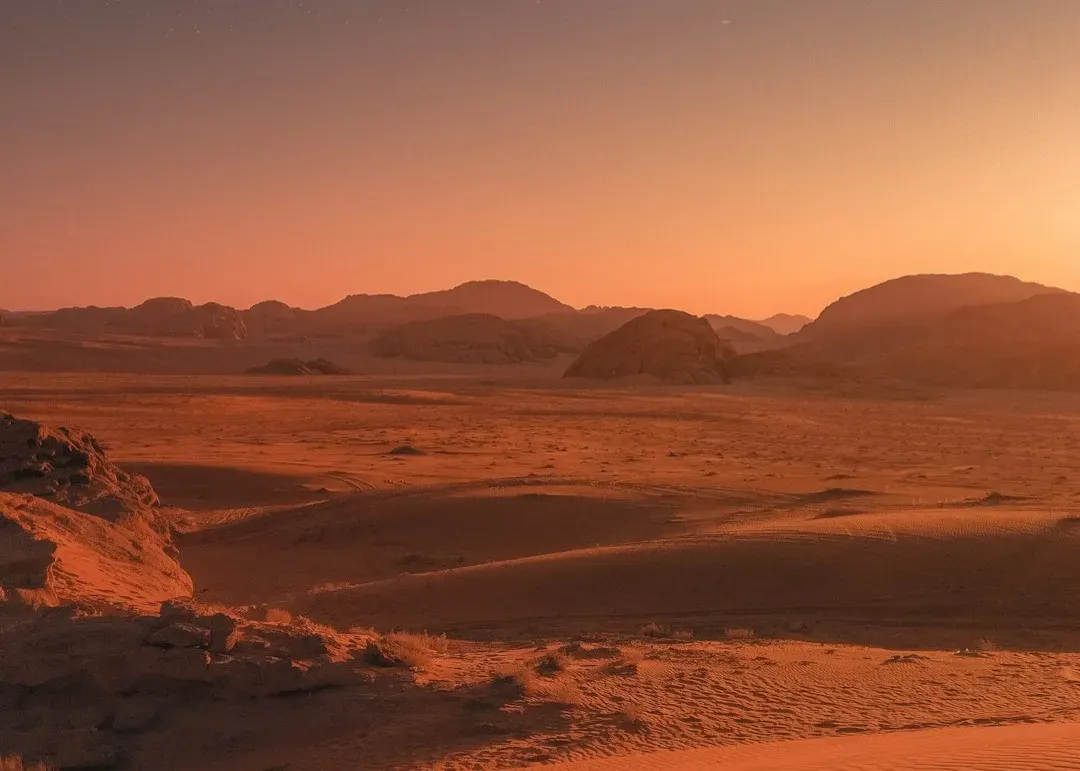
Here’s the thing about river deltas: they don’t just form anywhere. They require sustained water flow over long periods of time, the kind of slow, persistent liquid movement that carves landscapes and deposits sediment layer by layer. Scientists have now confirmed the discovery of a well-preserved delta structure on Mars that points to exactly this kind of prolonged aquatic history.
The delta was identified through detailed orbital imaging data, and what makes it remarkable is its state of preservation. Unlike many ancient Martian features that have been eroded beyond recognition, this formation retains enough structural integrity to allow meaningful geological analysis.
Researchers believe the delta dates back billions of years, to an era when Mars was far wetter and potentially far more hospitable than the barren, frozen desert we see today.
Why River Deltas Matter So Much in the Search for Life
Think of a river delta like a natural archive. As water flows and slows, it drops whatever it was carrying, sediment, minerals, organic compounds, and potentially even biological material. Over time, those layers build up and get buried, protected from harsh surface conditions like radiation and temperature extremes.
On Earth, some of our most important fossil records come from ancient delta and floodplain environments. The logic extends naturally to Mars. If microbial life ever existed on the planet, a delta would be one of the best places for traces of it to have been preserved, locked away in sedimentary rock like a time capsule waiting to be opened.
Scientists aren’t just speculating here. The connection between deltaic deposits and biosignature preservation is well established in planetary science, which is exactly why this discovery is generating such serious attention.
What the Geological Evidence Actually Shows
The imaging and spectral analysis of the delta reveal layered sedimentary structures that are consistent with slow, sustained water deposition. These aren’t random wind-blown patterns. They show the kind of organized, horizontal stratification that geologists associate with aquatic environments specifically.
Mineralogical data also suggests the presence of clays and other hydrated minerals within the delta region. These minerals only form in the presence of liquid water, which adds another layer of confirmation to the idea that this location was once genuinely wet, not just damp, but persistently wet over long stretches of geological time.
It’s honestly hard to overstate how significant layered clay-rich deposits are in this context. On Earth, clay minerals are extraordinary at trapping and preserving organic molecules. Finding them concentrated in a delta structure on Mars is, to put it plainly, a very big deal.
How This Discovery Stacks Up Against Previous Mars Findings
Mars has no shortage of candidate sites for ancient habitability. The Jezero Crater, where NASA’s Perseverance rover is currently operating, was itself chosen partly because of its own ancient delta structure. So how does this new delta compare?
What sets the newly discovered delta apart is a combination of factors: its preservation quality, its mineralogical composition, and its location within a broader regional context that suggests extensive ancient hydrological activity. It’s not just one delta in isolation. It appears to sit within a larger system of ancient waterways, which paints a picture of a Mars that was hydrologically active across wide geographical areas, not just in isolated pockets.
I think what’s genuinely thrilling here is the cumulative weight of evidence building up across the planet. Each new discovery isn’t just interesting on its own. It fits into an increasingly coherent story of a Mars that was, for a significant stretch of early solar system history, a world with real potential for life.
The Preservation Question: Could Biosignatures Still Survive?
One of the biggest challenges in Mars astrobiology isn’t just finding the right kind of ancient environment. It’s figuring out whether any biological signatures could have actually survived billions of years of cosmic radiation, freeze-thaw cycles, and chemical weathering.
This is where the delta’s depositional layers become critically important. Sediment burial is nature’s own protective mechanism. The deeper the material is buried, the more shielded it becomes from surface radiation. Scientists believe that even after billions of years, subsurface sedimentary layers in a well-preserved delta could still contain detectable organic chemistry, the kind that wouldn’t be there unless biology had once played a role.
It’s not a guarantee, of course. It’s hard to say for sure how much degradation has occurred at this particular site. Still, the structural and mineralogical evidence suggests this is one of the more promising preservation environments identified on Mars so far.
What Comes Next: Future Missions and Exploration Priorities
Discoveries like this don’t exist in a vacuum. They feed directly into decisions about where future missions should go, what instruments they should carry, and what questions they should prioritize. The newly identified delta is now likely to enter serious discussions among mission planners as a high-priority target.
NASA’s Mars Sample Return mission, which aims to bring Martian rock and soil samples back to Earth for laboratory analysis, is one of the most anticipated planetary science endeavors of the coming decades. Finding the right samples from the right locations is everything, and a pristine delta environment loaded with clay-rich sedimentary layers is exactly the kind of place you’d want to sample. Earth-based labs would be able to run analyses that no rover instrument could match in sensitivity or complexity.
Meanwhile, the European Space Agency’s ExoMars Rosalind Franklin rover, designed specifically to drill beneath the Martian surface and search for organic molecules, represents another avenue through which a site like this could eventually be explored in detail.
What This Means for Our Understanding of Mars as a Living World
Let’s be real: every time we find more evidence of ancient water on Mars, the question of life gets harder to dismiss. The planet clearly had the raw ingredients. It had water. It had chemistry. It had geological stability over long enough time periods. The missing piece has always been proof that life actually took advantage of those conditions.
A discovery like this delta doesn’t answer that question outright. Nothing short of an actual biosignature detection, or a returned sample showing unambiguous biological chemistry, will do that. Still, it tightens the circle of possibility considerably.
Honestly, I find it hard not to feel a sense of wonder at where Mars science has arrived. We’ve gone from thinking of Mars as a cold, dead rock to mapping out ancient river systems, lake beds, and now richly preserved deltas with genuine astrobiological potential. The Red Planet, it turns out, has been telling us a story all along. We’re just now starting to understand the language.
Conclusion: A Planet That Keeps Surprising Us
The discovery of this ancient Martian delta is more than a geological curiosity. It’s a signpost. It points toward a Mars that was once dynamic, wet, and chemically complex enough to potentially support life, and it points toward the locations we should be visiting next with our most powerful scientific tools.
Each layer of sediment preserved in that ancient delta is like a page in a book we haven’t been able to read yet. The tools are getting better, the missions are getting smarter, and the questions are getting sharper. Whether Mars was ever truly alive remains one of the most profound open questions in all of science.
What do you think? If life once existed on Mars, where do you believe we’re most likely to finally find the proof? Drop your thoughts in the comments below.