
Something streaked across the Ohio sky in early 2026, and it wasn’t a plane. It wasn’t a drone. It was a fireball, blazing through the atmosphere at tens of thousands of miles per hour, and it left behind fragments that scientists and amateur hunters alike are desperately trying to find. The story of what fell, where it landed, and why it matters is more fascinating than you might expect.
This isn’t just a quirky news story about rocks falling from space. The fragments from this event could carry information about the early solar system, and finding them quickly, before rain and oxidation degrade them, is a race against time. Let’s dive in.
Scientists Zero In on a Strewnfield in Ohio
Based on Doppler radar data and infrasound readings, researchers were able to map out an approximate strewnfield, which is the area across which meteorite fragments are scattered after a bolide breaks apart during atmospheric entry. The predicted zone stretched across parts of rural Ohio, covering farmland, wooded areas, and small communities. Pinpointing a strewnfield is a bit like trying to find where a shattered windshield scattered its pieces after a highway impact, except the windshield came from outer space.
Scientists from several universities and the meteorite research community began coordinating almost immediately. Radar returns, particularly from weather radar systems that can pick up the dense, heavy signatures of falling rock, helped narrow the search corridor. The clock was ticking from the moment those first estimates came in.
Meteorite Hunters Hit the Ground Running
Here’s the thing about meteorite hunting: it’s equal parts science, detective work, and sheer physical endurance. Professional researchers and passionate amateur hunters flooded into the Ohio search zone within days of the event. They walked transects through muddy fields, scanned gravel roads, and knocked on the doors of farmers to ask permission to search private land.
Fresh meteorites are prized not just for their scientific value but for their pristine condition. The longer a meteorite sits on Earth’s surface, the more it gets contaminated by terrestrial minerals and moisture. A meteorite recovered within days of landing is essentially a time capsule, untouched since it formed billions of years ago. That urgency drives people to travel hundreds of miles on very short notice, and honestly, I find that kind of obsessive dedication oddly inspiring.
What Kind of Space Rock Are We Dealing With?
Early analysis of the fireball’s spectral signature and flight characteristics suggested the incoming object was most likely a chondrite, the most common type of stony meteorite. Chondrites are ancient. We’re talking roughly four and a half billion years old, nearly as old as the solar system itself. They contain tiny spherical structures called chondrules, which are among the oldest solid materials ever formed in our cosmic neighborhood.
If confirmed as a chondrite, and particularly if it turns out to be a carbonaceous chondrite, the scientific value jumps considerably. These rare varieties can contain organic compounds and even amino acids, the building blocks of life. Researchers would want to get samples into a laboratory as quickly as possible to prevent any terrestrial contamination from skewing the chemical analysis. It’s hard to say for sure what type it is until physical samples are examined directly.
Farmers and Local Communities Play a Crucial Role
Let’s be real: without the cooperation of local landowners, this kind of search simply doesn’t happen. Ohio’s rural communities responded with remarkable openness. Farmers allowed strangers to walk their fields, and some even joined the search themselves after learning what had potentially landed on their property.
Finding a meteorite on your land is genuinely exciting, and it carries real legal weight too. In the United States, meteorites found on private property belong to the landowner. That’s a significant incentive. Some recovered meteorites, especially those with rare compositions or notable size, have sold for thousands of dollars per gram on the collector market. The cooperation between scientists and landowners in cases like this is a beautiful example of how community goodwill can accelerate real scientific discovery.
The Race Against Rain and Time
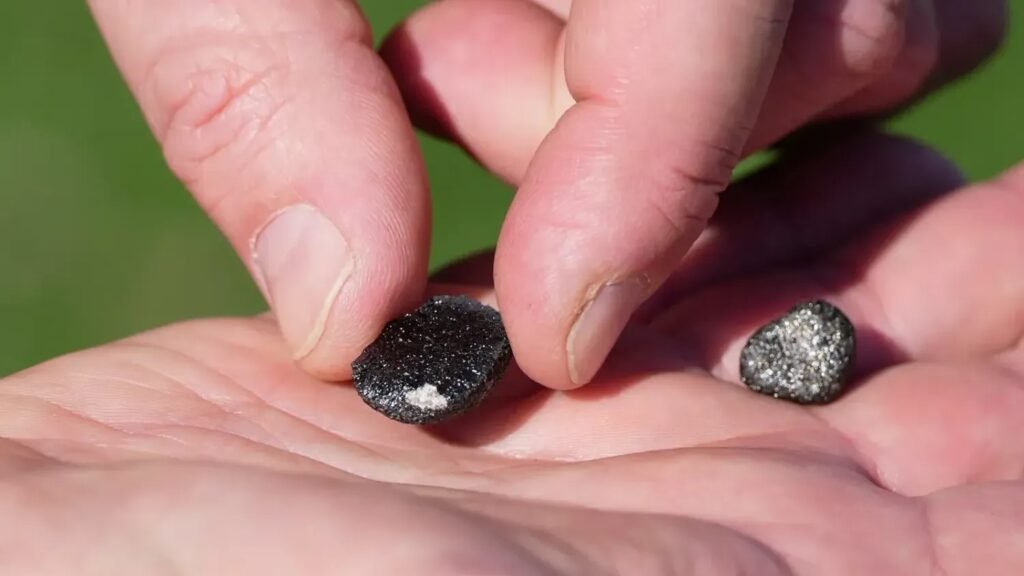
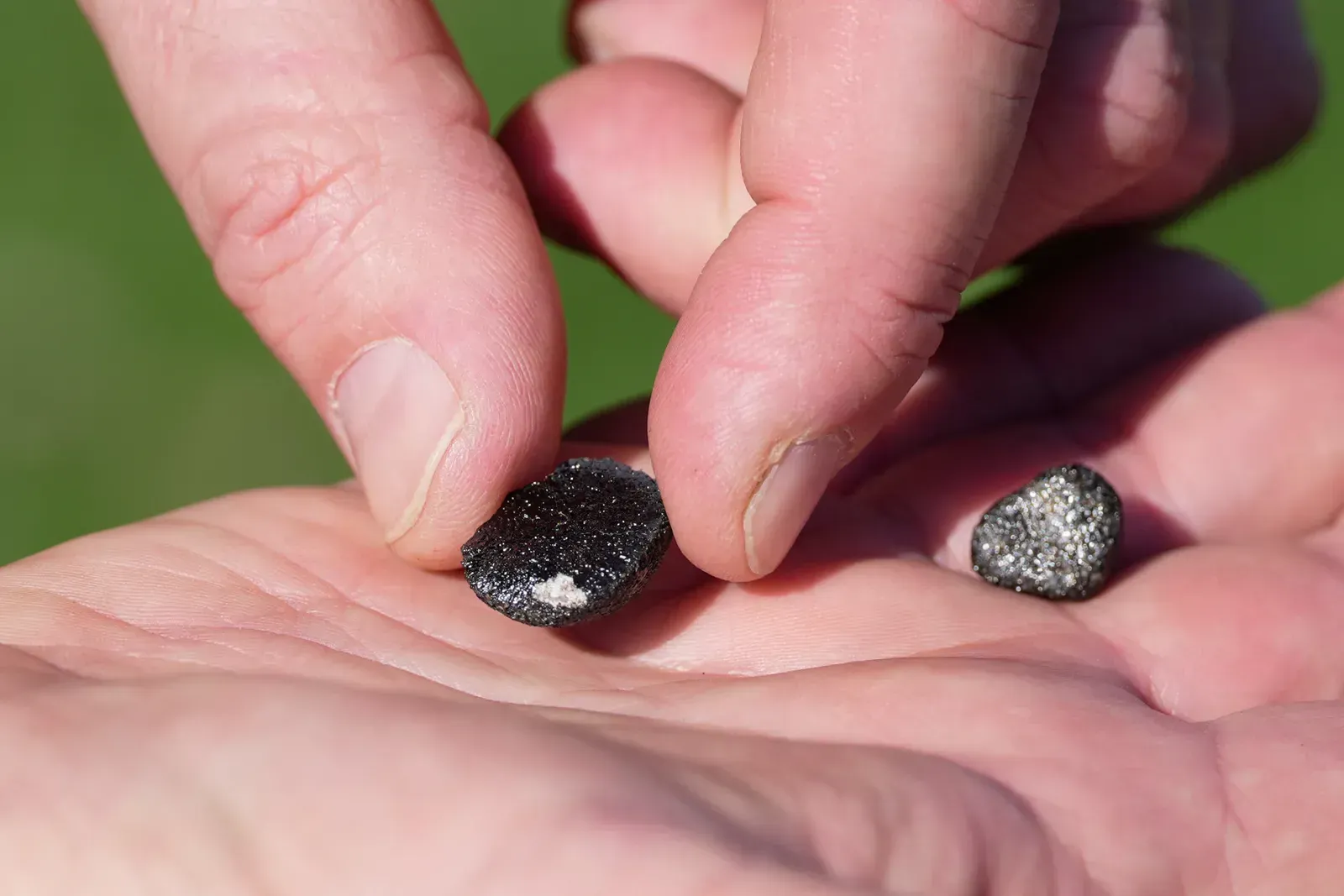
Weather is the enemy of fresh meteorites. Even a single rainstorm can begin the oxidation process, turning iron-rich minerals rusty and degrading the delicate fusion crust that forms on a meteorite’s surface during atmospheric entry. That black, glassy crust is one of the key identifiers hunters look for in the field, and once it starts to weather, it becomes harder to distinguish from ordinary Earth rocks.
Forecasts for the Ohio region in the days following the fireball showed rain was on the way, which added real pressure to the search teams. Every hour of dry searching counted. Some hunters were working from dawn until after dark, using strong flashlights to check gravel roads and plowed fields in the fading light. The combination of urgency and physical labor in cold March conditions made this an unexpectedly grueling endeavor for everyone involved.
Why Events Like This Matter for Science
Recovered meteorites from witnessed falls are among the most scientifically valuable objects in the world. Unlike meteorites that sit undiscovered in deserts or ice fields for centuries, witnessed falls come with precise trajectory data, spectral information from fireball cameras, and a known arrival date. Scientists can match the recovered rock to the specific asteroid family it likely came from, creating a direct link between what we hold in our hands and what orbits in space.
The Ohio fall offers that rare combination of good radar coverage, rapid community response, and a well-defined strewnfield. Even a handful of recovered fragments could contribute to our understanding of how the early solar system formed and evolved. When you hold a piece of meteorite, you’re holding something older than Earth itself, older than the oceans, older than any living thing that has ever existed on this planet. That thought alone should be enough to send anyone out into a muddy Ohio field with a magnet on a stick.
Conclusion: Rocks from Space and What They Tell Us About Ourselves
The Ohio fireball event is a reminder that the universe is not a distant, abstract concept confined to textbooks and telescope images. Sometimes it shows up in your backyard, literally. The scramble to recover these fragments, involving scientists, amateur hunters, farmers, and curious locals, captures something genuinely moving about human curiosity.
We instinctively run toward the unknown rather than away from it. The search for these meteorite fragments is science at its most human: messy, urgent, collaborative, and driven by the oldest question we have ever asked. Where did we come from? The answer might be sitting in a muddy Ohio field right now, waiting to be picked up. What would you do if you found one?