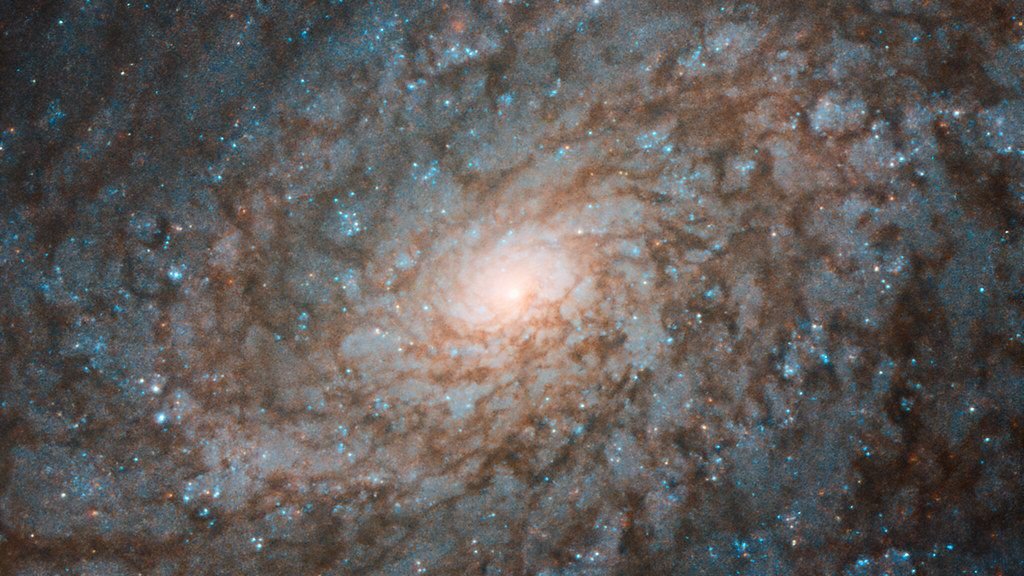
Space has always had a way of humbling us. Just when we think we’ve cracked the cosmic code, the universe throws another puzzle our way that upends everything we thought we understood. From ghostly radio signals screaming across billions of light-years to invisible forces quietly reshaping galaxies, the sky above us is far stranger than most people realize.
You might be surprised to learn that even with the most powerful telescopes ever built, including the James Webb Space Telescope now transforming our view of the cosmos, astronomers in 2026 are still scratching their heads over phenomena that simply refuse to be explained. So let’s dive in, because what you’re about to read will seriously make you rethink what we really know about the universe.
1. Fast Radio Bursts: The Screams of the Cosmos
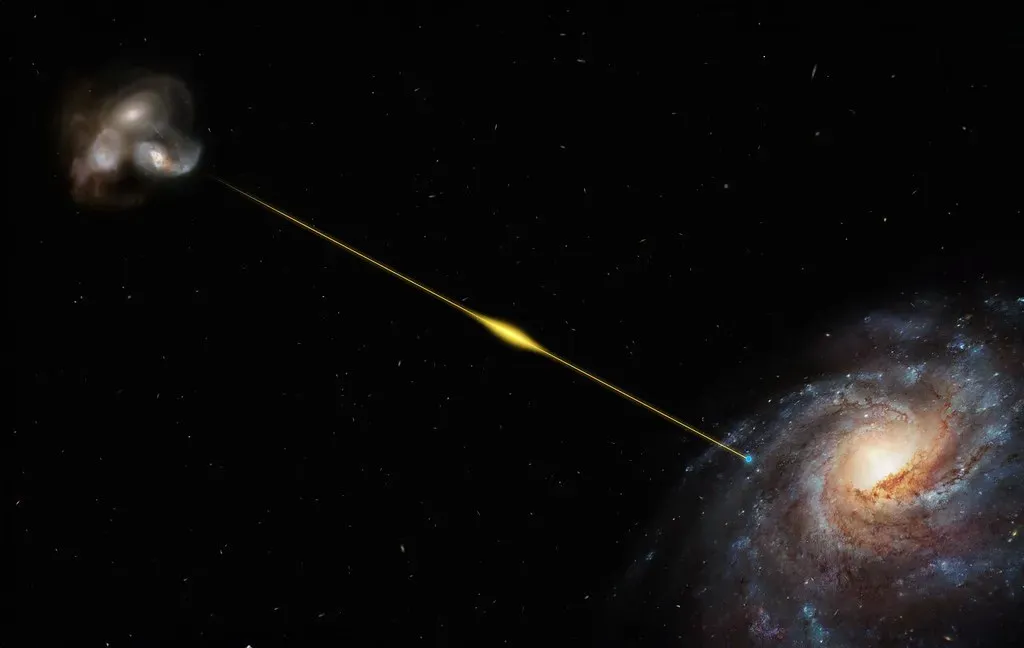
Imagine a signal so powerful it crosses billions of light-years of space in the blink of an eye, lasting only a fraction of a millisecond, and then vanishes. That’s precisely what fast radio bursts, or FRBs, are. They are extremely bright radio blips lasting anywhere from a fraction of a millisecond to a few seconds, and they have provided researchers with one of the best recent astronomical mysteries. The raw energy involved is staggering enough to fry your sense of scale entirely.
Most fast radio bursts seem to happen just once, while others repeat frequently or infrequently on irregular or regular timescales. This inconsistency makes them maddeningly difficult to pin down. Long-term observations recently revealed a rare signal flare caused by plasma likely ejected from a nearby companion star, showing that at least one burst source isn’t alone but part of a binary system, strengthening the case that magnetars interacting with stellar companions can generate repeating cosmic flashes. Even so, the full picture remains elusive.
2. Dark Matter: The Universe’s Missing Skeleton
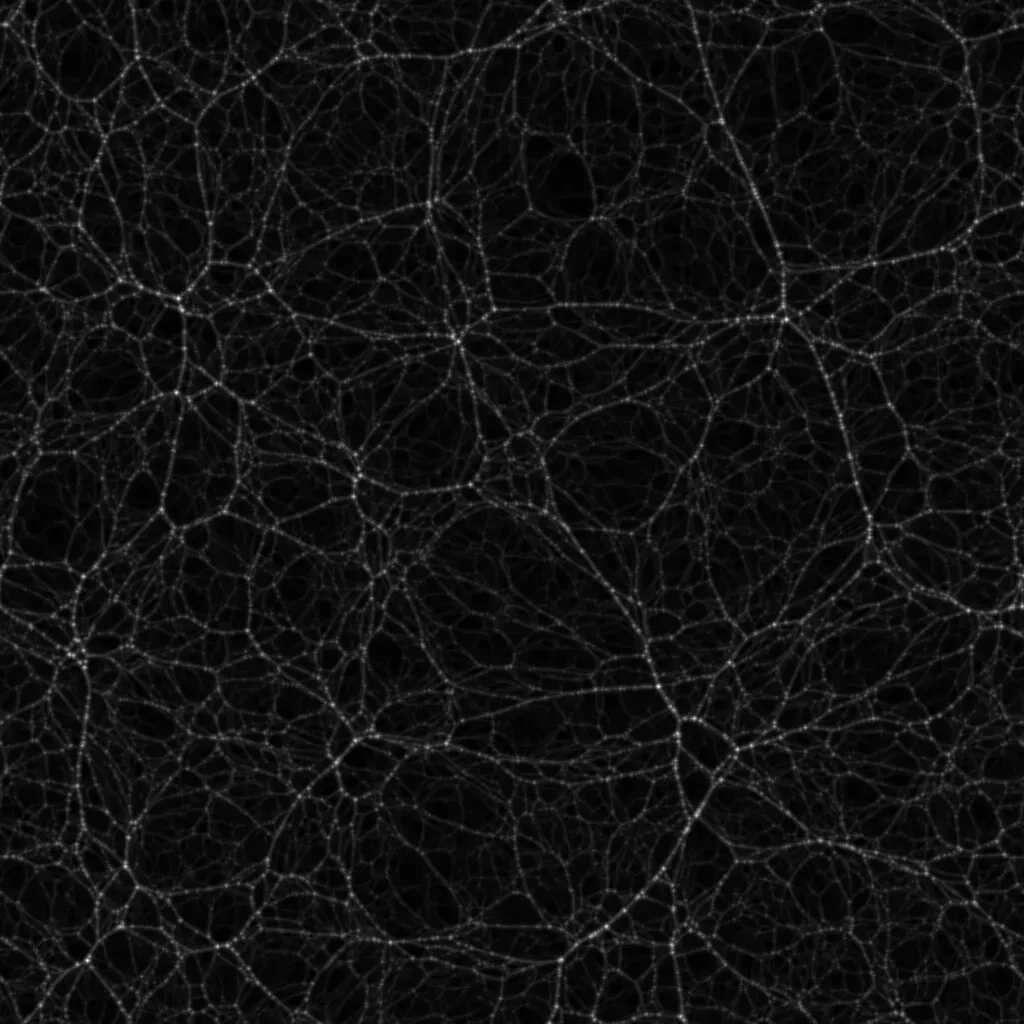
Here’s the thing – everything you can see in the night sky, every galaxy, every star, every nebula – makes up only a tiny slice of what actually exists. Scientists have found that only roughly five percent of the universe is composed of baryonic matter, and they can’t even detect the other ninety-five percent. Scientists believe that some twenty-five percent consists of dark matter, but nobody can say definitively what dark matter actually is or what it’s made of. It’s like being told that nearly everything in your house is invisible and untouchable.
Dark matter has remained one of astronomy’s biggest unknowns since it was first suggested. Until recently, scientists have only been able to study it indirectly by observing how it affects ordinary matter, such as the way it produces enough gravity to hold galaxies together. Direct detection has not been possible because dark matter particles do not interact with electromagnetic force, meaning they do not absorb, reflect, or emit light. However, in late 2025, there was a tantalizing development: a University of Tokyo researcher analyzing data from NASA’s Fermi Gamma-ray Space Telescope detected a halo of high-energy gamma rays that closely matches what theories predict should be released when dark matter particles collide and annihilate, making it one of the most compelling leads yet in the hunt for the universe’s invisible mass.
3. Tabby’s Star: The Most Bizarre Object in the Known Galaxy
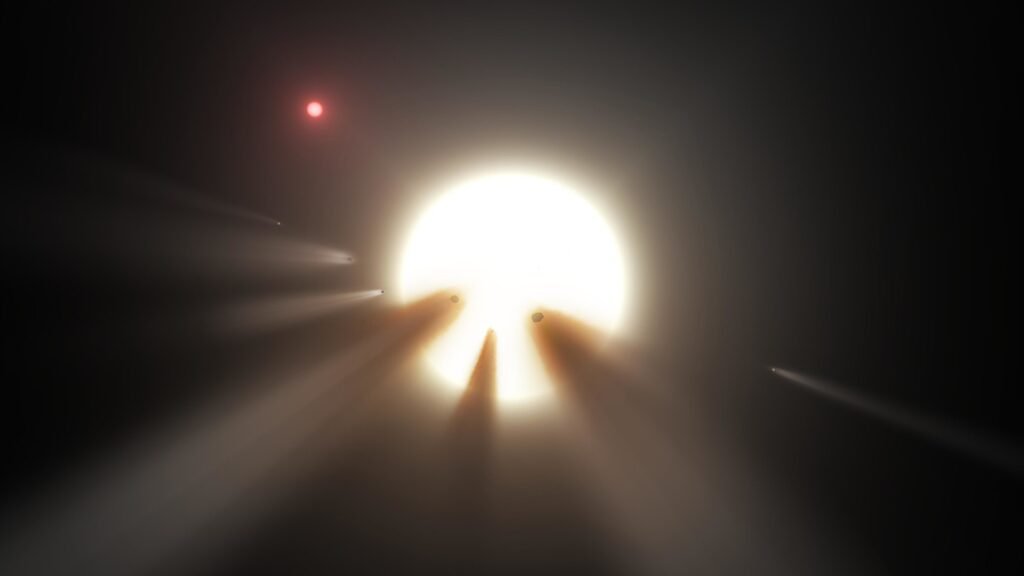
If you want a truly jaw-dropping example of something that defies explanation, look no further than KIC 8462852, better known as Tabby’s Star. Located roughly 1,470 light-years away in the constellation Cygnus, this star exhibits the most bizarre behavior astronomers have ever recorded. Unlike typical planetary transits that block less than one percent of starlight, Tabby’s Star dims by up to twenty-two percent in completely unpredictable patterns. The erratic brightness drops lack any consistent timing, and some evidence suggests the star has been gradually dimming over the past century.
Think of it this way: a planet the size of Jupiter passing in front of its star blocks less than one percent of its light. Something at Tabby’s Star is blocking more than twenty times that amount, sometimes multiple times. While scientists favor explanations involving circumstellar dust from colliding asteroids or disrupted moons, no single theory fully accounts for these dramatic, irregular light variations. Honestly, it’s the kind of mystery that makes even the most seasoned astrophysicists look stumped in front of their data.
4. Dark Energy: The Force Tearing the Universe Apart
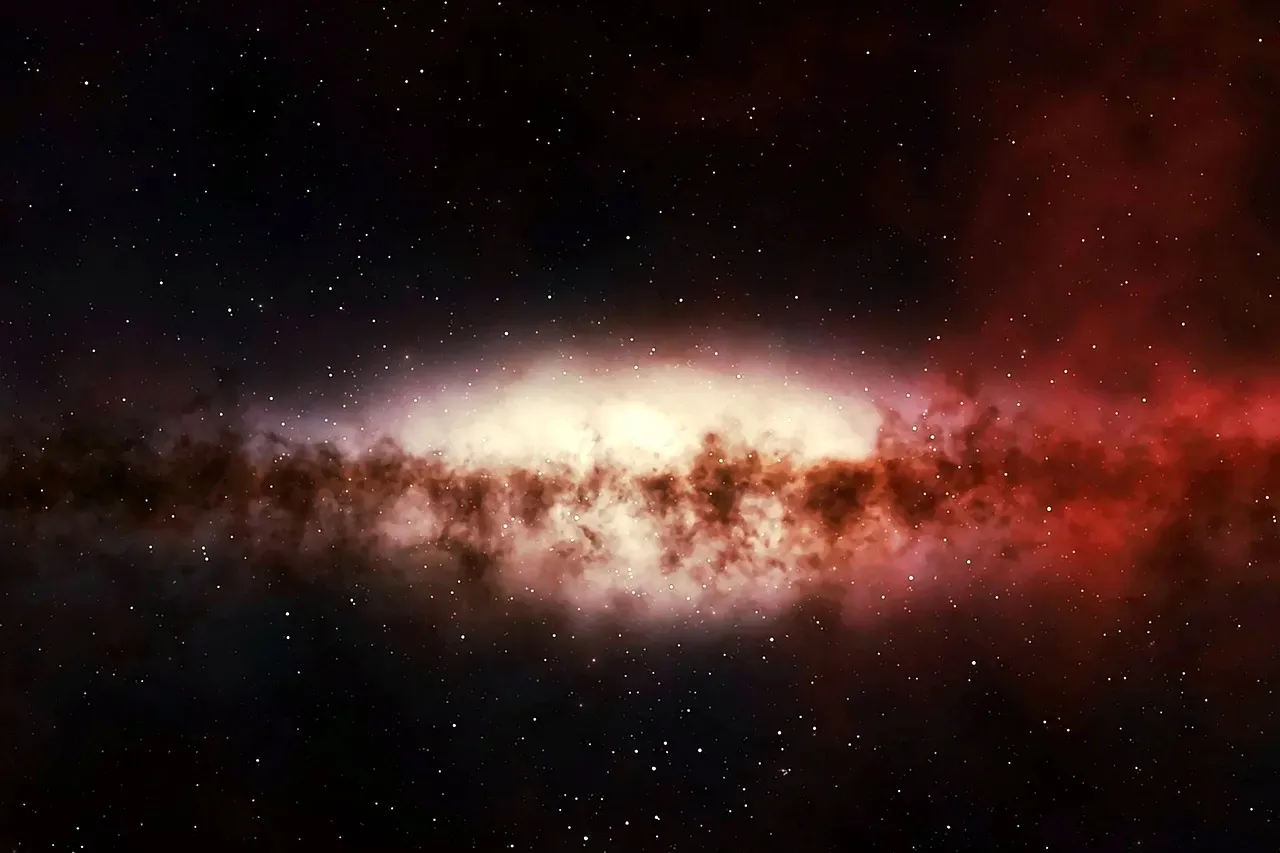
You would think that gravity, the force that built every star and galaxy in existence, would eventually slow the universe’s expansion. You would be wrong. Dark energy is driving the universe to expand at an accelerating rate, and it appears evenly distributed throughout space, dominating the universe’s total energy content. It’s the cosmic equivalent of a car that keeps speeding up with no engine anyone can find.
Among all cosmic questions, dark energy stands as the most dominant unsolved universe mystery. It drives the accelerating expansion of space, overriding gravitational attraction on the largest scales. Observations of distant supernovae revealed this unexpected behavior, forcing scientists to rethink cosmological models. Let’s be real – we’ve been watching this happen for over two decades and still have no meaningful explanation for what dark energy actually is. Its origin and behavior remain entirely unknown, making it one of the most puzzling space mysteries of our time.
5. The Fermi Bubbles: Giant Ghostly Structures Above the Milky Way
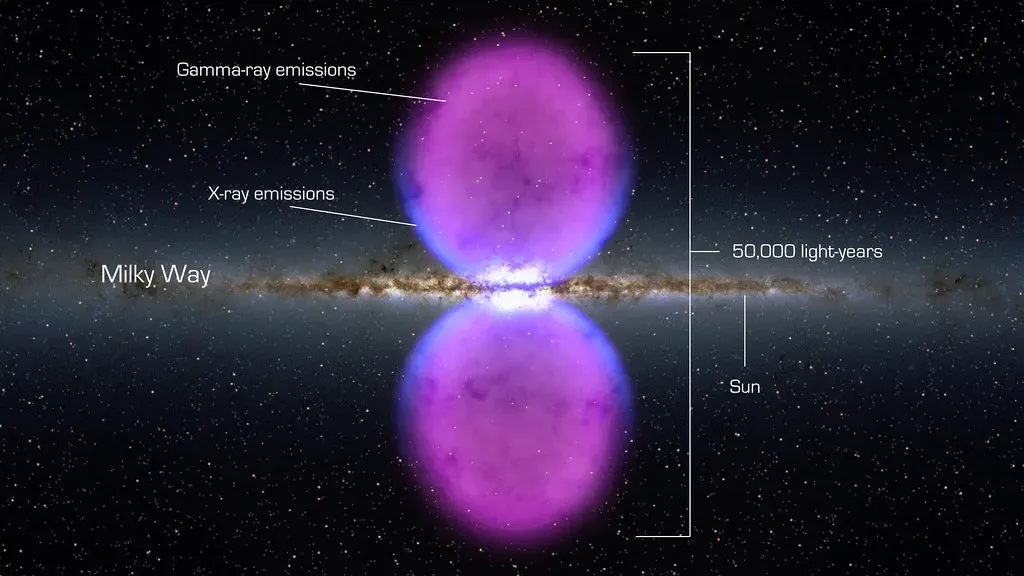
Few discoveries in recent astronomy have been as visually striking or as confusing as the Fermi Bubbles. Two enormous lobes of high-energy gamma radiation extend roughly 25,000 light-years above and below the Milky Way’s center, invisible to human eyes but blazing brightly in gamma-ray observations. These structures have sharp, well-defined edges that suggest a sudden, powerful explosion rather than gradual stellar activity. The leading suspects include violent outbursts from our galaxy’s central supermassive black hole or intense bursts of star formation near the galactic core.
The Fermi bubbles extend tens of thousands of light-years north and south of the Galactic Center and are likely the consequence of a very active period in the recent history of the galaxy, possibly having to do with the rate of star formation in the inner galaxy or with an eruption from a supermassive black hole. Yet the debate continues. For more than a decade, scientists have wrestled with this unexpected surge of gamma rays streaming from the Milky Way’s heart. Early researchers suspected dark matter particles might be colliding and annihilating each other, but the observed pattern didn’t quite fit, leading many to favor ancient, fast-spinning neutron stars known as millisecond pulsars instead.
6. Supermassive Black Holes Growing Too Fast
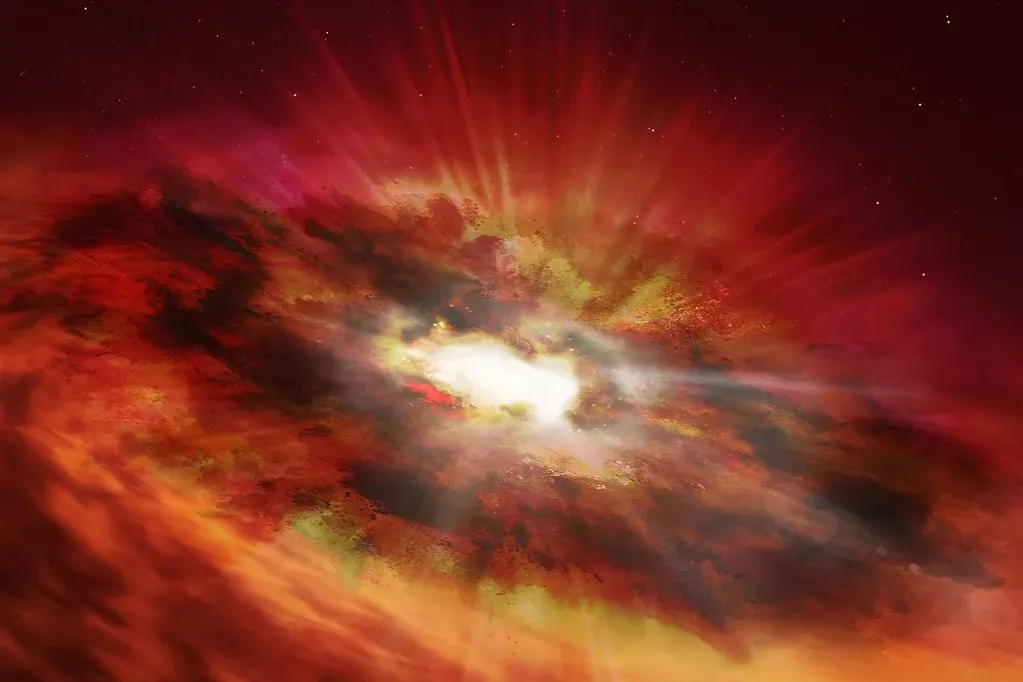
Black holes are already hard enough to wrap your head around. Now imagine one that somehow grew to the mass of a billion suns in the first few hundred million years after the Big Bang, when the universe was barely a cosmic toddler. A central unsolved question in astronomy is how the most distant quasars grow their supermassive black holes up to ten billion solar masses so early in the history of the universe. Our current models of black hole formation simply cannot explain it. It’s like discovering a skyscraper built before concrete was invented.
New observations by the James Webb Space Telescope have revealed that supermassive black holes of more than one million solar masses were already present only 450 million years after the Big Bang. That timeline is absurdly compressed by astronomical standards. The black hole information paradox adds another layer of weirdness: scientists debate whether black holes produce thermal radiation and, if so, what happens to the information stored inside them, since the unitarity of quantum mechanics does not allow for the destruction of information. Every answer opens a new and deeper question.
7. The Great Attractor: Something Enormous Is Pulling Us
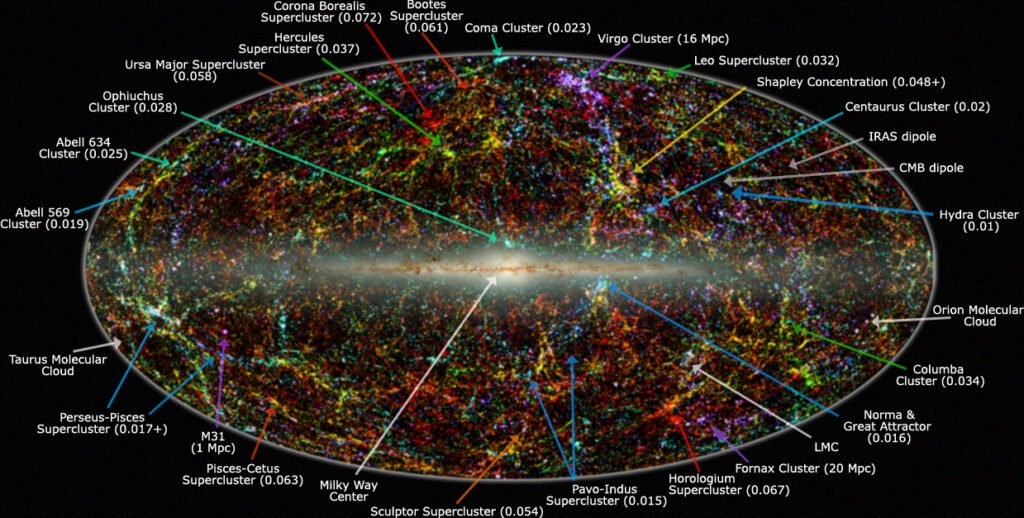
Somewhere out there, roughly 150 million to 250 million light-years away, something unimaginably massive is pulling our entire galaxy toward it, along with thousands of other galaxies. It doesn’t care about your theory of gravity or your models of cosmic structure. This massive gravitational region is pulling nearby galaxies toward it at remarkable speeds, it lies hidden behind the Milky Way’s dense dust, making direct observation extremely difficult, and its exact mass and composition remain uncertain.
The frustrating irony is that the very position of our own Milky Way blocks our best view of this thing. It’s hidden in what astronomers call the “Zone of Avoidance,” an area of sky so dense with dust and gas from our own galaxy that optical telescopes are essentially blind to it. Something massive lurks 150 million light-years away, pulling our galaxy and thousands of others toward a region hidden behind the Milky Way’s dusty disk. It’s hard to say for sure what lies there, but the gravitational evidence is undeniable. Something enormous is waiting to be properly seen.
8. Odd Radio Circles: Perfect Halos That Shouldn’t Exist
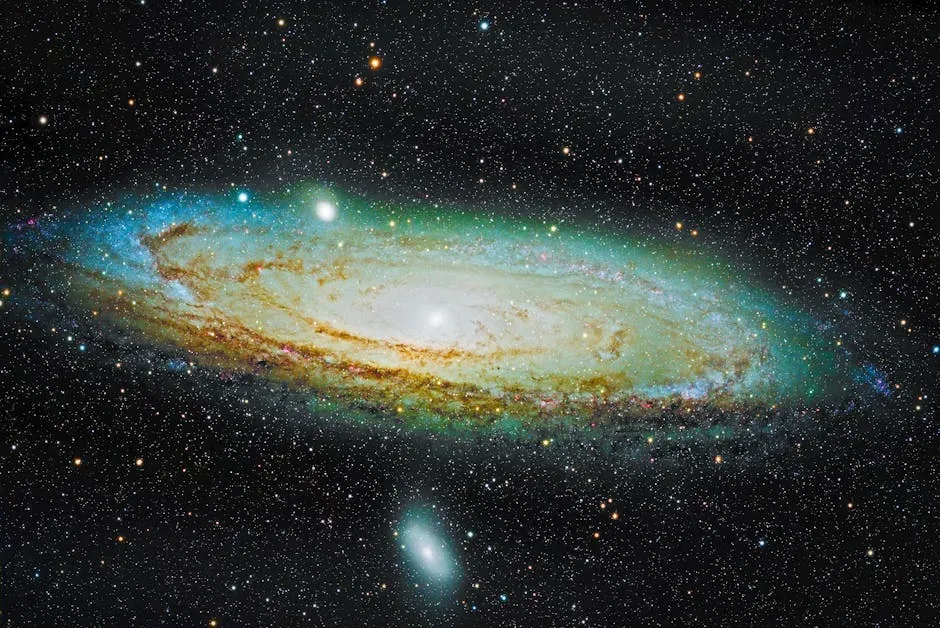
In 2019, astronomers stumbled across something genuinely bizarre: enormous ring-shaped structures in space that appeared only in radio wavelengths and matched absolutely nothing in any known catalog of cosmic phenomena. These enormous ring-shaped structures span roughly one million light-years across and emit exclusively in radio wavelengths, making them invisible to optical telescopes. First spotted in 2019, these perfectly circular “halos” don’t match any known cosmic phenomena like supernova remnants or galaxy clusters. Their clean, symmetric appearance and massive scale suggest powerful shockwaves from unknown energetic events, possibly involving supermassive black hole mergers or galaxy collisions.
Only a handful of these odd radio circles have been identified so far, leaving scientists to wonder whether they’re witnessing rare cosmic accidents or common features they’ve simply overlooked. Think about that scale for a moment. One million light-years across. Our entire Milky Way galaxy is only about 100,000 light-years wide. These rings are ten times larger than that, and they formed from some kind of event that has no agreed-upon explanation. I know it sounds crazy, but they are very real, very massive, and very mysterious.
9. The Hubble Tension: The Universe Is the Wrong Size

This one is deceptively simple to describe but catastrophically difficult to explain. Astronomers have two very precise, very reliable methods of measuring how fast the universe is expanding. The problem? The expansion rate of the universe, quantified by the Hubble constant, remains one of the most debated quantities in cosmology. Measurements based on nearby objects yield a higher value than those inferred from observations of the early universe, a discrepancy known as the “Hubble tension.” Both methods are carefully checked and rechecked. Both remain stubbornly different.
Despite powerful observatories and decades of research, many cosmic questions remain unanswered. From invisible forces shaping galaxies to unexplained signals arriving from deep space, these mysteries highlight the gaps between observation and theory. As telescopes grow more precise and missions probe deeper into space, scientists often uncover more questions than answers, and each discovery reshapes assumptions about physics, time, and matter itself. The Hubble tension may not just be a measurement error. It could be a sign that something fundamental is missing from our understanding of the cosmos, a crack in the foundation of modern physics itself.
Conclusion: The Universe Refuses to Be Fully Understood
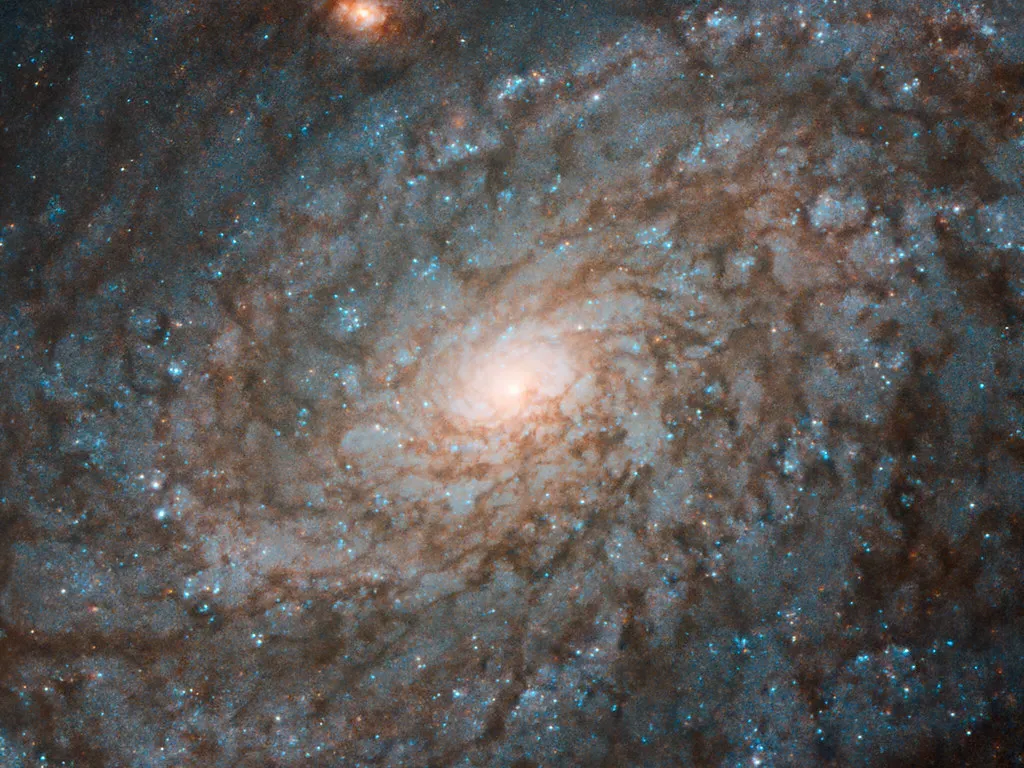
What makes these nine phenomena so extraordinary isn’t just the scale of them. It’s the fact that they persist despite everything we’ve built and launched into space to study them. These unsolved universe enigmas are not failures of science, but signs that exploration is far from complete. Some space mysteries continue to defy explanation despite decades of observation, simulation, and theoretical debate. These unresolved phenomena challenge core assumptions about gravity, matter, time, and even the origin of the universe itself.
There’s something strangely wonderful about all of this. We live in a universe so rich and so complex that our best minds and most powerful instruments are still humbled by it. Even small discrepancies can point toward new physics, and rather than providing closure, each breakthrough often opens new mysteries. The cosmos is not a problem to be solved and set aside. It’s a living, churning story that keeps writing new chapters. Which of these nine mysteries do you find the most mind-bending? Drop your thoughts in the comments, we’d genuinely love to know.