
You’ve probably thought about it at least once. Maybe it was while watching a movie, staring at an old photograph, or lying awake at 2 a.m. wondering: what if you could just go back? Not metaphorically. Actually go back. Rewind time like a cassette tape and step into yesterday, or even into the ancient past.
Here’s the thing – this isn’t purely a fantasy. Time travel, once relegated to science fiction, has emerged as a tangible possibility through modern physics. The conversation has evolved dramatically, and some of the world’s most brilliant minds have spent entire careers wrestling with whether time is truly the one-way street we always assumed it to be.
Physicists, philosophers, and thinkers have long wrestled with the nature of time itself – whether it is a linear arrow pointing from past to future, an unbreakable chain of cause and effect, or something more flexible that might, under the right circumstances, allow movement backward or forward at will. What you’re about to discover might change the way you think about every single second that passes. Let’s dive in.
Einstein Changed Everything: The Flexible Nature of Time
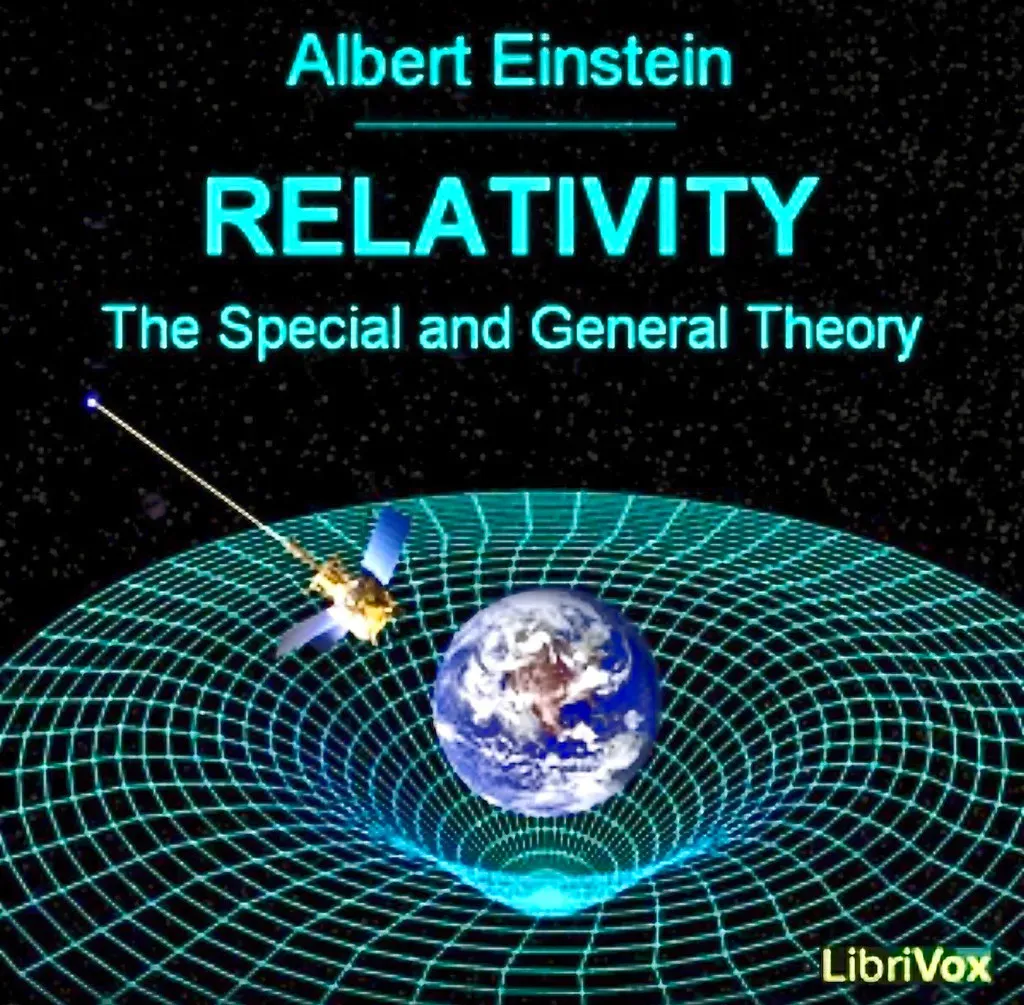
Most of us grow up thinking of time as steady and universal, like a river flowing at the same pace for everyone on Earth. That turns out to be completely wrong. Einstein’s theory of general relativity provides a framework where spacetime is malleable, influenced by mass and energy. In other words, time isn’t a rigid backdrop to life – it’s more like a fabric you can stretch, compress, or even warp.
General relativity, formulated by Albert Einstein in 1915, describes gravity in its deepest form. The central idea is that space and time are not separate, rigid entities, but together form a flexible structure known as spacetime. This structure can deform in the presence of mass or energy – a star, a planet, or even a black hole “bends” the spacetime around it. A surprising consequence of this theory is that time can flow at different speeds depending on where you are or how fast you are moving. Honestly, that’s one of the most mind-bending facts in all of science. Your time is not the same as someone else’s time, and that’s not philosophy – it’s hard physics.
Time Dilation: The Part of Time Travel That’s Already Real
Here’s where things get genuinely exciting. You don’t have to wait for a science fiction invention to experience time travel – in a very real, measurable sense, it’s already happening around you. Time dilation, a cornerstone of Einstein’s relativity, occurs when time passes at different rates for observers in relative motion or differing gravitational fields. Think of it like this: two identical twins, one of whom hops on a rocket traveling close to the speed of light. When that twin returns, they’re younger than the one who stayed home. Not by metaphor. By actual biology.
The faster the relative velocity, the greater the time dilation between two clocks, with time slowing to a stop as one clock approaches the speed of light. In theory, time dilation would make it possible for passengers in a fast-moving vehicle to advance into the future in a short period of their own time. This has been confirmed in real experiments too. In the Hafele-Keating experiments of 1971, atomic clocks were flown on airplanes traveling in opposite directions, and the time differences shown on the clocks, as a result of their relative motion, precisely matched the predictions from relativity. Let that sink in – atomic clocks on airplanes proved Einstein right.
Wormholes: The Universe’s Ultimate Shortcut
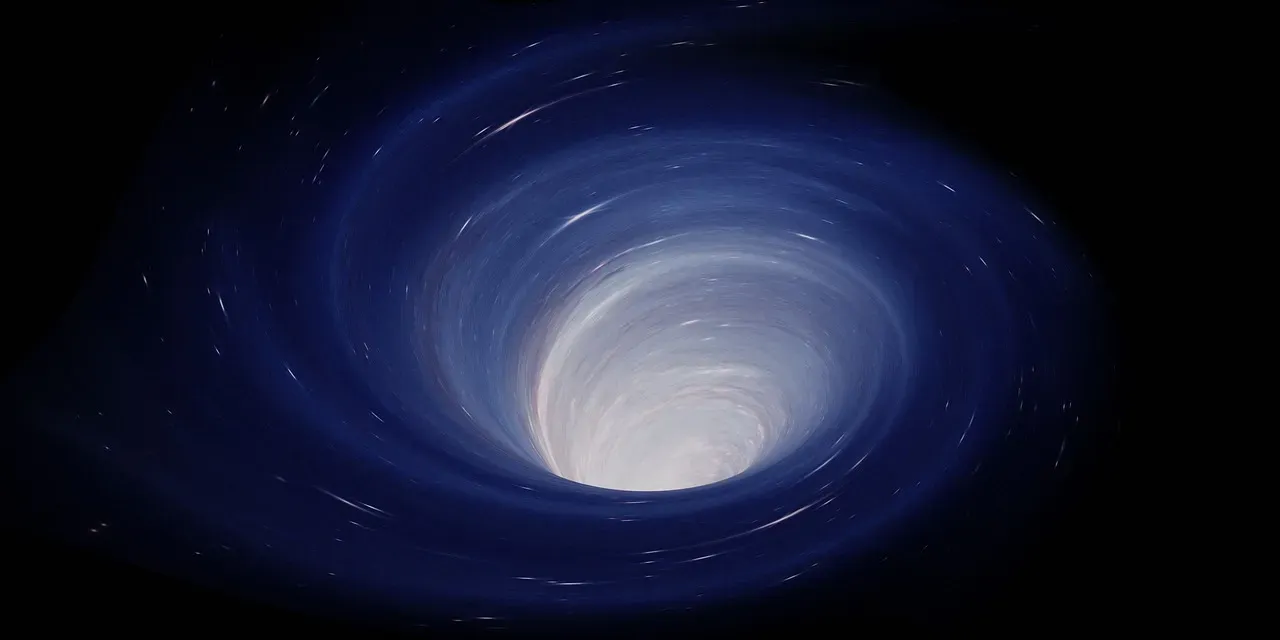
If time dilation is the science world’s quiet confirmation of time travel, wormholes are its dramatic headline act. Theoretical physicists explore models in which the fabric of spacetime is warped or bent enough to allow loops in time – and this is where wormholes, hypothetical tunnels connecting distant points in spacetime, become central to the discussion. Imagine folding a piece of paper and poking a pencil through both layers at once. That shortcut between two distant points? That’s the basic idea behind a wormhole.
Wormholes were first proposed as solutions to Einstein’s field equations in general relativity. These entities are envisioned as shortcuts through spacetime, allowing instantaneous travel between widely separated regions of the universe. A wormhole conceptually resembles a tunnel with two ends located at different points in spacetime. The real problem, though, is that the biggest hurdle to wormholes and time travel lies in the exotic matter required. Negative energy density, which physics predicts might hold wormholes open, has been indirectly observed in minor quantum effects such as the Casimir effect, but never in the amounts or scale needed. So for now, wormholes remain a brilliant theoretical idea looking for its experimental proof.
Black Holes and Rotating Universes: Where Time Bends to Breaking Point
You’ve heard that nothing escapes a black hole. But there’s something else remarkable about these cosmic monsters – they might actually bend time severely enough to create the conditions for backward time travel. Black holes are regions of spacetime where gravity is so intense that nothing, not even light, can escape. Some theories suggest that rotating black holes – Kerr black holes – could, in theory, create closed timelike curves. If you could avoid being crushed by tidal forces and radiation, you might loop through time by navigating the warped spacetime inside a rotating black hole. That’s an enormous “if,” but it’s not nothing.
In general relativity, black holes bend spacetime itself to the point where even light can’t escape. This bending of spacetime means that as you approach a black hole, time will slow down for you relative to the outside world. There’s also a fascinating idea about rotating universes: in a universe where all matter rotates, spacetime could become so warped that time effectively bends back on itself, forming a loop. A spaceship traveling along such a loop could theoretically return to its starting point, not just in space but also in time. While our universe as a whole doesn’t seem to rotate in this way, rotating masses such as black holes can produce similar effects, creating potential environments for closed timelike curves.
The Grandfather Paradox: The Problem That Refuses to Die
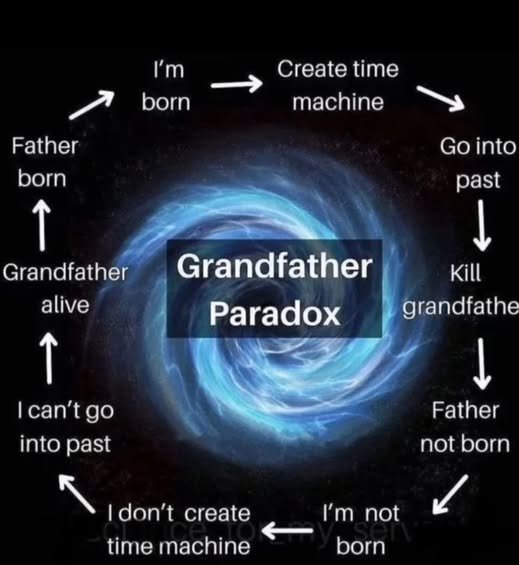
Let’s be real – no conversation about time travel is complete without the most famous logical trap in all of physics. Time travel has long been dismissed as impossible due in part to the infamous grandfather paradox. This conundrum asks what would happen if someone traveled back in time and prevented their grandfather from having children, thus erasing the traveler’s existence. It sounds like a plot from a bad thriller, but physicists genuinely lose sleep over this one. If you erase yourself from the past, you never existed to go back and erase yourself. And round and round you go.
Interestingly, some recent research suggests the paradox might be solvable. By combining general relativity, quantum mechanics, and thermodynamics, one study demonstrates that time travel might be feasible without leading to these logical contradictions. Even more fascinatingly, research suggests that time itself might have a built-in self-correction mechanism – if any action threatens to disrupt causality, reality seems to intervene and prevent it from happening. Even if time travel were possible, attempts to create paradoxes might simply result in the failure of the journey itself. The universe, it seems, has safeguards against rewriting its own history.
Hawking’s Chronology Protection Conjecture: The Universe Playing Defense
Stephen Hawking wasn’t just willing to leave the paradox problem to philosophers. He put forward one of the boldest proposals in modern theoretical physics. The chronology protection conjecture is a hypothesis first proposed by Stephen Hawking that laws of physics beyond those of standard general relativity prevent time travel – even when the latter theory states that it should be possible. It’s almost poetic: the very laws of physics might have evolved – or just happen – to make time travel impossible at large scales, protecting the timeline the way an immune system protects a body.
Hawking argued that quantum phenomena would generate enormous energy fluctuations in the region where a closed time-like curve is about to form, and these fluctuations would destroy the wormhole or structure before it could become a working time machine. It’s a brilliant and slightly humbling idea. It is as if the universe had a self-defense mechanism against paradoxes: it permits time dilation, spacetime distortions, and even theoretical tunnels, but it does not allow alterations to the past. I find that almost reassuring, honestly – like the cosmos has thought this through more carefully than we have.
What Modern Physics Tells You Right Now in 2026
So where does all of this leave you, sitting here in 2026, wondering whether time travel will ever be more than a movie premise? The honest answer is: it depends on which direction you want to travel. While the notion of time travel to the future complies with current understanding of physics via relativistic time dilation, temporal paradoxes arise from circumstances involving hypothetical time travel to the past. In other words, forward time travel is already real – astronauts on the International Space Station age very slightly slower than people on the ground. Backward time travel remains deeply, stubbornly problematic.
Meanwhile, research keeps pushing the frontier. Chinese researchers have proposed a simple yet powerful theory to explain one of physics’ oldest puzzles: why time only moves forward and why travelling to the past remains impossible. Physicist Cai Qingyu and his team at Hainan University developed a fresh explanation at the quantum level for why we cannot unscramble an egg or grow younger, even though the laws of physics perfectly allow time to go backwards. The field is alive. Science is a work in progress, and ideas once deemed impossible – like heavier-than-air flight or quantum entanglement – are now realities. Time travel may yet move from the pages of science fiction into the annals of science fact.
Conclusion: The Dream That Keeps Physics Honest
Time travel may never be achieved in the way Hollywood has trained you to imagine it – no glowing DeLorean, no dramatic leap into the Renaissance. The physics is profoundly complex, the paradoxes are genuinely unsolved, and the engineering requirements border on the cosmically absurd. Yet the science keeps circling back to the same startling truth: time is not what you think it is.
It bends. It stretches. It slows down near massive objects and speeds up in the emptiness of space. You are, in the most technical sense, already a tiny time traveler every single day, ticking through time at a rate ever so slightly different from someone standing at a different altitude or moving at a different speed than you. The dream of time travel, at its core, forces physics to confront its deepest questions about causality, consciousness, and the very structure of reality.
Maybe the greatest gift of the time travel question isn’t a machine or a method. Maybe it’s the reminder that time itself is stranger, wilder, and more wondrous than anything you learned in school. So the next time you glance at a clock, remember – that little device is not just counting seconds. It’s measuring something the universe is still keeping secrets about. What would you do first, if you could go back?