

There is something quietly unsettling about standing in front of a 4,000-year-old structure and realizing that, with all our satellites, supercomputers, and labs full of brilliant researchers, we still cannot fully explain how it was built. We carry smartphones that connect to space, yet ancient humans managed feats of engineering and material science that we are only now beginning to decode. It raises a question that is honestly a little humbling: were our ancestors far smarter than we give them credit for?
Throughout history, ancient civilizations demonstrated remarkable ingenuity in solving complex engineering, architectural, and technological challenges using tools and methods that often seem impossibly sophisticated for their historical periods. Some of what they left behind defies tidy explanations. Certain artifacts appear so advanced for their time periods that they’ve been labeled “out-of-place artifacts” by researchers struggling to understand how ancient peoples could have created such sophisticated devices without the industrial infrastructure and accumulated knowledge that modern technology requires. So let’s dive in, because what you are about to read might genuinely surprise you.
Ancient Egypt: The Pyramid Builders Who May Have Mastered Hydraulics

More than 4,000 years after their construction, the pyramids at Giza in Egypt remain among the most recognizable ancient landscapes. Here’s the thing though: the real mystery was never about their appearance. It was always about the how. The Great Pyramids have perplexed the world for thousands of years, and in all that time, no one has ever been able to conclusively determine how they were created. The structures are made from millions of stone blocks, all weighing tens or hundreds of tons apiece. In trying to explain how the ancient Egyptians moved, shaped, and stacked these stones, scientists have developed dozens of theories.
Recent science has started to reframe the entire conversation. A groundbreaking discovery by researchers from the University of North Carolina Wilmington reveals that these ancient marvels were likely built along a now-buried branch of the River Nile, concealed beneath desert sands and farmlands. For years, archaeologists have speculated that the ancient Egyptians used a waterway to transport massive stone blocks and other materials needed for pyramid construction. Even more striking, the theory centers on the Step Pyramid at Saqqara, Egypt’s first large-scale stone structure, built over 4,600 years ago during the reign of Pharaoh Djoser. The pyramid’s internal design has long puzzled researchers, with deep shafts, sealed chambers, and large-scale subterranean compartments that defy typical interpretations of tomb architecture. The new study argues these were not symbolic elements, but the mechanical heart of an ancient hydraulic construction system. If further research confirms this water-powered lifting system, it forces us to rethink the history of technology. The Egyptians would be among the pioneers of hydraulic engineering, predating similar developments by the Romans and Greeks by centuries.
Ancient Greece: The World’s First Computer Hidden in a Shipwreck
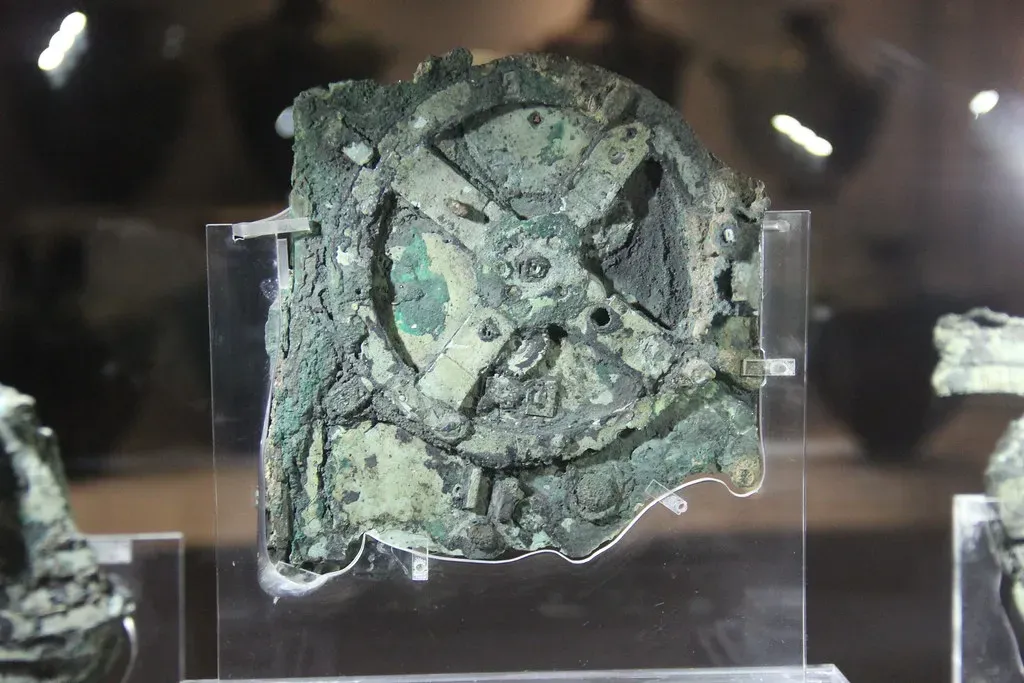
Picture yourself as a sponge diver in the year 1900, reaching the floor of the Mediterranean Sea during a storm layover, and pulling up what appears to be a hunk of corroded bronze. You’d probably toss it aside. Luckily, nobody did. A seemingly unassuming lump of corroded bronze has confounded investigators for more than a century, ever since it proved to contain precision gearwheels that simply should not have existed in the ancient Greek world. This was the Antikythera Mechanism, and it is genuinely one of the most astonishing objects ever recovered from antiquity.
It was a mechanical computer of bronze gears that used ground-breaking technology to make astronomical predictions, by mechanizing astronomical cycles and theories. It calculated the ecliptic longitudes of the Moon, Sun and planets; the phase of the Moon; the Age of the Moon; the synodic phases of the planets; eclipses; the heliacal risings and settings of prominent stars and constellations; and the Olympiad cycle. It is the first known device that mechanized the predictions of scientific theories. Let that sink in for a moment. No other geared mechanism of such complexity is known from the ancient world or indeed until medieval cathedral clocks were built a millennium later. Scientists even debated the mechanism’s functionality as recently as 2025, when one research team concluded that manufacture error in the original mechanism’s gears is too great for the mechanism to have ever worked, though they emphasized that the scans they used could be incorrect about the extent of imperfections. Controversial findings like this only deepen the mystery rather than resolve it.
Ancient Rome: Concrete That Heals Itself and Outlasts Everything We Build Today

I know it sounds almost impossible, but concrete built by Roman hands roughly 2,000 years ago is still standing stronger than many structures built in the last century. Ancient Roman concrete structures like the Pantheon and harbor installations have survived for over two thousand years, often in better condition than modern concrete buildings that crumble after mere decades. Roman concrete, particularly that used in marine environments, actually grows stronger over time as seawater reacts with the volcanic ash in the mixture to create rare minerals. Modern concrete formulations, despite our advanced chemistry, typically begin degrading within 50 years, especially in saltwater environments.
The secret, it turns out, involved a process called hot mixing, and a 2025 study from Pompeii made it even clearer. Recent excavations at Pompeii’s Regio IX have uncovered an intact ancient construction site, offering insights into Roman building techniques at the time of the eruption of Mount Vesuvius in 79 CE. Microstructural and chemical analysis of materials collected from previously constructed walls, walls under construction, and adjacent dry, raw material piles show unequivocally how quicklime was pre-mixed with dry pozzolan before adding water in the creation of Roman concrete. This construction method, also known as hot mixing, results in an exothermic reaction within the mortar and the formation of lime clasts, key contributors to the self-healing and post-pozzolanic reactivity of hydraulic mortars. Essentially, when cracks form in the hardened concrete and water penetrates the material, the clasts react, and calcium is released to fill these cracks. The study identified reaction rims around volcanic aggregates and evidence of calcium-rich phases such as calcite and aragonite, demonstrating how cracks could gradually heal through mineral growth. It is the closest thing to living, breathing building material that ancient hands ever produced.
Ancient Mesopotamia: A Battery Made From Clay Before Electricity Was “Invented”
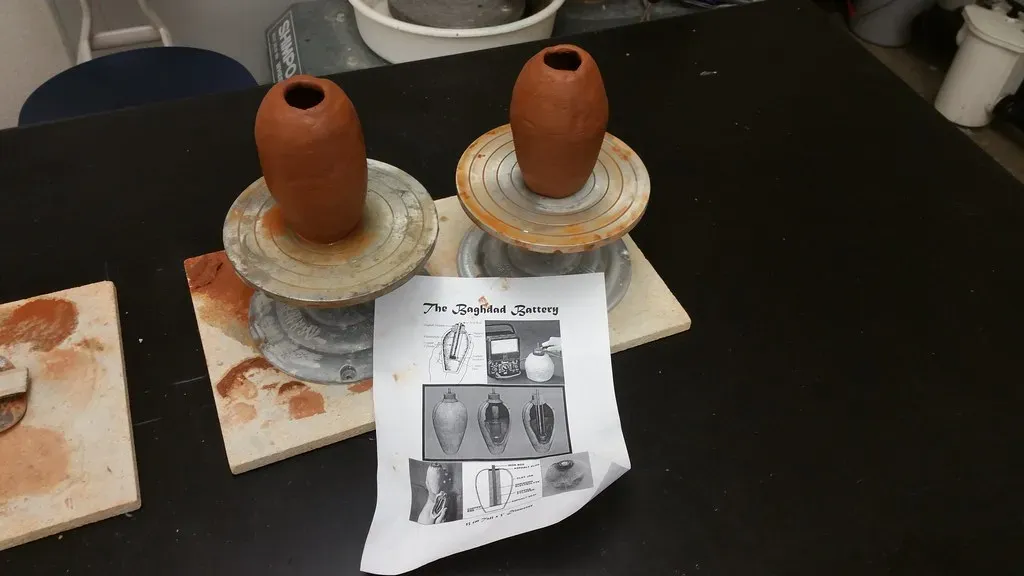
Mesopotamia, the ancient cradle of civilization nestled between the Tigris and Euphrates rivers, gave the world writing, the wheel, and legal codes. But it may have also given the world something far stranger: electricity, or at least a rudimentary version of it. In 1936, archaeologist Wilhelm König discovered a curious clay jar near Baghdad containing a copper cylinder and iron rod. Dating to approximately 250 BCE, this artifact sparked one of archaeology’s most controversial debates about ancient electrical knowledge.
The device is now famously known as the Baghdad Battery. The jar’s construction closely resembles a galvanic cell. When filled with an acidic solution like vinegar or wine, it can generate a small electrical current. This has led some researchers to theorize that ancient Mesopotamians may have used these devices for electroplating jewelry or other electrical applications. Honestly, the debate has never fully settled. When filled with an acidic liquid, the device could generate a small electrical charge. While its exact function remains debated, many scholars suggest it may have been used for electroplating, a technique for coating objects with metals such as gold. This artifact suggests that the Persians had some understanding of electrochemical processes long before the modern discovery of electricity. Think about that the next time you charge your phone: someone in ancient Iraq may have had the same basic idea roughly two and a half millennia ago.
Ancient India: The Iron Pillar That Refuses to Rust After 1,600 Years
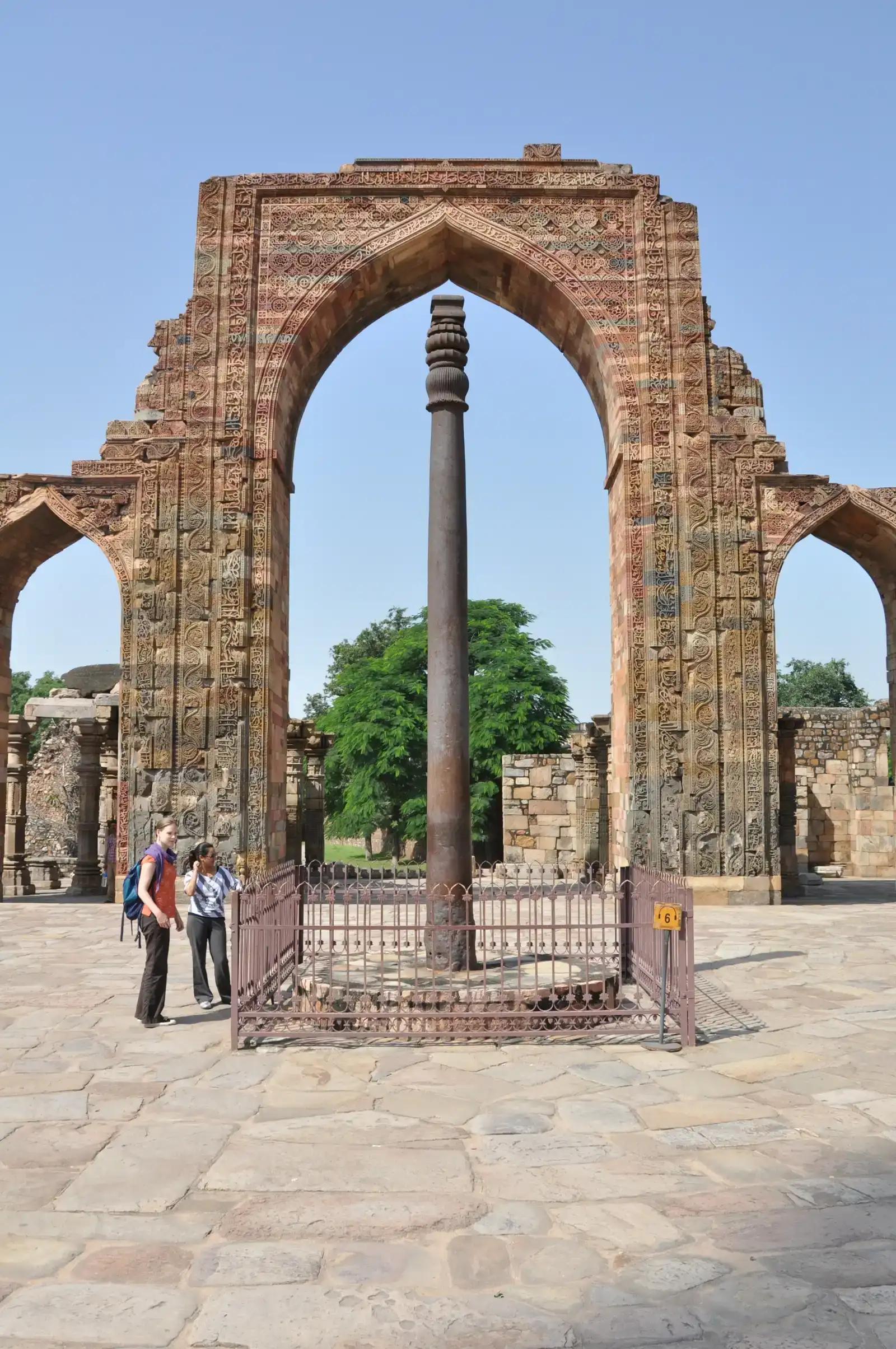
If you placed a piece of iron outside in the elements and left it for 1,600 years, you would return to find nothing but a pile of orange dust. That is basic chemistry. Yet the Iron Pillar of Delhi stubbornly refuses to follow the rules. The Iron Pillar of Delhi, standing over 7 meters tall and weighing more than 6 tons, is completely rust free, even though it was constructed around 400 AD. Made during the height of the Gupta Empire of India, the pillar continues to puzzle scientists, since it never rusts even though it is exposed to the elements for more than 1,600 years.
Modern science has analyzed the pillar extensively, yet replication remains elusive. The puzzle surrounding the Iron Pillar involves understanding how ancient Indian metallurgists achieved such sophisticated control over iron composition and forging techniques using methods and equipment from the 4th to 6th centuries. Creating such a large, uniform structure from wrought iron requires advanced furnace technology, precise temperature control, and sophisticated hammering techniques to consolidate the metal without introducing impurities or structural weaknesses. While modern analysis can determine the pillar’s composition and explain its corrosion resistance, replicating the manufacturing process using period-appropriate methods remains challenging for contemporary metallurgists. It is one thing to understand why something works once you can examine it under modern instruments. It is quite another to explain how people without those instruments ever figured it out in the first place. Modern metallurgy experts are baffled by this pillar, as the technology with which it was built and treated remains a mystery.
Conclusion: Humility Is the First Step to Discovery

There is a temptation to assume that history moves in a straight line, that humans started out primitive and simply got smarter over time. These five civilizations shatter that comfortable assumption entirely. Whether through lost documentation, disrupted cultural transmission, or techniques so specialized they failed to spread widely, these technological achievements remind us that progress is not always linear. Studying these ancient mysteries not only helps us appreciate the accomplishments of our ancestors but may also provide solutions to contemporary challenges, from creating more sustainable building materials to developing new approaches to metallurgy and engineering.
What is perhaps most exciting in 2026 is that we are closer than ever to answers. Modern science plays a crucial role in uncovering the secrets of ancient lost technologies. Researchers use tools such as X-ray imaging, 3D modeling, and chemical analysis to study artifacts without damaging them. These advanced methods allow scientists to understand the materials, construction techniques, and possible uses of ancient devices. Still, every answer tends to open three new questions. The persistence of these mysteries reminds us that significant gaps remain in understanding ancient technologies, manufacturing techniques, and knowledge systems that enabled remarkable achievements with tools and methods very different from modern approaches. The ancient world was not a lesser world. It was simply a different kind of brilliant. Which of these five civilizations surprises you the most? Let us know in the comments.