

If everything around you – your hands, your screen, the stars overhead – turned out to be a kind of cosmic projection, would your life feel any less real? The wild twist is that some of the most serious, conservative branches of physics are actually entertaining that idea. The so‑called “holographic universe” sounds like science fiction, but it grew out of attempts to solve very real problems about black holes, information, and what space and time even are.
I remember the first time I read about this: I literally closed the article, stared at my living room wall, and thought, “If this is a projection, it’s a really convincing one.” And yet, the more I dug into the science, the more I realized physicists weren’t talking about a cheap simulation, but about a deep mathematical equivalence. In some sense, our three‑dimensional reality might be like a movie encoded on a two‑dimensional screen – not fake, just not what it first appears to be.
The Strange Clue Hidden in Black Holes
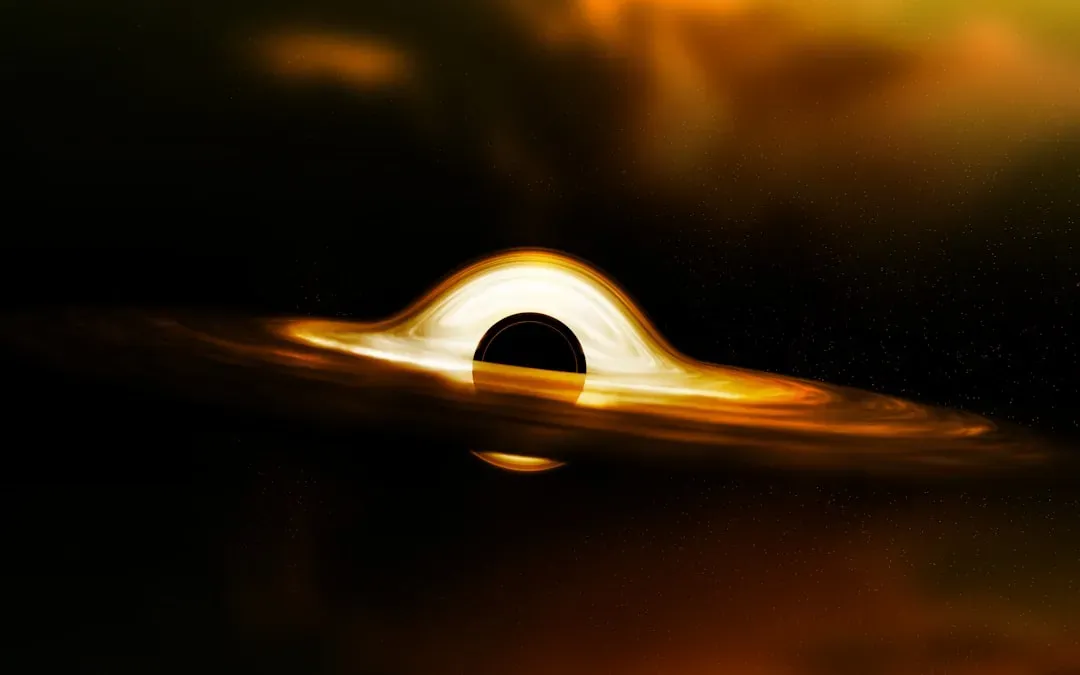
One of the biggest seeds of the hologram idea came from the weirdest objects in the universe: black holes. In the 1970s and 1980s, physicists realized that a black hole isn’t just a bottomless pit; it has a temperature and something like an entropy, which is a measure of how much information it can contain. The shocking part was that this “information content” didn’t scale with the volume of the black hole, but with the area of its surface – its event horizon.
Think about that: all the messy details of everything that falls into a black hole seem to be somehow encoded on its outer boundary, like data etched onto a cosmic hard drive. This idea, often called the holographic principle, suggests that the true description of what’s going on inside might live on a lower‑dimensional surface. It’s like discovering that all the files on your laptop are, in a sense, just patterns of tiny magnets on a flat disk. That doesn’t make the files less real, but it changes where you think their “reality” is stored.
From Black Holes to the Whole Universe
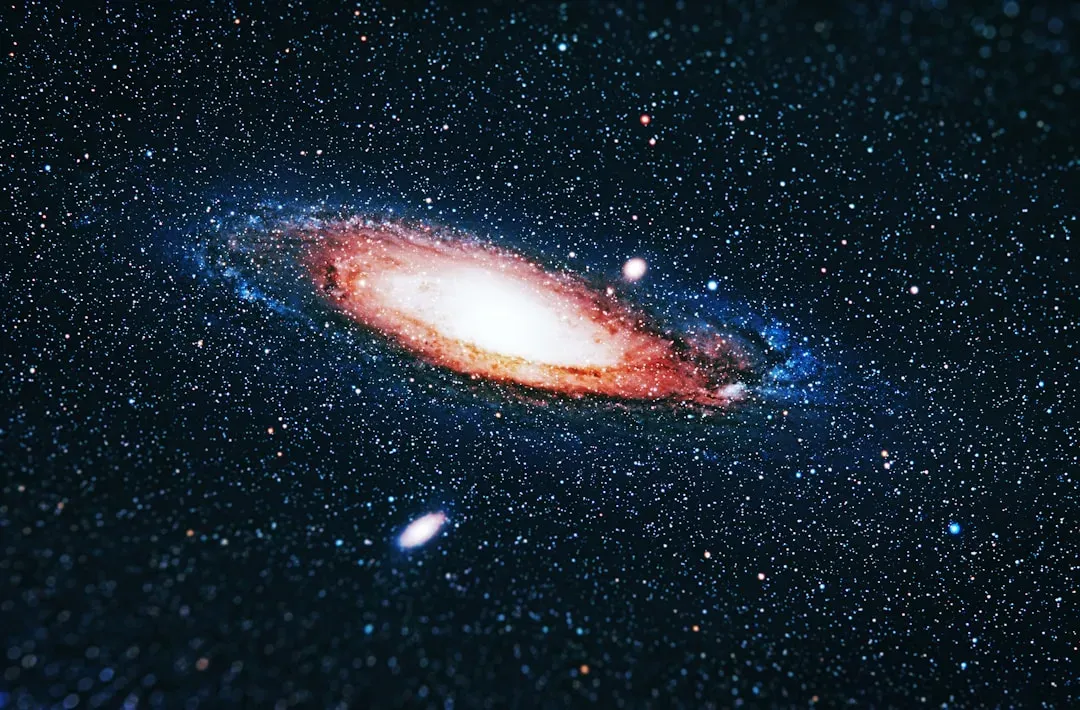
Here’s where things get bold: if information in a black hole can be stored on its boundary, maybe that’s not a weird one‑off quirk. Maybe that’s how reality works everywhere. Some physicists have proposed that the entire universe might follow a similar rule, where the fundamental description of everything inside a region of space is encoded on its boundary surface. In that view, our three‑dimensional world would be like a rich, detailed image emerging from data written on a two‑dimensional “cosmic screen.”
This doesn’t mean there’s a literal giant wall somewhere with our lives scrolling across it like a sci‑fi billboard. It’s more subtle: mathematically, there could be a theory defined on a lower‑dimensional boundary that fully captures the physics of the higher‑dimensional space we experience. The higher‑dimensional world wouldn’t be fake, but it would be a kind of “reconstruction” of the more fundamental boundary information, similar to how a flat QR code on a packet can suddenly unfold into a full 3D experience on your phone.
How Quantum Gravity Pushed Us Toward a Hologram
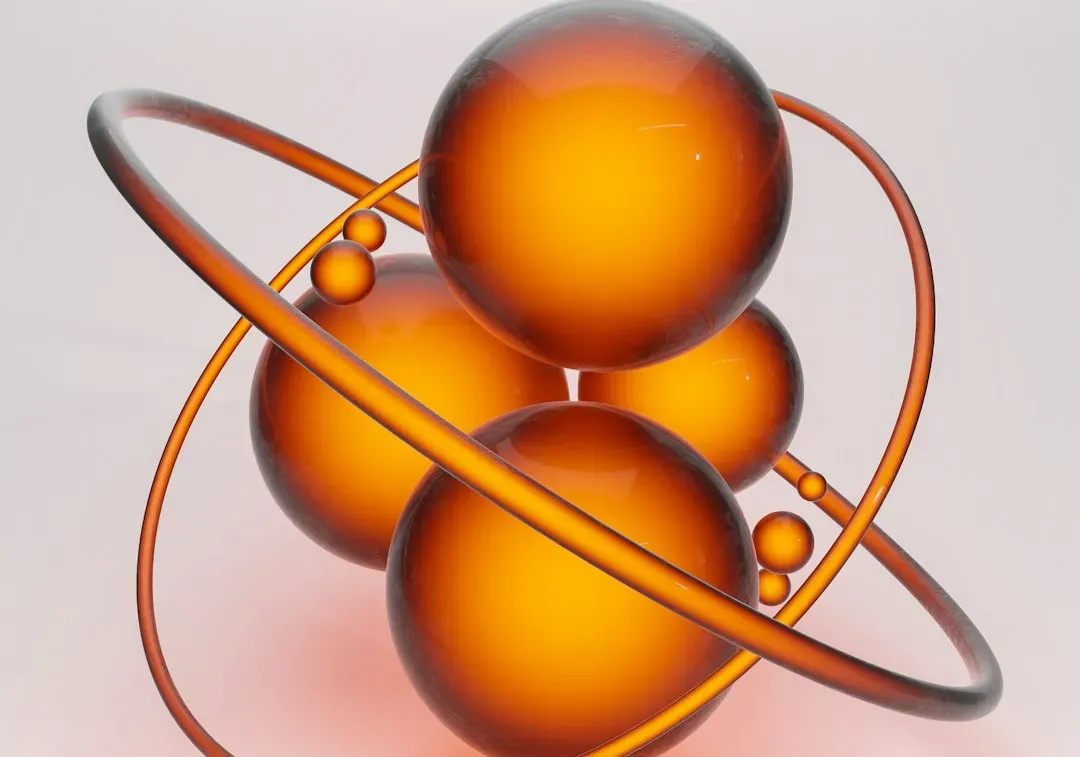
The holographic idea really took off when physicists tried to merge two big, stubborn theories: quantum mechanics, which rules the microscopic realm, and general relativity, which describes gravity and the structure of spacetime. At very high energies or very tiny scales – like near black holes or right after the Big Bang – these two frameworks clash badly. Traditional approaches to quantum gravity were like trying to jam mismatched puzzle pieces together; you could force them, but ugly infinities and paradoxes kept showing up.
Out of that struggle came a surprising insight: in certain highly symmetric universes, a theory with gravity in a higher number of dimensions can be mathematically equivalent to a theory without gravity in lower dimensions. In practical terms, it meant you could translate a hard problem about curved spacetime into an easier problem about particles on a flat boundary, and both descriptions would give you the same physical answers. The fact that this “holographic duality” works so beautifully in those special cases made many researchers think it might reveal something true and general about how spacetime and gravity really emerge from more basic ingredients.
Are There Actual Tests for a Holographic Universe?
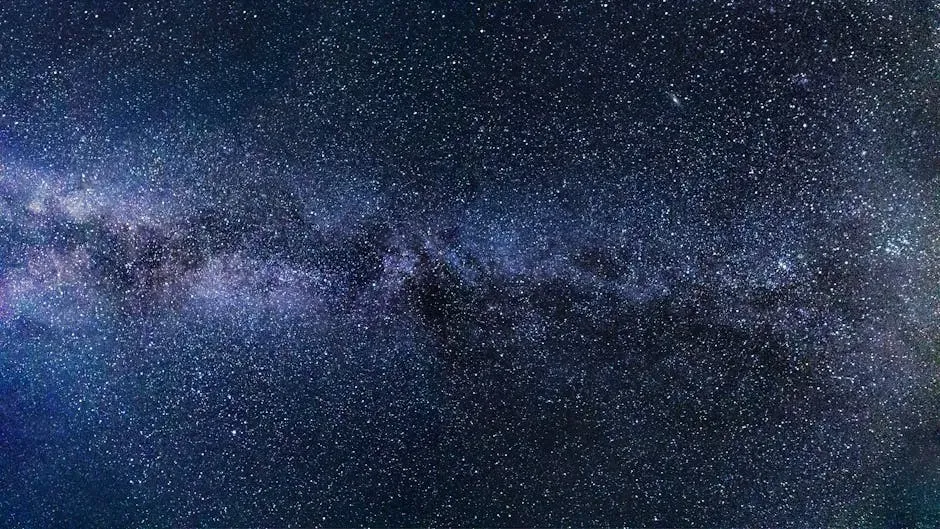
This is usually the moment when people ask, “Okay, but is this just a fancy math trick, or can we test it?” That’s the painful part: directly testing whether our entire universe is holographic is extremely hard, because the idea often lives in energy ranges and length scales far beyond what we can probe today. Still, there have been attempts to see whether some holographic models can reproduce features of our real universe, like its large‑scale structure or the cosmic microwave background – the faint afterglow of the Big Bang.
Some studies have explored whether tiny deviations in those cosmic patterns could hint at a holographic origin of space and time, and in a few cases, simple holographic models have managed to match certain key observations surprisingly well. But none of this counts as decisive evidence; at best, it shows that holographic descriptions are not obviously wrong and might be compatible with what we see. If you’re hoping for a lab experiment where someone flips a switch and the universe blinks like a glitchy screen, that’s not what’s on the table right now.
Does a Holographic Universe Mean We Live in a Simulation?
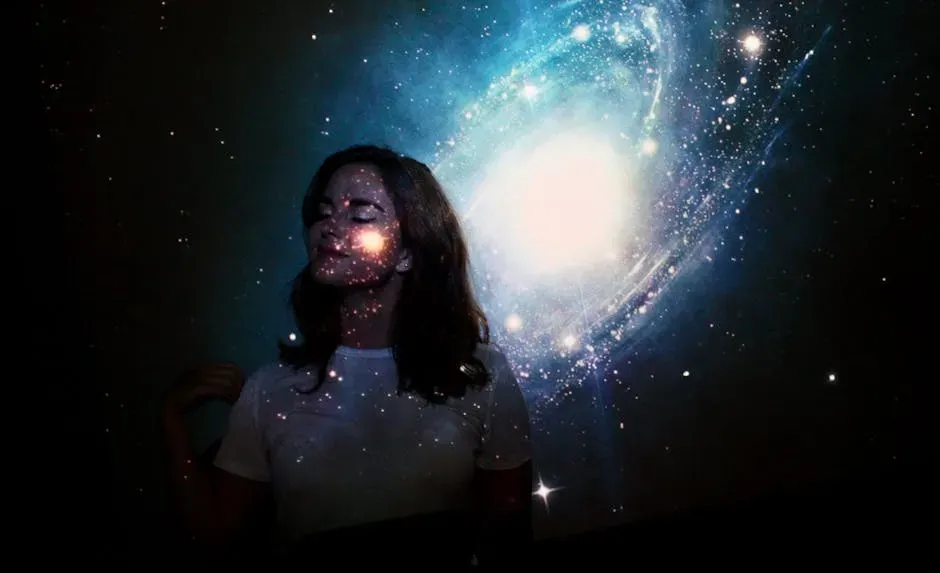
It’s really tempting to mash the holographic principle together with the idea of a computer simulation and imagine we’re living in some cosmic video game. But those are two different things. A simulation hypothesis says we’re inside an artificial construct created by some external intelligence. The holographic universe idea, on the other hand, is about how the laws of physics might be encoded and related across dimensions, with no requirement for programmers or servers in a bigger reality outside.
If our universe is holographic, that wouldn’t automatically make it less authentic or more “fake” than a non‑holographic one. It would simply mean that what we call three‑dimensional reality has a deep, dual description in fewer dimensions, in the same way that a 3D movie comes from a flat film strip. When I first wrapped my head around that, it actually made the world feel more mysterious, not less meaningful – like discovering that the book you’re reading can be rewritten in a completely different language while still telling the same exact story.
What This Does to Our Idea of Reality

The philosophical fallout of a holographic universe is huge. If space and maybe even time are not fundamental, but instead emerge from more basic relationships, then our everyday intuitions about “here,” “there,” “before,” and “after” might be about as deep as a user interface. It would be like realizing that icons on your phone’s home screen aren’t really tiny folders and cameras, just helpful symbols riding on layers of hidden code.
For some people, this is unsettling, because it suggests that reality is more abstract and less solid than it appears. For others, it’s oddly liberating, because it shows how much room there is for wonder and surprise in the universe. Personally, I find it humbling: if even space and time might be emergent, then clinging too tightly to common sense as the final judge of what’s real starts to look a bit naive. The universe clearly doesn’t care if its rules line up neatly with our gut feelings.
Why Scientists Take the Holographic Idea Seriously
Despite how wild it sounds, the holographic view isn’t a throwaway fringe idea whispered about in late‑night documentaries. It’s respected mainly because it solves hard technical problems, especially in areas like quantum gravity, black hole physics, and even some parts of high‑energy nuclear physics. The fact that a lower‑dimensional description can produce the same detailed predictions as a higher‑dimensional gravitational theory is a powerful tool, not just a philosophical toy.
On top of that, holographic thinking has sparked new ways of modeling complex systems, from strongly interacting particles to certain exotic states of matter in condensed‑matter physics. When a concept keeps working across very different domains, physicists pay attention. That doesn’t mean they’re all convinced the entire cosmos is literally a hologram, but it does mean the principle has earned a place at the table whenever we talk about what space, time, and information really are.
So, Is the Universe Really a Hologram?
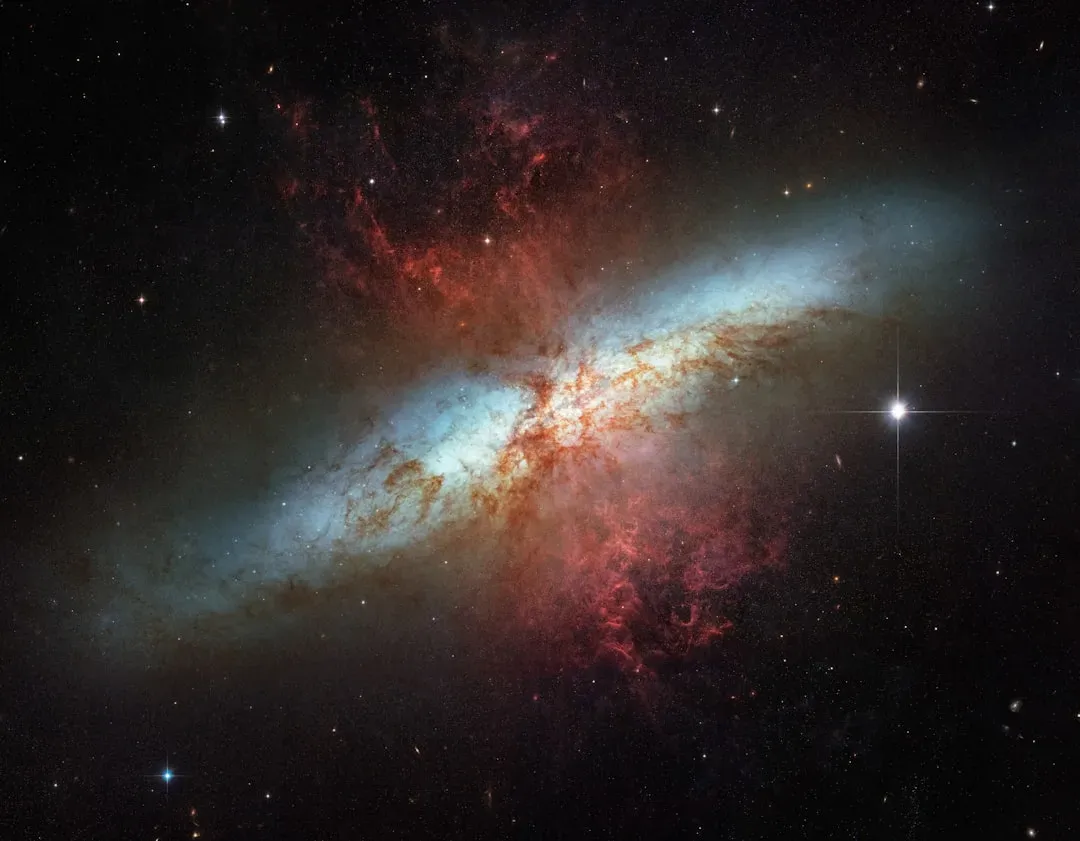
Right now, the honest answer is that we do not know. The holographic principle has strong evidence in specific theoretical setups and has given researchers a powerful framework to tackle problems that once looked impossible. But whether that insight scales all the way up to our actual universe, with its specific mix of dark matter, dark energy, and expanding space, is still an open question. There are promising hints and elegant models, but no definitive, smoking‑gun test.
What we can say is that the holographic idea has already changed how physicists think about reality, even if it eventually turns out to be only part of the story. It suggests that the world we move through every day might have a hidden, lower‑dimensional script quietly running beneath it. Whether or not that script is the final word, the possibility alone nudges us to see our familiar surroundings with fresh eyes. If everything you touch might be the shadow of something deeper, how differently do you look at your own place in the cosmos?