Some animal societies are so complex, they feel uncomfortably close to our own. Hierarchies, alliances, punishments, childcare systems, even political coups – you can find them all in the wild if you know where to look. Once you start to see it, the forest, the ocean, even your backyard, begin to look like a world of tiny, parallel civilizations quietly unfolding around us.
What’s really startling is how many different ways life has “solved” the problem of living together. Ants build supercolonies that function like a giant body, dolphins cooperate in shifting alliances that resemble human friendships, and elephants grieve their dead and share leadership. Let’s walk through ten of the most remarkable social systems on Earth and see how wildly creative evolution can be when it comes to community.
1. Ant Supercolonies That Behave Like a Single Organism
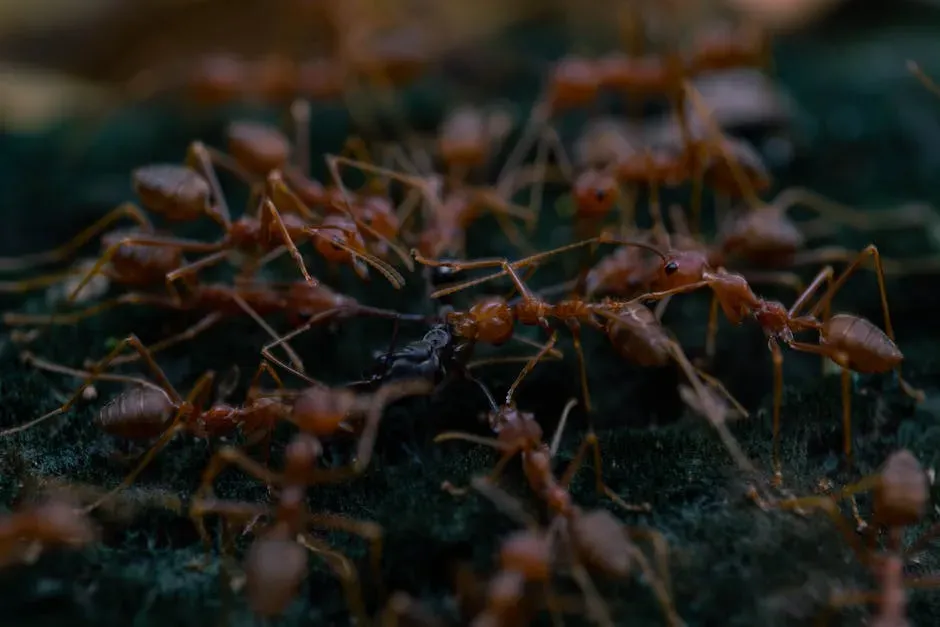
Imagine living in a society where you are essentially a cell and the entire community is the body. That’s how many ant colonies function, especially the colossal “supercolonies” where millions of ants across huge areas cooperate as if they’re one creature. There can be multiple nests, multiple queens, and still no internal war – just seamless collaboration in foraging, defense, and care for brood.
Some invasive ant species have taken this to a shocking extreme, forming supercolonies that can stretch for hundreds of kilometers, with workers from distant nests recognizing each other as nestmates. These ants maintain their unity through shared chemical signatures, using scent like a passport and uniform combined. The result is a highly efficient, hyper-cohesive society that can outcompete almost every other insect around it.
2. Elephant Families Led by Wise Matriarchs
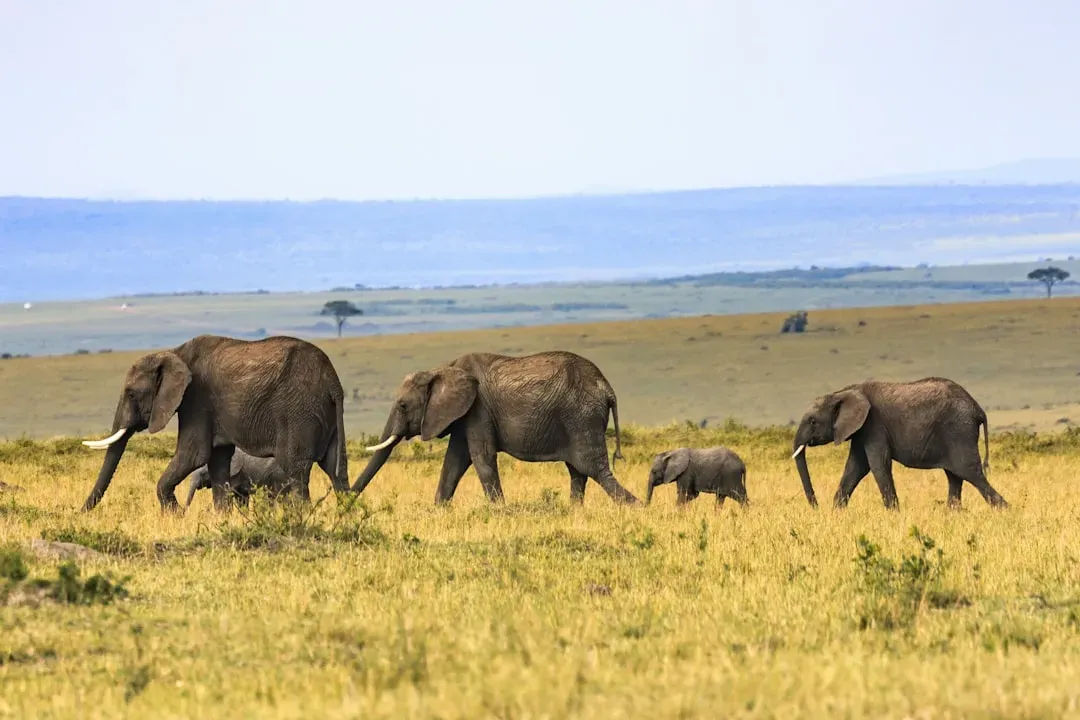
Elephant societies feel almost painfully familiar because they’re built around deep memory, emotional bonds, and leadership earned with age. At the heart of a typical family group is an older female – the matriarch – who leads her relatives across vast landscapes, remembering waterholes, safe routes, and dangerous areas. Her decisions can literally mean life or death during drought or conflict.
These families don’t just move together; they teach, comfort, and coordinate. Calves are raised not just by mothers but by “aunties,” older siblings, and cousins in a loose, supportive network. When a matriarch dies, her absence can destabilize the group, because vital knowledge about the environment and social relationships disappears with her. It’s as if a library, a GPS, and a head of state vanished at once.
3. Dolphin Alliances That Resemble Political Friendships
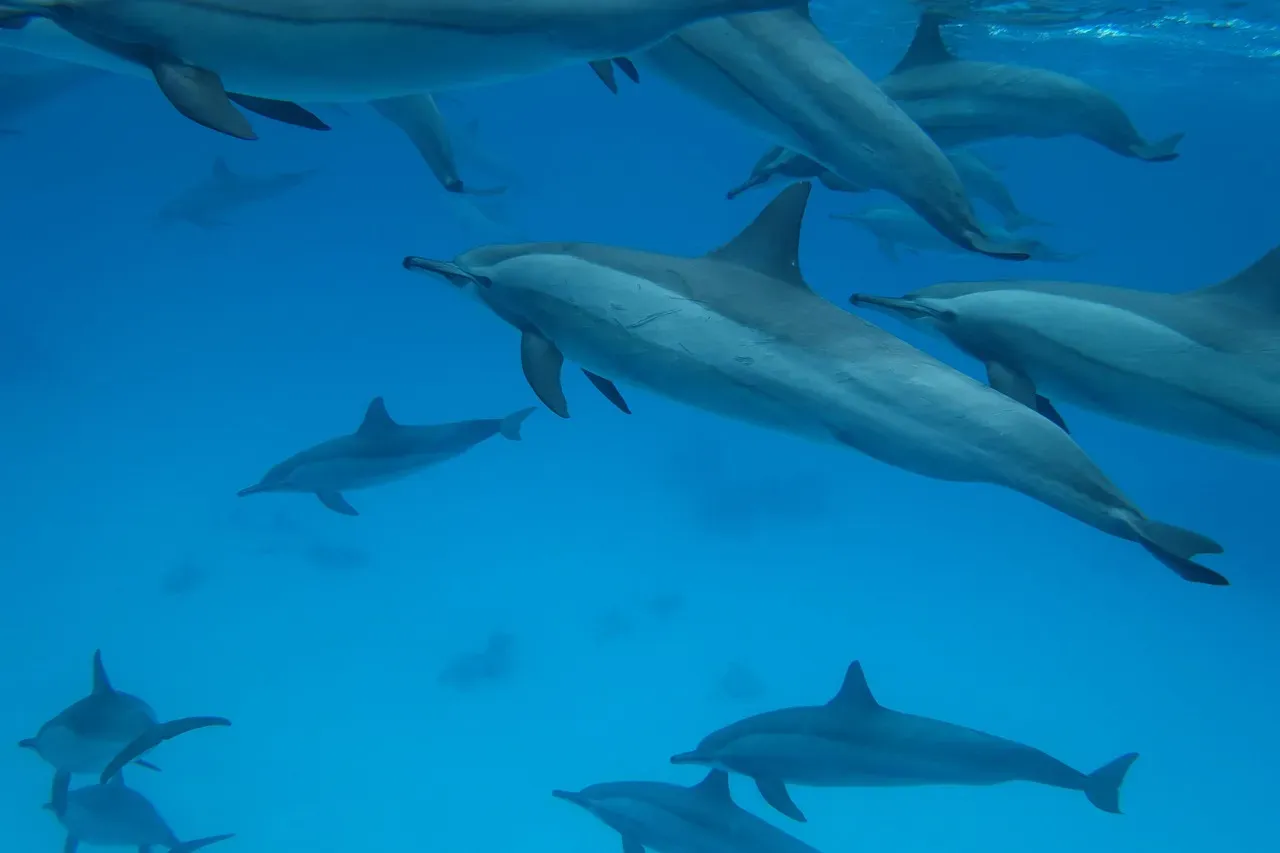
Dolphins don’t just hang out in random pods; their social world is full of strategic alliances and shifting friendships that look surprisingly political. In some populations, males form long-term coalitions with a few other males, teaming up for mating opportunities and mutual protection. These partnerships can last for years and are built on trust, shared history, and constant interaction.
What’s even more wild is that these alliances can stack into higher-level alliances, where several small male groups cooperate with each other, a bit like rival political parties occasionally teaming up. Relationships are reinforced through physical touch, synchronized swimming, and coordinated vocalizations. Their social system is so complex that researchers often end up using terms like network, strategy, and negotiation – words we normally reserve for humans.
4. Naked Mole-Rat Colonies With Insect-Like Castes
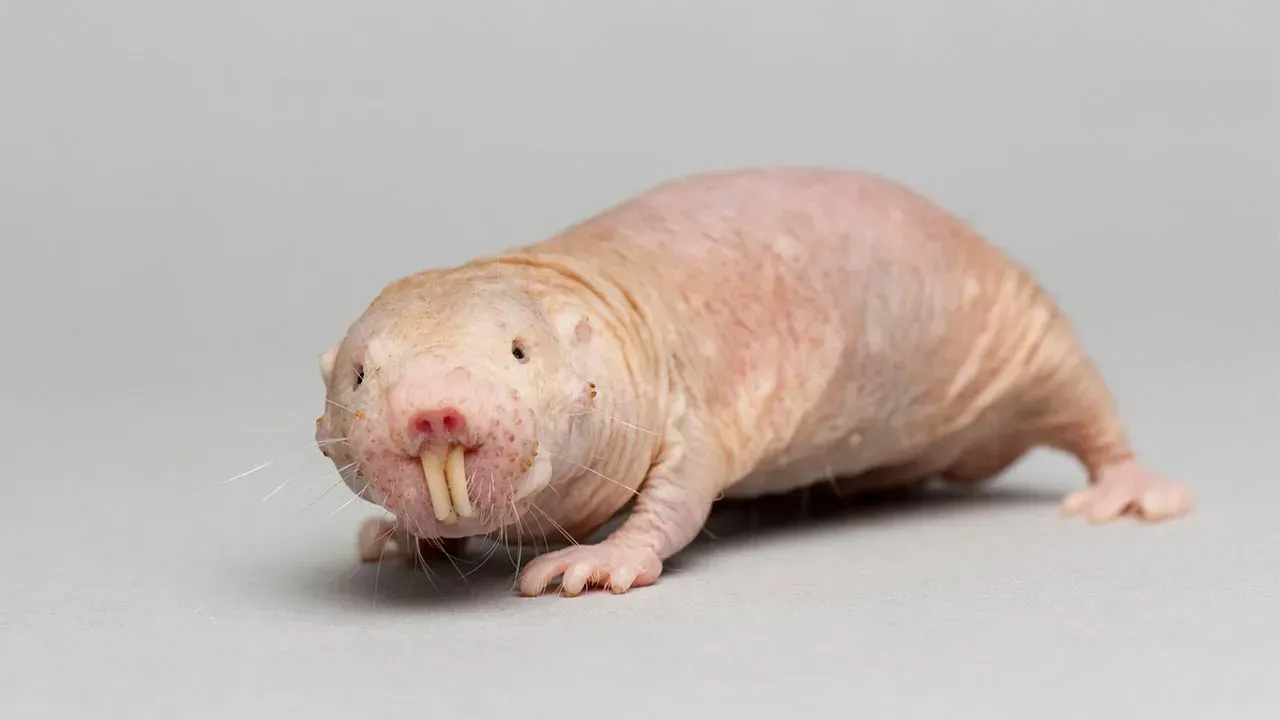
Deep underground in East Africa, naked mole-rats have quietly evolved a social system that feels like it was copied from ants and bees. A single breeding female, often called the queen, monopolizes reproduction, while other females are suppressed from breeding and instead work as laborers or soldiers. These non-breeding adults dig tunnels, gather food, and defend the colony from snakes and intruders.
Their tunnels can stretch for kilometers, and within this maze, individuals specialize: some are larger, more aggressive defenders, others smaller workers. Social suppression and pheromones help maintain the hierarchy, and removing the queen can trigger a fierce struggle among females for the throne. It’s monarchy, caste system, and army rolled into one wrinkled, buck-toothed package.
5. Meerkat Clans Built on Vigilance and Shared Childcare
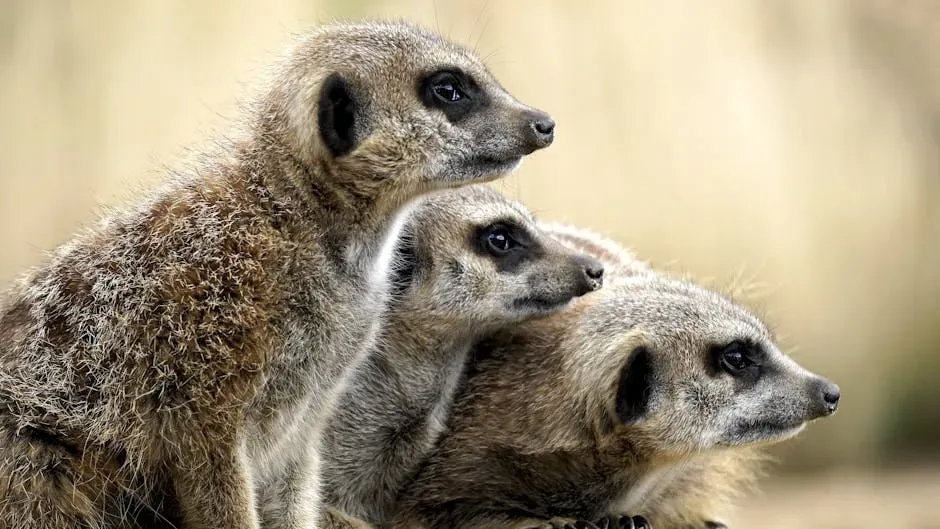
Meerkats turn dusty desert plains into neighborhoods full of drama, teamwork, and constant watchfulness. These small carnivores live in close-knit groups where cooperation is the difference between surviving a predator and becoming someone’s lunch. While most individuals forage for insects and small animals, at least one meerkat usually stands upright on a mound as a sentry, scanning the sky and ground for threats.
Their social life runs deeper than just lookouts. Meerkats share childcare responsibilities, with “babysitters” staying behind to guard pups while others forage, and experienced individuals teaching young ones how to handle prey. Dominant breeding pairs can sometimes evict rivals or subordinates, and conflicts over mating and status are common, but the group’s survival still depends on that tight choreographed balance between competition and intense cooperation.
6. Hive-Minded Honeybees With Perfectly Coordinated Roles
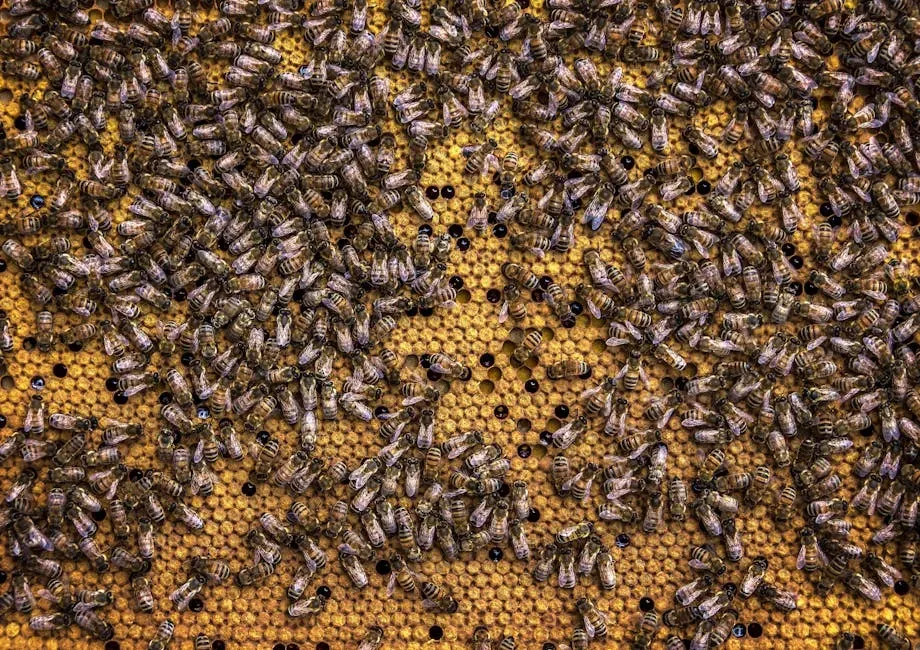
Honeybee colonies are like miniature cities humming with choreographed activity, where every individual has a job and almost no one is freelancing. A single queen is responsible for laying eggs, while the vast majority of bees are sterile workers who cycle through specialized tasks as they age. Young workers start with cleaning and brood care, then progress to comb building and food storage, and finally graduate to risky foraging outside the hive.
Information flows through this city using scent and movement rather than words. Foragers perform “dances” to communicate where good flowers are located, encoding distance and direction through the angle and rhythm of their steps. Guard bees patrol the entrance, recognizing nestmates by smell and turning away or attacking intruders. It’s an orderly, efficient, and surprisingly flexible system that lets a colony adapt rapidly to weather, predators, and changing resources.
7. Wolf Packs Organized Around Family and Hierarchy
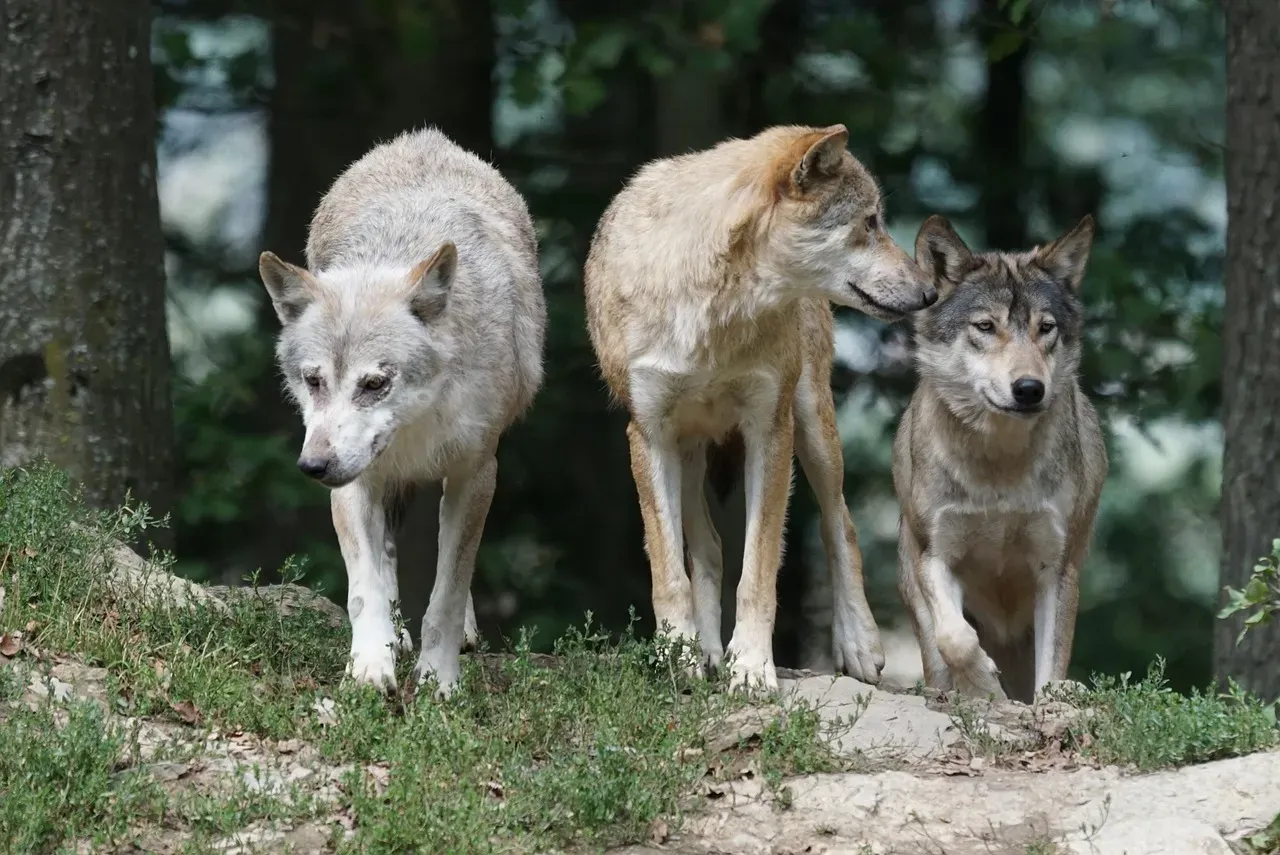
Wolves have long been portrayed as either ruthless alpha warriors or noble family guardians, but their real social life is a blend of both strength and tenderness. A typical wolf pack is essentially a family unit, led by a dominant breeding pair and made up of their offspring from multiple years. Hierarchy matters, but it’s woven into play, affection, and cooperation, not just constant aggression.
Hunting is where their social structure really shines. Wolves coordinate complex group hunts, using position, body language, and experience to bring down prey much larger than any individual. Pups and lower-ranking wolves are often fed first at a kill, and adults will carry food back in their stomachs for those left at the den. Their system is strict enough to keep order, but flexible enough to allow play, learning, and subtle shifts in rank over time.
8. Chimpanzee Communities With Ambition and Alliances
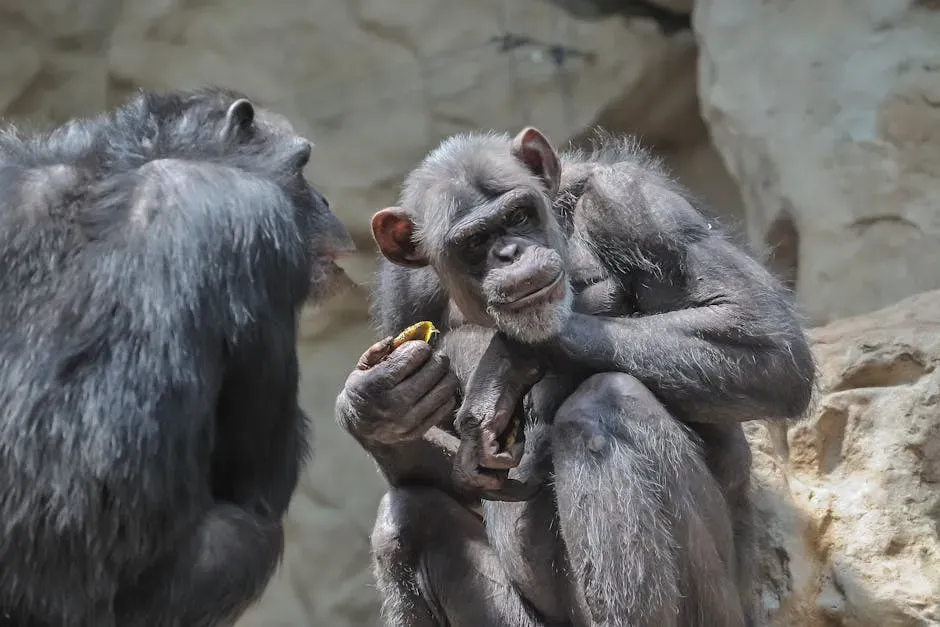
Chimpanzees live in communities where social tension, loyalties, and ambition are constantly simmering beneath the surface. Adult males, in particular, compete for dominance, and the highest-ranking male – often called the alpha – only keeps his position as long as he manages alliances, intimidates rivals, and maintains support. It’s not just about brute strength; political skill matters too.
These communities are rich in subtleties: grooming sessions reinforce bonds, low-status individuals navigate carefully to avoid provoking powerful neighbors, and females form their own hierarchies and friendships. Coalitions can rise up to overthrow a failing alpha, and leaders often “campaign” through displays, support-building, and strategic generosity. Watching them feels uncomfortably like watching a raw, harsher version of human office politics, only with more fur and fewer emails.
9. Orca Clans That Pass Down Culture Across Generations
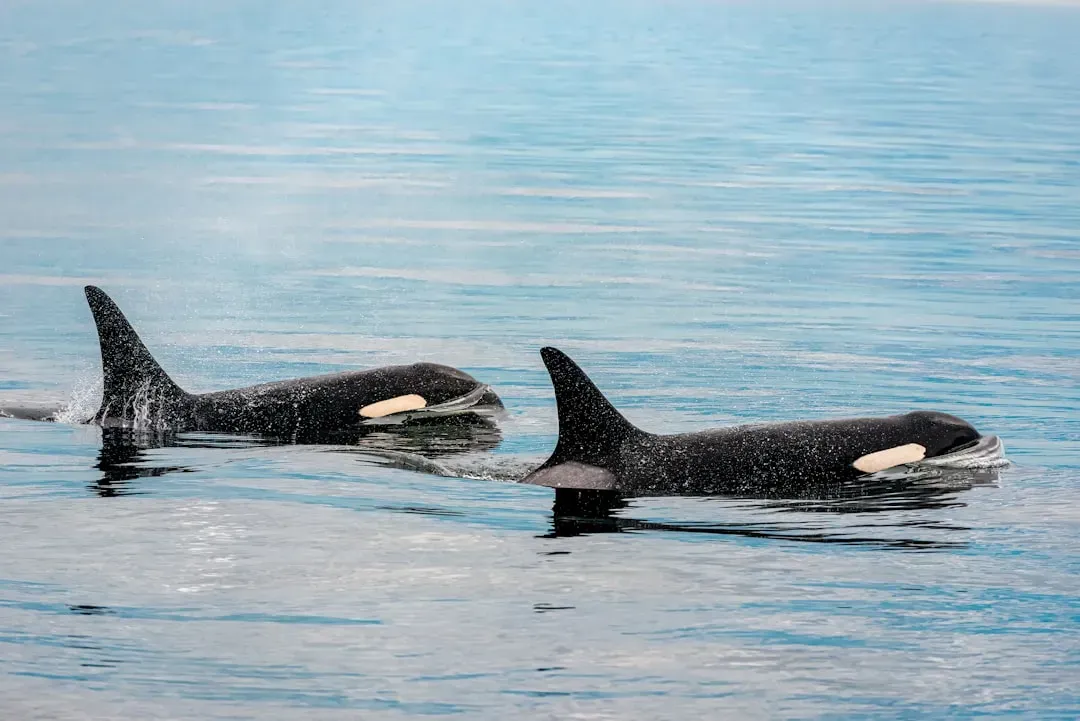
Orcas, or killer whales, don’t just travel in pods; they live in culture-rich clans defined by family, dialect, and tradition. In some populations, offspring – especially males – stay with their mothers for life, weaving multi-generational lineages that move, hunt, and rest together. These matrilineal groups form larger social networks, but their closest bonds remain within family lines tied to elder females.
Different orca groups have distinct vocal patterns, hunting techniques, and even dietary preferences that are learned, not hardwired. One clan may specialize in fish, using coordinated herding tactics, while another focuses on marine mammals with very different strategies. Older females often act as leaders and knowledge-keepers, guiding their kin to seasonal feeding grounds and passing on these cultural skills like grandparents teaching family recipes and local shortcuts.
10. Termite Metropolises With Hidden Underground Organization
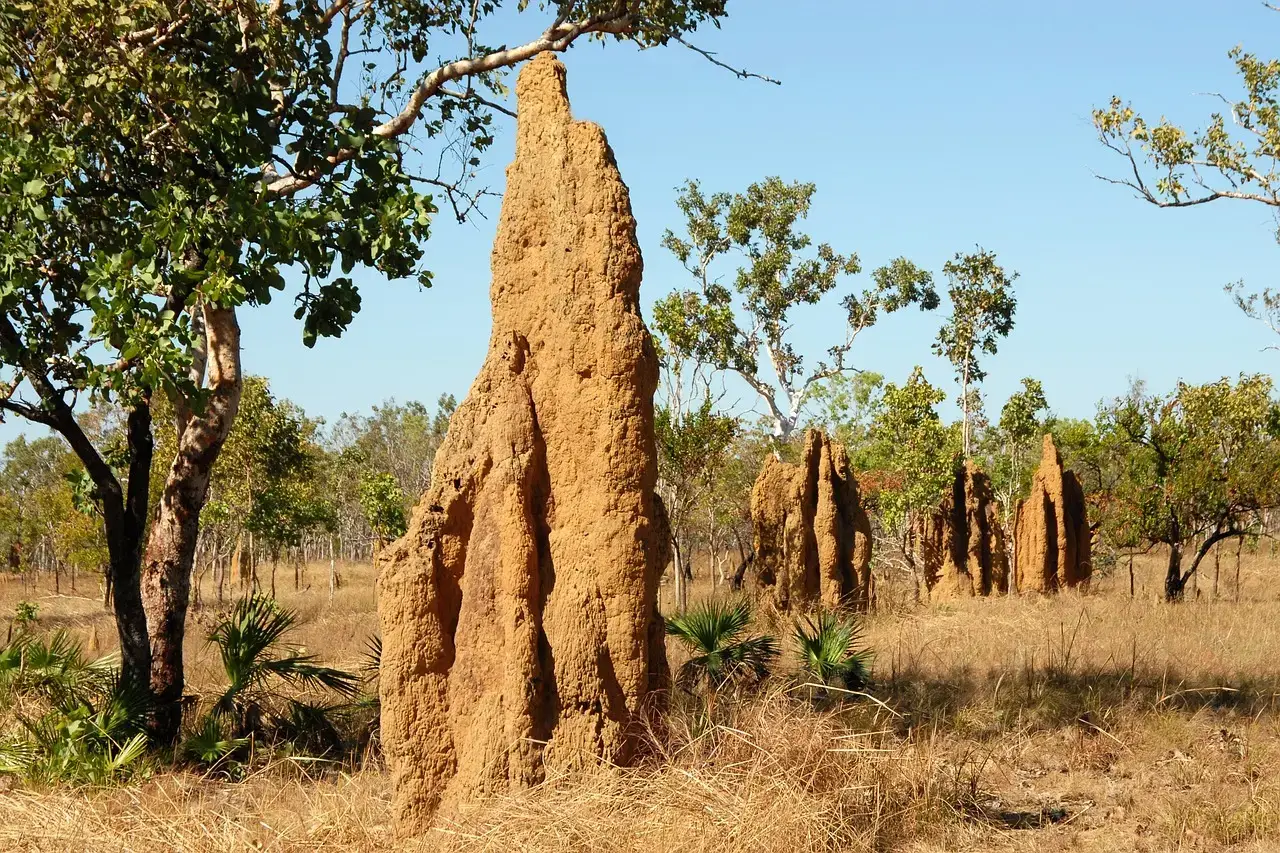
Termite mounds look like simple dirt towers, but inside them are sprawling, multi-level societies that could rival a small city in complexity. Termites divide labor among different castes: a queen and king at the reproductive core, workers that handle building and feeding, and soldiers with armored heads or oversized jaws for defense. Many species farm fungus in carefully managed chambers, turning chewed plant material into a more digestible food source.
The architecture of a mound is not random; it regulates temperature, humidity, and gas exchange through an intricate system of tunnels and vents. No single termite is an architect, yet collectively they create stable, climate-controlled structures using simple local rules and chemical cues. The social structure is so tightly coordinated that the mound and its inhabitants almost blur into one living, breathing superorganism.
Across ants, elephants, dolphins, naked mole-rats, meerkats, honeybees, wolves, chimpanzees, orcas, and termites, social structures have evolved in wildly different directions, yet all solve the same core problem: how to live, compete, and cooperate with others. Seeing how many ways nature has answered that question makes you wonder what other forms of society might still be hidden, waiting to be noticed.