Something remarkable is happening beneath your feet right now. Well, not your feet exactly – but somewhere deep under the African continent, geological forces so powerful they make earthquakes look like minor inconveniences are slowly, relentlessly ripping the land apart.
It sounds like science fiction. A continent splitting in two. A brand new ocean forming where there was once desert and savanna. Yet this is not a movie plot. It is real, it is measurable, and honestly, it is one of the most awe-inspiring things happening on Earth right now. Let’s dive in.
The Great Rift That Is Rewriting the Map
The East African Rift System is the geological feature at the center of all this drama. It stretches thousands of kilometers from the Afar Triangle in Ethiopia all the way down through Kenya, Tanzania, and beyond. Think of it like a zipper being slowly pulled open – except the zipper is a continent, and the process takes millions of years.
Scientists have been tracking this rift for decades, and what they’ve found is genuinely staggering. The African plate is actively being split into two separate plates: the Somali Plate and the Nubian Plate. These two chunks of the Earth’s crust are moving apart at a rate of a few millimeters per year. Slow by human standards, yes – but geologically speaking, that’s practically sprinting.
What Happens When a Continent Splits
Here’s the thing most people don’t realize: we’ve seen this movie before. The Atlantic Ocean? That used to be a rift too. Hundreds of millions of years ago, what is now North America and Africa were glued together, and then the Earth’s mantle said otherwise. Water filled the gap over time, and voilà – one of the world’s greatest oceans was born.
The East African Rift is following the same playbook. As the land pulls apart, the crust thins and sinks. Low-lying areas begin to form. Eventually – and we’re talking roughly five to ten million years from now – the Indian Ocean will flood in and create an entirely new body of water. Parts of East Africa, including Somalia and parts of Ethiopia and Kenya, will become a separate landmass. It’s wild to wrap your head around, I know.
The Afar Triangle: Ground Zero for a New Ocean
If you want to see where this drama is most visible right now, look at the Afar Triangle in Ethiopia. This remote, scorchingly hot region sits at the junction of three tectonic plates and is one of the lowest points on the African continent. It is, in the most literal geological sense, where the future ocean will begin.
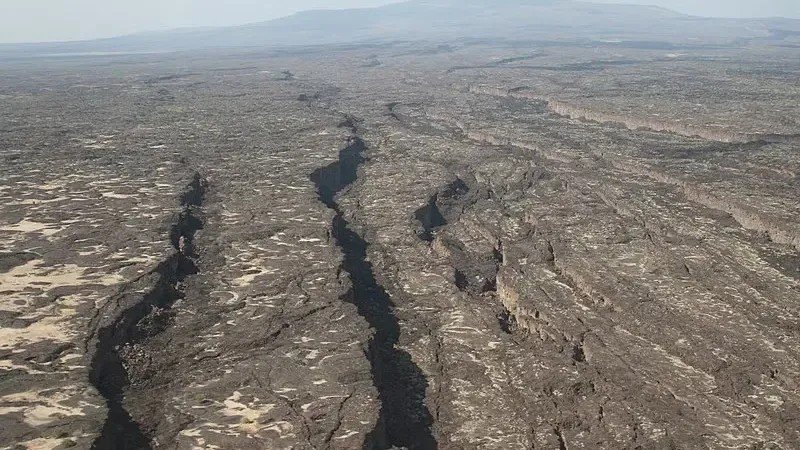
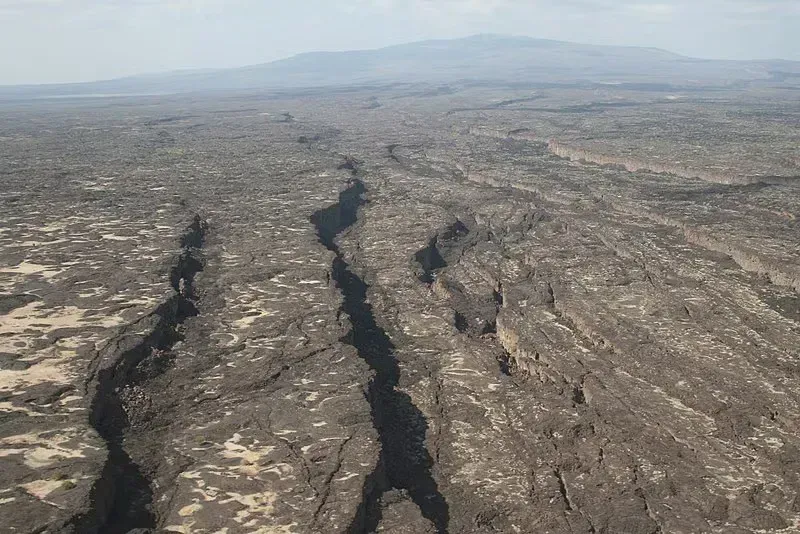
In 2005, a massive crack appeared in the Ethiopian desert almost overnight – stretching roughly 60 kilometers in just a matter of days. Geologists were astonished. That kind of rapid rifting event is extraordinarily rare on land. Normally these processes happen beneath the ocean floor, hidden from view. The Afar Triangle is giving scientists a front-row seat to something that almost never happens above sea level.
Visible Cracks and Real Consequences for People Living There
This isn’t just an abstract geological curiosity. People live along the rift, and the physical changes are affecting their lives right now. Cracks have appeared in roads, farmland, and even homes in parts of Kenya and Ethiopia. In some areas, the ground literally opens up, swallowing soil and disrupting communities.
Honestly, it’s a sobering reminder that tectonic forces don’t care about borders or human infrastructure. Volcanic activity along the rift is also elevated, and the region experiences earthquakes regularly. For the communities living in the rift valley, these aren’t distant scientific phenomena – they’re part of daily life. Scientists and local governments are working to better understand and predict these events, though forecasting geology on this scale remains incredibly difficult.
What This Means for the Future Shape of Africa
Let’s zoom out and think about the bigger picture. When the split is complete – millions upon millions of years from now – the map of Africa will look completely unrecognizable. A new ocean will separate a chunk of East Africa from the rest of the continent. New islands may form. Coastlines will shift dramatically.
It’s almost impossible to truly internalize that kind of timescale. We struggle to think past next Tuesday, let alone ten million years. Still, the science is clear: the Earth is not a static place. The continents we know today are just a snapshot in an endlessly changing planetary story. Africa as we know it is temporary. That’s not scary – it’s honestly kind of beautiful.
How Scientists Are Studying the Rift Right Now
Modern technology has transformed our ability to study these tectonic processes. GPS sensors placed across the rift zone can detect movements of just a few millimeters per year. Satellite imagery reveals surface changes that would have gone completely unnoticed a few decades ago. Seismographs scattered across East Africa record thousands of small earthquakes that collectively paint a picture of where the crust is under the most stress.
Researchers from institutions around the world have converged on the region, particularly the Afar Triangle, to gather data. It’s hard to say for sure exactly how the timing will unfold, but the more data scientists collect, the sharper their models become. The 2005 rifting event in Ethiopia was a turning point – it produced an enormous amount of real-world data about how continental breakup actually works in practice, not just in theory.
A Conclusion Written in Stone – Millions of Years in the Making
There’s something deeply humbling about all of this. We spend so much time worried about day-to-day changes, yet beneath us, the planet is executing a plan so vast and slow it makes all of human history look like a blink. Africa splitting apart and a new ocean being born isn’t a catastrophe. It’s just Earth doing what Earth does.
I think what makes this story so compelling is that we are alive at a moment when we can actually observe it happening. The cracks in Ethiopia, the drifting plates, the future coastlines – it’s all unfolding in real time, even if “real time” here means geological epochs. The next ocean already has its birth certificate. It just hasn’t been signed yet.
What do you think – does knowing the ground beneath Africa is slowly tearing apart change how you see the planet we live on? Drop your thoughts in the comments.