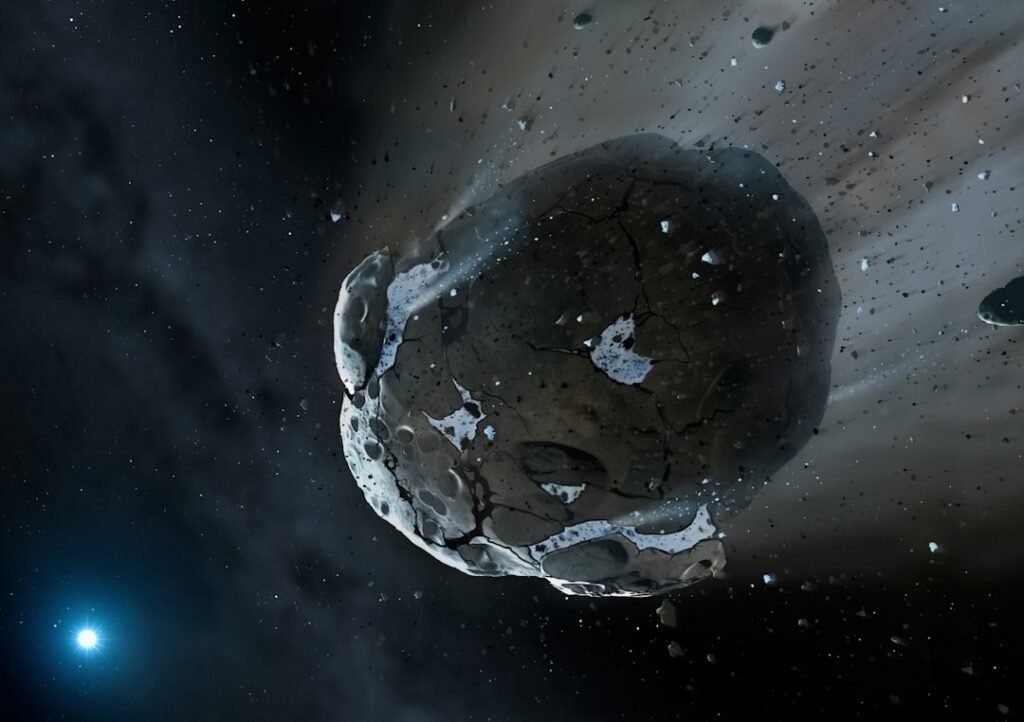

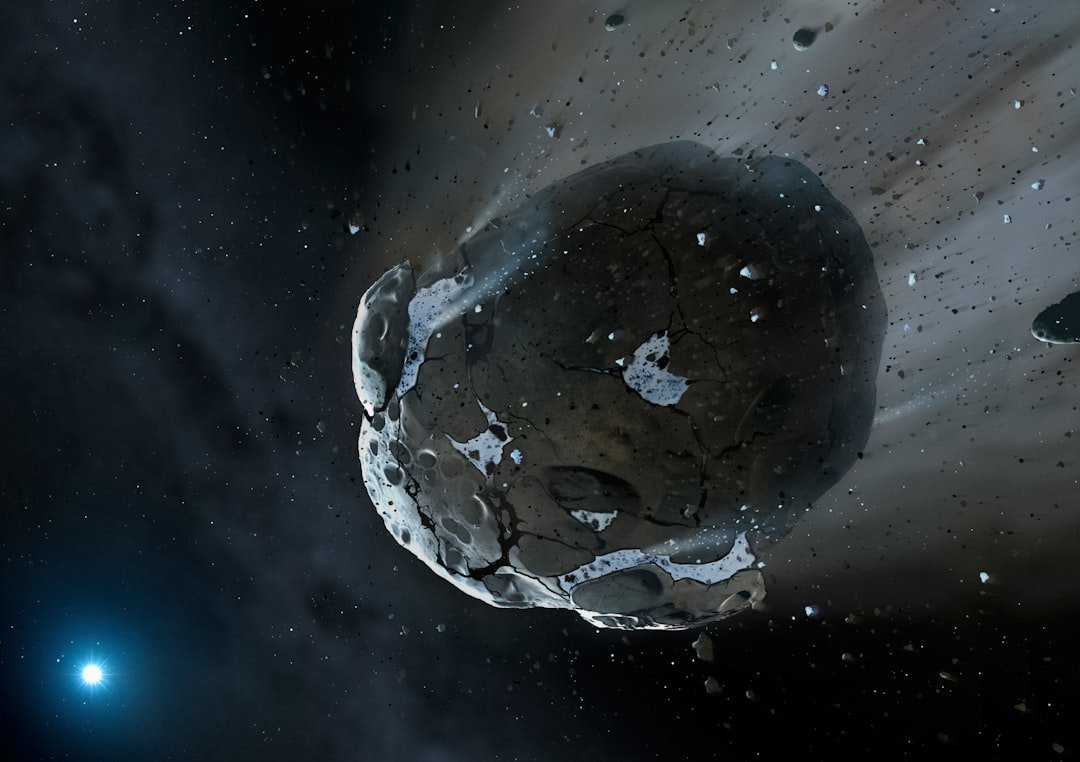
A Stroke of Astronomical Luck (Image Credits: Unsplash)
NASA’s Hubble Space Telescope has documented a comet’s disintegration in unprecedented detail, mere days after its intense solar encounter. The observations of C/2025 K1 (ATLAS), captured in November 2025, represent the earliest such event ever recorded by the orbiting observatory.[1]
This rare footage emerged from an unplanned target switch, offering astronomers a front-row seat to the exposure of ancient solar system materials. The breakup highlights the fragile nature of these icy wanderers and their role in revealing cosmic history.[1]
A Stroke of Astronomical Luck
Researchers never intended to study C/2025 K1, known as K1, with Hubble. The original comet target became unobservable due to new technical limitations after the team secured observation time. Co-investigator John Noonan, a research professor at Auburn University’s Department of Physics, described the pivot that led to the discovery.
“Sometimes the best science happens by accident,” Noonan stated. “This comet got observed because our original comet was not viewable… and right when we observed it, it happened to break apart, which is the slimmest of slim chances.”[1] Hubble’s images arrived the next day, revealing not one but four distinct comets where only one had been expected. Noonan spotted the anomaly during his initial data review. The findings appeared in the journal Icarus on March 18, 2026.[1]
Timeline of the Comet’s Demise
Hubble acquired three 20-second exposures on November 8, 9, and 10, 2025 – roughly one month after K1’s perihelion. The comet reached its closest solar approach inside Mercury’s orbit, at about one-third Earth’s distance from the sun. This proximity subjected it to extreme heat and stress, common triggers for long-period comets to disintegrate.
Analysis indicated K1 began fragmenting eight days prior to the first image. It split into at least four pieces, each surrounded by a coma of gas and dust. One smaller fragment further broke apart during the observation window. Prior to the event, the nucleus measured around 5 miles (8 km) across, larger than typical comets.[1]
- Pre-perihelion: K1 approaches sun on long-period orbit.
- Perihelion (October 2025): Intense heating inside Mercury’s orbit.
- ~8 days before Nov. 8: Initial disintegration begins.
- Nov. 8-10, 2025: Hubble images capture four fragments.
- Present: Remnants 250 million miles away in Pisces, outbound forever.
Unlocking Pristine Solar System Secrets
Principal investigator Dennis Bodewits, also from Auburn University, emphasized the value of the breakup. Comets consist of primordial materials from the solar system’s formation era, but surface alterations from solar radiation complicate analysis. The fragmentation exposed unprocessed interior layers.
“Comets are leftovers of the era of solar system formation, so they’re made of ‘old stuff’: the primordial materials that made our solar system,” Bodewits explained. “By cracking open a comet, you can see the ancient material that has not been processed.”[1] Ground telescopes saw only vague bright spots, but Hubble’s resolution distinguished the fragments clearly. This event fulfills long-sought proposals to observe active disintegrations, previously thwarted by scheduling challenges.[1]
Mysteries in the Dust and Ice
A key puzzle emerged: a delay between fragmentation and observed brightening from Earth. Fresh ice exposure should have caused immediate outbursts, yet ground data showed a lag. Theories include a dust layer forming over the ice before ejection or subsurface heat buildup driving gas expulsion.
Noonan noted the timing’s significance: “Never before has Hubble caught a fragmenting comet this close to when it actually fell apart… This is telling us something very important about the physics of what’s happening at the comet’s surface.”[1] K1 also stands out chemically, depleted in carbon relative to peers. Hubble’s STIS and COS instruments promise deeper spectroscopic insights into its composition. For full details, see NASA’s report.[1]
Key Takeaways
- Hubble observed the breakup earlier than any prior case, just days post-onset.
- Exposed interiors reveal unaltered primordial ices and dust from solar system birth.
- Ongoing analysis will clarify K1’s unusual chemistry and fragmentation physics.
Hubble’s unexpected glimpse into K1’s demise underscores the thrill of unplanned discoveries in astronomy. These fragments carry irreplaceable clues to our cosmic origins, even as they fade into interstellar space. What do you think this reveals about the solar system’s past? Share your thoughts in the comments.