
You walk on solid ground every single day and never think twice about it. It feels permanent, reliable – basically the definition of stability. Yet beneath the thin shell you call home, there is a world of boiling rock, ancient mysteries, hidden oceans, and structures so massive they dwarf entire continents. Honestly, the deeper scientists look, the stranger it gets.
The planet beneath you is not the dull layered rock you might remember from a school diagram. It is a churning, dynamic, unbelievably complex system that shapes your climate, your magnetic shield, your volcanoes, and possibly even the origins of life itself. Get ready to look down – way, way down. Let’s dive in.
The Ground You Stand On Is Thinner Than You Think

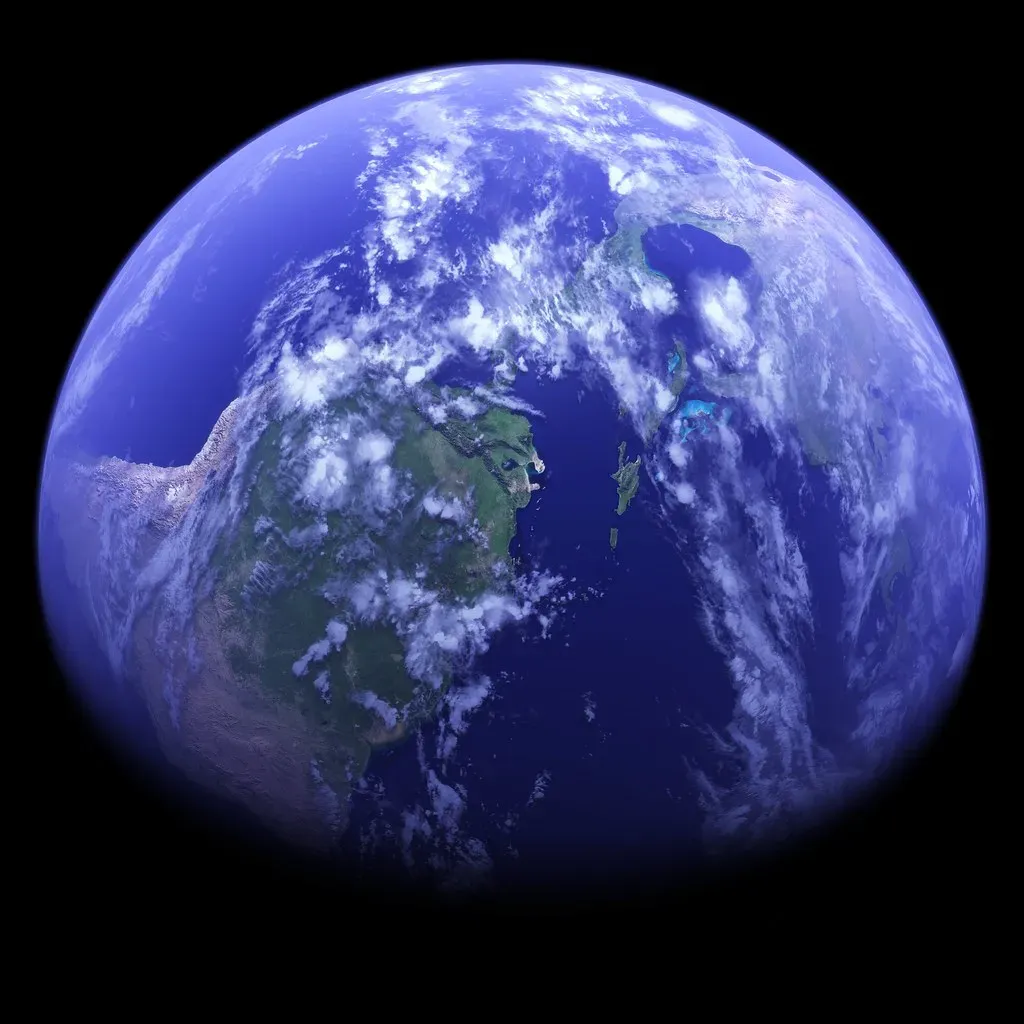
Picture the Earth as a hard-boiled egg. The shell is your crust – the familiar layer of mountains, oceans, and soil you live on. Here’s the thing: that shell is absurdly thin. Beneath you lies the crust, then the mantle, the outer core, and finally the inner core. You might expect those layers to feel deep and distant, but the crust averages only about 30 kilometers thick under the continents – comparable to the skin of an apple, if the apple were the size of a house.
Humans have traveled roughly 25 billion kilometers beyond our planet into space, yet the deepest drill hole ever made reaches just over 12 kilometers below the surface – meaning scientists still know surprisingly little about what happens far beneath your feet. Think about that for a moment. You have come closer to the moon, in a sense, than to the beating heart of your own planet. Everything you know about Earth’s interior has been pieced together not by drilling, but by listening to the planet’s own earthquakes.
The Mantle: A Slow-Moving World of Impossible Heat
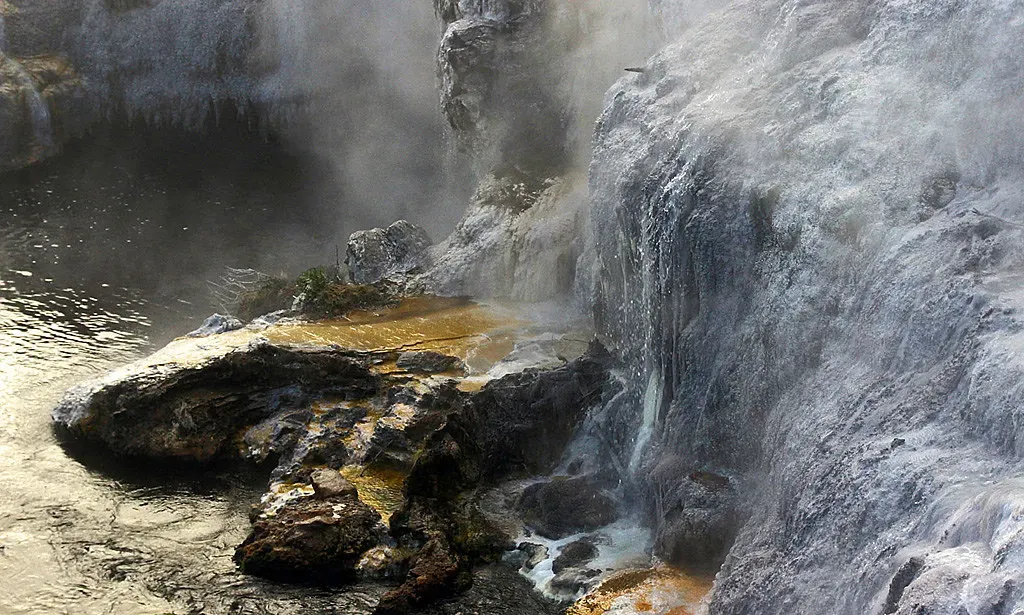
Earth’s mantle is a layer of silicate rock between the crust and the outer core, making up roughly 86 percent of the planet’s total mass and about 84 percent of its volume. That is a staggering amount of material, and yet it behaves in ways that defy simple description. It is predominantly solid, but on geologic time scales it behaves as a viscous fluid – sometimes described as having the consistency of caramel.
The temperature of the mantle varies greatly, from around 1,000 degrees Celsius near its boundary with the crust all the way to roughly 3,700 degrees Celsius near its boundary with the core. Let that sink in. The rock under your feet is hotter than a furnace, yet so compressed by the weight of everything above it that it cannot melt in the traditional sense. The transfer of heat and material in the mantle helps determine the landscape of Earth – activity in the mantle drives plate tectonics, contributing to volcanoes, seafloor spreading, earthquakes, and mountain-building.
The Two Giant Blobs Nobody Can Fully Explain
Two enormous structures were discovered in the 1980s in seismic data collected from earthquakes, revealing two large regions in Earth’s lowermost mantle – one sitting beneath Africa and the other beneath the Pacific Ocean. They extend upward from the core-mantle boundary, which lies around 2,900 kilometers below Earth’s surface. Scientists informally call these the “blobs,” and they are each roughly the size of a continent. They extend laterally for thousands of kilometers and possibly up to 1,000 kilometers vertically from the core-mantle boundary, and have been named Tuzo and Jason, after two geologists celebrated in the field of plate tectonics.
Through these patches, seismic waves travel with distinct sluggishness, implying a different composition from the surrounding material. Scientists have previously proposed varying explanations – including remnants of old tectonic slabs, a cooling magma ocean, or even chunks of a giant object called Theia that once collided with Earth to form the Moon. Deep inside Earth, these two massive hot rock structures have been quietly shaping the planet’s magnetic field for millions of years – and using ancient magnetic records and advanced simulations, scientists discovered that these formations influence the movement of liquid iron in Earth’s core. You are living above geological giants, and science is only just beginning to understand them.
A Hidden Ocean Trapped Inside Rock
Here is one that sounds like science fiction. Buried nearly 400 miles beneath Earth’s surface, scientists have discovered a vast underground reservoir of water – not in liquid form but locked within a high-pressure mineral called ringwoodite. This breakthrough came from a combination of seismic wave analysis, laboratory simulations, and mineralogical studies, pointing to what could be a water volume three times larger than all the world’s surface oceans combined. You read that correctly. Three times all the oceans.
Unlike surface water, this reservoir doesn’t exist as a liquid, solid, or gas – instead, it’s held in a strange fourth state, suspended inside the rock like moisture in a sponge. The presence of vast water reserves deep within the mantle implies the existence of a whole-Earth water cycle, where water moves between the interior and the surface over geological timescales. Subduction zones, where oceanic plates dive into the mantle, may carry water-laden crust downward, releasing water into the transition zone through mineral reactions – and in return, some of this water may resurface through volcanic activity, completing a deep-Earth circulation system. The planet is breathing water in and out, just on a timescale you can barely imagine.
Earth’s Core: A Brand New State of Matter
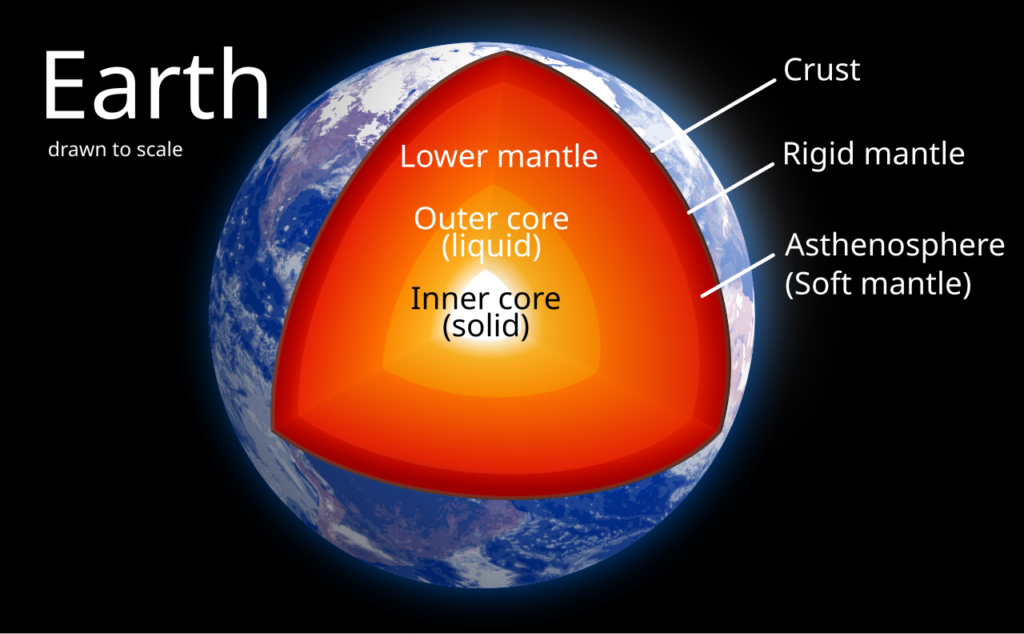
The inner core is a scorching ball of iron and nickel, reaching temperatures hotter than the surface of the sun – over 9,000 degrees Fahrenheit. For decades, scientists assumed it was simply a solid metallic ball, slowly cooling. Then in late 2025, something extraordinary was published. New research revealed that Earth’s solid inner core is actually in a superionic state, where carbon atoms flow freely through a solid iron lattice – an unusual behavior that makes the core soft, matching seismic observations that had puzzled scientists for decades.
The mobility of these light elements may also contribute energy to Earth’s magnetic field, and the findings reshape models of Earth’s interior and could apply to other rocky planets. This is not a small correction to existing theory – it is a fundamental rethinking of what Earth’s core actually is. Data suggests that somewhere between three and five percent of the inner core is mixed with light elements, and according to research from 2025, hydrogen may play a major role, while oxygen, chromium, nitrogen, and silicon could also be involved. The core, in other words, is far stranger than anyone expected.
The Deepest Earthquakes Science Just Mapped
You probably think of earthquakes as something that happens near the surface – fault lines, tectonic boundaries, the kind of thing a seismologist tracks with surface sensors. So it’s genuinely surprising to learn that some earthquakes originate deep within the mantle itself. Scientists at Stanford have unveiled the first-ever global map of rare earthquakes that rumble deep within Earth’s mantle rather than its crust. Long debated and notoriously difficult to confirm, these elusive quakes turn out to cluster in regions like the Himalayas and near the Bering Strait – and by developing a breakthrough method that distinguishes mantle quakes using subtle differences in seismic waves, researchers identified hundreds of these hidden tremors worldwide.
I think this one deserves more attention than it gets. If earthquakes can happen deep in the mantle – a place that was supposed to be too viscous and plastically flowing for brittle fracture – then your understanding of how the planet moves needs updating. Earthquakes at shallow depths are a result of faulting, but below about 50 kilometers the hot, high-pressure conditions ought to inhibit further seismicity – and yet the mantle is considered viscous and incapable of brittle faulting, even as earthquakes in subduction zones are observed down to 670 kilometers. The Earth is breaking its own rules down there, and scientists are still figuring out why.
Sunken Worlds and Ghost Tectonic Plates
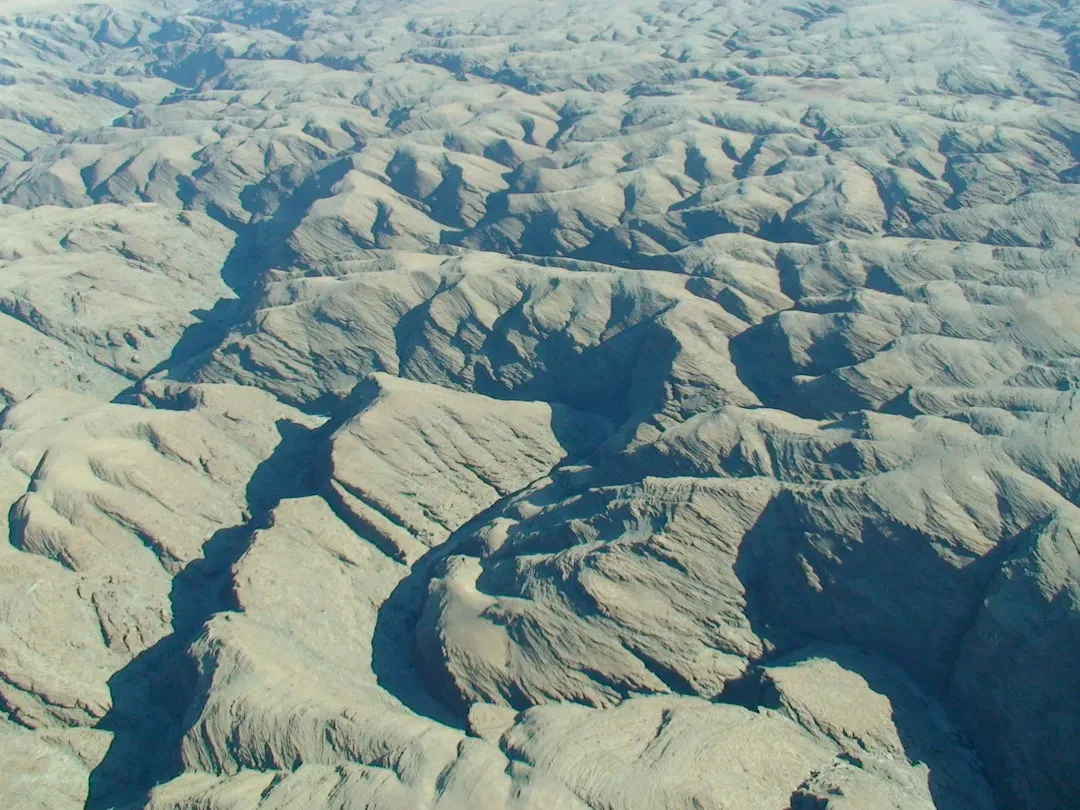
You might picture tectonic plates as slabs of rock that drift around the surface and occasionally collide. But what happens to them when they sink? The answer is far more dramatic than a simple descent into the mantle. Scientists discovered that the remnants of supercontinents hidden deep within the mantle are older than previously thought – and the finding suggests that the rocky mantle isn’t as uniformly blended by Earth’s internal churning as once believed. There are, in fact, many hidden structures that may shape activity in the mantle and on Earth’s crust in ways yet to be understood.
Researchers have long known that slabs of subducted plates cluster under regions where one tectonic plate slides under another – so it came as a surprise when new images revealed large slabs below oceans and continental interiors that lack a clear history of plate collisions, signaling a possible complication in our understanding of how plates evolve and where they end up. One study even found unexpected plate fragments sitting in the western Pacific where, according to current tectonic timelines, there is no reason for them to be. Many people imagine Earth’s interior mantle as separate layers stacked on top of each other like a layered cake – but in reality, those internal zones are complex and often full of surprises. Honestly, the planet’s basement is a graveyard of ancient worlds.
The Deep Earth and the Origins of Life
Of all the revelations coming out of deep-Earth research, perhaps none is more profound than the suggestion that the planet’s interior may have been a cradle for life itself. Scientists may finally be closing in on the origins of two colossal, mysterious structures buried nearly 1,800 miles inside Earth – and new modeling suggests that slow leakage of elements from Earth’s core into the mantle prevented the planet from developing strong chemical layers after its primordial magma-ocean era.
By lowering the melting point and viscosity of mantle rocks, deep water helped drive internal circulation and plate motion, giving the planet long-term geological energy. Over vast spans of time, some of this water was slowly returned to the surface through volcanic and magmatic activity – contributing to the formation of Earth’s early atmosphere and oceans. Researchers suggest that this buried reservoir of water may have been a decisive factor in turning Earth from a molten inferno into the blue, life-friendly planet you know today. It’s a wild thought: the oceans above you may owe their existence to water stored unimaginably far below. Interactions between the mantle and core may have influenced how Earth released heat, how volcanic activity developed, and even how the atmosphere changed over time – linking the deepest corners of the planet to the air you breathe right now.
Conclusion: The Planet Beneath You Is Alive
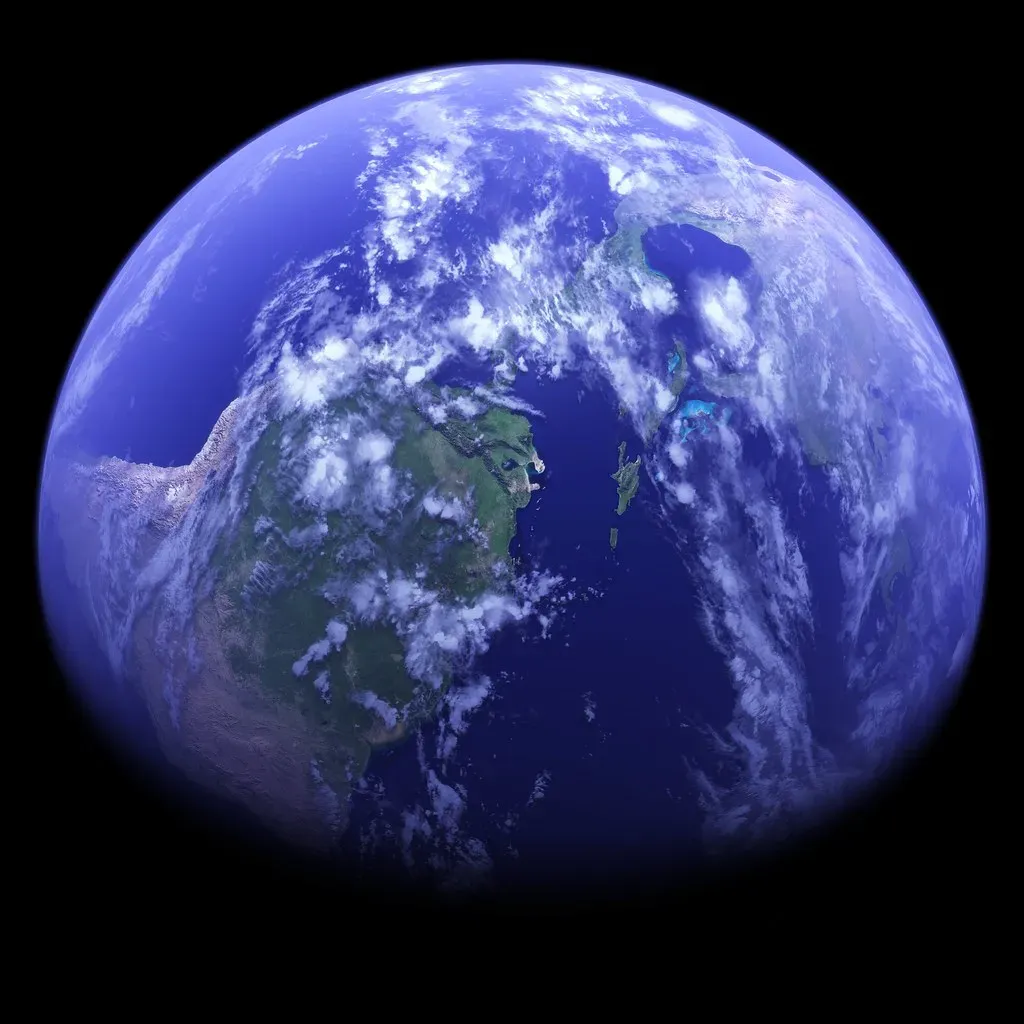
Every time you plant your feet on the ground, you are standing on one of the most complex and least understood environments in the known universe. You have been to space in a sense – through satellites, telescopes, and probes – far more thoroughly than you have explored the mile beneath your own shoes. Superionic states of matter. Hidden oceans three times the size of all your surface seas. Continent-sized blobs shaping the magnetic field that protects all life. Ghost tectonic plates sleeping thousands of kilometers down. The deep Earth is not a static, boring backdrop to life on the surface. It is an active, evolving, profoundly strange place that continues to surprise even the most seasoned geophysicists.
It’s hard to say for sure what the next major discovery will be – but given the pace of research in 2025 and 2026, the chances are high that the next headline will make everything you thought you knew seem even more incomplete. The planet is always talking, through its seismic tremors and magnetic pulses and volcanic exhales. You just have to know how to listen. So here is the question worth sitting with: if the ground under your feet holds this many secrets, what else might you be standing on top of – and never even noticed?