
You do it every single day without thinking twice. You walk to the kitchen, drive to work, wander through a grocery store, and somehow always find your way back home. It feels effortless, almost automatic. Yet what’s happening inside your skull during all of that is breathtakingly complex, a symphony of neurons firing in patterns scientists are still working hard to fully decode.
Your brain is not just processing movement. It’s building entire worlds inside itself, rich internal maps that store where you’ve been, where you’re going, and even where you might go next. The science behind all of this is as fascinating as it is surprising. So let’s dive in.
What Is a Cognitive Map, and Where Did the Idea Come From?
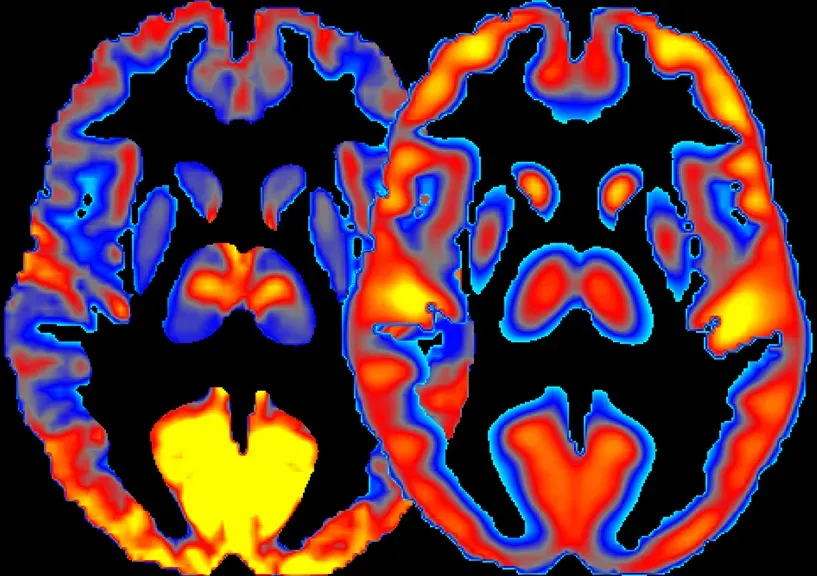
Let’s be real: when most people think about maps, they picture something printed on paper or glowing on a smartphone screen. The idea that your brain carries something equivalent, a living, dynamic, constantly updating map built from experience and memory, is genuinely mind-blowing. The “cognitive map” hypothesis proposes that the brain builds a unified representation of the spatial environment to support memory and guide future action. That’s not a metaphor. Scientists mean it quite literally.
The idea of a cognitive map was originally proposed by Tolman, in an effort to explain navigational behaviors in rodents that could not be logically reduced to associations between specific stimuli and rewarded behavioral responses. In other words, even rats seemed to know more than they were “taught.” They weren’t just following memorized paths. They understood space, and that insight changed neuroscience forever.
Your Brain’s GPS: The Hippocampus and Its Remarkable Role
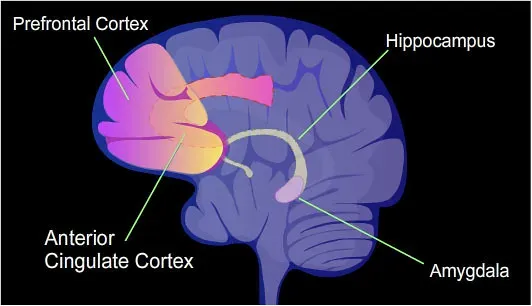
The hippocampus, the brain’s GPS, creates an internal representation of your surrounding environment, known as a cognitive map. Think of it as the hardware running the whole navigation system, a small but incredibly powerful structure tucked deep inside your brain. Representations of physical locations are stored in the hippocampus, a small seahorse-shaped structure, and the nearby entorhinal cortex. When you enter a familiar room or retrace a known route, this is the system firing up.
The hippocampus has a major role in learning and memory, and when the hippocampus is damaged in humans, orientation is affected. This is why people with Alzheimer’s disease, which degrades this region, often get lost in places they once knew intimately. These so-called brain maps not only help you navigate your home and neighborhood, but they also play an important role in how you organize, store, and retrieve memories. Navigation and memory, it turns out, are far more intertwined than you might expect.
Place Cells and Grid Cells: The Tiny Neurons That Map Your World
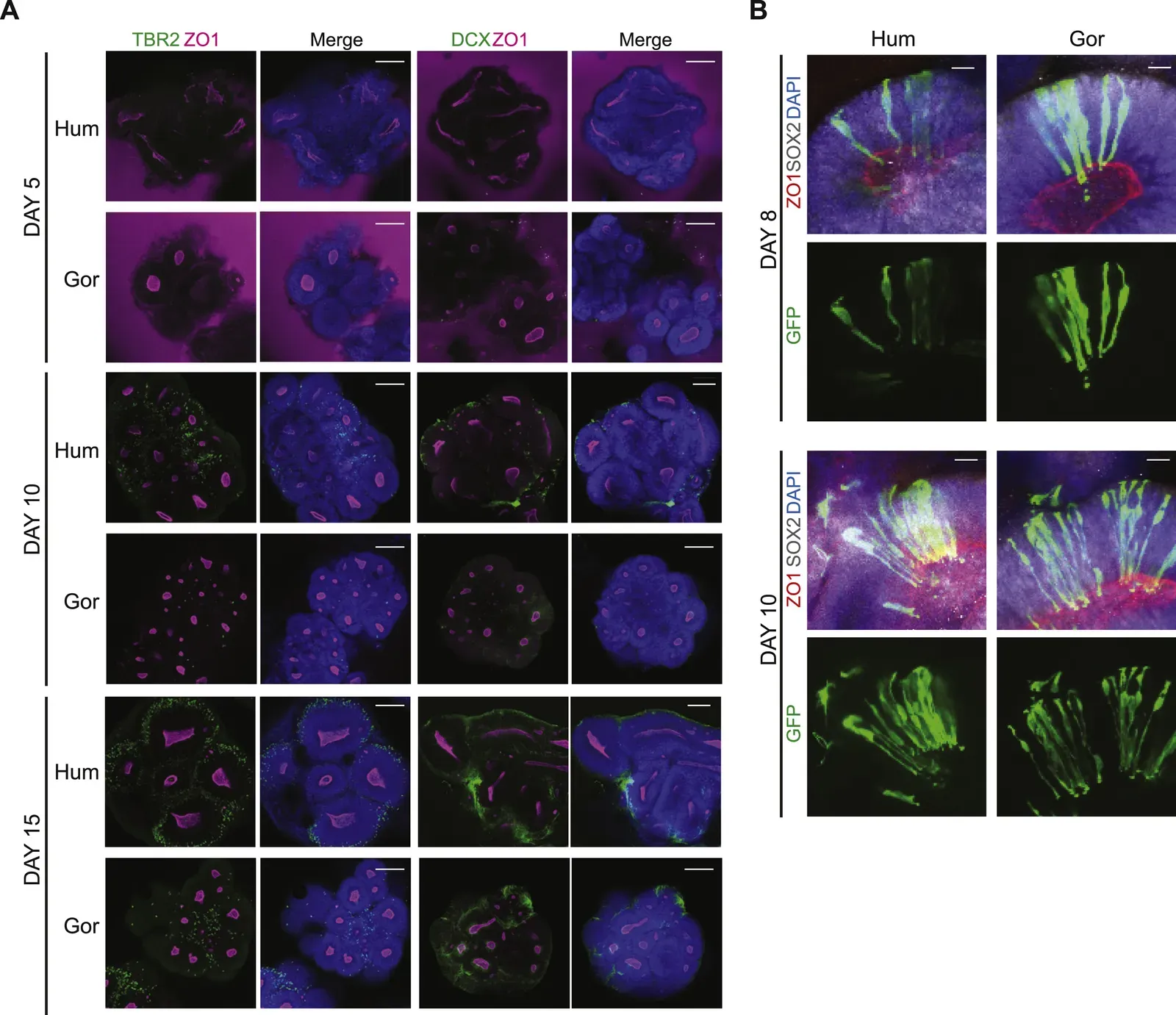
Here’s where things get truly extraordinary. A place cell is a kind of pyramidal neuron in the hippocampus that becomes active when an animal enters a particular place in its environment, and place cells are thought to act collectively as a cognitive representation of a specific location in space, known as a cognitive map. Imagine tiny neurons lighting up like pins on a map every time you step into a specific spot. That’s essentially what’s happening in your brain right now.
Then there are grid cells, which are arguably even more impressive. Some cells in the entorhinal cortex lit up in a unique hexagonal pattern. Edvard and May-Britt Moser called these cells “grid cells” and found that they work as a coordinate system for navigation. Together, the grid cells and the place cells do the heavy lifting when it comes to spatial orientation. This discovery was so significant, so far-reaching in its implications, that it earned the Nobel Prize in Physiology or Medicine in 2014.
The Brain’s Inner Compass: Head Direction Cells and Border Cells
Your navigation system doesn’t stop at place cells and grid cells. There’s an entire supporting cast of specialized neurons, each contributing a unique piece of the puzzle. Head-direction cells were first described by James Ranck in another part of the brain, the subiculum. They act like a compass and are active when the head of an animal points in a certain direction. Essentially, you have a biological compass that never requires batteries and never loses signal.
The Mosers further showed that grid cells were embedded in a network in the medial entorhinal cortex of head direction cells and border cells, and in many cases, cells with a combined function. Border cells fire in response to the physical edges of your environment, like walls, cliffs, or the boundary of a room. It’s genuinely like having a built-in sensor that tracks every edge, every corner, every limit of the space you occupy. Honestly, the more you learn about this system, the more it feels like your brain is running software that most computers would envy.
The Flickering Brain: How You Handle Detours and New Routes
Ever notice how disorienting it is when a familiar road is suddenly blocked, and you have to reroute? Your brain has a very specific way of handling exactly that challenge, and it’s more dynamic than researchers once believed. When navigating a detour route, your brain doesn’t just focus on where you are. Instead, neural activity “flickered,” jumping back and forth between the current location and the memory of the original path that no longer existed. This mental juggling act is highly organized by phases of theta brain waves that allow rapid comparison between current and alternate recalled experiences.
What’s more surprising is that your brain seems to prepare for detours before you even encounter them. What was surprising was that the rats’ brains were already prepared for the novel detour before they ever encountered it. Before the rats encountered the detour, the research team observed that their brains were already firing in patterns that seemed to “imagine” alternate unfamiliar mental routes while they slept. Sleep, it seems, isn’t just rest. It’s a crucial rehearsal for navigation you haven’t experienced yet.
The Taxi Driver’s Brain: What Extreme Navigation Does to Your Gray Matter

I think one of the most powerful real-world demonstrations of the brain’s navigational plasticity comes from a very specific profession: London cab drivers. To earn a license, these drivers must memorize over 25,000 streets and thousands of landmarks, a process so demanding it’s known as “The Knowledge.” The posterior hippocampi of taxi drivers were significantly larger relative to those of control subjects. Their brains had literally grown in response to the demands placed upon them.
Years of navigation experience correlated with hippocampal gray matter volume only in taxi drivers, with right posterior gray matter volume increasing and anterior volume decreasing with more navigation experience. The longer they drove, the more the brain changed. Even more intriguing, the very low incidence of Alzheimer’s disease did not manifest among drivers of other modes of transportation, which involve fewer navigational demands, and another brain-imaging study of long-time London bus drivers found that they do not have enlarged hippocampi. Active navigation, it seems, may actually protect the brain. That’s not a small thing.
Beyond Physical Space: Cognitive Maps and the World of Abstract Thought
Here’s where the story takes an unexpected turn that might just reshape how you think about your own mind. Humans live in complex worlds, and though locomotion is a large aspect of our lives, we spend a considerable amount of time navigating interpersonal relationships and abstract concepts. Some of the most exciting recent work in navigation has begun to explore how the mechanisms of spatial coding, landmark anchoring, and route planning might apply to non-physical “spaces.” Your brain may be using the same GPS system to navigate social dynamics as it uses to find your car in a parking lot.
Research from MIT found that mental maps are created and activated when you merely think about sequences of experiences, in the absence of any physical movement or sensory input. Think about that for a moment. You don’t have to move a muscle for your navigation system to spring into action. The same brain structures containing spatial cells play important roles in neural processes that relate to a broader view of a cognitive map, such as generalization, inference, imagination, social cognition, and memory. Your brain’s navigation system isn’t just about roads and rooms. It may be the foundation of abstract human thought itself.
Conclusion: The Map Is More Than Just a Map
What neuroscience has revealed about the brain’s hidden maps is nothing short of extraordinary. You carry inside your skull a dynamic, flexible, constantly updated spatial system built from trillions of firing neurons, specialized cells acting as compasses, coordinate grids, boundary sensors, and even future-planning simulators. It’s a system so deeply embedded in human biology that it shaped everything from how you remember your childhood home to how you form social judgments about strangers.
The most humbling part? Scientists are still mapping the map itself. There are layers of complexity here that research in 2026 is only beginning to peel back, and the connections between spatial navigation and abstract thought, memory, imagination, and even emotional well-being are growing more fascinating by the year. Your brain’s hidden maps are not just navigational tools. They may be the very architecture of how you understand the world.
Next time you find your way to a familiar place without a second thought, take a moment to appreciate the extraordinary machine making it possible. What part of this surprises you the most? Feel free to share your thoughts in the comments.