
Imagine standing in a canyon, clapping once, and hearing that sound bounce back at you long after your hands have fallen silent. Our universe is doing something eerily similar. The Big Bang happened once, more than thirteen billion years ago, but its echoes are still washing over us, quietly filling all of space with an invisible glow.
We’ve built entire observatories just to listen to that cosmic aftersound. It’s not a roar anymore; it’s more like a whisper frozen into the fabric of reality. Yet inside that whisper is a detailed record of how the universe was born, what it’s made of, and even how it might end. The wild part is: those echoes are literally passing through your body right now, all day, every day.
The Cosmic Microwave Background: The Universe’s Oldest Light
Not long after the Big Bang, the universe was a blinding fog of hot, charged particles where light couldn’t travel freely. Roughly about three hundred and eighty thousand years after that first moment, everything cooled just enough for atoms to form and for light to finally move in straight lines. That first light didn’t disappear; it simply stretched and cooled as the universe expanded, becoming what we now call the cosmic microwave background, or CMB.
The CMB is a faint glow that fills all of space, coming at us from every direction, with a temperature just above absolute zero. Even though it’s unimaginably cold now, it used to be searingly hot radiation when the universe was young. Radio telescopes and satellites can see this relic light directly, like an ancient photograph of the cosmos as a baby. Every tiny variation in this glow is a clue to what the universe looked like in its first days.
How Scientists Accidentally Discovered the Big Bang’s Afterglow
The discovery of this echo wasn’t a neat, planned experiment; it was a stubborn mystery that wouldn’t go away. In the 1960s, two engineers working with a radio antenna in New Jersey found an annoying, persistent background noise in their data, no matter where they pointed the device. They cleaned the instrument, checked for interference, and even removed literal pigeon droppings inside the antenna, but the noise remained.
What they were hearing turned out to be the CMB itself, the leftover light from the Big Bang humming at microwave frequencies. At first, it sounded too strange to be true, but other scientists quickly recognized what it meant. That static wasn’t just random noise; it was evidence that the universe had once been much hotter and denser. The Big Bang went from a bold theoretical idea to something we could actually measure.
Why the CMB Is So Uniform – And Why Tiny Imperfections Matter
One of the most shocking things about the CMB is how smooth it is. No matter where you look in the sky, its temperature is nearly identical, differing by only a tiny fraction of a degree. That smoothness tells us the early universe was incredibly well mixed, almost eerily even, like a perfectly blended soup with barely any lumps at all.
But the story gets interesting in the tiny bumps. Small temperature fluctuations in the CMB map out slightly denser and slightly emptier regions in the early universe. Those faint ripples are what later grew into everything we see today: galaxies, clusters, and vast cosmic structures. Without those tiny imperfections, gravity would have had nothing to work with, and the universe might have stayed a bland, featureless fog forever.
Reading the Echo: What These Signals Reveal About the Cosmos
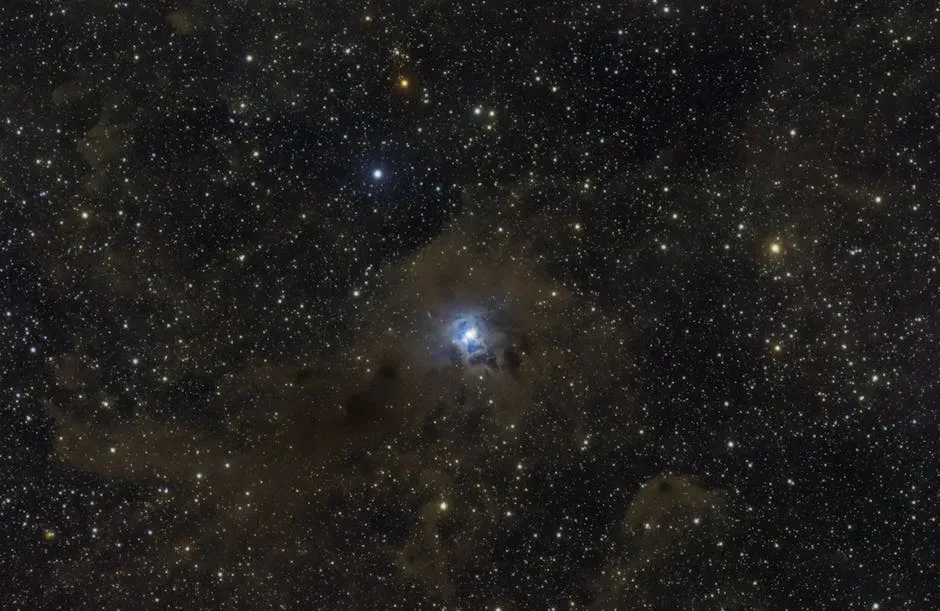
The CMB isn’t just proof that the Big Bang happened; it’s a detailed report card on the entire universe. By analyzing the pattern of hot and cold spots, scientists can estimate the age of the cosmos, the amount of dark matter and dark energy, and even the shape of space on the largest scales. It’s like scanning the rings of a tree and suddenly understanding its whole life story.
The numbers that come out of these measurements are surprisingly precise for something so ancient and faint. They tell us the universe is roughly about thirteen and a half billion years old and that most of its content is invisible stuff we still don’t fully understand. Every new satellite that maps the CMB adds extra decimal places to those estimates, sharpening our picture of reality. What started as a vague glow has turned into a cosmic blueprint.
Other Echoes: Gravitational Waves and the Ripples in Spacetime
Light from the Big Bang isn’t the only echo we’re chasing. Physicists are also hunting for primordial gravitational waves, ripples in spacetime itself that may have been generated in the universe’s first split second. These waves would be like vibrations frozen into the cosmic fabric, a deeper kind of echo than light, carrying information from a time even earlier than the CMB.
We’ve already detected gravitational waves from colliding black holes and neutron stars, which was a stunning achievement on its own. But the earliest waves, if we can find them, might show up indirectly as special patterns in the CMB or as very subtle signals in massive radio arrays. It’s an absurdly hard search, like trying to feel the ghost of a tremor that shook the ground ages ago, yet the payoff would be enormous: a direct glimpse into physics at energies we can’t possibly recreate on Earth.
How We Actually “See” These Ancient Signals Today
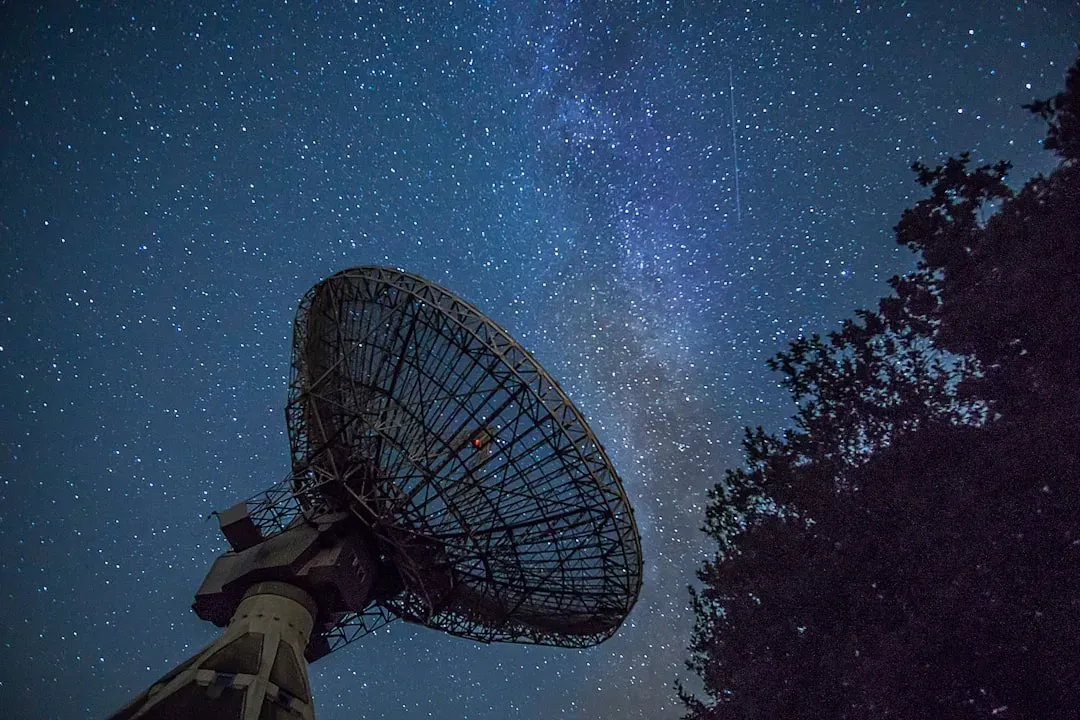
When you hear that we’re “seeing” the echoes of the Big Bang, it might sound like science fiction, but the process is surprisingly down to Earth. Huge radio telescopes and space-based observatories quietly scan the sky, collecting incredibly faint microwaves that have been traveling for billions of years. The data they gather is then turned into colorful maps showing temperature variations that are far too small for our senses to detect directly.
On those maps, the sky looks mottled and speckled, like a cosmic weather forecast frozen in time. Each blotch and swirl corresponds to slightly different densities and temperatures in the young universe. Teams of scientists spend years turning that raw signal into meaningful numbers and patterns, constantly checking for sources of error. What ends up in textbooks and documentaries is the polished version of an enormous, messy, very human effort to interpret a whisper from the beginning of everything.
What These Echoes Tell Us About the Past – And Our Future
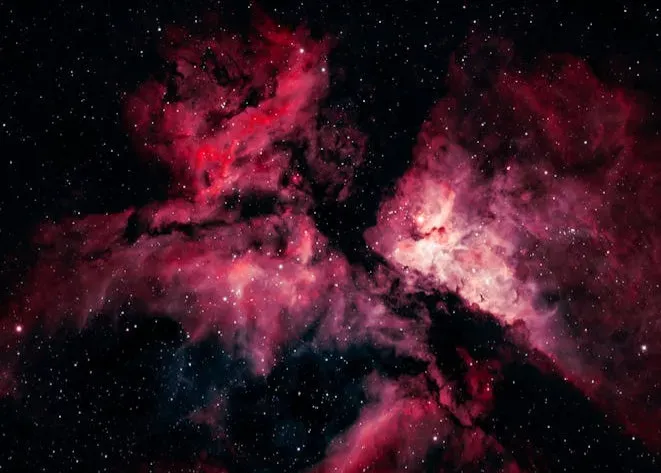
All of these echoes, from microwaves to spacetime ripples, tell a remarkably consistent story: the universe had a beginning, it evolved, and it is still changing. The CMB confirms that we live in a universe that has been expanding and cooling since its fiery origin, shaped by gravity and by mysterious components like dark matter and dark energy. The patterns in that ancient light suggest that this expansion is not slowing down but actually speeding up over time.
That acceleration hints at a future where galaxies drift farther apart, the night sky slowly empties, and the universe becomes darker and colder on the largest scales. One day, far in the future, distant echoes of the Big Bang will be so stretched and faint that no new astronomer could ever detect them. Right now, though, we live in a rare window of cosmic history where those signals are still strong enough to study and understand. The universe is still telling us its origin story – how long do we really have to keep listening?