Imagine hiking through Brazil’s rugged, river-carved backcountry and stumbling across a circular structure so huge you can’t actually see it from the ground. That’s essentially what scientists realized when they examined satellite images of a remote region in northeastern Brazil and spotted a massive, nearly perfect ring etched into the landscape. What looked, at first glance, like just another eroded basin is now being seriously studied as a possible meteor impact crater on a scale that would rank among the largest on Earth.
This structure, tucked away in a sparsely populated area and partially reclaimed by vegetation and sediment, has likely been sitting there for tens or even hundreds of millions of years, unnoticed by modern science. Only with today’s high-resolution satellite imagery and digital elevation models did its symmetry and strange geometry jump out. The fact that such a potentially colossal scar from space was hiding in plain sight feels both thrilling and a little unsettling, like realizing your neighborhood park was once the site of a massive explosion.
How Scientists First Spotted the Giant Ring
The story starts with researchers poring over satellite data and topographic maps of Brazil’s interior, not because they were specifically hunting for craters, but because they were interested in regional geology and landscape evolution. When they zoomed in on this region, they noticed something that geologists are trained to see instantly: an almost perfectly circular depression, roughly seventy kilometers across, framed by raised outer rims and dissected by rivers. Perfect circles of that size almost never happen on Earth by accident.
Closer analysis showed a distinctive set of concentric ring features and a central area that looked subtly elevated compared to its surroundings, like the ghost of a central uplift. Those are classic hallmarks of a large impact structure, not just a random basin carved by water or wind. It wasn’t a single dramatic “aha” moment, but rather a series of small, nagging clues that made the team step back and say, this is too regular to ignore. That moment of noticing a simple shape and realizing it might imply apocalyptic violence in the distant past is exactly why remote sensing has become such a powerful tool for planetary science.
Just How Big Is This Possible Impact?
If this Brazilian structure is confirmed as an impact crater, it would sit in the same league as some of the most powerful collisions Earth has ever endured. The estimated diameter, on the order of seventy kilometers, suggests an impactor that may have been several kilometers wide, slamming into the planet with energy millions of times greater than the largest nuclear detonations humans have ever created. This isn’t the kind of event that just scars the ground; it can shake climate, oceans, and ecosystems for years or even decades.
For comparison, the famous Chicxulub crater in Mexico, linked to the extinction of the dinosaurs, is roughly twice as wide, but that still places this Brazilian candidate in the upper tier of known impact structures. On a planet where erosion, tectonics, and sedimentation work tirelessly to erase old wounds, the survival of such a large and coherent circular form is remarkable. It means the rock beneath it might still carry preserved evidence of the shock and fury of the original collision, locked away like a black box recorder from Earth’s deep past.
What Makes a Crater an Impact Crater?
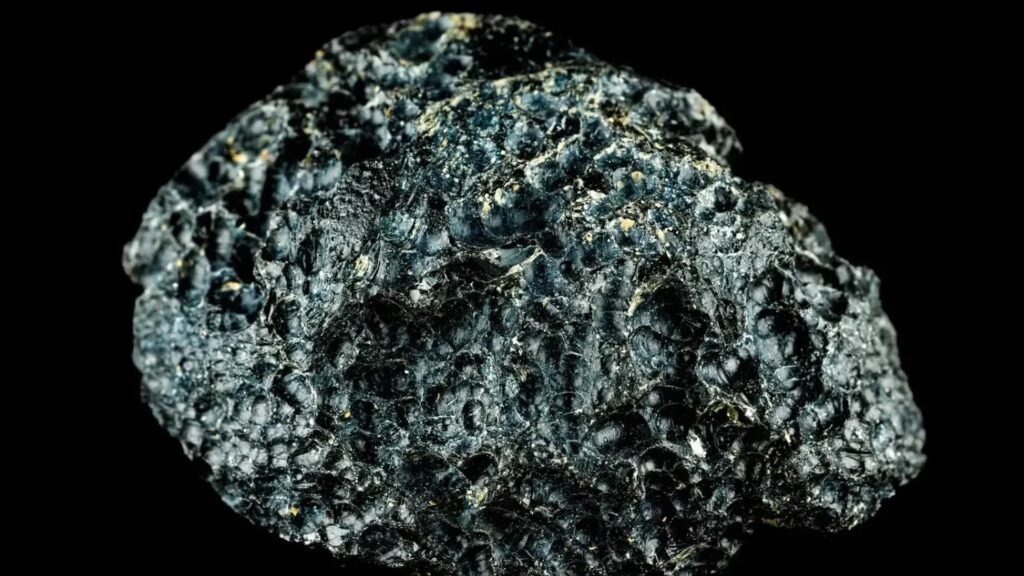
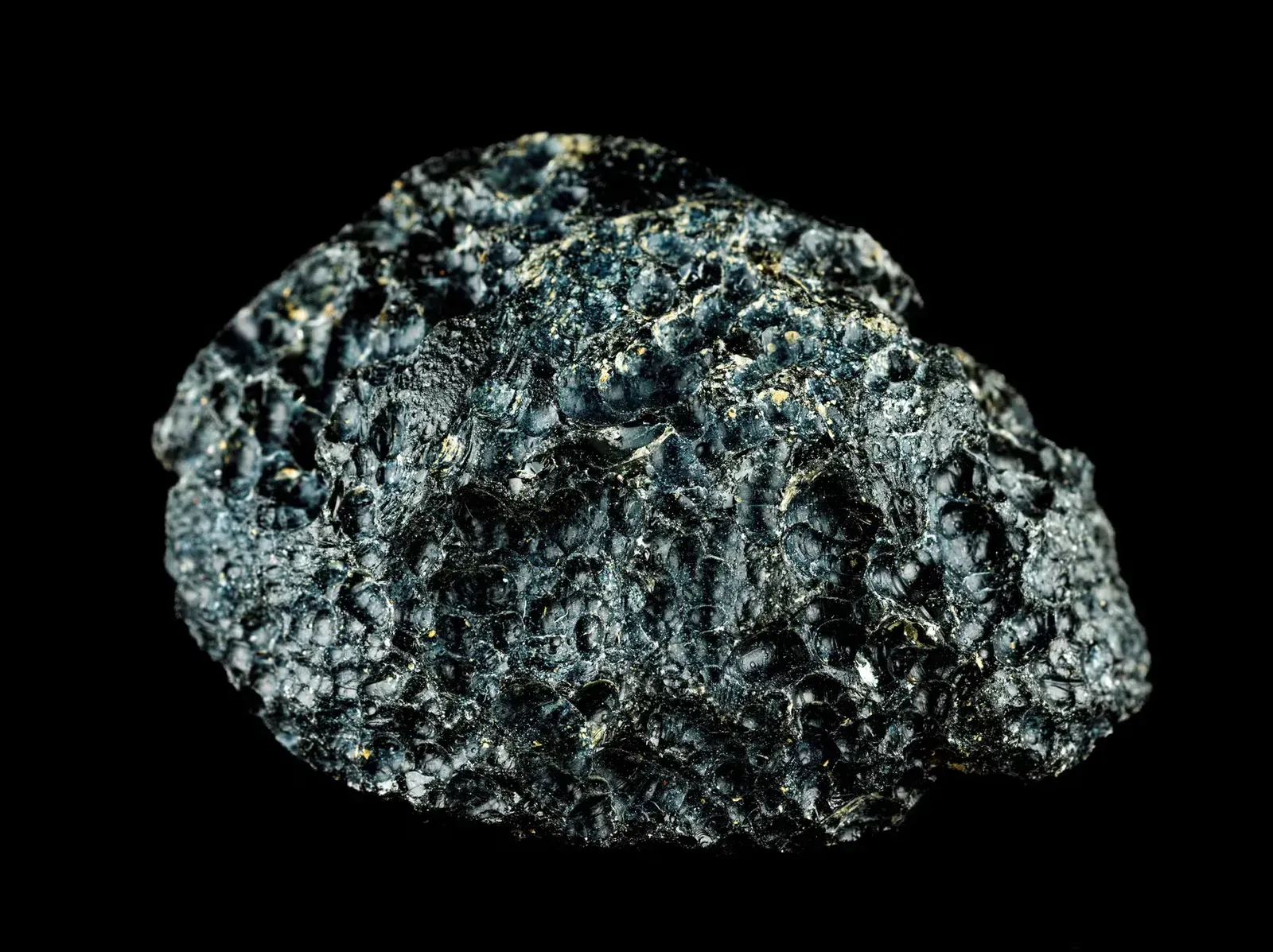
Spotting a circle from space is only the beginning; proving it was carved by a meteor rather than shaped by slower geologic forces is the real challenge. Geologists rely on a kind of forensic toolkit to make that call: they hunt for minerals that have been crushed and deformed in ways only extreme, sudden pressures can produce. One of the classic signatures is shocked quartz, tiny crystals whose internal structures have been rearranged by the brutal compression of an impact shockwave, something ordinary volcanic eruptions or tectonic shifts can’t normally replicate at the same scale.
They also look for breccias, rocks made of broken fragments welded together by heat, and melt rocks formed when the surface literally liquefied during impact and then cooled. Circular fault zones, radial and concentric fractures, and a distinct uplift in the center are all big clues as well. From orbit, this Brazilian feature checks some visual boxes, but that’s not enough; scientists need boots on the ground, hammers on rock, and microscopes on samples to build an airtight case. Until those lines of evidence are fully assembled, the structure sits in that tantalizing gray zone: strongly suspected, but not yet officially crowned an impact crater.
Why Confirmation Is So Hard in Brazil’s Terrain
On paper, you might think confirming a crater is straightforward: fly in, take samples, publish a paper. In reality, this part of Brazil is remote, difficult to access, and not exactly lined with highways and research outposts waiting to host an expedition. Dense vegetation, rugged topography, and seasonal rivers complicate both fieldwork and logistics. Simply reaching the most interesting rock outcrops could mean days of travel and careful planning, especially if researchers want to drill deeper than surface layers that may have been altered or eroded.
There’s also the issue of age. Over tens of millions of years, erosion and sedimentation can scrub away or bury the most obvious impact signatures, leaving only subtle traces behind. If the suspected crater is very ancient, some of the key minerals and melt features may be heavily weathered or metamorphosed, making them harder to identify. That’s why scientists are likely to rely on a combination of techniques, from careful field mapping to geochemical analysis and possibly geophysical surveys, to peek under the current landscape and reconstruct what really happened there long ago.
What This Crater Could Reveal About Earth’s Violent Past
If this Brazilian structure is indeed an impact crater, it could help fill in missing pieces of Earth’s impact history, which remains surprisingly incomplete. Large impacts are rare but catastrophic, and each confirmed crater adds another puzzle piece for understanding how often our planet has been hammered from space and how life responded. Depending on its age, this structure might align with known extinction events, climate shifts, or periods of intense volcanism, raising questions about whether it played a hidden role in reshaping ecosystems on a continental or even global scale.
Even if it turns out to be unrelated to any mass extinction, the crater would still offer a unique laboratory for studying how large impacts interact with Earth’s crust in a region with its own distinctive geology. Comparing it with other big craters in Canada, South Africa, and Australia could reveal patterns in how these structures deform, erode, and persist over geological time. In a field where every new confirmed crater feels like discovering another chapter in a book we thought we’d already finished, this one has the potential to surprise us, maybe even forcing a rewrite of some timelines we’ve taken for granted.
Why This Discovery Matters for Our Future, Not Just Our Past
It’s tempting to treat giant impact craters as purely historical curiosities, but they’re really warning labels etched into the planet. Understanding how often big impacts happen, how their energy is released, and how their effects ripple through climate and biology directly informs how seriously we should take present-day asteroid threats. When scientists model what a large impact would do to modern civilization, they anchor those simulations in evidence from real craters like this one, not just hypothetical math on a whiteboard.
There’s also a broader, more emotional piece here: the sky doesn’t care that we have cities, smartphones, and stock markets. The same kind of celestial accidents that scarred ancient Earth are still possible, even if we now have telescopes and planetary defense plans. Learning everything we can from past impacts is both a scientific responsibility and, frankly, a survival strategy. Ignoring a structure like this because it’s hard to reach or confirm would be like refusing to read a detailed accident report after a massive pileup on a highway we still drive every day.
A Personal Take on Earth’s Hidden Wounds
Looking at images of this Brazilian structure, what strikes me most is how ordinary it seems at first, just another weathered landscape, until you notice the circle that shouldn’t be there. It feels like finding a faded bruise on the planet’s skin and realizing it came from a punch so powerful it briefly changed everything. I find it oddly humbling that, for most of human history, no one even knew this feature existed, and yet it might record an event more dramatic than anything we’ve ever witnessed firsthand.
In my view, that’s the real power of this possible crater: it forces us to admit how incomplete our picture of Earth still is, even in the age of satellites and supercomputers. We walk around acting like we fully understand this planet, when in reality, it’s still hiding scars from cosmic collisions that predate our entire species. Whether this Brazilian ring is ultimately confirmed as a giant impact or not, the fact that we are still discovering structures of this scale should keep us humble, a little on edge, and very, very curious about what else we’ve missed so far.