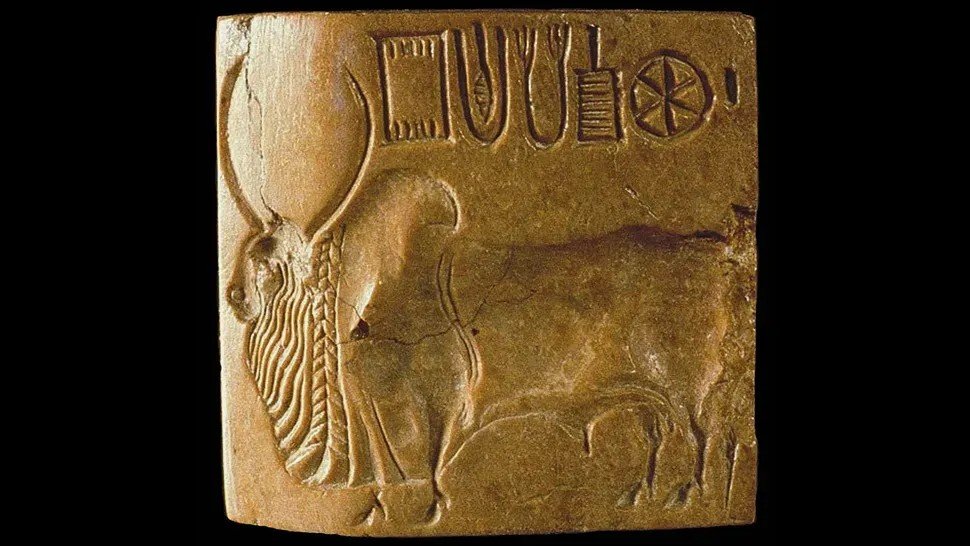
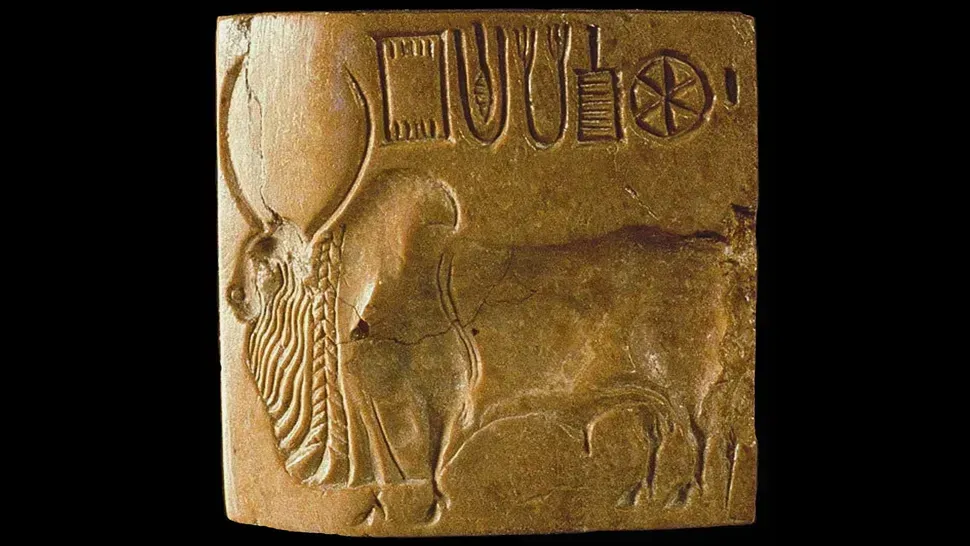
There are mysteries in history that tease us just enough to keep us hooked. The Indus Valley Script is one of them. Carved into tiny seals, pottery, and copper tablets, this ancient writing system has remained stubbornly silent for more than four thousand years, refusing to give up its secrets no matter how hard researchers push.
What makes it so maddening is that we know the people who created it built one of the most sophisticated civilizations the ancient world had ever seen. Yet we still cannot read a single word they left behind. Let’s dive in.
A Civilization Advanced Enough to Have Running Water, Yet Its Language Remains Unknown
Here’s the thing about the Indus Valley Civilization: it doesn’t get nearly enough credit. Flourishing roughly between 3300 and 1300 BCE across parts of modern-day Pakistan, India, and Afghanistan, this was a society with planned cities, drainage systems, and standardized weights. In many ways, it was more organized than its contemporaries in Mesopotamia and Egypt.
The people of this civilization left behind thousands of inscribed objects. Seals, tablets, pottery fragments, all marked with a mysterious script consisting of somewhere between four hundred and six hundred distinct signs. That’s actually a crucial clue, and scholars are still debating what it means about the nature of the writing system itself.
What we don’t have, and this is the painful part, is a bilingual text. Something like the Rosetta Stone, which allowed researchers to crack Egyptian hieroglyphics by comparing it to known Greek text. Without a linguistic anchor like that, deciphering the Indus script is a bit like trying to solve a puzzle when you’re not even sure what the picture is supposed to look like.
The Sheer Scale of the Problem
Imagine inheriting a library of books written in a language no one alive has ever spoken, and your only reference material is a collection of very short inscriptions, most of them under five symbols long. That’s essentially the situation researchers face. The vast majority of known Indus inscriptions are remarkably brief, which severely limits the statistical analysis that normally helps crack ancient codes.
Scholars have identified roughly five thousand inscribed objects, which sounds like a lot until you realize how little actual text that represents. The average inscription is only about four or five signs. Compared to the lengthy texts that helped decode Linear B, the ancient Greek script, the Indus corpus feels almost frustratingly thin.
Is It Even a Writing System? That Debate Is Very Much Alive
This is where things get genuinely controversial, and I think it’s worth sitting with the discomfort of it. A small but vocal group of researchers has argued that the Indus symbols may not constitute a true writing system at all. Instead, they suggest the signs could represent something more like a system of political or religious symbols, similar to heraldry, rather than a spoken language.
On the other side, the majority of scholars believe the signs do encode language in some meaningful way. A landmark computational study published in 2009 found that the Indus script shows statistical patterns consistent with linguistic writing, including something resembling the entropy levels seen in spoken language. That’s a significant finding, though it’s not quite the smoking gun everyone was hoping for. Honestly, the debate hasn’t fully resolved even years later.
The Language Family Problem: A Dead End With No Map
Even if we accept that the Indus script encodes language, there’s another brutal obstacle: we don’t know what language family it belongs to. Some researchers have proposed it could be an early form of Dravidian, the family that includes modern Tamil and Telugu. Others have floated proto-Sanskrit connections. A few fringe theories have gone even further afield.
The difficulty here is that the Indus Civilization disappeared, or more accurately transformed and dispersed, around 1900 BCE, possibly due to climate shifts and changes in monsoon patterns. Whatever language or languages its people spoke may have left no clear living descendants. It’s like trying to trace a river back to its source when half the tributaries have dried up completely.
Artificial Intelligence Enters the Room
In recent years, machine learning and AI have been brought in to attack the problem from a completely different angle, and the results have been genuinely interesting, even if not yet decisive. Researchers have used deep learning models trained on other undeciphered or poorly understood scripts to look for structural patterns in the Indus signs. Some studies have suggested potential connections to Dravidian languages based on sign sequencing alone.
Still, it’s hard to say for sure whether AI will crack this where human scholars haven’t. Machine learning needs data to work well, and the Indus corpus is simply too small and too contextually limited. You can apply the most sophisticated algorithm in the world, but if you’re feeding it four-symbol inscriptions with no known meaning, the output is going to be limited. That said, AI is also getting dramatically better every year, so dismissing it entirely would be premature.
What a Decipherment Would Actually Change
Let’s be real: reading the Indus script would be one of the most electrifying moments in modern archaeology. We would suddenly gain direct access to the thoughts, beliefs, trade records, and possibly myths of a civilization that shaped the subcontinent for millennia. Right now, everything we know about the Indus people comes from physical artifacts alone. No stories, no laws, no prayers, nothing.
Think about how much our understanding of ancient Egypt changed once hieroglyphics were decoded. Entire belief systems, royal histories, and everyday lives suddenly came into focus. A successful decipherment of the Indus script could do the same for South Asian history, potentially rewriting the early chapters in ways that are hard to even anticipate right now. The stakes are enormous.
So, Will It Ever Actually Happen?
Researchers are more cautiously optimistic than they were a generation ago, though “optimistic” might still be a generous word. New archaeological excavations in India and Pakistan continue to uncover inscribed objects, and the hope is that one day a longer text or a bilingual inscription will surface. It only takes one significant discovery to change everything.
The honest answer, though, is that without a bilingual text or a major new find, the Indus script may remain undeciphered for a very long time. Some scholars believe we are simply missing too much of the puzzle to ever fully reassemble it. Others argue that we haven’t yet asked the right questions or applied the right methods. Both camps agree on one thing: the script is not giving up without a fight.
The Mystery That Refuses to Die
There’s something almost poetic about a civilization this sophisticated choosing to remain, at least linguistically, unknowable to us. Or perhaps it’s not a choice at all, just the brutal randomness of what survives and what doesn’t. Whichever way you look at it, the Indus Valley Script stands as one of the last great unsolved puzzles of the ancient world.
The people who carved those tiny seals thousands of years ago could not have imagined that their marks would still be puzzling some of the sharpest minds on Earth in 2026. Whether the code is ever cracked may depend as much on luck as on genius. A single archaeological find in the right place could change the entire game overnight.
The question that keeps archaeologists and linguists up at night isn’t just “what does it say?” It’s “what if we never find out?” What do you think, is some mystery better left unsolved, or does the silence of the Indus Valley feel like unfinished business? Tell us in the comments.