
You have probably spent more time than you’d like to admit watching someone step into a glowing machine and vanish into another era. Hollywood has sold you that picture for decades. A lever, a destination year, a dramatic flash of light. The truth, it turns out, is far stranger, far quieter, and honestly more unsettling than any movie has managed to capture.
The real science of time travel does not live in a machine. It lives in the fabric of reality itself, in particles that behave like they’re cheating at physics, in satellites orbiting above your head right now, and in some of the most brilliant minds on the planet quietly rewriting what we thought we knew about cause and effect. So let’s dive in.
Time Is Already Bending Around You, Every Single Day
Here is a thing that might blow your mind a little: time travel is not just theoretical. It is happening above your head, continuously, without any fanfare. The Global Positioning System uses accurate, stable atomic clocks in satellites and on the ground to provide worldwide position and time determination, and those clocks have gravitational and motional frequency shifts so large that, without carefully accounting for numerous relativistic effects, the entire system would not work. That blue dot on your phone’s map? It only exists because engineers accounted for the fact that time moves differently depending on where you are in space.
The combination of relativistic effects means that the clocks on board each satellite tick faster than identical clocks on the ground by about 38 microseconds per day, which sounds small, but the high-precision required of the GPS system demands nanosecond accuracy. Think of it this way: ignoring this effect would be like building a skyscraper while ignoring the fact that the ground tilts slightly. If these effects were not properly taken into account, a navigational fix based on the GPS constellation would be false after only two minutes, and errors in global positions would continue to accumulate at a rate of about ten kilometers each day, making the whole system utterly worthless for navigation in a very short time.
Einstein Saw It First: Space and Time Are One Tangled Fabric
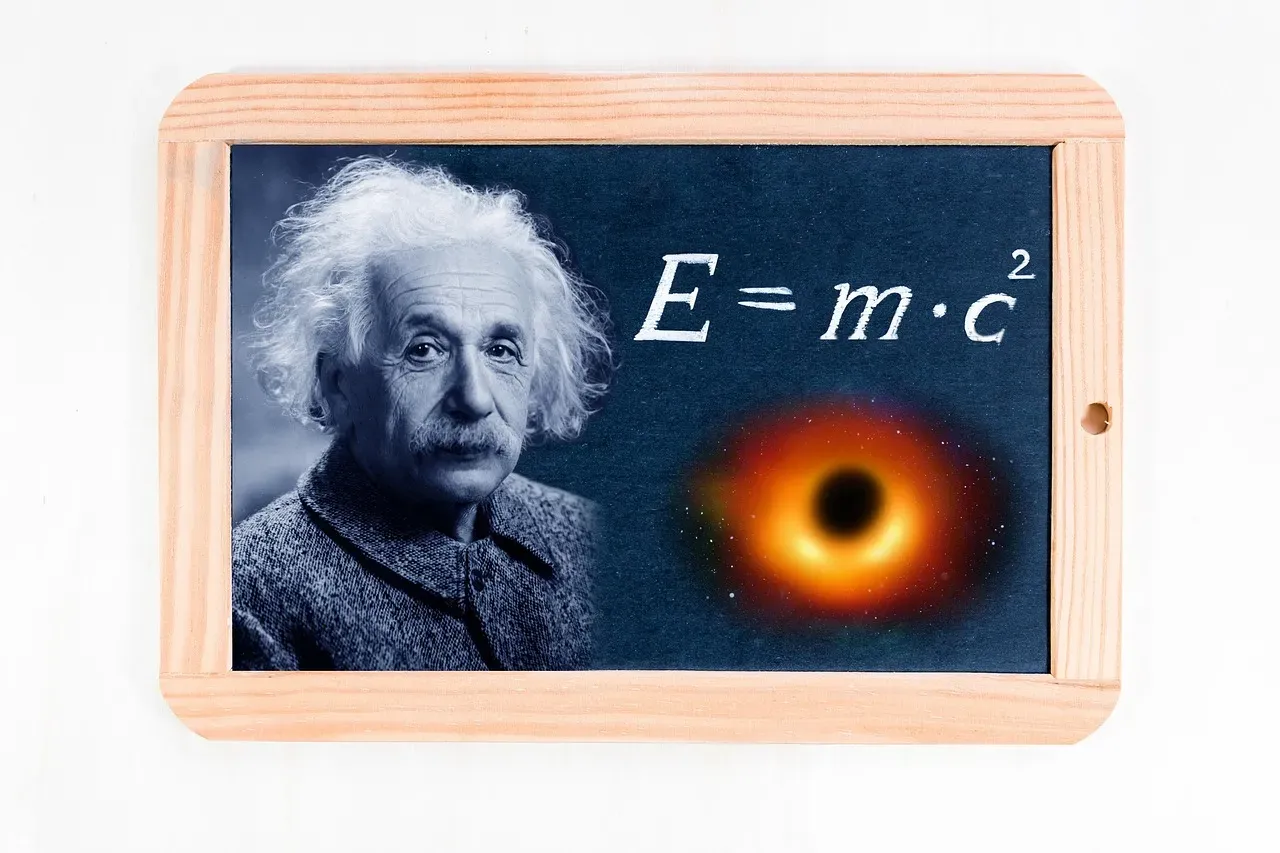
Few ideas in modern science have reshaped our understanding of reality more profoundly than space-time, the interwoven fabric of space and time at the heart of Albert Einstein’s theory of relativity. Einstein didn’t just propose a clever idea in a paper. He fundamentally changed the definition of reality. Time, it turns out, is not a fixed river that everyone floats down at the same speed. It bends, stretches, and slows depending on your speed and how deep you are in a gravitational field.
In 1905, a young Albert Einstein published his world-changing special relativity theory, and along with the famous equation E = mc², the theory made a startling statement about time: the faster you move relative to a motionless observer, the slower time passes for you, a phenomenon that became known as time dilation. Then, just over a decade later, he went further. According to his audacious theory of general relativity, time is also affected by gravity, and the more strongly you feel the force of gravity, the slower time passes for you, an effect that became known as gravitational time dilation. Two forms of time distortion. Both real. Both verified.
The Grandfather Paradox: Physics Has a Surprising Answer
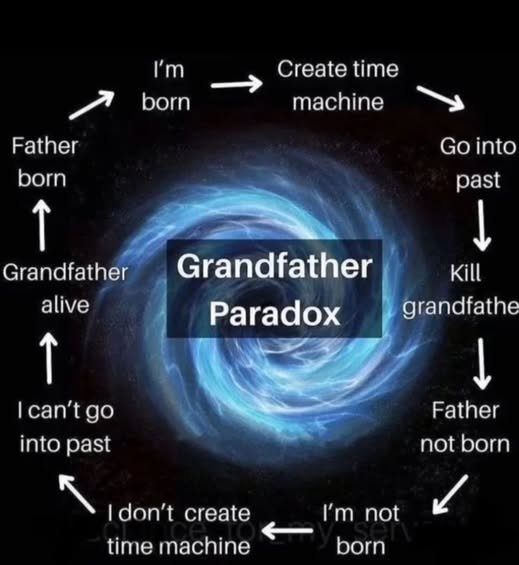
Let’s be real. When most people hear “time travel,” their first instinct is to ask what happens if you go back and accidentally prevent your own birth. This is the famous grandfather paradox, and it has haunted physicists and screenwriters alike for generations. This concept has always run into fundamental contradictions, like the infamous grandfather paradox where changing the past seems to erase the time traveler’s very existence. Now, a study by Lorenzo Gavassino, a Vanderbilt University physicist, explores how quantum mechanics and thermodynamics might resolve such paradoxes, offering a theoretical glimpse into how time travel could actually work without breaking reality.
According to Gavassino, in a universe with closed timelike curves, the laws of quantum mechanics would inherently erase many time travel paradoxes, and his study reveals that any system traveling through a time loop experiences a reset in entropy and memory, ensuring that causality remains intact and preventing contradictions like the grandfather paradox from arising. In other words, you couldn’t sabotage your own existence even if you tried. An important consequence of these quantum corrections is that history might remain self-consistent, meaning that even if you attempted to do something paradoxical like destroying the time machine before it was built, the physical system would not settle into a final state that defies logic or causality, and instead the universe would “correct” the scenario to avoid a permanent contradiction. Nature, it seems, has a built-in safety mechanism.
Closed Timelike Curves: Where General Relativity Gets Deeply Strange
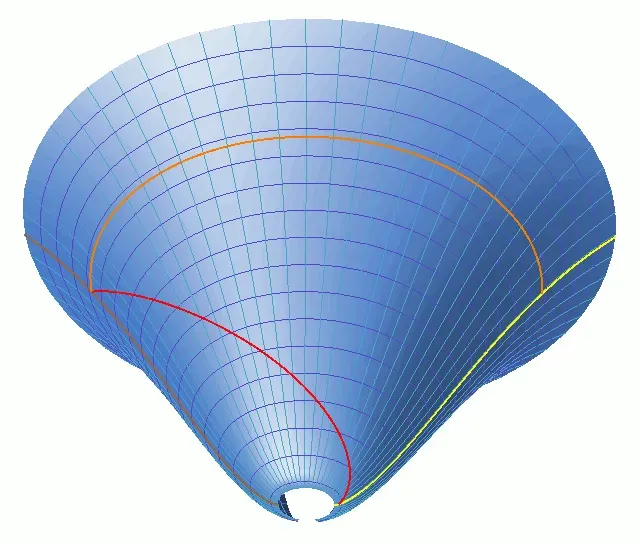
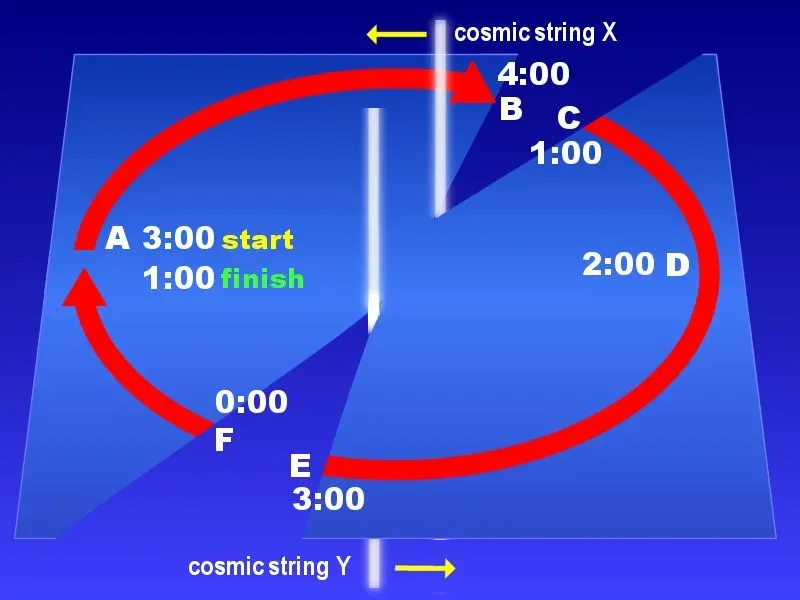
In mathematical physics, a closed timelike curve is a world line in a Lorentzian manifold of a material particle in spacetime that is closed, returning to its starting point. I know that sounds like a sentence assembled by a particularly caffeinated mathematician, but the concept is worth sitting with. Imagine walking in a straight line and somehow arriving back at where you started, not in space, but in time. This possibility was first discovered by Willem Jacob van Stockum in 1937 and later confirmed by Kurt Gödel in 1949, who discovered a solution to the equations of general relativity allowing CTCs known as the Gödel metric, and since then other general relativity solutions containing CTCs have been found, such as the Tipler cylinder and traversable wormholes.
A closed timelike curve is a path in the fabric of spacetime that loops back on itself, allowing an object or signal to return to its own past. The unsettling part is that these solutions emerge directly from Einstein’s own equations. They are not science fiction inserted into the math. They arise naturally from the theory itself. The cylinders of infinite length in relativistic rotation are not physically relevant, our universe does not rotate as fast as the Gödel solution requires, cosmic strings of infinite length are unrealistic, and traversable wormholes violate the positivity energy condition. So the math allows it. Reality, at least for now, seems reluctant to cooperate at any scale you could actually use.
Wormholes: The Universe’s Theoretical Shortcut Through Time
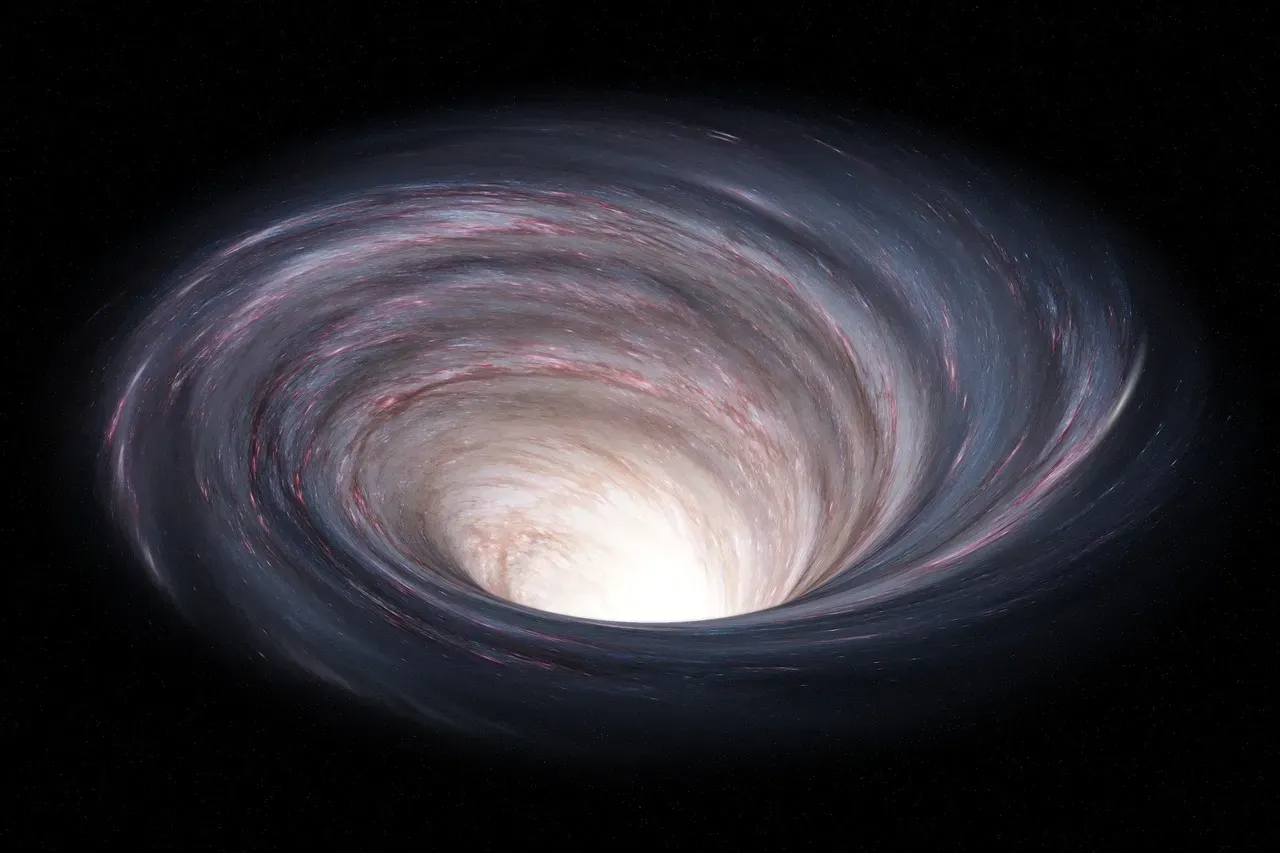
A wormhole is a hypothetical structure that connects disparate points in spacetime, and it can be visualized as a tunnel with two ends at separate points in spacetime, including different locations, different points in time, or both. Think of spacetime like a piece of paper. Instead of walking from one end to the other, you fold the paper and punch a hole through it. The distance collapses. Time, potentially, does too. If you somehow managed to stabilize a wormhole, which itself requires exotic matter with negative energy density to prevent collapse, you might set up conditions for time travel by placing one mouth of the wormhole in a region of space undergoing different gravitational or velocity-based time dilation relative to the other mouth, and over time the two mouths of the wormhole end up at different points on each other’s timelines, so entering one mouth and exiting the other could, in principle, bring you back to an earlier era.
Here’s the thing though. Wormholes remain brutally difficult to make work even on paper. The problem with using wormholes to travel in space or time is that they are inherently unstable, and when a particle enters a wormhole, it creates fluctuations that cause the structure to collapse in upon itself, though there are theories that a wormhole could be held open by some form of negative energy, which represents a case where the energy density of space is actually negative. Negative energy is not a resource you can simply order in bulk. Stephen Hawking proposed the “chronology protection conjecture,” hypothesizing that the laws of physics, likely quantum gravity effects, conspire to prevent the formation of macroscopic time machines. Even Hawking wasn’t certain this conjecture holds forever, which is perhaps the most exciting thing about it.
Quantum Time: When Scientists Actually Reversed the Flow
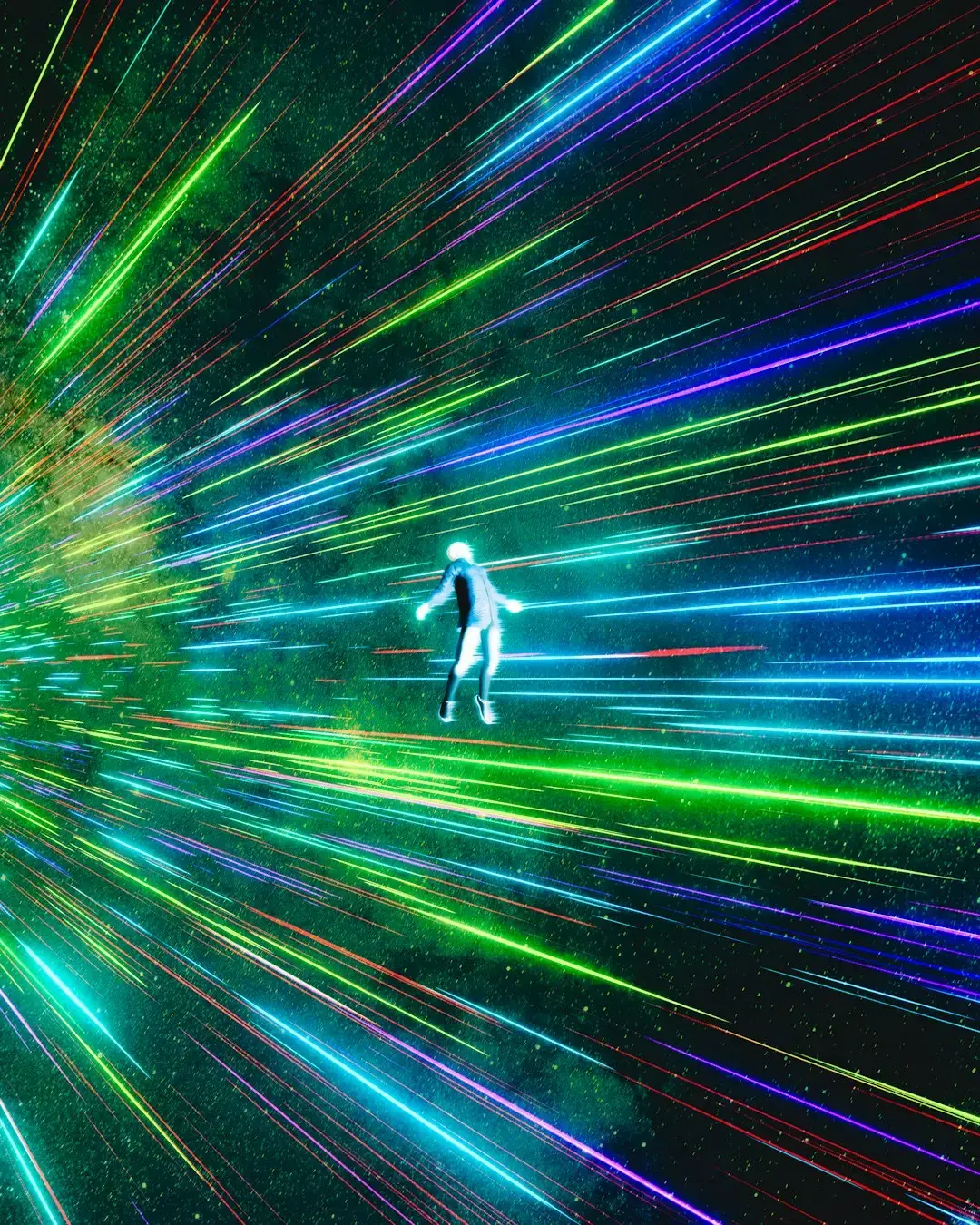
This is where things get genuinely astonishing, and honestly, a little hard to process. We are not talking about metaphors here. Researchers from the Austrian Academy of Sciences and the University of Vienna made what many thought was impossible: they discovered a method to reverse the flow of time in quantum systems. Not for people. Not for cars or clocks. For individual particles, yes, but the implications ripple outward in every direction. In Vienna, researchers from the Austrian Academy of Sciences and the University of Vienna coaxed a single photon to experience time out of order using a quantum switch, and by reshuffling the sequence of operations on its state, they could speed its evolution, slow it, or even run it backward, a behavior foreign to everyday physics.
Central to this advance is the quantum switch, a protocol that places operations into an indefinite causal order, and by routing a photon through devices whose sequence is not fixed, researchers can steer its evolution in ways that mimic pausing, rewinding, or accelerating its dynamics. Think of it like a film reel that can be edited at the particle level. For now, the message is clear: in the quantum world, time can be treated as a programmable variable, opening a frontier that was once purely speculative. That phrase, time as a programmable variable, should sit with you for a moment. Because that is not a science fiction pitch. That is a published scientific result.
Retrocausality: Could the Future Already Be Influencing Your Present?
This is probably the strangest stop on this entire journey. Retrocausality, or backwards causation, is a concept of cause and effect in which an effect precedes its cause in time and so a later event affects an earlier one, and in quantum physics, the distinction between cause and effect is not made at the most fundamental level, so time-symmetric systems can be viewed as causal or retrocausal. That is not a philosophical riddle. Some physicists are treating it as a legitimate framework for explaining the weirdness already observed in quantum experiments. One of the weirder aspects of quantum mechanics could be explained by an equally weird idea, that causation can run backwards in time as well as forwards, and what Einstein called “spooky” action at a distance could theoretically be evidence of retrocausality.
Researchers at the University of Cambridge have shown that by manipulating entanglement, a feature of quantum theory that causes particles to be intrinsically linked, they can simulate what could happen if one could travel backwards in time. What’s remarkable is that this simulation isn’t just theoretical play. Physicists have shown that simulating models of hypothetical time travel can solve experimental problems that appear impossible to solve using standard physics. The practical payoff here is real and growing. Since time symmetry appears to be a fundamental physical symmetry, some researchers argue that it makes more sense to allow for retrocausality, and doing so would eliminate the need for action-at-a-distance in Bell tests, while it would still be possible to explain why using retrocausality to send information is forbidden. So no, you cannot send lottery numbers to your past self. Sorry.
Conclusion: The Time Machine Was Never a Machine
Time travel is real. It is just radically different from everything the movies promised you. It happens in the orbital paths of satellites. It hides inside entangled particles behaving in ways that seem to defy linear cause and effect. It emerges from the equations of a patent clerk in 1905 who decided that the universe’s rulebook needed a serious rewrite. Research highlights that if time travel were ever possible, it would not resemble the whimsical journeys of popular culture but instead operate as a highly constrained and self-consistent quantum process, and while the possibility of traversing through time may not be as far-fetched as once thought, one crucial takeaway is clear: the past is permanent, and no matter how advanced our understanding of spacetime becomes, the laws of physics appear to safeguard causality, ensuring that history remains unchangeable.
The truly mind-bending realization is that physics isn’t rejecting time travel. It’s redirecting it. It’s saying: not like that, but maybe like this. The frontier is wide open, and the scientists working there are redefining what time even means at its most fundamental level. Every answer seems to pull three more questions up behind it. What do you think is more unsettling: that time travel might be impossible, or that it might already be happening in ways you cannot see or control? Let us know in the comments.