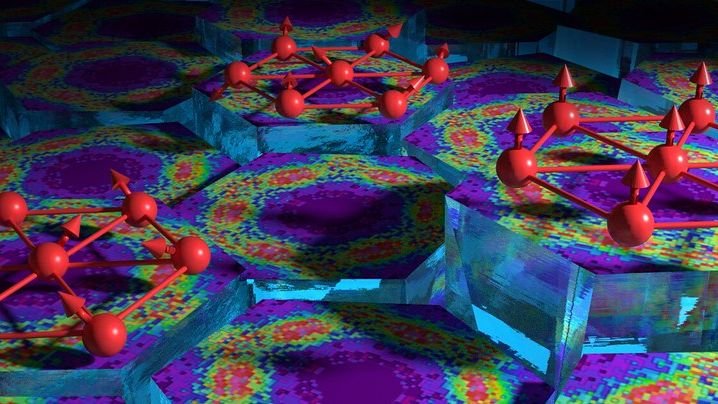

There is a version of reality hiding just beneath the surface of everything you can see and touch. It does not follow the rules you learned in school. It defies logic, laughs at common sense, and casually breaks boundaries that classical physics spent centuries building. Quantum physics is that version of reality, and honestly, the deeper scientists dig into it, the weirder it gets.
Every year that passes seems to reveal yet another layer of the impossible made possible. We are talking about particles that exist in multiple states at once, objects that tunnel through walls they have no energy to cross, and two particles separated by cosmic distances that still seem to whisper secrets to each other in an instant. So let’s dive in, because what you are about to discover will change the way you look at the universe forever.
Superposition: The Universe That Cannot Make Up Its Mind
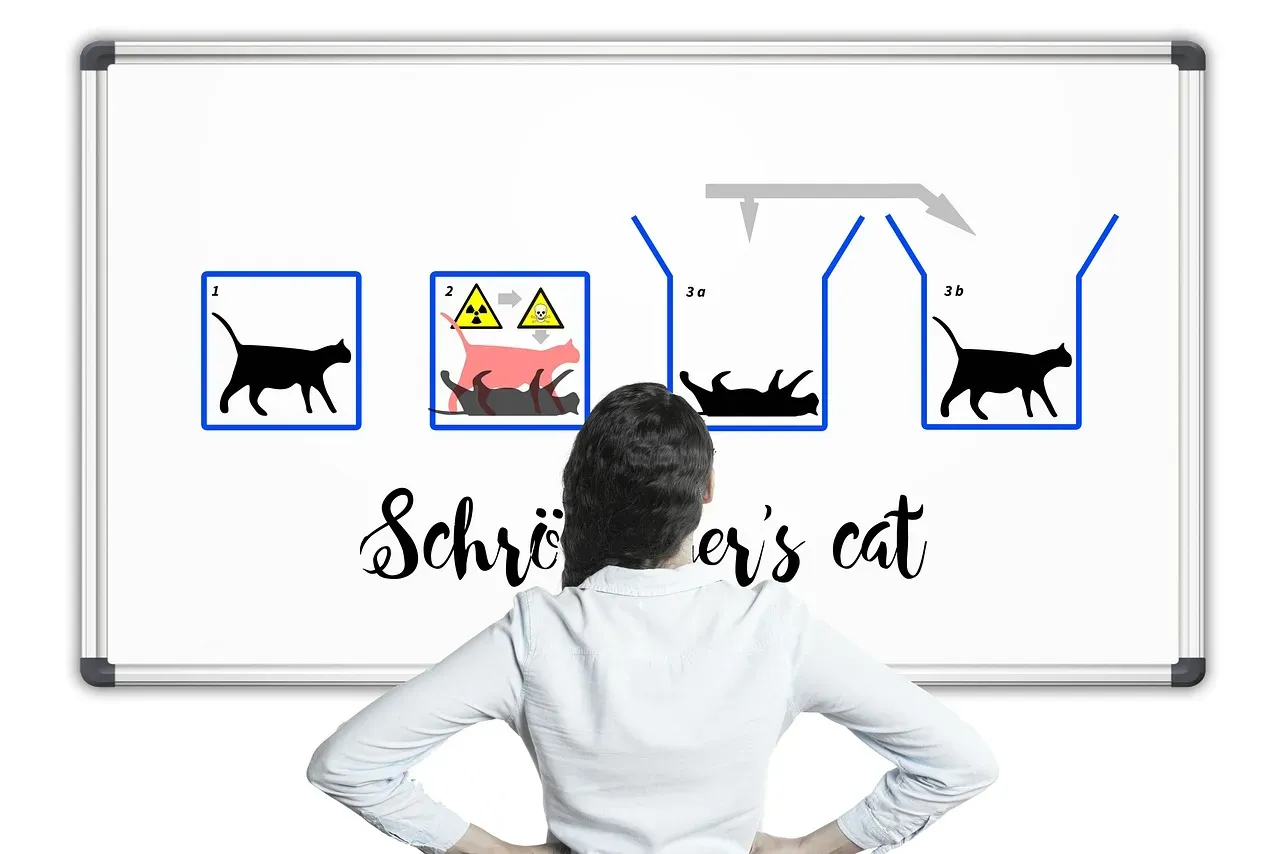
Imagine flipping a coin and then asking where it lands before you look at it. In the everyday world, it is obviously either heads or tails. In the quantum world? It is genuinely both, right up until the moment you peek. Quantum superposition is the idea that particles exist in multiple states at once, and only when a measurement is performed does it appear that the particle selects one of those states. That is not a metaphor or a limitation of our measuring instruments. It is the actual structure of reality at the smallest scale.
In the quantum world, superposition allows a qubit to be both a zero and a one at the same time. Think of it like a musician who can play every note on a piano simultaneously, producing a chord of infinite possibility, until the moment someone listens and hears just a single note. Scientists observe quantum particles such as photons or electrons behaving in ways that can only be explained if we mathematically describe the particle as having some probability of being in two different possible states or configurations at once. This is not philosophy. This is measurable, testable, and endlessly strange.
Quantum Entanglement: Spooky Action That Einstein Hated
Here is a story that should make your brain itch. Two particles are created together and then separated, potentially by millions of miles. You measure one, and the other instantly “knows” what happened. No message, no signal, no travel time. Quantum entanglement describes a strange and powerful connection between quantum objects that remains intact even across vast distances. When two particles, such as photons or electrons, are entangled, their states are linked in such a way that the state of one instantly determines the state of the other, no matter how far apart they are. Einstein called it “spooky action at a distance,” and he spent considerable energy trying to prove it could not be real.
Quantum entanglement is the phenomenon wherein the quantum state of each particle in a group cannot be described independently of the state of the others, even when the particles are separated by a large distance. The topic of quantum entanglement is at the heart of the disparity between classical physics and quantum physics. Researchers have not stood still on this front, either. Scientists have finally unlocked a way to identify the elusive W state of quantum entanglement, solving a decades-old problem and opening paths to quantum teleportation and advanced quantum technologies. The practical applications are starting to become very, very real.
The Heisenberg Uncertainty Principle: Nature’s Hard Limit on What You Can Know

Let’s be real, this one genuinely unsettles people when they understand it fully. You can know exactly where a particle is, or exactly how fast it is moving. Never both. Introduced by Werner Heisenberg in 1927, this principle asserts that there is a limit to how precisely we can simultaneously know certain pairs of properties, like position and momentum, of a particle. This uncertainty is not due to imperfect tools but is an intrinsic feature of nature at the quantum scale. You are not failing because your instruments are bad. You are failing because the universe literally does not possess both pieces of information at the same time.
The real-world consequences of this are staggering and run deeper than most people realize. The Heisenberg Uncertainty Principle explains why atoms do not collapse and why particles are never truly “still,” even at absolute zero. Everything is always jittering, vibrating, buzzing with quantum uncertainty. It turns out that for roughly 90 years, theorists tried to describe damped harmonic systems using quantum physics with limited success, because the difficulty involves preserving Heisenberg’s uncertainty principle, a foundational tenet of quantum physics. Scientists only recently cracked that particular puzzle, which tells you something about just how stubborn and profound this principle really is.
Quantum Tunneling: How Particles Walk Through Walls
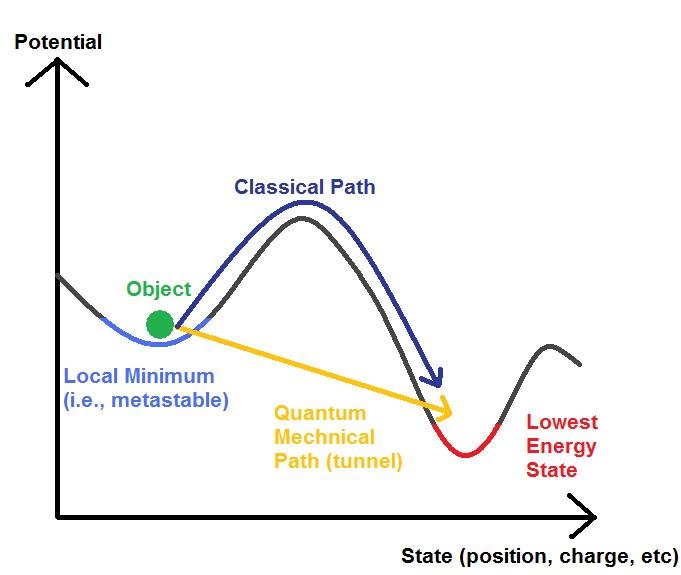
Imagine rolling a ball toward a hill that is taller than the ball has energy to climb. Classical physics says the ball rolls back. Quantum physics says, sometimes, the ball just appears on the other side. That is quantum tunneling. Quantum tunneling is a phenomenon that stands as a testament to the peculiar and often counterintuitive nature of quantum mechanics. It describes the process by which particles move through a barrier that they seemingly should not be able to pass according to the laws of classical physics. This barrier could be an energy barrier, like a hill too high for a classical ball to roll over, or even a physical barrier like a thin insulating film. Yet in the quantum realm, particles such as electrons have a non-zero probability of tunneling through these barriers, effectively appearing on the other side.
I know it sounds crazy, but this is not some exotic lab curiosity. It is happening everywhere, all the time. The sun shines because protons utilize quantum tunneling to overcome repulsion and fuse together. Without quantum tunneling, there would be no sunlight, no warmth, no life on Earth. Quantum tunneling happens inside stars including the sun, inside your devices, during photosynthesis in plants, and even inside DNA mechanisms. The phenomenon that sounds most like science fiction is one of the most essential forces keeping the universe alive.
Wave-Particle Duality: Light Is Both, Until You Decide It Isn’t

For centuries, physicists argued about whether light was a wave or a particle. The maddening answer quantum physics eventually delivered was: it is both, and your choice of experiment determines which face it shows you. Although photons are emitted one at a time and appear as small, individual dots, demonstrating their particle-like behavior, they also exhibit wave-like behavior by passing through both slits simultaneously. Over time, an interference pattern of alternating light and dark bands appears on the screen, something only waves can produce. This remarkable result is only possible because photons, and in fact all quantum particles, exhibit both particle and wave properties.
The original duality in physics emerged more than a century ago when scientists realized that light and matter can act as both waves and particles. That discovery transformed physics and led to technologies such as solar cells and electron microscopes. Think about that. Something as mundane as the solar panel on a rooftop is a direct technological child of quantum weirdness. Electron microscopes, building on diffraction principles, achieve resolutions below a tenth of a nanometer, enabling breakthroughs in biology and nanotechnology, from imaging viruses to fabricating quantum dots for displays. Wave-particle duality is not just strange. It is quietly powering your world.
New States of Quantum Matter: Reality Has More Phases Than You Think
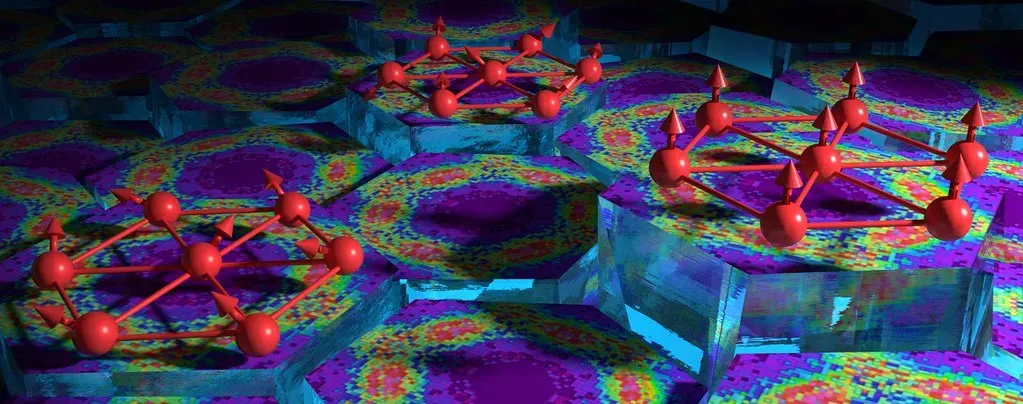
You grew up learning that matter comes in three phases: solid, liquid, and gas. Quantum physics has been methodically shredding that neat little list. At the edge of two exotic materials, scientists have discovered a new state of matter called a “quantum liquid crystal” that behaves unlike anything seen before. That was in 2025 alone. The same year brought even more surprises. A UC Irvine team uncovered a never-before-seen quantum phase formed when electrons and holes pair up and spin in unison, creating a glowing, liquid-like state of matter.
Meanwhile, a decades-long mystery in the field was finally cracked by researchers pushing the boundaries of what quantum matter can do. A long-standing physics mystery has been solved with the discovery of emergent photon-like behavior inside a strange quantum material. The finding confirms a true three-dimensional quantum spin liquid and unlocks a new way to study deeply entangled matter. Quantum spin liquids have fascinated physicists for years because they could eventually support transformative technologies, including quantum computing and dissipationless energy transmission. Dissipationless energy transmission. Let that sink in for a moment. Energy that flows without any loss. The implications are almost incomprehensible.
Dark Matter, Dark Energy, and the Universe We Cannot See
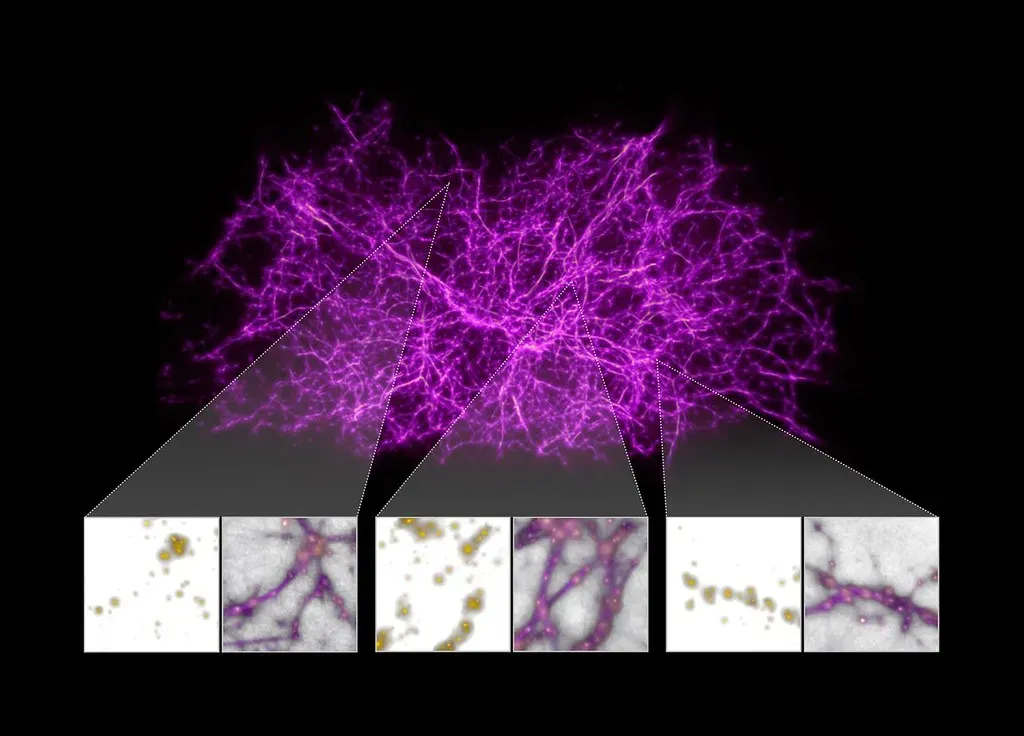
Here is the most humbling fact in all of science, at least in my opinion. Everything you can see, touch, measure, or detect with any instrument ever built makes up only a tiny fraction of the total universe. Dark matter and dark energy make up about 95 percent of the universe, leaving only 5 percent as “ordinary matter,” or what we can see. Roughly speaking, nearly all of reality is invisible to us. We are living in a universe we can barely perceive. Dark matter accounts for most of the mass in galaxies and galaxy clusters, shaping their structure on the largest scales, while dark energy refers to the force driving the universe’s accelerated expansion. In other words, dark matter holds things together, while dark energy is pulling them apart.
Quantum physics is now the primary tool scientists are deploying to close this enormous gap in understanding. Tohoku University researchers have found a way to make quantum sensors more sensitive by connecting superconducting qubits in optimized network patterns, and these networks amplify faint signals possibly left by dark matter. Even bolder ideas are emerging from theorists. The accelerating expansion of the universe is usually explained by an invisible force known as dark energy, but a new study suggests this mysterious ingredient may not be necessary after all. Using an extended version of Einstein’s gravity, researchers found that cosmic acceleration can arise naturally from a more general geometry of spacetime. The universe’s deepest secrets, it turns out, may be hiding in the quantum fabric of space and time itself.
Conclusion: The Stranger the Physics, the Closer We Are to Truth
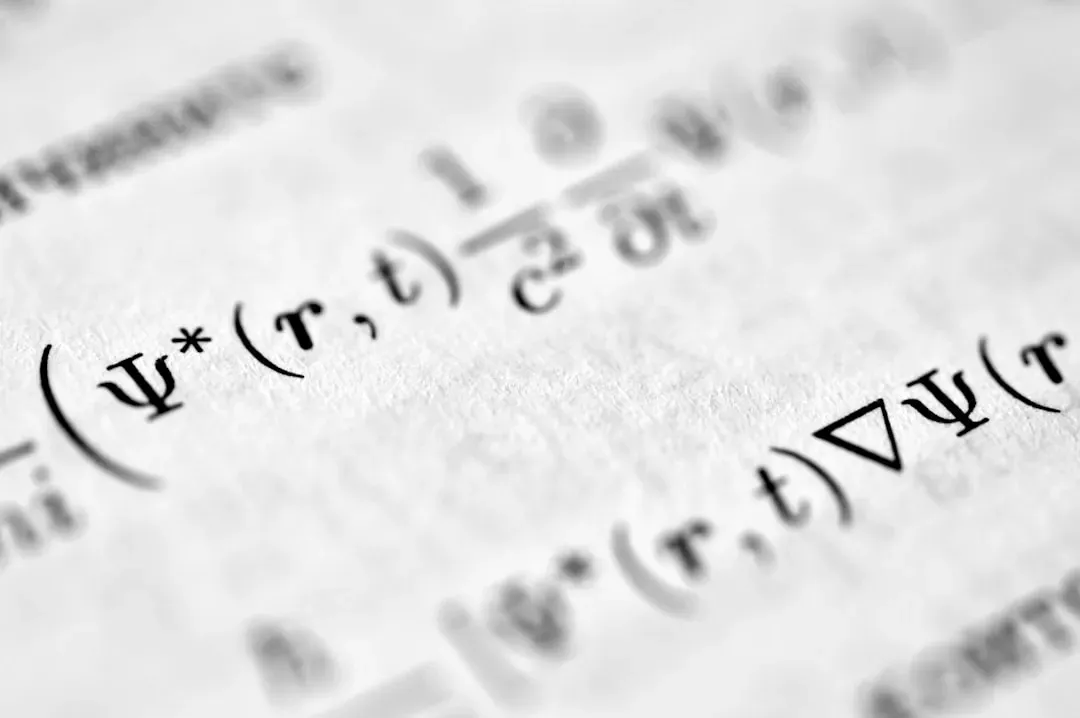
There is something almost poetic about the fact that the more deeply we probe reality, the less it resembles anything we experience with our senses. In the hundred years since Werner Heisenberg successfully formulated quantum theory, quantum mechanics has transformed the world. Yet physicists remain confused and divided over the theory’s meaning and what it implies about the nature of reality. The scientists who understand quantum physics best are often the ones who admit most freely that they still do not fully grasp what it means.
What we do know is extraordinary. Particles tunnel through walls. Light is simultaneously a wave and a bullet. Two objects share an invisible bond across the cosmos. Matter comes in phases nobody imagined. The vast majority of everything that exists is completely hidden from us. While quantum theory has proven to be supremely successful since its development a century ago, physicists have struggled to unify it with gravity to create one overarching theory of everything. But any such ultimate theory must still incorporate superposition, entanglement, and the probabilistic nature of reality, since these features have been confirmed time and again in lab tests. Whatever comes next in physics, it will have to reckon with just how beautifully, mind-bendingly strange the universe already is.
The question worth sitting with is this: if you had been told a century ago that your phone, your GPS, your MRI scanner, and possibly even your next energy source would all trace back to the bizarre rules governing objects a billion times smaller than a grain of sand, would you have believed it? What part of quantum physics surprises you the most? Drop your thoughts in the comments below.