
There’s something almost poetic about humanity trying to recreate the sun. We’ve been chasing nuclear fusion for decades, pouring billions into research that critics once called an eternal pipe dream. The joke used to be that fusion is always “thirty years away.” Honestly, that joke is starting to age poorly.
Recent milestones in tokamak fusion research are turning heads, raising pulses, and genuinely challenging the old skepticism. The science is moving fast, the records are falling, and the implications for clean energy are staggering. Let’s dive in.
What Exactly Is a Tokamak and Why Does It Matter?
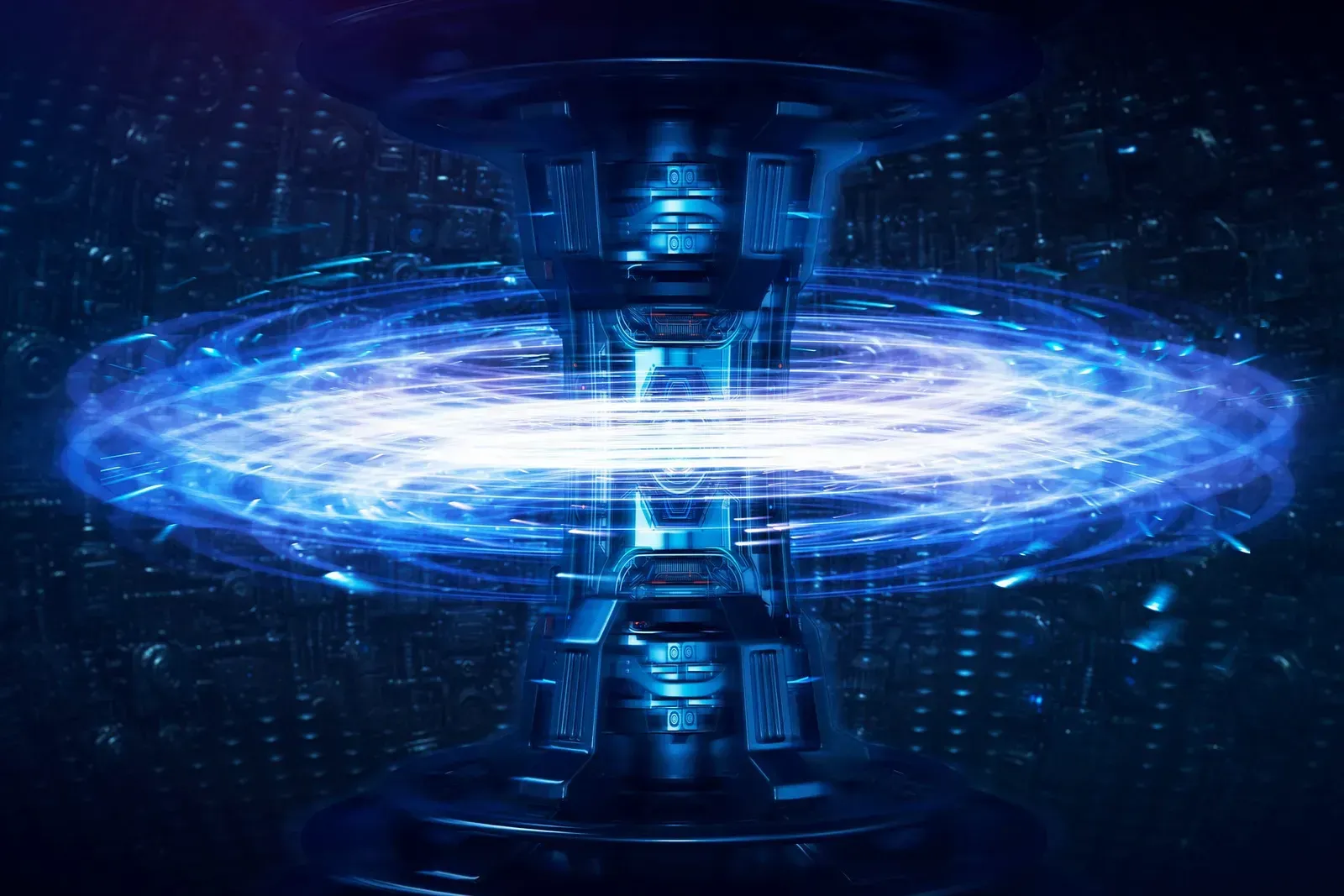
Think of a tokamak as a magnetic bottle designed to hold something impossibly hot, plasma reaching temperatures several times hotter than the core of the sun. It’s a donut-shaped reactor chamber that uses powerful magnetic fields to contain superheated plasma long enough for hydrogen atoms to fuse together, releasing enormous amounts of energy in the process.
The reason this matters so much is the fuel source. Fusion primarily uses isotopes of hydrogen, which are abundant and extractable from seawater. Unlike fission reactors, there’s no long-lived radioactive waste and no risk of a runaway meltdown. It’s difficult to overstate how transformative that combination could be for global energy.
The tokamak design has been the dominant approach to fusion research for over sixty years. What’s changed recently isn’t the concept but the engineering behind it, the materials, the magnet technology, and the sheer scale of investment. That combination is starting to produce results that feel genuinely historic.
Record-Breaking Plasma Temperatures and Confinement Times
Here’s the thing about fusion physics: getting plasma hot enough to fuse is only half the battle. You also need to keep it confined for long enough and at sufficient density. Scientists describe this as achieving the triple product, a combination of temperature, density, and confinement time. Recent tokamak experiments have been hitting record highs across all three.
South Korea’s KSTAR reactor, often called the “Korean artificial sun,” held a plasma temperature of roughly 100 million degrees Celsius for 48 seconds in late 2023, shattering its own previous record. That’s about seven times hotter than the sun’s core, sustained for nearly a minute. Progress like that would have seemed almost science fiction not long ago.
The trend lines here are genuinely exciting. Each successive experiment isn’t just breaking records by small margins; the jumps are substantial. It signals that researchers are beginning to understand and control plasma behavior at a level of precision that previous generations of scientists could only theorize about.
The Role of High-Temperature Superconducting Magnets
If there’s one technological leap that deserves serious credit for the current wave of fusion optimism, it’s high-temperature superconducting magnets. Companies like Commonwealth Fusion Systems have developed magnets capable of generating magnetic fields roughly twice as strong as what older superconducting systems could manage. Stronger fields mean you can confine denser plasma in a smaller, cheaper device.
This matters enormously from an engineering standpoint. Smaller machines cost less to build, less to operate, and can be iterated faster. Think of it like the difference between filling a swimming pool with a fire hose versus a garden hose. More powerful magnets are the fire hose.
Commonwealth Fusion’s SPARC reactor, currently under construction, is betting heavily on this magnet technology to demonstrate net energy gain, meaning the reactor produces more fusion energy than is put in to heat the plasma. If that works, it won’t just be a scientific milestone. It will be a commercial proof of concept.
JET’s Final Achievement and What It Handed to the Next Generation
The Joint European Torus, known as JET, shut down operations in late 2023 after more than four decades of research. Before the lights went out, it set a world record for sustained fusion energy, producing roughly 69 megajoules of energy over five seconds. That’s the highest energy output from any fusion device ever recorded at that point.
JET’s legacy isn’t just a number in a record book. Decades of operational data, plasma behavior observations, and engineering lessons have been handed directly to ITER, the massive international fusion project currently being assembled in southern France. ITER is roughly ten times the plasma volume of JET, and it will rely heavily on everything JET learned.
I think JET’s farewell record was deliberately symbolic, a final gift to the fusion community. The researchers who worked on that machine for decades knew they were building a foundation, not just chasing milestones. That kind of long-game thinking is genuinely rare in science.
ITER: The World’s Biggest Fusion Experiment
ITER is almost incomprehensibly large in scope. It’s a collaboration between 35 nations, representing roughly half the world’s population, and its budget has exceeded 20 billion euros. The machine itself is being assembled piece by piece in Cadarache, France, with components manufactured across member countries and shipped to a single site for assembly.
The goal of ITER isn’t to generate electricity for the grid. It’s to prove that fusion can produce ten times more energy than is put in, achieving what’s called Q equals 10. If it hits that target, it becomes the scientific blueprint for the generation of commercial fusion power plants that would follow.
Progress has been slower than originally hoped, with revised timelines pushing the first plasma experiments toward the late 2020s. Still, the scale of international cooperation involved is itself remarkable. When nearly every major world power agrees on something in physics, it’s worth paying attention.
Private Fusion Companies Are Changing the Game
Something has shifted dramatically in the fusion landscape over the past few years. Private investment has flooded into the sector at a pace that would have been unthinkable a decade ago. Companies like Commonwealth Fusion Systems, TAE Technologies, Helion Energy, and others have collectively raised billions in venture capital and strategic investment.
Helion Energy, for instance, has attracted significant attention for its approach to directly converting fusion energy to electricity without a steam turbine, which would make the whole process dramatically more efficient. Microsoft has already signed a power purchase agreement with Helion, a remarkable vote of confidence from one of the world’s largest technology companies.
The competition between private companies and publicly funded projects is healthy. It’s forcing faster iteration, bolder engineering decisions, and a commercial mindset that academic institutions sometimes lack. Let’s be real, when profit motives align with clean energy goals, timelines tend to compress in ways that pure research funding rarely achieves.
What Fusion Could Actually Mean for the Planet
It’s worth stepping back and thinking about what successful commercial fusion would actually mean. Not in abstract terms, but practically. A fusion power plant would produce no carbon emissions during operation, generate vastly more energy per kilogram of fuel than any combustion process, and produce no long-lived radioactive waste. The fuel itself is extracted from water and lithium, both of which are effectively inexhaustible on a human timescale.
For a world still heavily dependent on fossil fuels and struggling to scale renewable energy fast enough to meet climate goals, fusion represents something rare: an option without painful tradeoffs. Solar and wind require land and storage infrastructure. Fusion, if it works at scale, runs continuously regardless of weather or geography.
The honest caveat is that commercial fusion power plants are still likely a decade or two away even under optimistic projections. The engineering challenges between “scientific proof of concept” and “gigawatt-scale power plant” are enormous. Still, the direction of travel has never felt more credible, and that alone is worth celebrating.
Conclusion: The Moment Fusion Stopped Being a Joke
For most of the twentieth century, fusion energy occupied an awkward space between genuine promise and perpetual disappointment. Researchers believed in it. Governments funded it. The public mostly shrugged. The gap between theory and practice seemed insurmountable.
What’s different now is the convergence of multiple factors arriving at the same moment. Advanced magnet technology, private investment, international collaboration, decades of accumulated experimental data, and genuine record-breaking results are all pointing in the same direction. The “thirty years away” joke is slowly becoming less funny and more embarrassing to repeat.
Fusion won’t save us overnight. It isn’t a silver bullet and anyone promising otherwise is overselling. However, the probability that commercial fusion power will exist within most readers’ lifetimes has never been higher. That’s not hype. That’s a measured reading of where the science actually stands in 2026.
The sun has been fusing hydrogen for about five billion years. We’re just trying to do it on a slightly smaller scale. Given how far tokamak research has come, I think we might actually pull it off. What do you think, is the age of fusion power finally within reach? Share your thoughts in the comments below.