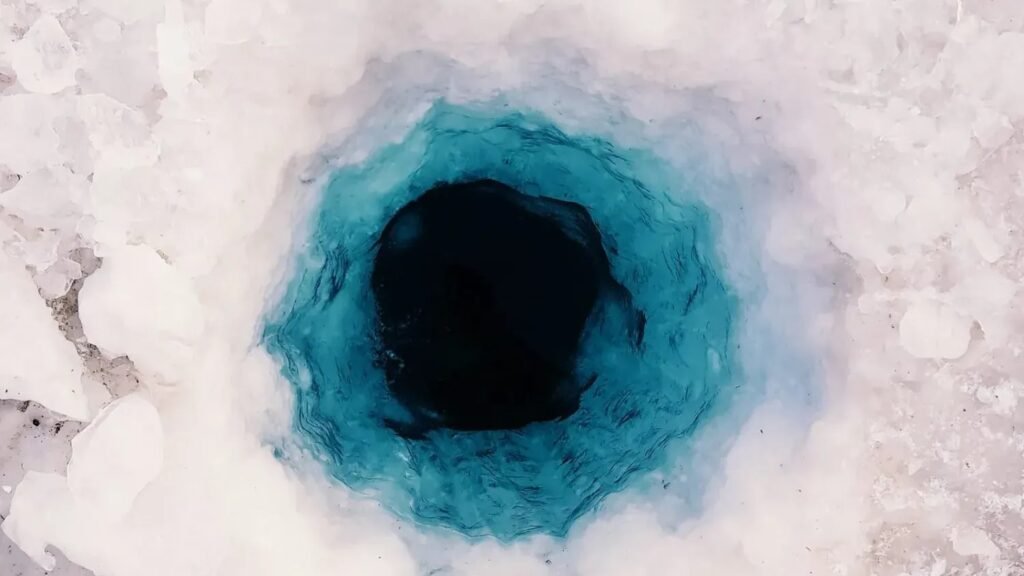
Something strange is lurking beneath the ice of Antarctica, and it’s not a creature or a hidden base. It’s a gravitational anomaly so unusual that scientists are genuinely scratching their heads trying to explain it. The continent at the bottom of the world has always been a place of extremes, but this discovery adds a whole new layer of weirdness to an already enigmatic landscape.
What does a “gravity hole” even mean? Is the ground literally pulling you down less in some spots than others? Honestly, yes – and the implications of that are far more fascinating than most people realize. Let’s dive in.
What Exactly Is a Gravity Hole?
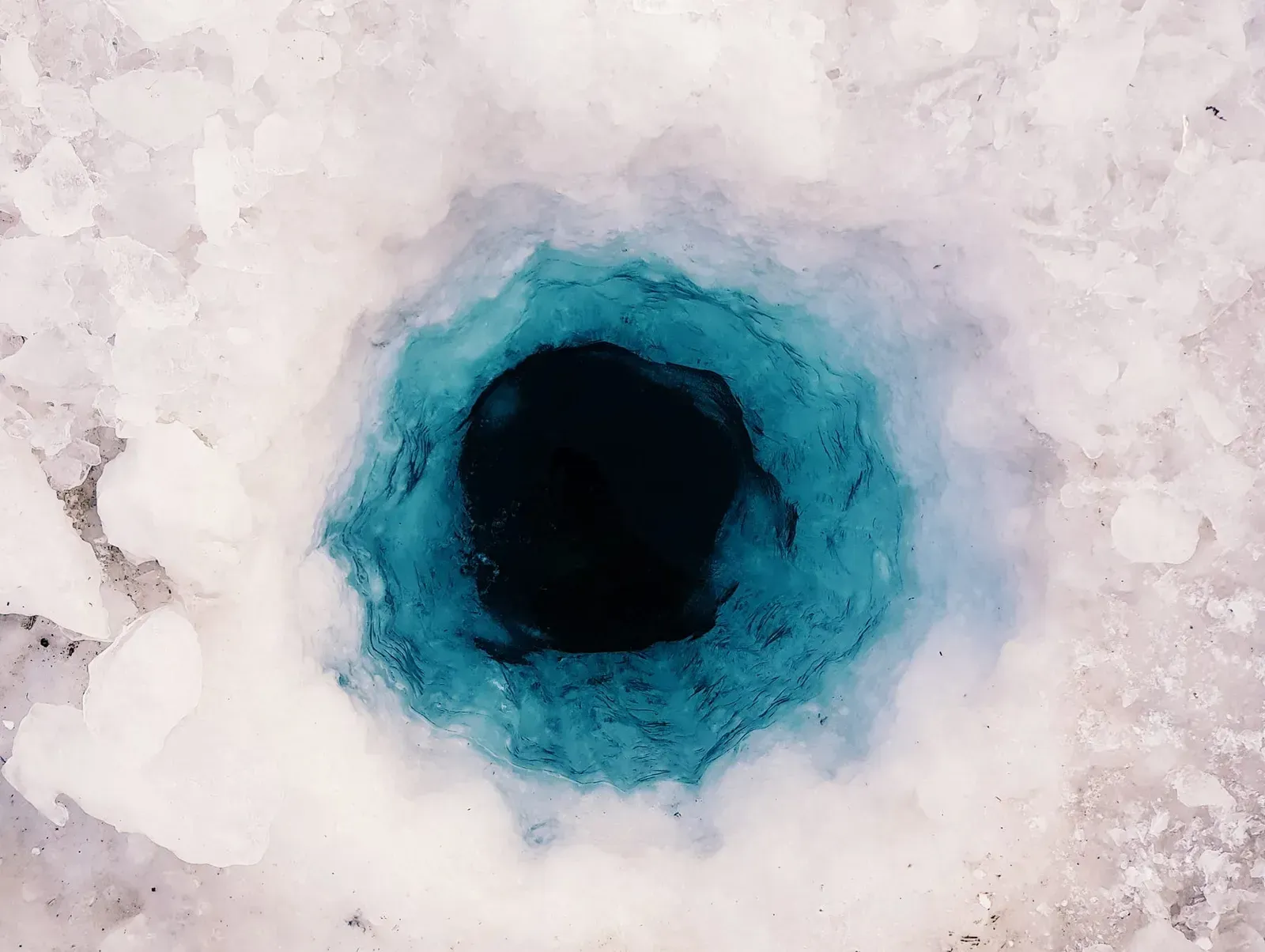
Here’s the thing about gravity – most of us assume it’s the same everywhere on Earth. It’s not. Earth’s gravitational field varies depending on the density of the material beneath your feet, the shape of the planet’s surface, and even the presence or absence of massive ice sheets.
A “gravity hole” is essentially a region where the gravitational pull is noticeably weaker than average. Think of it like a shallow dent in an otherwise smooth sheet of stretched fabric. In Antarctica, researchers have identified a significant low-gravity zone that stands out even against the continent’s already unusual physical profile.
This isn’t science fiction. Satellites measuring Earth’s gravitational field, particularly NASA’s GRACE mission data, have mapped these variations with remarkable precision. The results from Antarctica are, to put it mildly, surprising.
The Science Behind Gravitational Anomalies
Gravitational anomalies occur when the density of material beneath Earth’s surface is uneven. Dense rock or metal-rich areas pull harder, while regions with lower-density material – think vast underground cavities, thick ice, or ancient geological formations – pull softer.
Antarctica is a land of contradictions in this regard. On top, it carries one of the largest ice masses on the planet. Beneath that ice, however, lies a complex and ancient geological landscape that scientists are still actively mapping. The combination creates a kind of gravitational patchwork that’s genuinely hard to model.
What makes the Antarctic anomaly particularly interesting is its scale. It’s not a small localized blip. It’s a broad, sweeping region of reduced gravity that raises questions about what’s happening deep within the Earth’s mantle beneath the continent.
The Role of Glacial Isostatic Adjustment
One of the leading explanations involves a process called glacial isostatic adjustment, or GIA for short. When enormous ice sheets press down on land over thousands of years, they literally push the crust of the Earth downward. When that ice eventually melts or shifts, the crust slowly rebounds – like a mattress springs back after you get up.
Antarctica has been under immense ice pressure for millions of years. The crust beneath it has been depressed significantly, and this crustal depression affects local gravitational readings. Less rock above the normal baseline means less gravitational pull – simple as that.
The tricky part is that this process unfolds over geological timescales. Scientists must account for both current ice mass and the long history of ice loading to accurately interpret what the gravity readings are actually telling them.
Deep Mantle Dynamics at Play
Here’s where it gets genuinely mind-bending. Some researchers believe that part of the explanation involves the behavior of Earth’s mantle – the thick, semi-molten layer between the crust and the core. Mantle material can flow, albeit extremely slowly, and variations in mantle density directly influence gravitational strength at the surface.
Beneath Antarctica, there are indications that the mantle structure is different from what you’d find under, say, the stable continental cratons of Africa or North America. Parts of the Antarctic mantle may be warmer and less dense, which would contribute to a reduced gravitational signature at the surface.
This is genuinely hard to pin down with certainty. The ice makes direct geological sampling incredibly difficult, and our understanding of deep mantle dynamics in polar regions is still evolving. It’s hard to say for sure, but the mantle almost certainly plays a meaningful role.
Why Antarctica’s Ice Sheet Complicates Everything
You might think that having a giant ice sheet would make the gravitational signal stronger, not weaker – more mass, more pull. That’s actually a reasonable assumption, and in some respects it’s correct. The ice does add gravitational mass. The problem is what’s underneath it.
The ice sheet of Antarctica is not sitting on dense, solid bedrock everywhere. In many places, it rests on sedimentary basins, ancient rift valleys, and geological formations with relatively low density. These features effectively cancel out much of the added pull from the ice above, leaving behind a net gravitational deficit.
It’s a bit like stacking pillows on a hammock – the hammock sags downward even as you add more weight on top. The net vertical position drops, and the effective “density” of the whole system ends up lower than you’d expect.
What This Means for Climate Science
This is where the gravity hole story stops being just a cool geological curiosity and starts carrying real-world urgency. Measuring gravitational changes over Antarctica is one of the key tools scientists use to track ice mass loss. If the gravity baseline is already anomalously low, calibrating those measurements becomes much more complex.
As climate change accelerates and Antarctic ice continues to melt at concerning rates, having accurate gravitational models is essential. Errors in those models could lead to underestimates or overestimates of how much ice is actually being lost – which in turn affects sea level rise projections for coastlines around the world.
Roughly about one third of global sea level rise projections depend heavily on Antarctic ice loss estimates. Getting the gravity math right isn’t academic pedantry – it has consequences for the hundreds of millions of people living in coastal zones.
What Researchers Are Doing About It
Scientists aren’t just sitting on this mystery. Ongoing satellite missions, ground-based measurements, and increasingly sophisticated computer models are all being brought to bear on the problem. The GRACE Follow-On mission, which succeeded the original GRACE satellites, continues to gather gravitational data with improving accuracy.
There’s also growing collaboration between geophysicists, glaciologists, and climate scientists – fields that don’t always talk to each other as much as they should. Mapping the subglacial topography beneath Antarctica through radar surveys is helping fill in the picture, giving researchers a clearer view of what lies beneath all that ice.
The gravity hole beneath Antarctica is, in a very real sense, a window into Earth’s deep interior. Understanding it better will not only sharpen our knowledge of the planet’s structure but also improve the tools we use to monitor one of the most critical climate systems on Earth.
A Final Thought Worth Sitting With
There’s something almost poetic about Antarctica hiding one of Earth’s most profound physical mysteries under layers of ice that have barely been touched by human hands. A continent that humans only confirmed existed a little over two hundred years ago is still revealing secrets that challenge our best scientific models.
Let’s be real – when most people think of Antarctica, they picture penguins and blizzards. Not gravitational anomalies connected to mantle dynamics and sea level projections. But that’s exactly what makes Earth science so endlessly fascinating. The planet is still surprising us.
The gravity hole reminds us that even the things we take for granted – like the very force that keeps us tethered to the ground – are more complex, more variable, and more deeply connected to everything else than we ever imagined. What would you have guessed was lurking beneath all that ice?