
If you’ve ever had a gut feeling that turned out to be right, remembered a tiny detail from years ago out of nowhere, or lost yourself so deeply in a task that time seemed to disappear, you’ve brushed up against something strange and powerful inside your own head. For all our talk about brain scans and neuroscience, the truth is humbling: we still barely grasp what the mind is truly capable of. The cutting-edge research in 2026 doesn’t make the mind feel less mysterious; if anything, it makes it feel even more astonishing.
What’s really wild is that many of these abilities aren’t rare superpowers reserved for a few gifted people. They’re built into almost every human brain, just waiting for the right conditions to show up. Some of them we’ve observed in extreme cases, others only in carefully controlled experiments, and some we’ve only started to notice because technology finally caught up. Let’s dive into a few of the ways the human mind is quietly outpacing our understanding.
The Brain That Rewires Itself: Neuroplasticity Beyond the Textbook
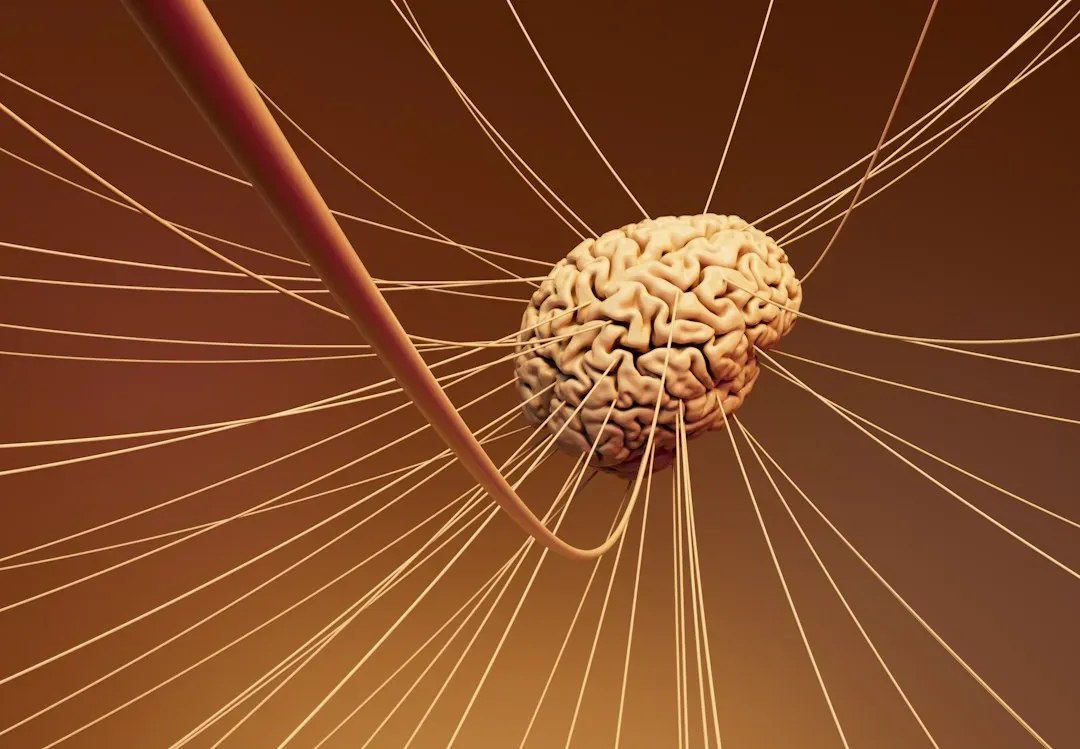
Imagine tearing out chapters from a book and somehow the story still makes sense because the remaining pages rearrange themselves. That’s a rough metaphor for what the brain can do. For a long time, people thought brain structure was basically fixed after childhood, but research on stroke survivors, amputees, and people with traumatic injuries has blown that idea apart. Brain imaging has shown that when one area is damaged, neighboring regions can often take over its functions in ways that once seemed impossible.
Even more surprising, this isn’t limited to catastrophic injuries. Intense practice, like learning a new language late in life or mastering a complex instrument, can physically reshape the brain’s wiring and even its volume in certain areas. In ordinary adults, targeted training has been shown to strengthen attention, working memory, and emotional control well into older age. This means we’re walking around with hardware that can update itself continuously, like a living operating system we still don’t fully know how to program.
The Hidden Power of the Unconscious: Processing Far Beyond Awareness

Most of what your brain is doing right now is happening without your permission or awareness. While you read these words, other systems are quietly predicting the next line, filtering distractions, regulating your heartbeat, and evaluating whether you feel safe or threatened. Experiments where people make choices a split second before they consciously “decide” suggest that our unconscious mind is often several steps ahead of what we experience as deliberate thought.
Researchers have also found that we can pick up patterns in information that we don’t consciously notice, like subtle shifts in tone, micro-expressions, or tiny changes in a repeated sequence. Over time, the brain builds a kind of internal “sense” of what’s coming next, even if we can’t put it into words. That eerie feeling of “something’s off” in a situation is often your unconscious mind flagging a pattern you haven’t consciously recognized yet. It’s not magic or psychic ability – it’s just an information-processing engine operating at a speed and depth we still can’t fully map.
Memory Is Not a Filing Cabinet: Its Capacity and Weirdness

We like to think of memory as a storage box where we put things and pull them back out, but the mind works more like a living, constantly edited story. There are people with so-called highly superior autobiographical memory who can recall the exact day of the week and details from random dates decades ago. At the same time, everyday experiments show how alarmingly easy it is to distort or even implant parts of a memory without people realizing it. The brain isn’t recording reality – it’s reconstructing it on the fly.
Still, the potential capacity is staggering. The number of possible connections between neurons in a single brain has been loosely compared to the number of stars in some galaxies, and each of those connections can modify how memories form and link together. Some studies on memory athletes reveal that many of their feats rely on techniques the average person could learn, suggesting our memory systems are capable of far more than we typically use them for. The real shock isn’t that some people can remember so much; it’s that most of us are barely scratching the surface of what’s biologically possible.
Flow States: When the Sense of Self Temporarily Disappears

Flow is that rare state when you’re so absorbed in what you’re doing that you stop noticing yourself, the clock, and sometimes even your surroundings. Artists, athletes, gamers, coders, and surgeons all describe versions of it. Brain imaging during flow suggests a curious pattern: some regions involved in self-criticism and inner chatter go quiet, while systems linked to attention and pattern recognition light up. It feels almost like switching from “manual mode” to a smoother, higher-bandwidth “automatic mode.”
What’s fascinating is how this affects performance and perception. People in deep flow often report moving faster, solving problems more elegantly, and making complex decisions without consciously thinking through every option. Time can seem to stretch or collapse in strange ways. We still don’t fully understand how the brain decides to flip into this state or why it seems easier for some people and tasks than others. But flow hints that the mind may function at multiple “gears,” and our everyday way of thinking might not be the most powerful one available to us.
Senses You Don’t Know You Have: Perception Beyond the Obvious

Our standard schoolbook senses – sight, hearing, touch, taste, smell – are only part of the story. The brain also tracks balance, body position, internal organ states, temperature, and subtle changes in the environment, often without conscious awareness. Studies on people who lose one sense, like vision, show that other sensory areas can expand, allowing them to detect information most sighted people simply miss. Blind individuals navigating spaces or reading Braille at high speed demonstrate just how adaptable perception can be.
Then there are those odd cases where people can respond to visual information they swear they cannot see, a phenomenon sometimes described in patients with certain kinds of brain damage. Their eyes capture the data, and their body can react to it, but their conscious mind doesn’t get the picture. This kind of research is unsettling because it suggests that our “experience” of seeing the world is only a carefully filtered summary of a much larger pool of raw data. The mind is sensing more than it tells us, and we don’t yet know the full extent of that hidden layer.
Placebo, Belief, and the Mind–Body Feedback Loop

The placebo effect is one of the clearest examples of the mind reaching into the body and changing it. In countless medical trials, people given inactive pills but told they might help still report reduced pain, improved mood, or even measurable changes in brain activity and hormone levels. This isn’t imaginary; it’s the nervous system and immune system responding to expectation and context. The body is listening carefully to what the mind believes is happening.
What’s even more striking is that this effect shows up not just with pills but with sham surgeries, fake devices, and carefully staged rituals. On the flip side, negative expectations can worsen symptoms, a nocebo effect that can amplify pain or side effects. In everyday life, this raises uncomfortable questions: how many of our aches, anxieties, or limits are partly reinforced by what we expect to be true? We still don’t have a precise way to harness this mind–body loop at will, but it clearly points to an ability we’ve only begun to understand.
Collective Intelligence: The Mind in a Social Web
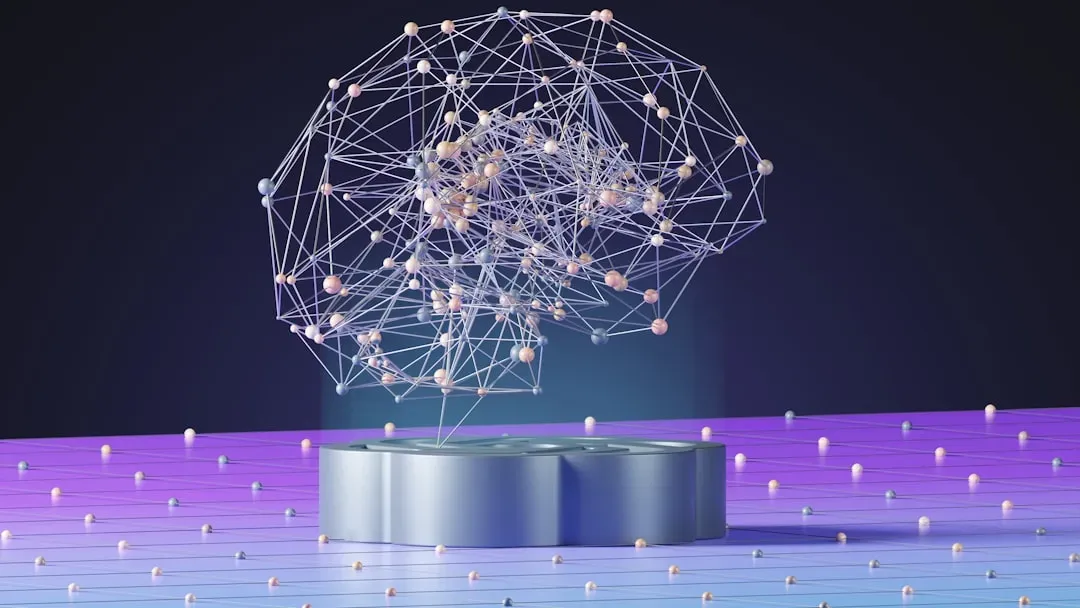
Human minds don’t operate in isolation; they sync up. When people work closely together, brain scans have shown patterns of neural activity that begin to align, especially when they share a focus or emotion. You can feel this in a great conversation, a powerful live concert, or a team that’s perfectly in sync – it’s as if an invisible circuit forms between people. In groups, we can solve problems, imagine futures, and build systems that no single brain could handle alone.
Of course, this collective power has a dark side. The same mechanisms that fuel coordination and empathy can drive herd behavior, misinformation, and emotional contagion. Social media has made this more obvious and more intense, as people’s mental states ping-pong across networks in real time. Still, underneath all of that chaos is a profound fact: individual minds can lock into shared patterns, creating something bigger than any one person. That ability is quietly shaping our history and our future, whether we fully understand it or not.
Consciousness: The Mystery at the Center
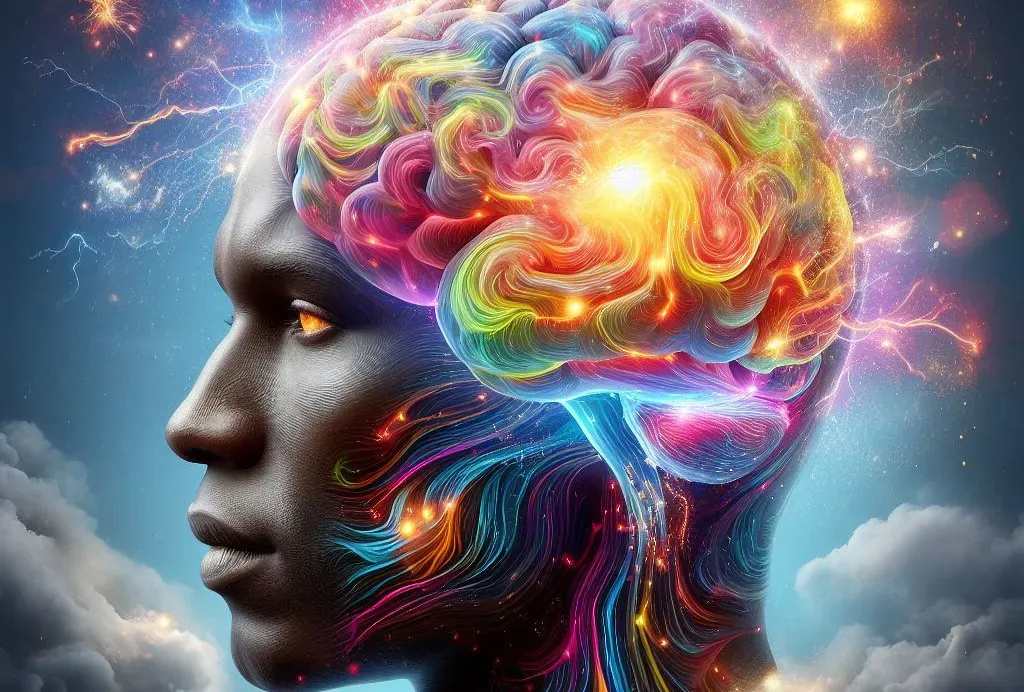
For all our progress in brain science, consciousness itself remains deeply puzzling. We can map which regions light up during certain tasks and how signals flow through networks of neurons, but that doesn’t fully explain why there is an inner experience at all. Why does electrical and chemical activity feel like anything from the inside? Different theories compete: some focus on information integration, others on global broadcasting of signals, and some explore entirely new angles, but none have closed the case.
What makes this so striking is that every other ability of the mind – memory, decision-making, emotion, creativity – depends on this mysterious backdrop of awareness. We take it for granted because it’s always there, like the screen behind every movie we watch. Yet, as of 2026, we’re still closer to describing the correlations of consciousness than its actual nature. That gap between what we can measure and what we can feel might be the clearest sign that the mind still holds abilities and dimensions we haven’t yet found words or tools for.
Conclusion: Living With a Mind We Don’t Fully Understand
The more we learn about the human mind, the less it looks like a simple machine and the more it resembles a shifting, adaptive, layered system that keeps surprising us. It can rewire itself after injury, process information beyond awareness, reshape memory, alter bodily states through belief, tune perception, and sync with other minds in complex ways. Many of these abilities are not rare gifts but ordinary features we just haven’t learned to use deliberately or fully appreciate.
We walk around every day carrying a mind that is more powerful, stranger, and more flexible than our stories about it usually admit. Instead of seeing our mental limits as fixed, it might be more honest to see them as temporary boundaries we haven’t yet learned how to cross. When you think about your own thoughts, habits, and perceptions, how sure are you that you’ve seen everything your mind can do?