Few questions grip the human imagination quite like this one: where did life actually come from? It sounds almost too big to answer. Yet researchers keep chipping away at it, and every now and then, a discovery lands that genuinely shifts the conversation.
A new wave of scientific research is pointing toward something remarkable. Asteroids, those ancient, tumbling rocks drifting through space, may have played a far more direct role in sparking life on Earth than anyone previously understood. Let’s dive in.
The Ancient Delivery System We Never Knew We Had
Here’s the thing about asteroids: most of us think of them as threats, extinction-level events waiting to happen. The popular image is a fiery rock wiping out dinosaurs. What scientists are now uncovering, however, flips that instinct completely on its head.
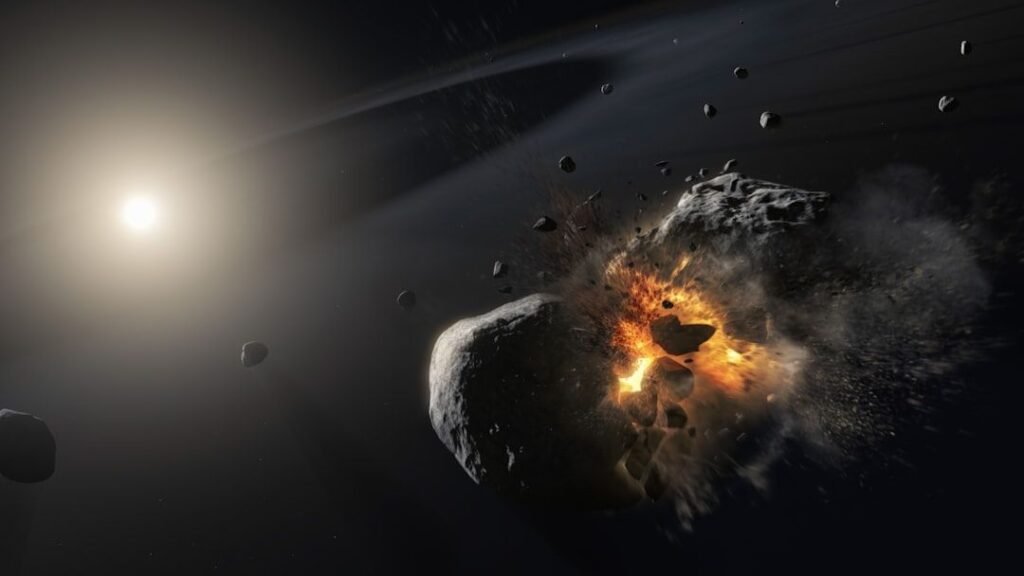
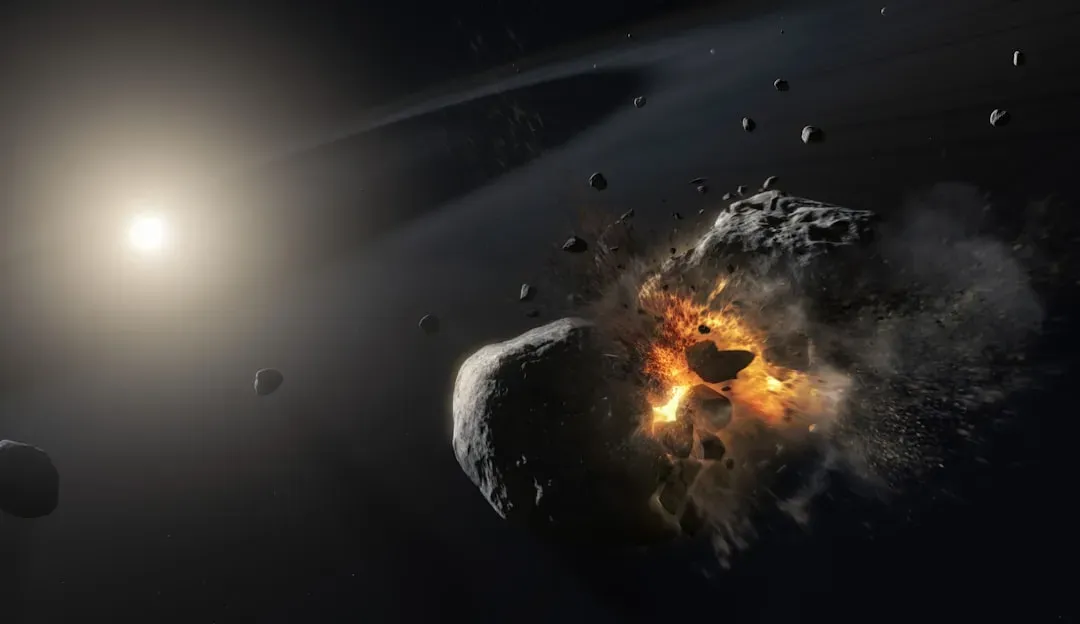
Research suggests that during a period known as the Late Heavy Bombardment, roughly four billion years ago, Earth was pelted relentlessly by asteroids and comets. Far from being purely destructive, some of these impacts may have carried organic compounds, the raw chemical ingredients necessary for life to eventually emerge. Think of it less like a bombardment and more like an incredibly violent, chaotic delivery service.
What Exactly Was Found Inside These Space Rocks
Samples returned from asteroid Ryugu by Japan’s Hayabusa2 spacecraft have been nothing short of extraordinary. Scientists analyzing this material found uracil, one of the nucleobases that makes up RNA, as well as niacin, a form of vitamin B3. These are not simple, random chemicals. These are molecules with direct biological relevance.
The presence of these compounds in a pristine, uncontaminated asteroid sample is genuinely exciting, and I think it’s hard to overstate how significant that is. It confirms something researchers had long theorized but struggled to prove. Asteroids are, in a very real sense, traveling chemistry labs, and they’ve been crossing the solar system for billions of years.
How Organic Molecules Survive the Violence of Space Travel
You might reasonably wonder how any delicate organic molecule could survive the brutal journey through space, let alone the searing heat of atmospheric entry. It sounds almost impossible. The answer lies in the physics of how asteroids absorb and distribute heat during impact.
Certain impact scenarios create what scientists describe as protective microenvironments. Deep within the rock, temperatures remain far lower than at the surface during entry. Some models suggest that porous asteroid material can act almost like insulation, shielding interior compounds from complete destruction. It’s a bit like wrapping something fragile inside layers of bubble wrap, except the bubble wrap is rock traveling at tens of thousands of kilometers per hour.
The Role of Water and Amino Acids in the Story
Water is another piece of this puzzle that keeps coming up. Some asteroids contain hydrated minerals, meaning water was chemically bound into the rock itself billions of years ago. When these rocks arrive on a planet, they can release that water, contributing to the conditions needed for chemistry to evolve into biology.
Amino acids, the building blocks of proteins, have also been detected in multiple meteorite samples over the years. What makes the newer findings so compelling is the sheer variety of these compounds and their confirmed extraterrestrial origin. Honestly, the more scientists look, the more they find that space is not the sterile, empty void it once seemed. It’s teeming with chemistry.
Not Everyone Is Fully Convinced, And That’s Okay
Let’s be real: science rarely produces unanimous agreement, and this topic is no exception. Some researchers remain cautious, pointing out the difficulty in ruling out terrestrial contamination of samples, even when extreme precautions are taken. The leap from “organic molecules arrived on Earth” to “those molecules directly contributed to life” is still a significant one.
There are alternative hypotheses, too. The hydrothermal vent theory, for instance, proposes that life emerged deep in Earth’s own oceans, driven by heat and chemistry entirely of our planet’s making. It’s hard to say for sure whether asteroids were the primary driver or simply one contributor among many. Most researchers these days seem to lean toward a combination of factors rather than a single origin story.
What This Means for the Search for Life Elsewhere
If asteroids can seed a planet with life’s ingredients, then the implications stretch far beyond Earth. The same kinds of carbon-rich asteroids scattered throughout our solar system have almost certainly impacted Mars, Europa, Titan, and other worlds at various points in cosmic history. That thought alone is staggering.
This research quietly reframes how scientists think about the probability of life existing elsewhere in the universe. If the delivery mechanism is essentially automatic, embedded in the very physics of solar system formation, then life might not be the extraordinary cosmic accident we once assumed. It might, in fact, be closer to an expected outcome. That’s a perspective shift that changes everything.
Where the Science Goes From Here
NASA’s OSIRIS-REx mission returned samples from asteroid Bennu, and analysis of that material is still ongoing as of 2026. Scientists are comparing findings across multiple asteroid samples to build a more complete picture of what the early solar system was carrying around. The data coming in is, by all accounts, genuinely surprising.
Future missions are already being planned with astrobiology as a core focus. Researchers want to understand not just what molecules exist in asteroids, but how they interact under simulated early-Earth conditions. The goal is to eventually map a credible, evidence-backed pathway from chemistry to biology, from dead rock to living cell. That roadmap, if it can be drawn, would be one of the most profound achievements in the history of science.
Conclusion: The Universe May Have Wanted Life to Happen
What strikes me most about this research is the sheer improbability of it all, and yet here we are. The same cosmic violence that could have sterilized a young planet may also have been the very thing that gave it the spark it needed. That’s a beautiful contradiction.
The idea that we are, in some meaningful sense, made of stardust and asteroid-delivered chemistry isn’t just poetic. It’s increasingly scientific. The universe, it seems, was quietly stacking the deck in favor of life long before any living thing existed to notice. What do you think? Does knowing life’s ingredients may have arrived from space change how you see our place in the universe? Tell us in the comments.