Every year on March 14th, something quietly remarkable happens. Math nerds, scientists, and curious minds around the world pause to celebrate a number that never ends, never repeats, and somehow shows up everywhere from the orbit of satellites to the beating of a human heart.
What does pi have to do with rocket trajectories? Or cancer treatment? Or the way signals travel through your phone? Honestly, more than most people ever realize. The connections are surprising, and some of them are genuinely jaw-dropping. Let’s dive in.
Pi is Far Stranger Than You Were Taught in School
Most people learn pi as roughly 3.14, a number you use to find the area of a circle, then forget by summer. Here’s the thing though – pi is what mathematicians call “irrational” and “transcendental,” which means it cannot be expressed as a simple fraction, and it doesn’t solve any standard algebraic equation. It just keeps going. Forever. Without a pattern.
What makes this philosophically unsettling is that pi isn’t just a quirky curiosity. It’s baked into the very structure of how the universe behaves geometrically. Think of it like the universe’s own internal language, and pi is one of the most common words in it.
Scientists have now calculated pi to over one hundred trillion digits, and they’re still going. Not because we need that many, but because the pursuit itself tests the absolute limits of computing hardware and mathematical endurance.
Rocket Science Literally Could Not Function Without Pi
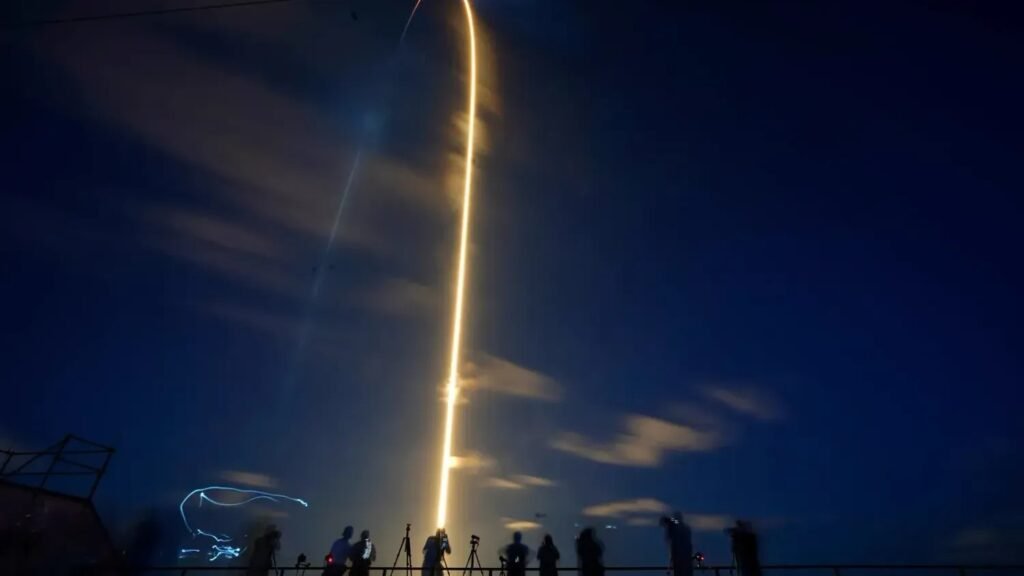
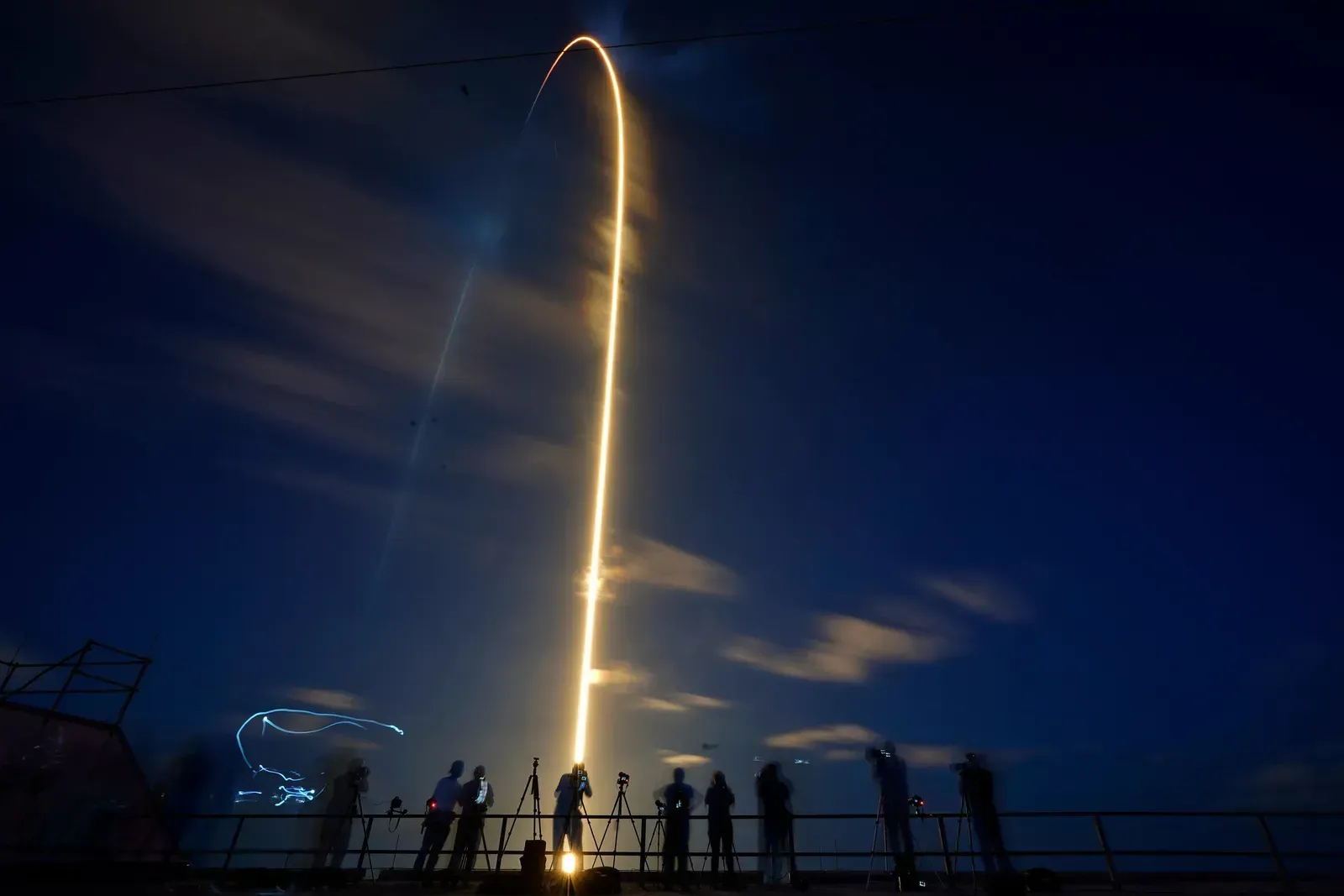
When engineers at space agencies plot the course of a spacecraft, they’re solving what’s called an orbital mechanics problem. Every curve, every arc, every loop around a planet involves circular and elliptical geometry. Pi is embedded in nearly every equation they write.
Let’s be real – without pi, a Mars mission wouldn’t just be difficult. It would be conceptually impossible to calculate with any accuracy. The trajectory windows that allow rockets to travel efficiently between planets rely on pi-dependent math so precisely that even small rounding errors could send a spacecraft thousands of kilometers off course.
NASA’s Jet Propulsion Laboratory even publishes what they call the “Pi in the Sky” challenge each year on Pi Day, offering real mission math problems for students to solve. It’s not just a fun exercise; those are actual equations used in active space missions.
The Surprising Role Pi Plays in Cancer Treatment
This is the one that genuinely surprised me. Medical physicists who design radiation therapy for cancer patients use pi constantly. When targeting a tumor with radiation, the beam paths are circular or spherical, and calculating the correct dosage that destroys cancer cells while sparing healthy tissue requires precise geometric modeling rooted in pi.
The planning software behind modern radiotherapy essentially runs thousands of pi-dependent calculations before a single treatment begins. Getting that geometry wrong, even slightly, has real consequences for real patients.
It’s a sobering reminder that abstract mathematics isn’t abstract at all when it’s determining how much radiation hits a tumor versus a vital organ. Pi, in that context, is as clinical and life-critical as any surgical instrument.
Pi Shows Up in Waves, Sound, and How Your Phone Works
Here’s where things get quietly fascinating. Pi appears in wave equations, which means it’s fundamental to understanding sound, light, electricity, and electromagnetic signals. Every time your phone transmits data wirelessly, the engineering behind that signal is described using Fourier analysis, a mathematical tool absolutely saturated with pi.
Radio waves, Wi-Fi signals, MRI machines, sonar – they all rely on equations where pi appears not once, but repeatedly. Engineers designing these technologies aren’t thinking “oh, there’s pi again” on a daily basis, but it’s always there, working in the background.
It’s a bit like how you don’t think about grammar every time you speak, but the rules are running constantly underneath every sentence you form.
Pi Day as a Cultural Moment for Science Advocacy
Pi Day on March 14th, which also happens to be Albert Einstein’s birthday, has grown from a quirky math celebration into something with real cultural weight. Schools run pi memorization contests. Universities host public lectures. Science communicators use the day as a genuine hook to get non-scientists interested in mathematics.
I think there’s something genuinely valuable about having a dedicated moment where math becomes a conversation topic for everyone, not just specialists. Science literacy matters enormously in a world where policy decisions about climate, health, and technology depend on a public that understands numbers.
The celebration also shines a light on careers in STEM that students might not otherwise consider. A teenager who gets curious about pi on March 14th might end up designing spacecraft trajectories or developing cancer treatment algorithms a decade later.
The Digits of Pi and the Limits of Human Curiosity
The ongoing effort to compute more digits of pi has become one of the longest-running endurance events in the history of computing. In 2024, a new record was set pushing computation into territories that required months of continuous processing on specialized machines. It’s hard to say for sure where the ceiling is, because technically there isn’t one.
Why do people keep going? Partly to test hardware. Partly to develop faster algorithms that have practical uses beyond pi itself. The techniques developed to compute pi efficiently have spun off into improvements in data processing, cryptography, and numerical simulation.
There’s also something deeply human about chasing a number that never ends. It mirrors a broader obsession with exploration – the idea that there’s always something further out there, always one more digit, one more discovery just beyond the current edge.
Why Pi Will Always Be More Than Just a Number
Across physics, medicine, engineering, computing, and communication, pi keeps appearing like an uninvited but essential guest at every mathematical party. It’s not taught well enough in schools, in my opinion. Students learn the formula but rarely learn the story, and the story is extraordinary.
Pi represents something almost philosophical about the nature of reality. The fact that a simple ratio between a circle’s circumference and its diameter turns out to be one of the most universally present constants in nature suggests the universe has a deep geometric logic running through it.
Whether you’re a student staring at a geometry problem, an engineer plotting a rocket path, or a medical physicist calculating a radiation dose, pi is there. Silent, irrational, endless, and absolutely indispensable.
Conclusion: The Never-Ending Number That Never Stops to Matter
It’s easy to dismiss Pi Day as a gimmick, a reason for math teachers to bring pie to class and call it educational. But the reality is that pi threads through the most consequential technologies and life-saving practices of our time. Honestly, that deserves more than one day of recognition.
The next time you see 3.14 written somewhere, maybe pause for a second. Behind that simple approximation is a number stretching into infinity, holding up rockets, guiding radiation beams, and carrying the signals on your phone. What other number can claim that kind of resume? What do you think – did you ever imagine pi was this embedded in everyday life? Let us know in the comments.