Discovering Intelligence in a Unicellular Giant (Image Credits: Images.newscientist.com)
Researchers have demonstrated that a trumpet-shaped microorganism thrives in ponds and exhibits a form of predictive learning typically linked to higher animals.
Discovering Intelligence in a Unicellular Giant
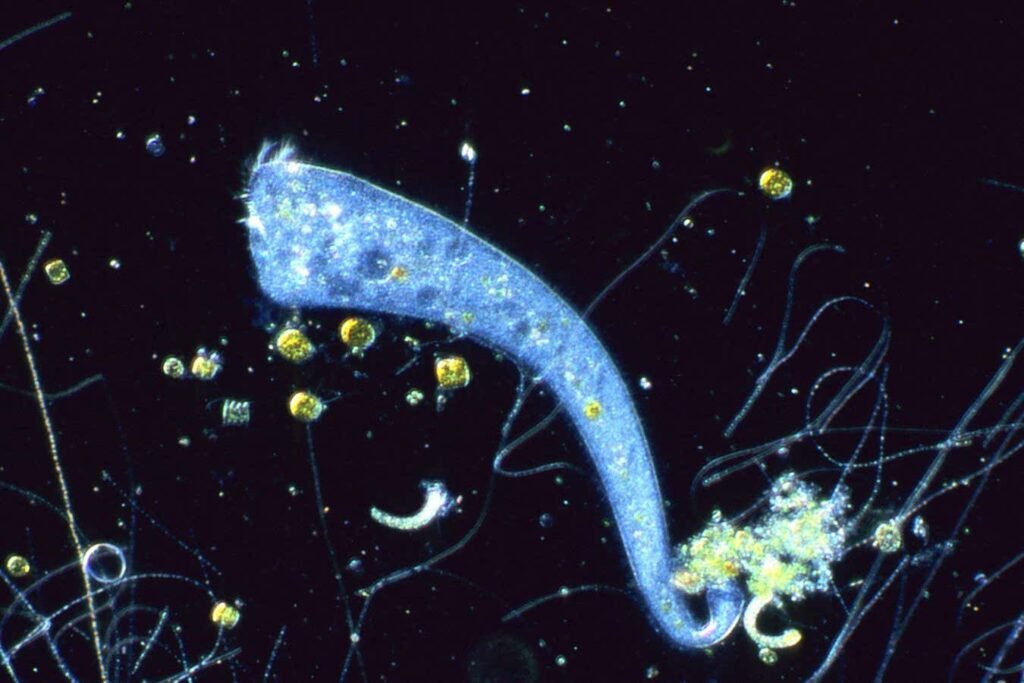
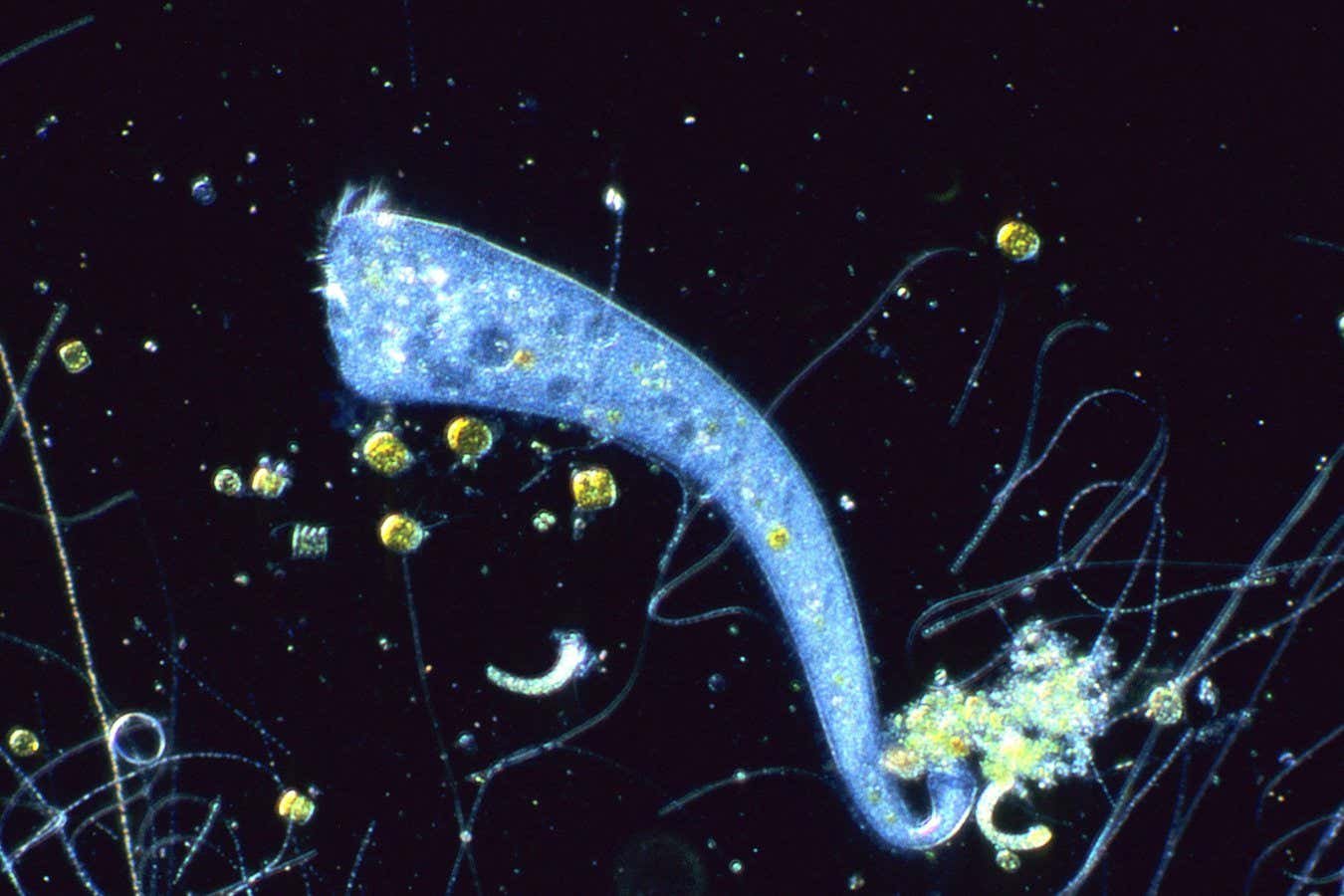
Stentor coeruleus stands out as one of the largest single-celled organisms known, reaching lengths of up to 2 millimeters.[1] This protist adopts a distinctive trumpet shape, complete with an anchor-like holdfast for attachment to surfaces and rows of cilia that propel it through water or generate feeding currents. When undisturbed, it extends its body to filter tiny food particles from the water column.
Threats prompt a rapid defense mechanism. The cell contracts into a tight sphere, halting feeding but evading harm. Such behaviors highlight a complexity unexpected in a creature without neurons or a central nervous system.[1]
Unpacking the Conditioning Protocol
Scientists at Harvard University, led by Sam Gershman, designed experiments mimicking Ivan Pavlov’s famous dog studies. They placed cultures of Stentor cells in Petri dishes and applied mechanical stimuli in the form of taps.[1]
Strong taps reliably triggered contractions in most cells. Initial sessions involved delivering these strong taps every 45 seconds for 60 repetitions, during which the response habituated – fewer contractions occurred over time. Subsequently, teams introduced a weak tap one second before each strong tap across 10 paired trials, timed to match the protists’ recovery period.
- Strong tap alone: High initial contraction rate, followed by habituation.
- Paired weak-strong taps: Temporary surge in response to the weak stimulus.
- Weak tap alone (control): No significant change in contraction rate.
Clear Evidence of Association Formation
Graphs from the trials showed a distinct pattern. Contraction probability spiked right after the weak tap in paired conditions before declining, a hallmark of successful conditioning. This effect vanished without the reinforcing strong tap.[1]
Sam Gershman noted, “We saw this bump in the graph where the contraction rate initially goes up before going down. If you just present the weak tap by itself, you don’t see this.” The result positions Stentor coeruleus as the first protist confirmed capable of such associative learning.[1]
Prior work had established habituation in Stentor and slime molds like Physarum polycephalum, but linking distinct stimuli marked new territory.[1]
Rewriting the Timeline of Cognitive Evolution
These findings suggest associative learning arose hundreds of millions of years ago, predating multicellular nervous systems. Gershman remarked, “It raises the question of whether apparently simple organisms are capable of aspects of cognition that we generally associate with much more complex, multicellular organisms with brains.”[1]
Shashank Shekhar at Emory University, who studies Stentor separately, called it “fascinating that a single cell can do such complex things that we thought required a brain, that required neurons.” He speculated such abilities might prove widespread in simple life forms.[1]
Memory in Stentor likely hinges on molecular changes in touch-sensitive receptors, altering calcium flows and cell voltage without synaptic machinery. Details appear in a preprint by the team.[3]
Key Takeaways
- Stentor coeruleus links weak taps to stronger ones, contracting preemptively.
- First protist evidence of Pavlovian conditioning.
- Challenges brain-centric views of learning origins.
This discovery blurs lines between simple and sophisticated cognition, urging a reevaluation of intelligence’s roots. What ancient mechanisms might underpin modern minds? Share your thoughts in the comments.