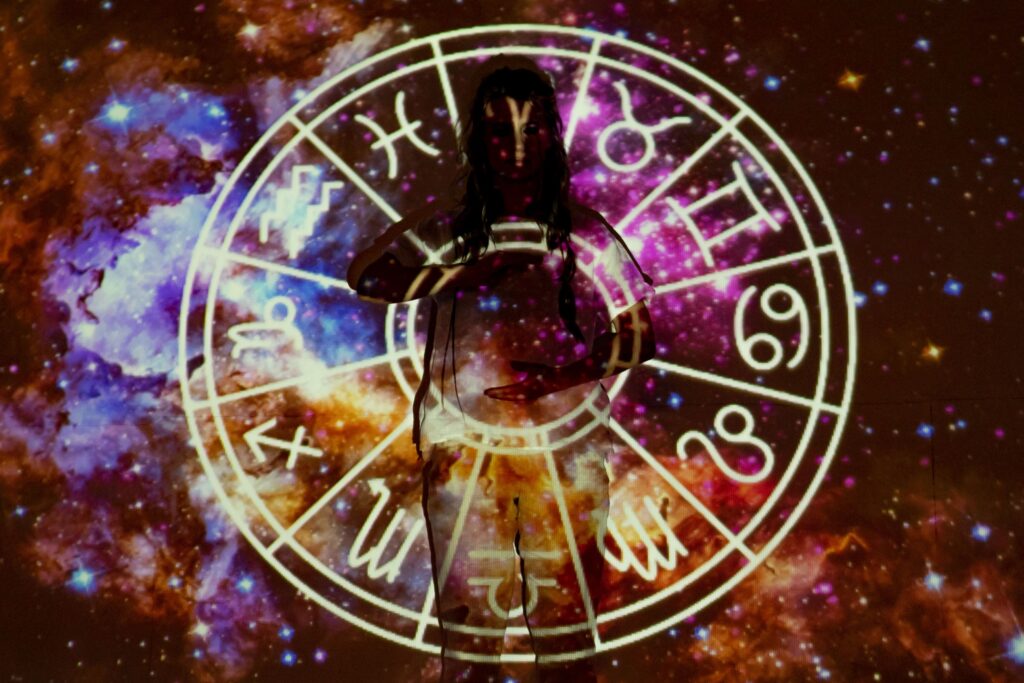

If you could peel back the visible layer of reality like wallpaper, what would you find underneath? Not more empty space, but a restless ocean of hidden influences quietly tugging on galaxies, guiding your thoughts, and even holding your body together. We grow up thinking the universe is mostly made of the stuff we can see: stars, planets, buildings, people. In truth, that visible layer is more like the thin foam on top of a deep, dark sea.
Modern science keeps discovering that the real drivers of reality are the things you don’t see and rarely even think about: invisible fields, ghostly particles, silent currents of information and emotion. Once you start noticing them, it’s hard to shake the feeling that we’re all walking around inside an elaborate, invisible machine, pulled by gears we barely understand. The wild part? Some of the most powerful of these forces don’t just live in deep space or particle accelerators – they run through your daily life, every second.
Gravity: The Curved Fabric Under Your Feet
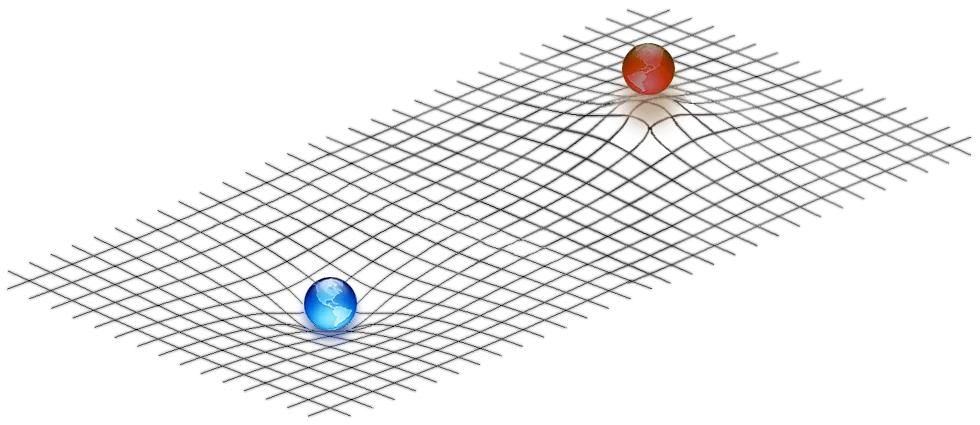
Imagine placing a bowling ball on a trampoline and then rolling a marble nearby; the marble curves around the dent, not because the ball reaches out and grabs it, but because the surface itself is bent. That’s the modern picture of gravity: not a mysterious pulling force, but the bending of space and time around mass and energy. Every step you take, every jump you make, is you moving across this warped fabric of spacetime, shaped by Earth’s mass and spin.
What’s shocking is how weak gravity actually is compared to other forces, yet it reigns over galaxies and black holes. A tiny fridge magnet can lift a paperclip against the entire pull of the planet, and still gravity is the architect of cosmic structure. It sculpts stars, herds galaxies into clusters, and stretches light from distant objects in a cosmic mirage called gravitational lensing. You never see gravity directly; you only see its fingerprints in the paths things take – including your own.
Dark Matter: The Invisible Scaffolding of the Cosmos
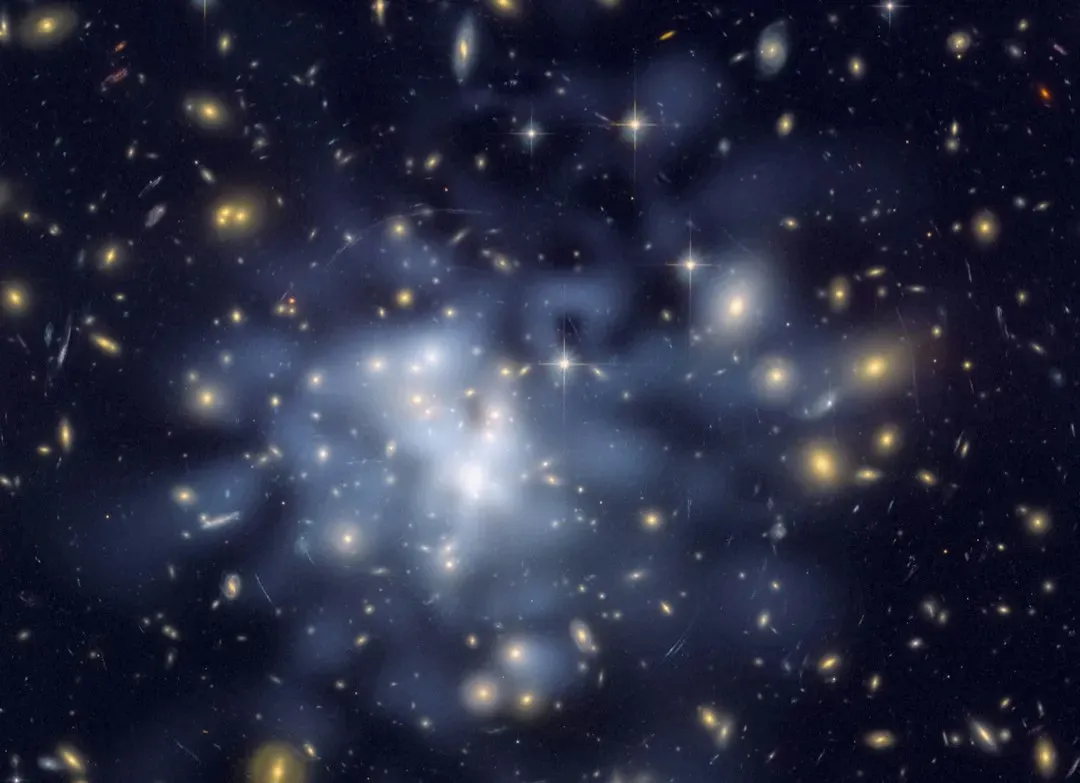
When astronomers weighed galaxies, the numbers simply didn’t add up. Stars at the edges were moving far too fast, as if held by an invisible hand. The best explanation we have today is dark matter: some kind of unseen mass that doesn’t glow, doesn’t reflect, and barely interacts with normal matter at all, except through gravity. By most estimates, the vast majority of matter in the universe is this invisible kind, not the atoms you’re made of.
Think of dark matter as the hidden scaffolding on which galaxies are built. Computer simulations suggest that it clumps together in enormous webs, with galaxies forming like drops of condensation along invisible cosmic filaments. We’ve built incredibly sensitive detectors deep underground, hoping a dark matter particle might occasionally bump into an atomic nucleus, but so far it’s like trying to catch a ghost in a butterfly net. Still, its gravitational pull is undeniable: without this unseen scaffolding, our Milky Way might never have formed, and you wouldn’t be here to wonder about any of it.
Dark Energy: The Mysterious Push Tearing Space Apart
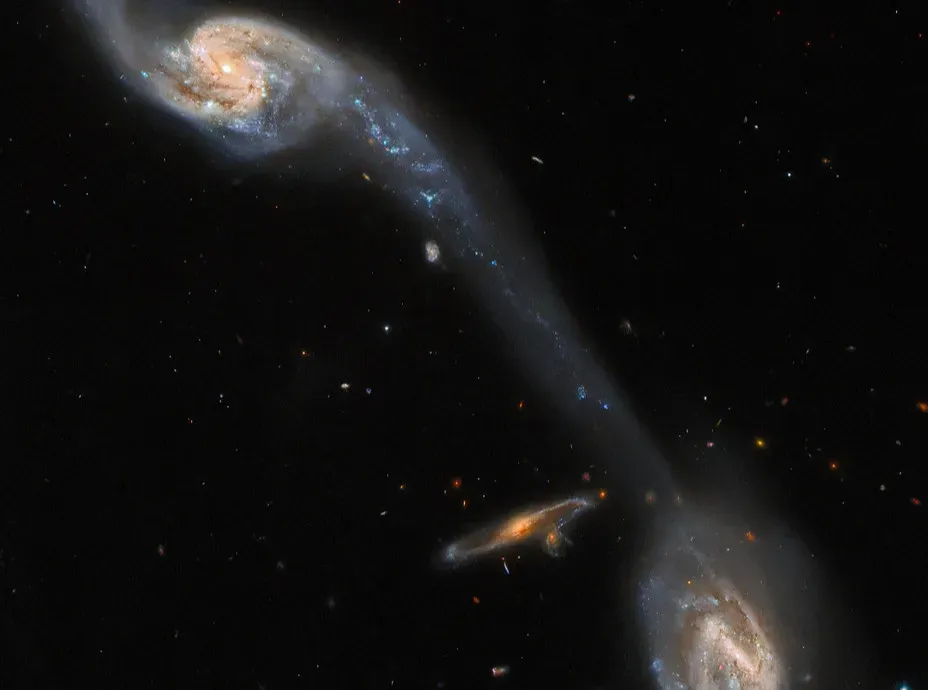
As if an invisible kind of matter weren’t strange enough, the universe delivered an even bigger twist: space itself seems to be stretching faster and faster over time. You might expect gravity to slowly pull everything back, like a ball tossed up that eventually falls. Instead, distant galaxies are not just receding; their speed is increasing, as though some hidden pressure in the fabric of reality is pushing them apart. We call this dark energy, but the name is really just a label for “we see the effect, but don’t truly understand the cause.”
The leading idea is that dark energy is tied to the vacuum of space – that even “empty” space has a kind of built-in energy that drives expansion. It’s like reality comes with its own slow, relentless outward shove. Dark energy now seems to dominate the large-scale behavior of the cosmos, outweighing both normal matter and dark matter combined by a huge margin. If its strength ever changes, the ultimate fate of everything – whether the universe rips apart or slowly coasts – could be very different from what we casually imagine when we look up at a calm night sky.
Quantum Fields: The Hidden Sea Beneath Solid Reality
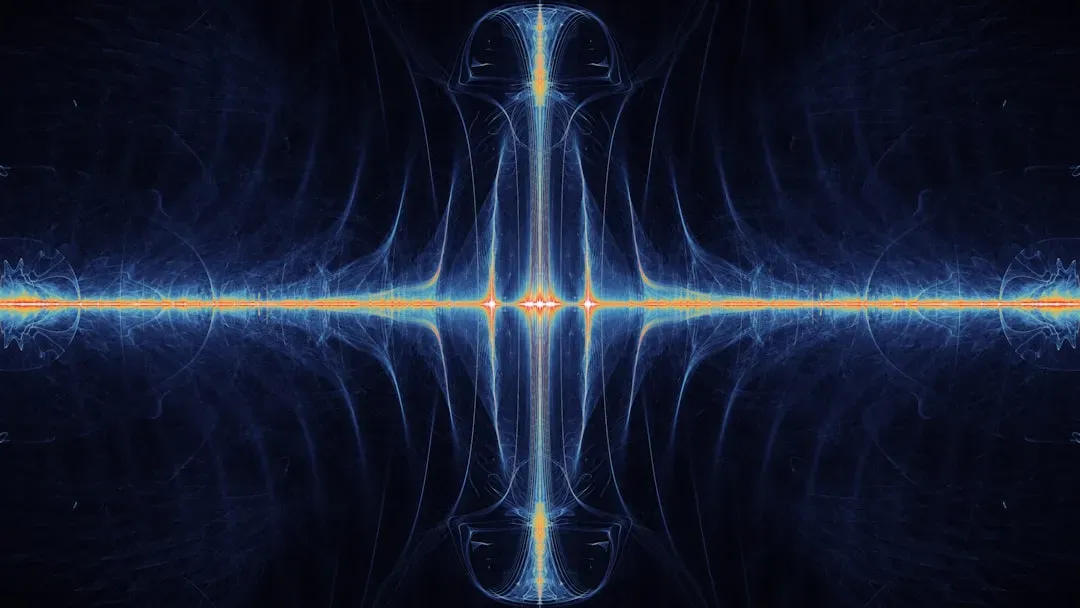
At everyday scales, matter feels solid and stable: a chair is a chair, a rock is a rock. Dive deep enough, though, and the universe stops looking like a collection of little billiard balls and starts looking more like a set of invisible, humming fields. In modern physics, every particle is really a ripple in an underlying field spread through all of space. An electron isn’t a tiny marble; it’s a vibration in the electron field. Light is a ripple in the electromagnetic field. You’re essentially an intricate orchestra of overlapping waves.
These quantum fields are never perfectly still. Even what we casually call “empty space” teems with fleeting fluctuations that can briefly bring pairs of particles into existence and then erase them again. The weirdness shows up in real experiments: tiny forces between metal plates that shouldn’t be there, particles tunneling through barriers they have no classical right to cross. The familiar world is like the calm surface of a lake, but just below is a restless, foaming layer of activity that quietly shapes the behavior of everything you touch.
Electromagnetism: The Hidden Glue of Everyday Life
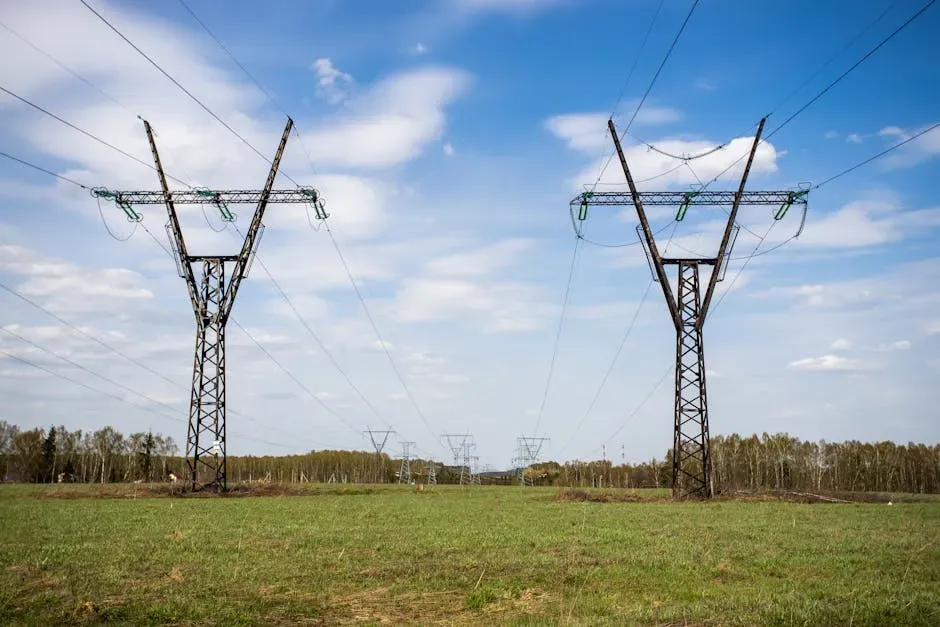
Most of the forces you actually feel day to day are electromagnetic, even if you just call them “touch” or “heat.” When you press your hand against a table, the reason it doesn’t pass through isn’t because the atoms literally collide like rocks; it’s because the electric fields of your atoms repel the electric fields of the table’s atoms. Your sense of solidity is really a dance of charges pushing against each other. That warmth from the sun on your skin is just electromagnetic radiation – light – dumping energy into the molecules in your body.
This same invisible force is what keeps electrons bound to atoms, holds atoms together in molecules, shapes chemical reactions, and lets nerves fire signals in your brain. Almost everything we associate with technology – radios, smartphones, Wi‑Fi, power grids – is us learning to harness and shape electromagnetic fields. It’s bizarre to realize that your thoughts, your memories, and the feeling of a loved one’s hand in yours all rely on the same fundamental interaction that makes a fridge magnet stick to a door.
Information, Patterns, and the Forces of the Mind

Not every unseen force is a physical field humming through space; some live in the spaces between people. You can’t weigh a belief, but it can move millions. Information – words, images, stories, algorithms – acts like a subtle gravity in human societies, pulling attention, shaping choices, and nudging behavior. A rumor can cross a city faster than a car, and a well-timed piece of data can change the course of an election or a market in minutes.
On a smaller scale, emotions and habits work as internal fields that bend the trajectory of your life. A quiet anxiety can stop you from taking a risk; a deeply held value can hold you firm under pressure. These aren’t “forces” in the physics sense, but they have real, measurable consequences: stress hormones flooding your bloodstream, sleep patterns disrupted, entire life paths altered. In a world saturated with digital signals and constant notifications, the invisible pushes and pulls of information might be the most powerful unseen forces you encounter every single day.
Emergent Order: When Many Small Interactions Create Something Bigger

Sometimes, no single force is surprising on its own, but the way countless tiny interactions combine produces something that feels almost magical. Flocks of birds wheel through the sky in smooth, coordinated patterns even though each bird is just following simple rules: keep close, don’t crash, match your neighbors. Ant colonies build complex nests and optimize foraging paths without any individual ant understanding the big picture. This phenomenon is called emergence: large-scale order arising from local rules.
You can see similar patterns in traffic flows, social networks, financial markets, and even inside your own brain. A single neuron is basically a tiny, twitchy device, but billions together give rise to consciousness, creativity, and that private voice in your head. In that sense, you yourself are an emergent force: a pattern of activity shaped by genetics, environment, chance, and choice, exerting real influence on the world. The universe is full of these layered systems where the whole becomes something new, something you could never fully predict just by staring at the parts.
Conclusion: Living Inside an Invisible Machine

From the slow, relentless bend of gravity to the jittery energy of quantum fields, from dark matter scaffolding galaxies to unseen currents of emotion and information in human lives, reality is crowded with forces you never directly see. What looks like solid stability is, on closer inspection, a complex negotiation between countless hidden influences constantly nudging, pulling, and shaping everything. The visible universe – stars, cities, your own hands – is just the tip of a colossal iceberg of invisible structure and motion.
You don’t need a telescope or a particle accelerator to feel this; simply noticing how much of your life is guided by things you can’t touch or see is enough to shift your perspective. The more we uncover about these unseen forces, the less the universe feels like a static backdrop and the more it feels like a living, evolving process that we’re part of, not separate from. If so much is happening behind the scenes already, what else might still be hidden in the spaces we haven’t learned to look at yet?