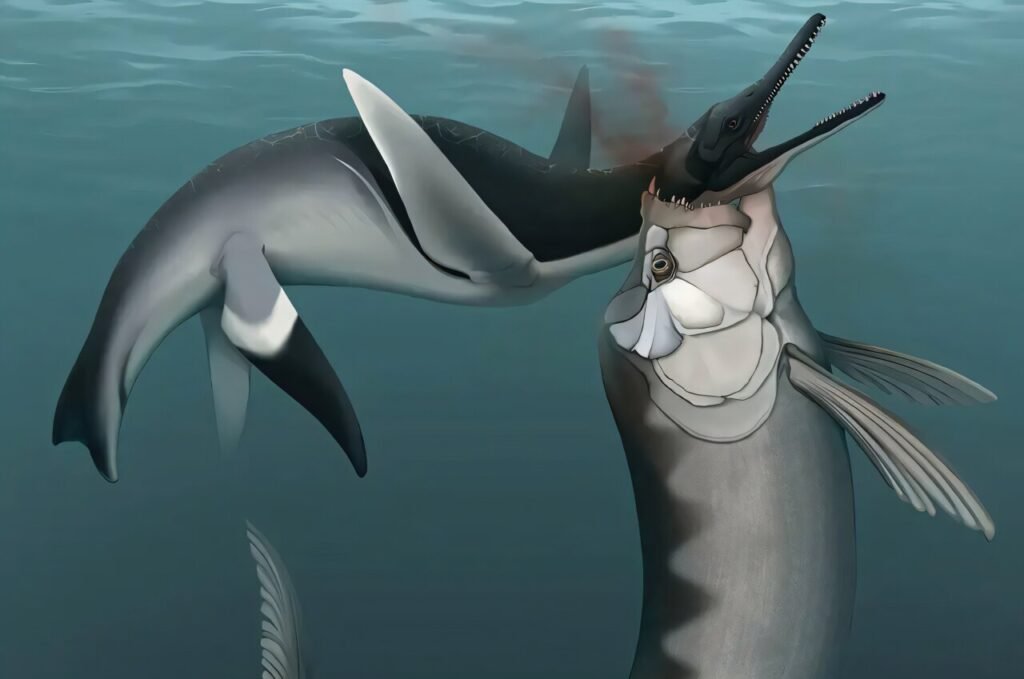
Rare Direct Evidence of Ancient Predator Attacks (Image Credits: University of Tennessee)
Long before humans walked the Earth, the region now known as Alabama lay beneath a vast inland ocean filled with enormous predators. During the Cretaceous period, marine reptiles and giant fish ruled these waters, competing for food in ecosystems as dynamic and dangerous as any modern ocean.
Now, a remarkable fossil discovery has provided rare direct evidence of that prehistoric struggle. Scientists studying a marine reptile fossil found a massive tooth embedded in the animal’s neck vertebra—clear proof of a violent encounter between two apex predators that lived roughly 80 million years ago. The finding offers an unusually vivid glimpse into the brutal food webs of ancient seas.
A Fossil Hiding a Violent Secret
The discovery began not in a remote excavation site but inside a museum drawer. Researchers examining fossil collections at the Field Museum of Natural History noticed something unusual in the skeleton of a marine reptile. The specimen belonged to Polycotylus, a long-necked predator that lived in the ancient seas covering North America.
When scientists inspected one of its neck vertebrae more closely, they found a large tooth lodged deep inside the bone—an unmistakable sign that the animal had been attacked. The fossil itself came from the Mooreville Chalk formation in Alabama, sediments deposited in the prehistoric Western Interior Seaway, a massive inland ocean that once split North America in two.
Identifying the Mysterious Attacker
At first, the identity of the attacking predator was unclear. The tooth had been broken during the violent strike and later compressed by millions of years of burial and fossilization. To solve the mystery, researchers used advanced imaging techniques such as CT scanning to examine the tooth embedded in the vertebra.
These scans revealed key features of the tooth’s structure and shape. The analysis showed that the tooth most likely belonged to Xiphactinus, a massive predatory fish that roamed the Cretaceous seas and could grow over 5 meters long.
A Battle Between Two Ocean Titans
The fossil evidence suggests that the encounter between these predators was anything but gentle. The bite was powerful enough to drive the fish’s tooth deep into the reptile’s neck bone. Scientists believe the attack may have occurred during a hunting attempt. Xiphactinus was a formidable predator known for swallowing prey whole, including other large fish.
However, the marine reptile Polycotylus was itself an apex predator with strong jaws and sharp teeth. This means the confrontation may have been a clash between two hunters competing in the same ecosystem.
Life in the Cretaceous Western Interior Seaway
During the late Cretaceous, much of central North America was submerged beneath the Western Interior Seaway, a warm, shallow ocean teeming with life. This environment hosted an extraordinary array of marine organisms—giant fish, sharks, marine reptiles, and ammonites. Fossils from these waters show that the ecosystem was complex and densely populated.
Predators such as Polycotylus hunted fish and smaller marine animals, while massive fish like Xiphactinus prowled the same waters searching for large prey. The newly discovered fossil suggests that even top predators were not safe from attack.
Rare Direct Evidence of Ancient Predator Attacks
Fossils that record predator-prey interactions are surprisingly rare. Most fossilized bones show only the remains of animals after death, without clear clues about how they lived—or died. This discovery is unusual because it captures a moment of direct violence preserved in stone.
The tooth embedded in the vertebra acts almost like a frozen snapshot of an attack that happened tens of millions of years ago. Such fossils provide valuable insight into ancient behavior, revealing how prehistoric predators interacted and competed for survival.
The Role of Museum Collections in New Discoveries
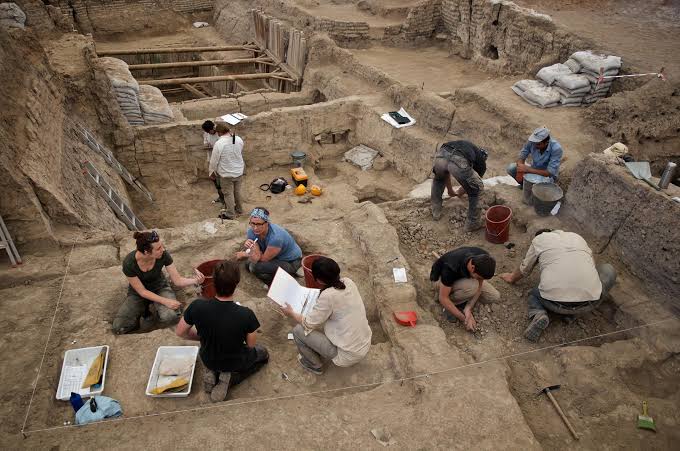
Interestingly, the fossil was not newly excavated. It had already been collected and stored in museum collections for years before its hidden detail was recognized. This highlights the enormous scientific value of museum archives.
Specimens gathered decades ago can still yield groundbreaking discoveries when examined with modern technology. In many cases, breakthroughs come not from finding new fossils, but from looking at existing ones in new ways.
What This Discovery Tells Us About Prehistoric Oceans
The fossilized bite offers more than just a dramatic story—it deepens scientists’ understanding of ancient marine ecosystems. Predator interactions help researchers reconstruct food webs, population dynamics, and ecological relationships that shaped prehistoric oceans.
By studying evidence like this, paleontologists can better understand how large predators coexisted and competed in ancient environments.
Conclusion: A Fossilized Snapshot of Prehistoric Violence
The tooth lodged in the neck of a marine reptile tells a story that unfolded nearly 80 million years ago—a story of speed, power, and survival in the ancient seas of North America. What makes this discovery especially fascinating is its immediacy. Instead of abstract bones and fragments, we see the aftermath of a specific moment: a predator lunging, teeth striking bone, and a violent encounter preserved for millions of years.
To me, discoveries like this remind us that prehistoric worlds were not quiet or static—they were dynamic ecosystems filled with risk, competition, and constant struggle. Each fossilized wound, bite mark, or embedded tooth is more than scientific data. It is a frozen chapter of life in Earth’s deep past, waiting patiently for someone to notice it.