
Imagine waking up tomorrow and realizing that your future has already happened, your past is still unfolding, and your “now” is just one slice of something much bigger. That sounds like science fiction, but it’s shockingly close to how many physicists think time might actually work. The comforting story we tell ourselves – that time moves like an arrow from yesterday to today to tomorrow – may not be the full truth.
We live as if time is a straight road we walk down, one step at a time. But what if time is more like a landscape, already there, and we’re just driving through it, seeing only what’s out the windshield? This idea doesn’t just bend your mind; it shakes how we think about choice, destiny, memory, even what it means to be alive right now.
The Strange Possibility That All Moments Already Exist
The most unsettling idea in modern physics is that the past, present, and future may all exist at once, like pages in a book that’s already been written. In this view, your entire life is laid out in the universe’s “spacetime,” from your first breath to your last, even if you’re only aware of one page at a time. This perspective is sometimes called the “block universe,” and it comes straight out of how Einstein’s relativity treats time as just another dimension, similar to space.
If that’s true, then the “flow” of time – the sense that moments are constantly appearing and then vanishing – might just be a feature of consciousness, not of reality itself. It would mean that asking where the future is now is a bit like asking where the other side of the Earth is when you’re standing still; it’s there, just not where you are. I remember the first time I came across this idea in a physics book as a teenager; it felt less like a theory and more like being told my entire life might be sitting on a shelf somewhere, complete from start to finish.
Einstein’s Relativity: When “Now” Stops Being Universal
Relativity theory delivers the first big blow to our everyday sense of time by quietly stating that there is no single, universal “now” for everyone. Two people moving differently through the universe can disagree about whether two events happened at the same time, and both of them can be right in their own frame of reference. Time becomes elastic, stretching and squashing depending on speed and gravity, more like dough than like a ruler.
Experiments have backed this up repeatedly: clocks flown on airplanes, satellites in orbit, and particles in accelerators all show that time doesn’t tick at a single, absolute rate. Your head ages ever so slightly faster than your feet because it’s farther from the center of Earth’s gravity; it’s a tiny difference, but it’s real. Once you accept that time can diverge like this, the idea of a rigid, global timeline starts to crumble, and with it, the comforting illusion that we all share one single cosmic present.
Is Time Just Another Dimension Like Space?

Physicists often describe reality as a four-dimensional fabric called spacetime, where time is woven together with the three dimensions of space. In that picture, you don’t move through time the way you think you do; instead, your life is a long, continuous path stretching through this four-dimensional landscape. You are not a dot that appears and disappears – you’re a long, wiggly line, and what you call “now” is just the point your mind is currently focused on along that line.
Thinking of time like this makes it feel less like a conveyor belt and more like a map. All the locations on a map exist at once, whether or not you’re standing in them, and you can’t say the town you haven’t visited yet is unreal. This doesn’t make everyday decisions meaningless, but it does make them feel different; you’re not inventing a future out of nothing, you’re uncovering a part of the map that was already there, waiting for you.
Quantum Weirdness: Does the Future Influence the Past?
Quantum physics complicates things further by suggesting that what we call “events” might not be as straightforward as we think. In some experiments, the way we choose to measure a particle in the present seems to affect how that particle behaved in the past, at least according to some interpretations. It’s as if the universe decides what “actually happened” only when we look, and that decision can reach backward in time to settle the score.
There are theoretical models in which information doesn’t just travel from past to future but loops through spacetime in more subtle ways. While there’s no solid evidence that we can send clear signals to our past selves, the mere fact that mainstream physics allows strange correlations across time is enough to make the idea of a simple, one-way timeline feel naive. When I first tried to visualize this, I kept imagining dropping a pebble into a pond and seeing ripples move both outward and backward, reshaping where the stone seemed to have fallen in the first place.
If Time Isn’t Linear, What Happens to Free Will?
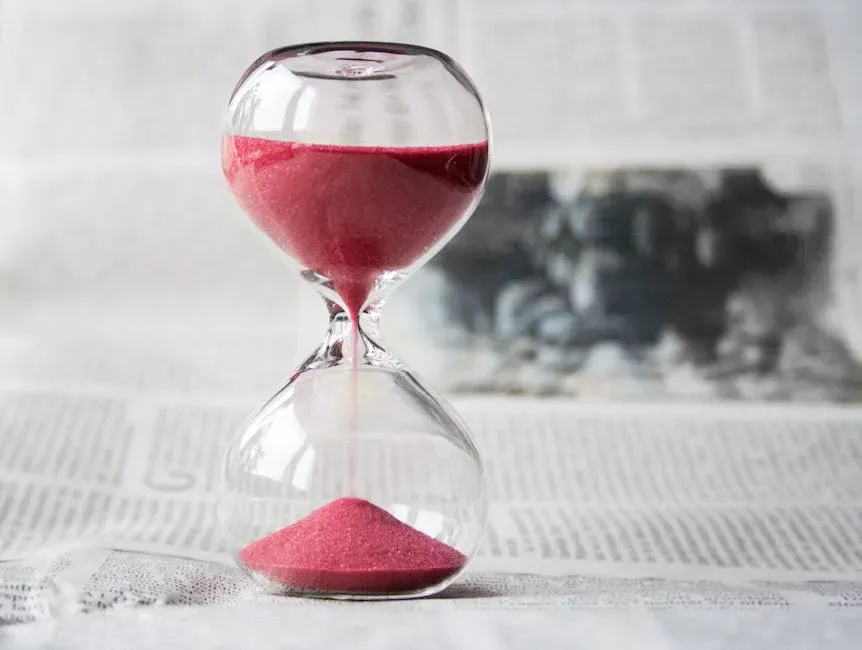
Once you entertain the possibility that your future already exists, it’s hard not to feel a twinge of panic about free will. If every one of your choices is already “there” in the block universe, are you really choosing, or are you just acting out a script that’s already been written? That can feel suffocating, like realizing you’re a character in a novel who thinks they’re improvising the dialogue.
But there’s another way to look at it: your choices might still be real and meaningful, even if they’re already part of the larger structure of spacetime. From inside your own experience, you don’t see the whole block universe; you only see the branching moment in front of you, with uncertainty and possibility stretching out in every direction. It’s a bit like reading a book you haven’t finished yet: the ending is already printed, but your reactions, feelings, and decisions as you move through each page are still vivid, surprising, and deeply your own.
Time, Memory, and Why We Only Remember the Past
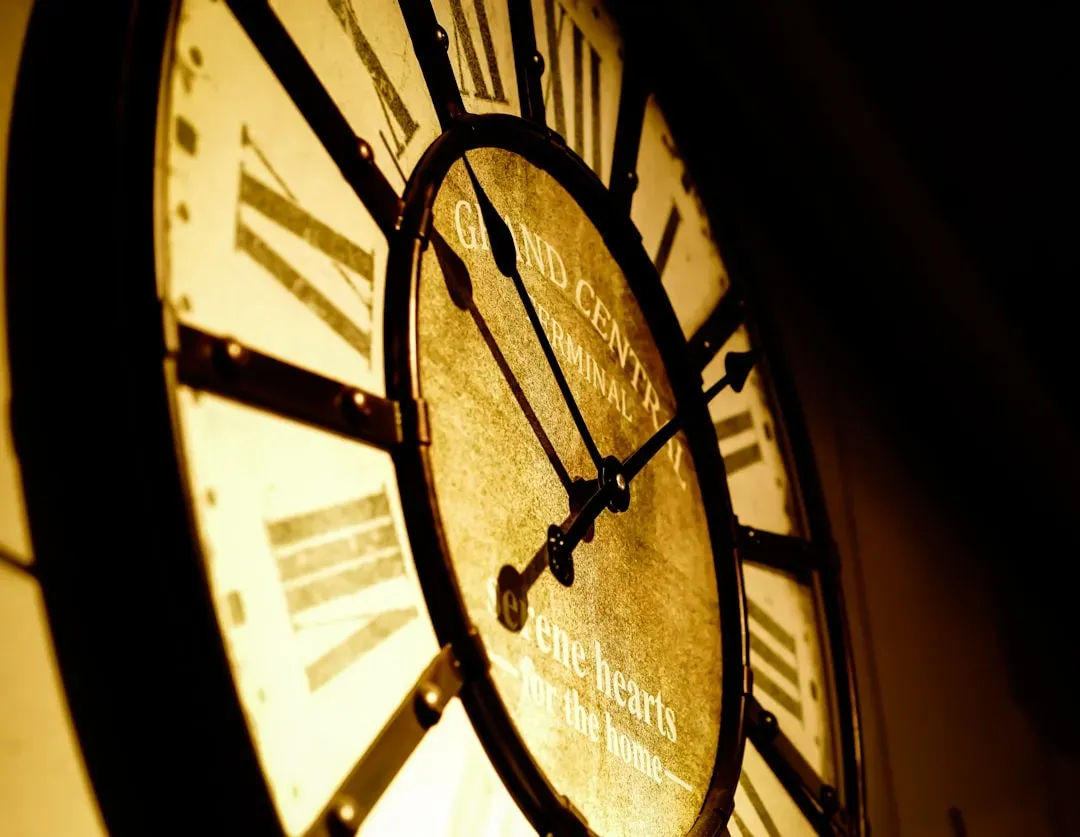
A huge part of why time feels linear is that we remember the past but not the future. Our brains store records of what has happened, not of what will happen, so we build a story of ourselves that runs in one direction. Physics, interestingly, doesn’t care much about this; most fundamental laws work just as well if you run them backward, like rewinding a movie and watching broken glass leap back into a window.
The arrow of time we actually experience seems tied to things like increasing disorder and entropy: eggs scramble but don’t un-scramble, ice melts but doesn’t un-melt on its own. Our memories and our sense of cause and effect are built on that one-way growth of disorder. If time isn’t truly linear at a deep level, then our sense of a one-way arrow could be less about reality itself and more about how brains like ours keep track of change, like a camera that can only record in one direction.
How a Non-Linear Time Changes the Way We Live

Thinking of time as non-linear doesn’t just twist your brain for fun; it can quietly reshape how you live your life. If every moment of your life is part of a larger structure, then each one might matter more, not less, because it’s permanently etched into the fabric of spacetime. Regret starts to look different too: you can’t edit the past, but you can understand it as one chapter of a fixed, larger story that still contains pages you haven’t yet consciously experienced.
On a more personal level, this view of time can make the present feel strangely sacred. If now is just one slice of a vast, already-existing whole, then this particular slice – this breath, this conversation, this quiet second – is something you only get to inhabit once from the inside. There’s a calm kind of awe in that idea, like standing at the edge of a canyon and realizing it was carved over ages you’ll never see, yet you’re here, at this exact moment in that timeline, fully awake to it.
Living Inside a Mystery We Can’t Step Outside Of

If time isn’t linear, then we’re not just walking through a simple corridor from birth to death; we’re embedded in a structure we can’t fully see, like ants tracing a path across a vast, folded sheet. Physics hints that our everyday sense of before and after might be a local illusion crafted by our brains, not a fundamental rule of the universe. The deeper we look, the more reality starts to feel less like a clock and more like a tapestry, where every thread is already woven, yet still feels in motion from where we stand.
We may never get to step outside time to look at it from the outside, the way we might wish. But even from inside, we can question, imagine, and explore, stretching our sense of what it means to exist in this strange, layered universe. Perhaps the real secret isn’t whether time is linear but how we choose to live, knowing that our small slice of it is both fleeting and, in some deep sense, forever. What does time feel like to you, now that you’ve looked at it this way?