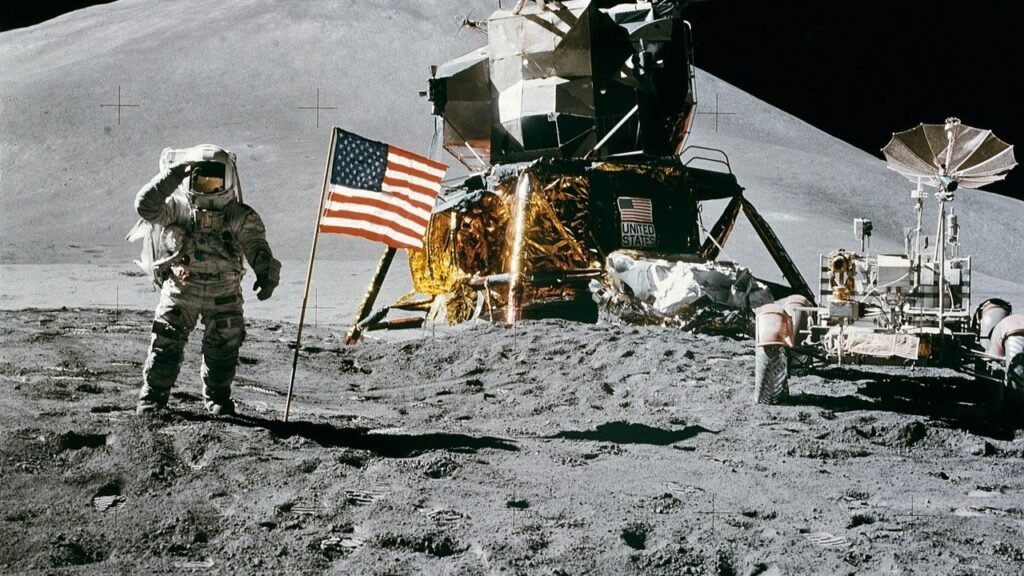
Space exploration has always carried a romantic appeal. The moon, glowing softly above us every night, feels almost inviting. But honestly, the closer scientists look, the more they realize it’s anything but a gentle destination.
New research is revealing just how unforgiving the lunar surface truly is, not just in temperature or radiation, but in the sheer physical brutality of the terrain at a microscopic level. The details are striking, and some of them are genuinely alarming for the future of human exploration. Let’s dive in.
A Surface That Cuts Like Glass
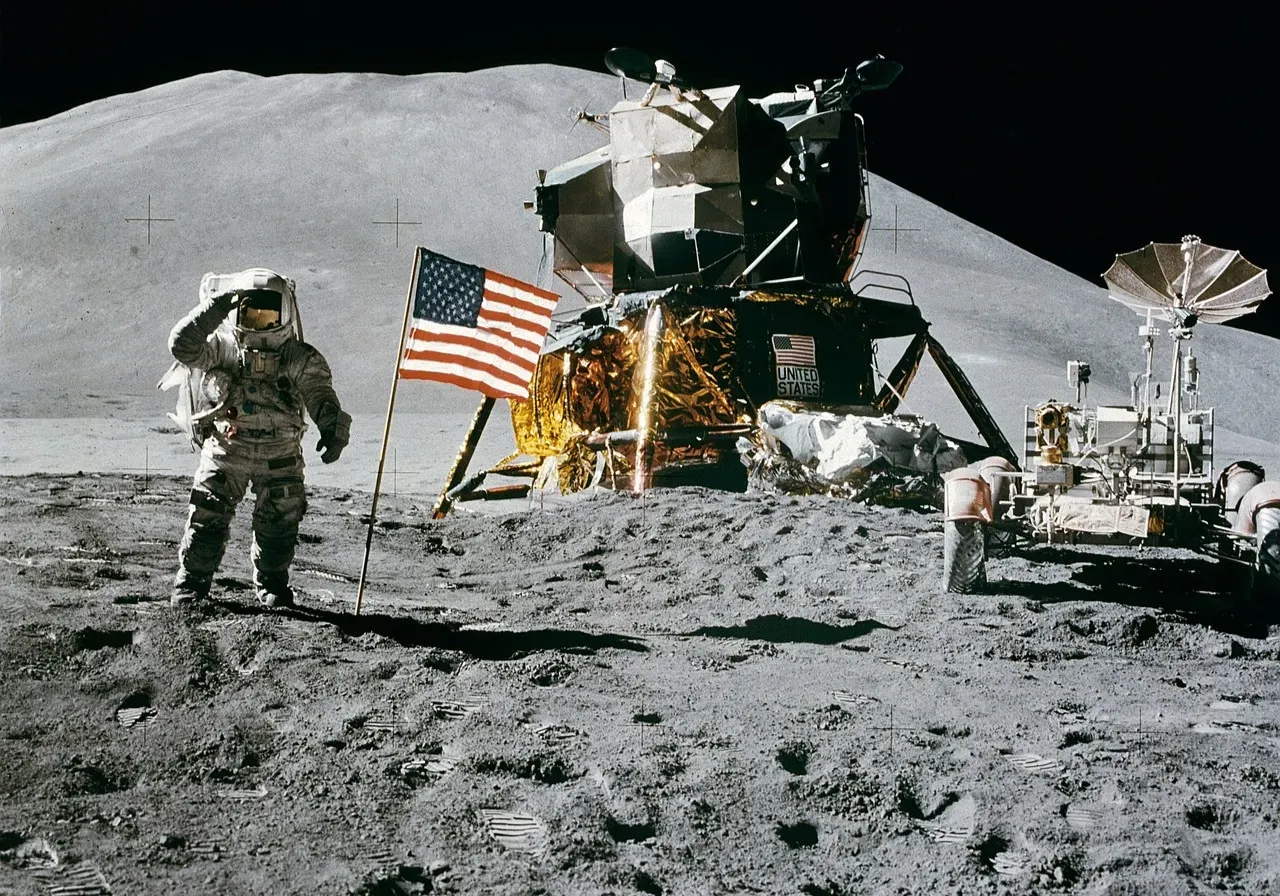
Here’s the thing most people don’t realize: the moon has no atmosphere, no wind, no rain, and no geological activity to smooth things out. On Earth, rocks tumble in rivers, edges wear down, and sand grains become round over millennia. The moon has none of that.
Every particle on the lunar surface is frozen in time, jagged and razor-sharp, exactly as it was created during meteorite impacts billions of years ago. Scientists describe lunar regolith, the layer of loose soil and rock covering the moon, as an extraordinarily abrasive material unlike anything we deal with on Earth.
Think of it like walking across a planet-sized sheet of microscopic broken glass. That’s not an exaggeration. It’s the reality that future astronauts will need to navigate.
Micrometeorite Bombardment Creates a Relentless Grinding Process
The moon is under constant bombardment. Even right now, tiny micrometeorites are striking its surface at incredible speeds, pulverizing rock into finer and finer particles. This process, called “gardening,” continuously churns and refreshes the top layer of the surface.
What’s remarkable is that this same process that breaks things down never rounds them off. The particles get smaller, yes, but they stay sharp. Researchers studying lunar samples brought back from Apollo missions confirmed that regolith grains have complex, jagged geometries that cause serious mechanical abrasion on contact.
This is a problem that compounds over time. The longer equipment or suits are exposed to this material, the more damage accumulates. It’s a slow, invisible degradation that mission planners cannot afford to ignore.
Why Lunar Dust Is One of the Biggest Engineering Challenges of Our Time
Lunar dust isn’t just an inconvenience, it is arguably one of the greatest technical obstacles standing between humanity and a permanent presence on the moon. Apollo astronauts reported dust sticking to everything: visors, suits, equipment, even getting inside the lunar module.
The dust is electrostatically charged, meaning it clings to surfaces with almost magnetic stubbornness. It infiltrated seals, scratched optical instruments, and degraded the performance of solar panels during the Apollo era. Now imagine that problem scaled up to a long-duration lunar base.
I think people underestimate this. We tend to focus on the dramatic risks, like radiation or a meteorite strike, while overlooking the slow, persistent enemy that is dust. Yet dust may ultimately determine how long humans can actually function on the moon.
Spacesuit Materials Are Being Pushed to Their Absolute Limits
Current spacesuit designs, even advanced next-generation models being developed for Artemis missions, are facing intense scrutiny. The abrasive nature of lunar regolith means that suit materials need to withstand sustained physical punishment that no lab on Earth can perfectly replicate.
Researchers are working on new fabric composites and surface coatings designed to resist the cutting and embedding of sharp particles. The challenge is that these materials also need to remain flexible enough for astronauts to move freely, which creates a genuine engineering tension. Tougher often means stiffer, and stiffer means harder to work in.
The joints of suits, the areas around knees, elbows, and gloves, are especially vulnerable. These high-movement zones flex repeatedly during a single moonwalk, and every flex is an opportunity for microscopic abrasion to deepen.
Equipment and Rovers Face Serious Long-Term Wear Concerns
It’s not just suits. Every mechanical system intended to operate on the moon faces the same threat. Wheels, gears, bearings, hinges, solar panels, cameras, and cables are all susceptible to degradation caused by abrasive lunar particles embedding themselves into moving parts.
The Apollo lunar rovers were only designed for short missions, a few days at most. They held up well enough. But future missions envision rovers operating continuously for weeks, months, or even years as part of a sustained lunar program. Under those conditions, the wear profile changes dramatically.
Scientists are modeling how long various materials can function before failure under realistic lunar conditions. Roughly speaking, many standard engineering materials fall significantly short of what a long-duration mission would require. That gap is now a central research priority.
The Moon’s South Pole Adds Even More Complexity
Most planned crewed lunar missions, including NASA’s Artemis program, are targeting the south pole region of the moon. This area is scientifically exciting because it contains permanently shadowed craters likely harboring water ice. However, it also presents unique surface hazards.
The terrain near the south pole is some of the most rugged on the entire moon. Steep crater walls, permanently dark regions, and highly variable illumination conditions make navigation extraordinarily difficult. The regolith in this region may also have distinct properties compared to the equatorial zones sampled during Apollo.
Let’s be real: we are planning crewed missions to one of the most hostile and least understood regions of a world we’ve only visited a handful of times. It’s bold, it’s exciting, and it requires an almost obsessive attention to the details of surface hazards that research teams are now digging into.
Preparing Humans for a Surface That Doesn’t Forgive Mistakes
Understanding the physical brutality of the lunar surface isn’t just an academic exercise. It directly informs how astronauts will be trained, how long surface excursions will last, and how mission timelines are structured to account for equipment wear.
Researchers and engineers are developing better simulation environments on Earth to mimic the properties of lunar regolith, including its sharpness, particle size distribution, and electrostatic behavior. These simulants allow suits, tools, and rovers to be tested under more realistic conditions before anything reaches the actual moon.
It’s hard to say for sure whether all of these precautions will be enough until humans are actually back on the surface. But the body of research building up right now represents the most serious and detailed preparation in the history of lunar science. The jagged moon is teaching us its secrets before we arrive, and that knowledge could make all the difference.
Conclusion: Respect the Moon Before You Land On It
The moon may be our closest neighbor in space, but closeness doesn’t mean familiarity. Decades of research, culminating in detailed studies now being conducted in preparation for Artemis and beyond, paint a picture of a world that is quietly, relentlessly hostile to human technology and biology.
What strikes me most is the contrast: the moon looks serene and peaceful from here, yet at the scale of a dust particle, it’s essentially a world made of broken glass. That image should stay with every engineer, every mission planner, and every astronaut preparing to step onto its surface.
The science is advancing fast, the engineering solutions are improving, and humanity is closer than ever to returning to the moon in a meaningful, sustained way. The question isn’t whether we’ll go back. It’s whether we’ve truly respected what’s waiting for us when we do. What do you think, are we prepared enough? Drop your thoughts in the comments.