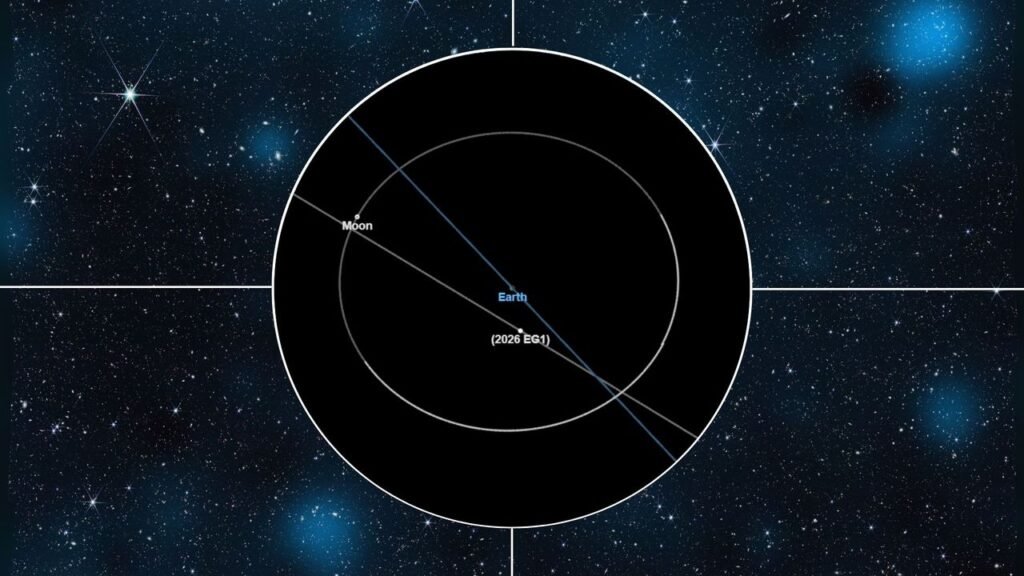
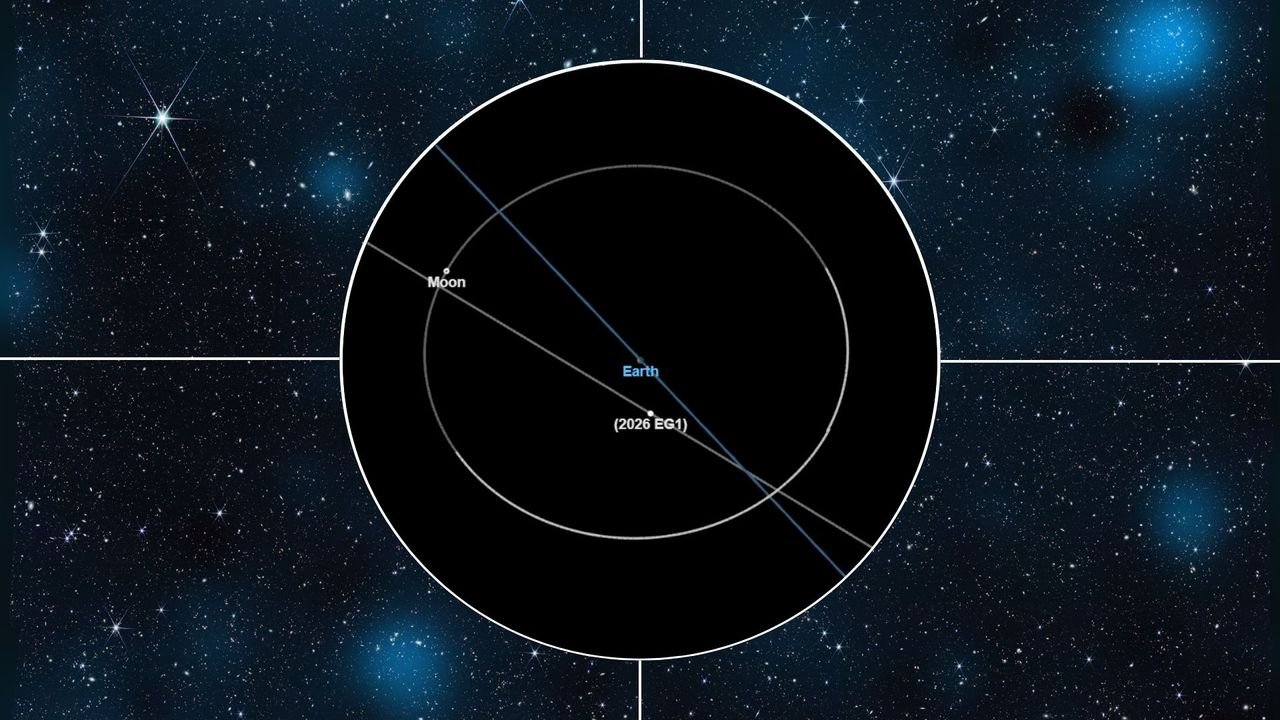
Astronomers Spot New Threat in Record Time (Image Credits: Cdn.mos.cms.futurecdn.net)
Asteroid 2026 EG1, roughly the size of a city bus, hurtles toward a safe close approach with Earth late on March 12, just days after astronomers first spotted it.[1]
Astronomers Spot New Threat in Record Time
Experts detected 2026 EG1 on March 8, providing only four days of advance warning before its Earth encounter. This rapid identification underscores the effectiveness of global sky surveys that scan for near-Earth objects nightly. NASA and its partners track more than 41,000 such asteroids, refining orbits with each new observation.[1]
The asteroid follows a 655-day elliptical path around the sun, swinging from inside Earth’s orbit out past Mars. Classified as an Apollo-type near-Earth object, it poses no collision risk during this pass. Initial data confirmed its trajectory early, allowing precise predictions.[2]
Details of the Swift and Silent Pass
2026 EG1 reaches its nearest point to Earth at 11:27 p.m. EDT on March 12, or 3:27 a.m. UT on March 13. At that moment, it will stand about 198,000 miles away – roughly 0.83 times the average Earth-Moon distance.[3][1] Traveling at 21,513 miles per hour relative to our planet, the space rock will zip silently beneath Antarctica after a more distant lunar flyby earlier that day.[2]
This distance keeps it well clear of satellites and spacecraft. No impact concerns exist, as its path stays far from our atmosphere. The Jet Propulsion Laboratory’s Asteroid Watch dashboard lists it among upcoming approaches, confirming the safe margin.[3]
Size, Speed, and Orbital Insights
Estimates place 2026 EG1 at 32 to 72 feet across, comparable to a standard city bus. Its absolute magnitude of 27.2 suggests a diameter between 10 and 22 meters, depending on surface reflectivity.[4][1] Relative velocity peaks at 9.62 kilometers per second during the flyby.
| Key Parameter | Value |
|---|---|
| Closest Distance | 198,000 miles (317,791 km)[1] |
| Speed | 21,513 mph (9.62 km/s)[2] |
| Size Estimate | 32-72 feet (10-22 m)[1] |
Such flybys offer valuable data for refining detection systems. The asteroid’s next notable encounter comes in 2186, when it passes Mars at over 7 million miles.
Why These Events Matter for Planetary Defense
Flybys like this one test the readiness of observation networks. NASA predicts no major impacts in the next century, but vigilance remains essential. Missions and simulations build defenses against larger threats.
- Near-Earth objects like 2026 EG1 number in the tens of thousands.
- Surveys detect most bus-sized rocks before close passes.
- Global collaboration ensures orbits update in real time.
- Rapid discoveries prevent surprises from smaller asteroids.
- Future tech will spot even tinier objects sooner.
Key Takeaways
- 2026 EG1 presents no danger during its 0.83 lunar-distance flyby.
- Discovery-to-flyby timeline of four days shows monitoring prowess.
- Safe passes refine models for true threats.
This event reminds us of our dynamic cosmic neighborhood, where routine monitoring turns potential unknowns into tracked visitors. What do you think about these close calls? Tell us in the comments.