Imagine flying over Earth at night, looking down at the glowing web of cities and highways. Now stretch that picture out across millions of light‑years: the universe has its own version of night lights, except the “cities” are galaxies, star clusters, and mysterious structures we’re only just beginning to notice. Astronomers used to think of galaxies as lonely islands in an empty sea, but over the past few decades, that picture has been quietly shattered.
We now know that the cosmos is layered, clumped, and woven together in ways that look eerily like human maps of trade routes and city grids. These aren’t just pretty patterns; they’re clues about how everything formed, how it moves, and maybe even what the universe is ultimately made of. Once you start seeing the universe as a landscape of hidden cities and cosmic suburbs, it’s very hard to unsee it.
The Milky Way: Our Home City in the Cosmic Night

It’s easy to forget that the faint band of light across the night sky is actually our own city seen from the inside: the Milky Way galaxy. Our galaxy is a vast, disk‑shaped system with hundreds of billions of stars arranged in spiral arms, a cluttered central bulge, and a dark halo that we can’t see directly. If you picture a glowing pinwheel with a thick center and thin arms, you’re not far off from what telescopes and computer models tell us about our galactic home.
What feels almost shocking today is how much structure we’ve uncovered inside that pinwheel. Instead of a simple, smooth swirl, the Milky Way has bars of stars slicing through the center, clusters of stars orbiting like suburbs, and streams of stars stretching out like broken highways from past collisions with smaller galaxies. Our Sun doesn’t live in any flashy part of town; it quietly circles in an ordinary spiral arm, roughly two thirds of the way from the center, in a region sometimes compared to a calm residential neighborhood far from downtown chaos.
Star Clusters: The Neighborhoods Within a Galaxy

If a galaxy is a city, then star clusters are the neighborhoods, and they come in very different styles. Open clusters are like small, young suburbs at the edges of town: a few hundred to a few thousand stars loosely bound together, often still wrapped in leftover gas and dust. These clusters are scattered mostly through a galaxy’s disk and spiral arms, where new stars are still being born, and many eventually drift apart over time.
Globular clusters, on the other hand, are dense, ancient downtown districts hovering above and below the disk in a spherical halo around the galaxy. Each globular cluster can pack hundreds of thousands, even millions, of stars into a relatively tight ball, many of them nearly as old as the universe itself. When astronomers map where these globular clusters sit and how they move, they get a kind of 3D survey of the hidden matter and past mergers that shaped the galaxy, the way an archaeologist might map old city walls and buried streets.
Galactic Arms, Bars, and Bulges: The Urban Planning of the Cosmos

The spiral arms we see in pictures of galaxies are not solid objects, but more like traffic jams of stars and gas that rotate around the center. In these arms, gas clouds get squeezed, collapse, and light up with new blue stars, a bit like bright new developments along a busy highway. Between the arms, there are older, redder stars that quietly orbit, giving the whole disk a layered, living texture that changes over hundreds of millions of years.
Many disk galaxies, including the Milky Way, also host a central bar: a stretched‑out arrangement of stars that funnels gas from the outer regions toward the core. This bar feeds the central bulge and often the supermassive black hole at the center, powering bursts of star formation or even violent activity. The bulge itself can be boxy, peanut‑shaped, or more rounded, and its exact structure tells astronomers how the galaxy evolved, whether through slow internal reshuffling or past collisions with other galaxies. In that sense, the layout of arms, bars, and bulges is like reading the zoning map and building codes of a cosmic metropolis.
Satellite Galaxies and Stellar Streams: Cosmic Suburbs and Broken Highways
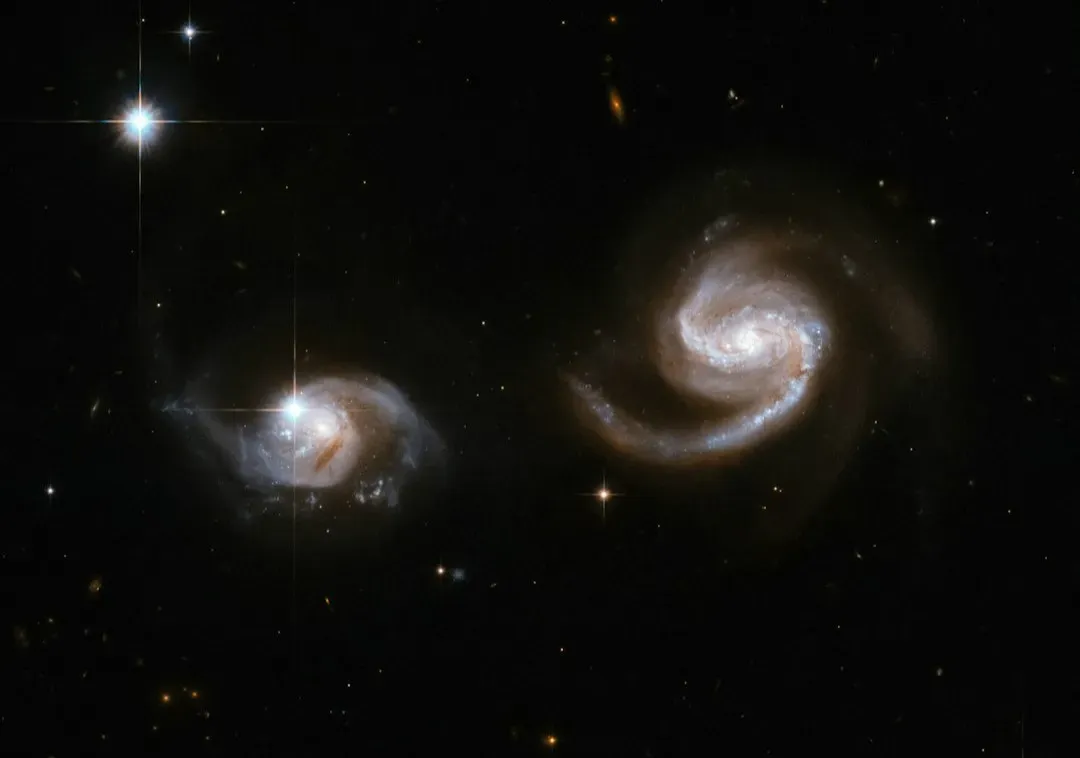
Big galaxies almost never live alone; they’re surrounded by swarms of smaller satellite galaxies, like dwarf companions orbiting a giant city. The Milky Way has dozens of these documented, including the Large and Small Magellanic Clouds, which are visible to the naked eye from the Southern Hemisphere. Many of these dwarfs are dim and fragile, their stars easily stripped away by the Milky Way’s gravity over billions of years.
When a dwarf galaxy gets torn apart, it leaves behind long, thin trails of stars called stellar streams that wrap around the host galaxy. These streams are like ghostly, broken highways marking where past suburbs used to be. Modern surveys have revealed more and more of these delicate structures, showing that the Milky Way has grown partly by eating its neighbors. By tracing the shape and motion of these streams, astronomers can map the invisible distribution of dark matter, much as wind can reveal the outline of a building even when the building itself is hidden in the dark.
Galaxy Groups and Clusters: The Greater Metro Areas of Space

On larger scales, galaxies themselves clump together into groups and clusters, forming the cosmic equivalent of metro regions. Our Milky Way, for example, is part of the Local Group, a small collection of more than fifty galaxies dominated by the Milky Way and the Andromeda galaxy. These galaxies orbit a shared center of mass, tugging on each other gravitationally in a slow dance that will eventually bring the Milky Way and Andromeda into a dramatic merger a few billion years from now.
Beyond groups lie galaxy clusters, enormous structures containing hundreds to thousands of galaxies bound together in a halo of dark matter and hot X‑ray‑emitting gas. These clusters are not quiet places; galaxies rush around at tremendous speeds, collide, strip gas from one another, and sometimes trigger wild bursts of star formation. When we observe these clusters, we also see signs of dark matter through gravitational lensing, where the cluster’s mass bends and magnifies the light of more distant objects. It’s like seeing a busy downtown skyline distorted in a curved pane of glass, and from those distortions, we can infer how much invisible mass is really there.
Filaments, Voids, and the Cosmic Web: The Universe’s Hidden Road Network
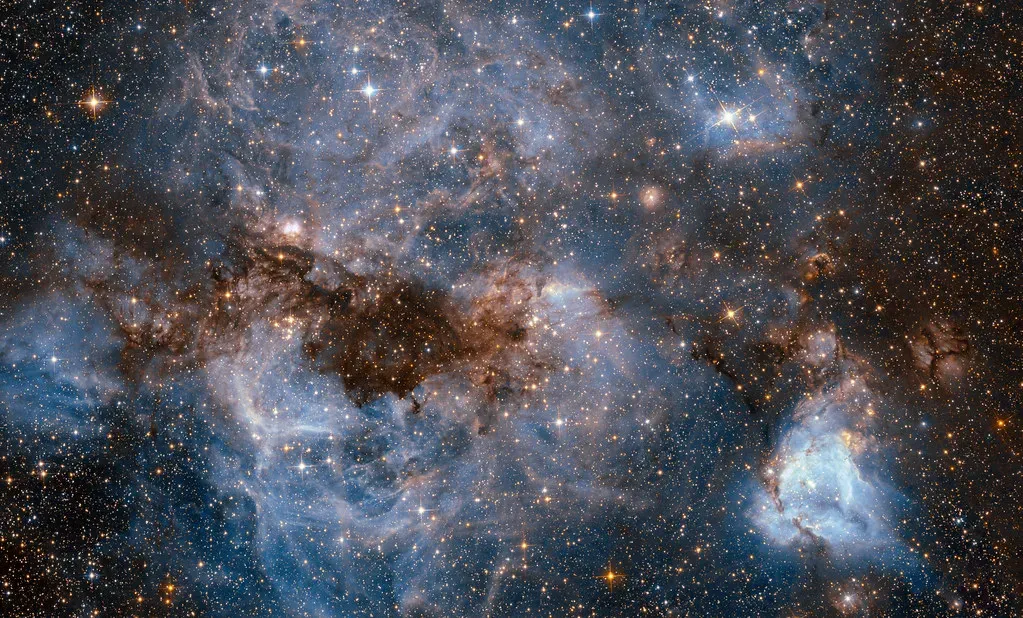
When astronomers mapped the positions of thousands, then millions of galaxies, they discovered something unexpected: galaxies are not scattered randomly but arranged in a vast, interconnected web. Long filaments of galaxies and clusters stretch across hundreds of millions of light‑years, meeting at dense nodes, while enormous empty regions called voids sit in between. The pattern looks uncannily like a 3D foam, with galaxies tracing out the thin walls and edges of invisible bubbles.
This cosmic web grew from tiny fluctuations in the early universe, amplified by gravity and driven largely by the pull of dark matter. Over time, matter flowed along these filaments, feeding galaxy clusters and shaping how galaxies formed and evolved. Today, when cosmologists simulate the universe on supercomputers, they generate structures that closely match the observed web, giving us one of the strongest tests of our models of dark matter and cosmic expansion. In a way, the web is the blueprint of the universe’s entire transportation and supply system, and galaxies are the bright cities lighting up its intersections.
Dark Matter Halos: The Invisible Foundations of Galactic Cities
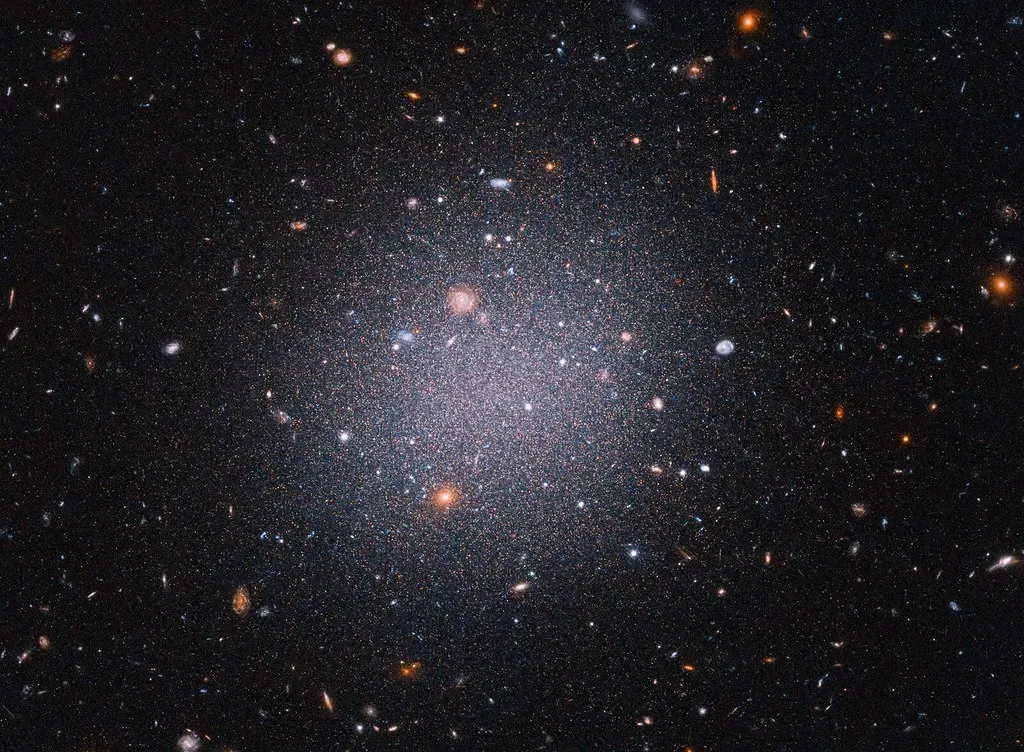
Almost everywhere we look, the visible parts of galaxies behave as if they are sitting inside much larger, invisible cocoons of mass called dark matter halos. When astronomers measure how fast stars and gas rotate around a galaxy, they find that the outer regions move too quickly to be held in place by visible matter alone. The most straightforward explanation is that there is a vast amount of unseen matter forming a kind of scaffolding in which galaxies are embedded, like cities built on a hidden continent of rock just beneath the ocean surface.
Dark matter halos do more than simply hold galaxies together; they seem to control where and when galaxies can form in the first place. In computer simulations, halos condense first, drawing in gas that eventually cools and forms stars, turning dark clumps into luminous galaxies. Larger halos host bigger galaxies or entire groups and clusters, while small halos may only manage to form a few dim stars or none at all. Even though we still don’t know what dark matter is made of, the way galaxies move, cluster, and merge strongly suggests that these unseen halos are the true foundations of cosmic cities, quietly shaping the architecture of the universe from the shadows.
A Universe Built Like a City, But Stranger
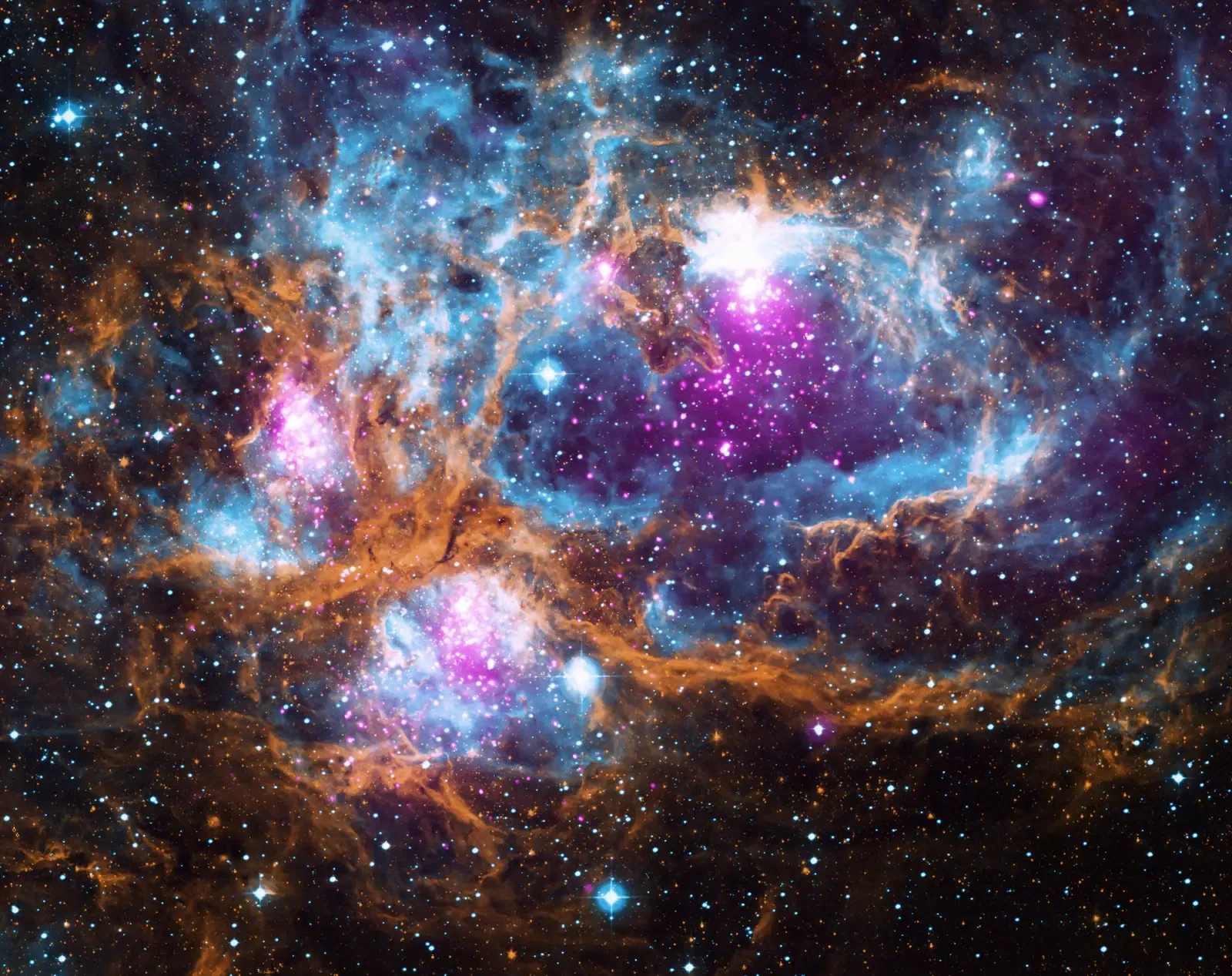
The more closely we look at the universe, the less it resembles an empty void and the more it starts to look like an immense, layered cityscape. From star clusters and spiral arms to galaxy groups, clusters, and the cosmic web itself, structures repeat and scale up in surprisingly familiar patterns. Our own Milky Way turns out to be just one bustling hub in a far larger network of galactic neighborhoods, highways, and forgotten ruins left behind by ancient collisions.
At the same time, the universe keeps reminding us that it plays by rules we still don’t fully understand, with dark matter halos and invisible forces silently guiding the growth of these cosmic cities. The hidden architecture of the cosmos is becoming clearer with every new telescope and survey, yet every fresh map also opens new questions about what we are really seeing. In the end, realizing that we live in just one district of an unimaginably vast, structured universe is both humbling and strangely comforting. Who would have guessed the cosmos was this crowded all along?