
You wake up every morning trusting one thing above almost everything else. Not gravity, not the laws of motion, not even the reliability of memory. You trust that time moves forward. Yesterday happened before today. Tomorrow hasn’t arrived yet. It feels obvious, almost embarrassingly simple.
Yet some of the sharpest minds in physics and philosophy are quietly, persistently, and with increasing urgency suggesting that this assumption may be wrong. Not a little wrong. Fundamentally, structurally, astonishingly wrong. The more you dig into what science actually says about time, the more unsettled you become. So let’s dive in.
The Illusion You’ve Been Living In: Time as a Human Construct
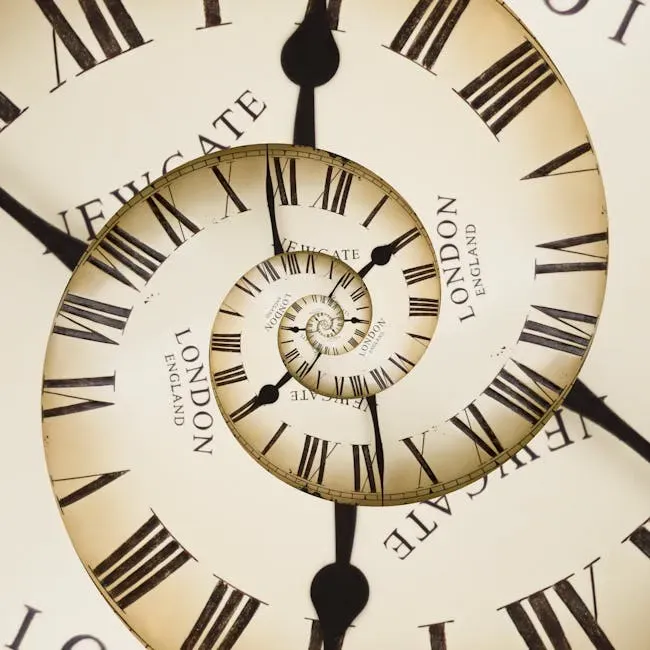
Here’s the thing that most physics textbooks don’t shout loudly enough: the laws of nature, at their deepest level, don’t actually care which direction time flows. The laws that underlie our most powerful theories are time-symmetric, meaning the physics they describe is the same regardless of whether the variable called “time” increases or decreases. Think about that for a moment. The universe, in its fundamental equations, sees no meaningful difference between forward and backward.
The present has a special status for us humans – our past seems to no longer exist, and our future is yet to come into existence. Yet according to how physicists and philosophers interpret Einstein’s theory of relativity, the present isn’t special at all. Your powerful, confident sense of “now” may be nothing more than a biological illusion your brain constructed to help you survive. Unsettling, right?
Einstein’s Spacetime and the Block Universe Theory
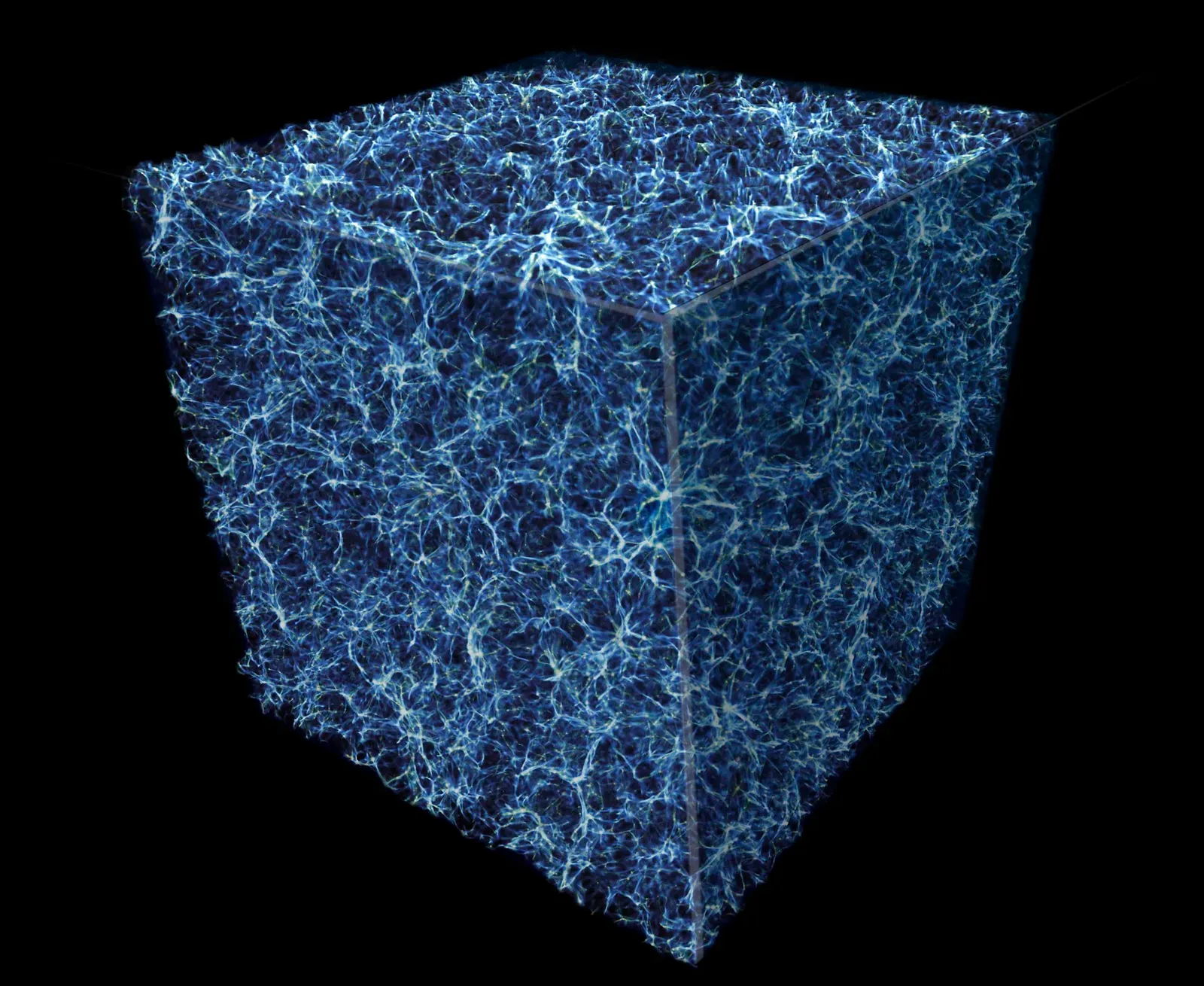
In his theories of special and general relativity in the early 20th century, Albert Einstein fundamentally changed how science views time and space. Time is relative: a clock ticks faster on a satellite in orbit than for one remaining on the ground. His most revolutionary idea was that time and space are not separate, distinct entities – they are simply the labels we give to the four dimensions of spacetime, the fabric of our universe.
The resulting timeless cosmos is sometimes called a “block universe” – a static block of space-time in which any flow of time, or passage through it, must presumably be a mental construct or other illusion. Honestly, this is where things get genuinely mind-bending. The past and the future are just as real as the present – they all coexist and you could, theoretically, travel to them. Your past self still exists somewhere in that four-dimensional block, fixed and permanent, just at different coordinates.
Quantum Physics and the Discovery of “Negative Time”
If the block universe makes you uncomfortable, wait until you hear what quantum physicists at the University of Toronto demonstrated recently. Researchers say they have demonstrated that “negative time” isn’t just a theoretical idea – it exists in a tangible, physical sense, deserving closer scrutiny. This is not science fiction. These are controlled, repeatable laboratory experiments involving photons and atom clouds.
The experiments, conducted in a cluttered basement laboratory bristling with wires and aluminum-wrapped devices, took over two years to optimize, and the lasers used had to be carefully calibrated to avoid distorting the results. The researchers emphasize that these perplexing results highlight a peculiar quirk of quantum mechanics rather than a radical shift in our understanding of time. It’s a subtle but profound distinction – and one that continues to spark fierce debate among physicists worldwide.
The Arrow of Time: Why Does It Only Point One Way?
You’ve never watched a shattered egg reassemble itself on the kitchen floor. You’ve never seen smoke pour back into a cigarette. The arrow of time expresses the fact that in the world about us, the past is distinctly different from the future. Milk spills but doesn’t unspill; eggs splatter but do not unsplatter; waves break but do not unbreak. This seems like common sense. The physics behind it, though, is far stranger.
Entropy is one of the few quantities in the physical sciences that requires a particular direction for time, sometimes called an arrow of time. As one goes “forward” in time, the second law of thermodynamics says, the entropy of an isolated system can increase, but not decrease. Thus, entropy measurement is a way of distinguishing the past from the future. The surprise is that this difference between past and future is nowhere to be found in the deep-down laws of physics. The arrow of time is, in a very real sense, an emergent property, not a fundamental one.
Time Crystals: When Time Breaks Its Own Rules

Let’s be real – “time crystals” sounds like something from a fantasy novel. Yet they are a genuine and increasingly active area of physics research. When countless particles interact in complex ways, they can spontaneously fall into a repeating rhythm instead of behaving chaotically. This phenomenon is known as a “time crystal.” It’s a phase of matter that repeats in time rather than in space, like a clock that never needs winding.
Quantum physicists at TU Wien discovered that particle correlations can create self-sustaining “time crystals,” breaking symmetry in time itself. Researchers at TU Wien have now demonstrated that time crystals can form through an entirely different mechanism than scientists had believed possible. This isn’t just exotic science for its own sake. It points to the possibility that time, at the quantum scale, has a structure that we are only beginning to map – and that structure is nothing like the linear river we imagine it to be.
Competing Theories: Presentism, Eternalism, and the Growing Block
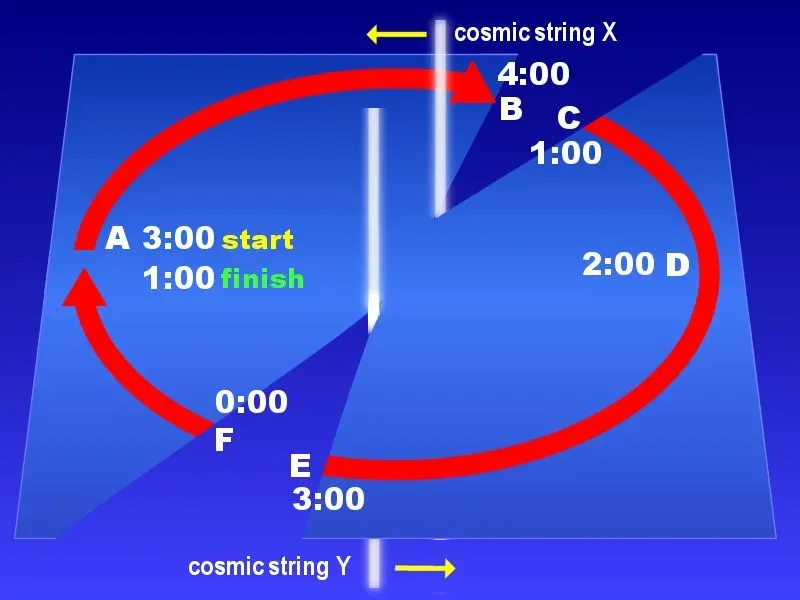
Physicists and philosophers have not agreed on a single picture of time, and honestly, the disagreement itself is revealing. The growing block universe is a theory of time arguing that the past and present both exist, while the future does not yet exist. The present is the perpetuating factor of time, where new moments are added to the past. It’s a middle ground between the radical block universe and pure presentism, and it actually aligns rather well with everyday intuition.
In “Time Reborn,” Lee Smolin argues that time is physically fundamental, in contrast to Einstein’s view that time is an illusion. Smolin hypothesizes that the laws of physics are not fixed, but rather evolve over time via a form of cosmological natural selection. In contrast to the orthodox block universe view, Smolin argues that what instead exists is a “thick present” in which two events in the present can be causally related to each other. It’s a bold counter-argument, and one that is gaining genuine traction in theoretical physics circles.
Your Brain’s Version of Time: Why Perception Warps Everything

You’ve probably experienced this yourself. Time seems to slow to a crawl during a crisis, speed up impossibly during a great conversation, and compress into near-nothing during sleep. In scenarios involving high-speed information processing, such as during athletic performance or moments of acute danger, the brain’s accelerated activity could imply a temporary reconfiguration of temporal perception. The physical limitations of signal propagation, shaped by the fundamental constraints of finite transmission speeds within neural pathways, may introduce relativistic-like effects. The separation between objective time and subjective experience becomes noticeably palpable.
The idea that you can remember the past and not the future is called the “psychological arrow of time,” and it has deep connections with the physics of information; memory is linked to the second law of thermodynamics, since such correlations increase with time. A Chinese research team is exploring how quantum entanglement could impact neural synchronization and cognition, suggesting that quantum entanglement occurs naturally within the brain’s architecture. If that’s true, your sense of time may be shaped by quantum processes happening in the very structure of your nervous system.
What This All Means for How You Understand Existence
I think most people go their entire lives assuming time is simply a river – steady, directional, unstoppable. The science says something far more complicated. The block universe is not encoded in Einstein’s equations. It is one way of reading them – one that interprets spacetime geometry as a frozen slab where all events coexist, and where becoming is an illusion. You are not forced to accept that picture. Other readings of the same equations are equally valid.
Researchers from the University of Surrey have uncovered evidence that in the strange world of quantum physics, time could theoretically run in directions we don’t normally consider. Relativity as well as quantum mechanics may together provide frameworks to understand how time delays and signal dependencies are circumvented to produce a unified conscious experience within a physically dispersed network. The deeper you look into the nature of time, the more you realize that linear, forward-moving time might be less a fundamental law and more a useful story we tell ourselves to make existence navigable.
Conclusion: The Clock Is Not What You Think It Is
Time is the most intimate feature of your existence. You live inside it, measure by it, and grieve by it. The remarkable thing that physics keeps quietly whispering is this: the clock on your wall tells you very little about what time actually is. Surprisingly, the laws of our most fundamental theories appear to be nearly oblivious to time’s arrow. Advocates of an objective theory of time have concluded from this that time itself may have no intrinsic arrow, or nearly none.
Whether time is a fundamental feature of reality, an emergent property of entropy, a frozen block containing all of your past and future simultaneously, or something stranger still – the honest answer is that we don’t fully know yet. That uncertainty is not a failure of science. It is, in fact, one of its most thrilling frontiers. The next time you glance at a clock, consider that what you’re really looking at is a human device for navigating something we’ve barely begun to understand.
What would change about the way you live if you genuinely believed that your past, present, and future all exist at once? Tell us in the comments – we’d love to know.