

There is a phenomenon happening right now, completely invisible to you, that even the greatest scientific minds of the twentieth century found deeply unsettling. Two particles, separated by an enormous distance, share a connection so immediate and so intimate that measuring one of them instantly tells you something about the other. No signal travels between them. No wire connects them. Nothing physically links them at all, at least not in any way you can see or touch.
This is not science fiction. It is not a metaphor. It is quantum entanglement, one of the most verified and most mind-bending discoveries in all of physics. As you are about to see, the implications stretch far beyond any laboratory, into the future of computing, communication, security, and our fundamental understanding of reality itself. Let’s dive in.
What Quantum Entanglement Actually Is (And Why It Defies Everything You Know)
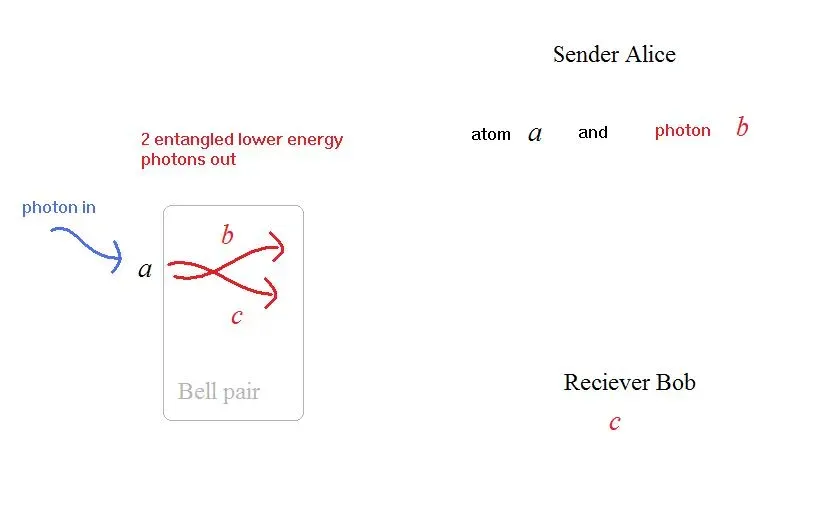
Most people assume that two objects, once separated, live entirely independent lives. That seems obvious, right? A pair of gloves separated into two boxes becomes two individual gloves with no ongoing relationship. Quantum particles, however, refuse to behave that way. In quantum physics, entanglement occurs when two or more particles become linked in such a way that what happens to one affects the other, even if they are far apart. It is not a metaphor. It is a measurable, laboratory-verified reality.
Entanglement is often described as one of the most mysterious effects in quantum physics. When two quantum objects are entangled, measurements performed on them can remain strongly linked even when the objects are far apart. These unexpected statistical connections have no explanation in classical physics. Think of it like two coins that, no matter how far apart they are, always land on opposite faces when flipped. You could separate them by an ocean and the rule would still hold. That is how strange and how real this phenomenon is.
Einstein’s Nightmare: The “Spooky Action” That Bothered a Genius
Albert Einstein famously hated this idea. He called it “spooky action at a distance” and spent years trying to prove it was somehow wrong or incomplete. To him, the notion that one particle could instantly “know” something about its partner, across any distance whatsoever, felt like a violation of the very fabric of rational science. Honestly, you can see his point. This quirky phenomenon, famously described by Albert Einstein as “spooky action at a distance,” holds that particles can know one another’s state, for example, their spin direction, even when they are separated by a great distance.
Here is the twist, though. Einstein was wrong. The effect can appear as though measuring one object somehow influences the other at a distance. This phenomenon, known as the Einstein-Podolsky-Rosen paradox, was confirmed experimentally and recognized with the 2022 Nobel Prize in physics. The Nobel committee effectively awarded physics’ highest honor to the people who proved Einstein’s nightmare was entirely real. That should tell you something about how well-established this phenomenon truly is.
How Particles Actually “Talk”: The Mechanics Behind the Magic
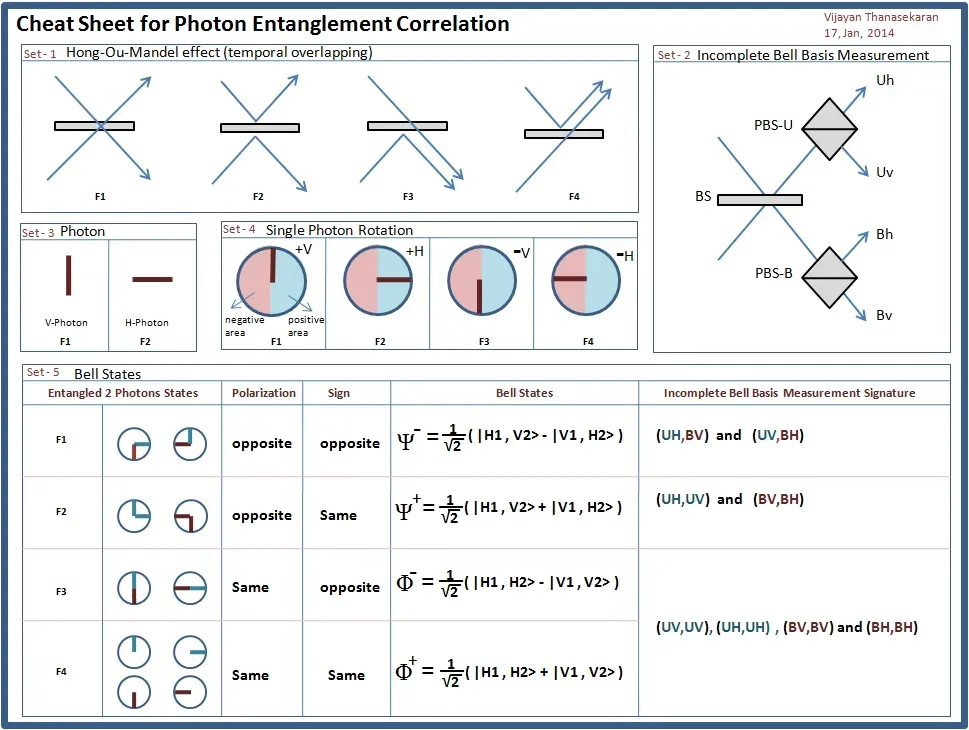
So how does it work exactly? When two particles become entangled, they do not send secret messages to each other. The connection is more fundamental than that. Entanglement, a cornerstone of quantum physics, links two or more particles so that the state of one instantly determines the state of the other. Measuring one particle immediately reveals the corresponding property in the other, regardless of the distance between them. It is as if the two particles share a single identity, split across space.
One of the most fascinating building blocks of this process is something called entanglement swapping. If you combine quantum principles, you can get the bizarre process of entanglement swapping. Imagine you have two sets of particles. Particles 1 and 2 are entangled, and particles 3 and 4 are entangled. If you jointly measure particles 2 and 3, you also know the correlations between 1 and 4. Now 1 and 4 are entangled, no matter how far apart they are. This chaining effect, repeated over and over like a relay race, is precisely how researchers are now planning to build global quantum networks.
The Fragile Side: Why Maintaining Entanglement Is Incredibly Difficult

Here is the thing about quantum entanglement that most popular articles gloss over: it is breathtakingly fragile. The moment an entangled particle bumps up against the outside world, that precious connection can be destroyed in an instant. Decoherence plays a crucial role in this process. It refers to the interaction of quantum systems with their environment, leading to a loss of coherence among particles. Imagine trying to keep an intricate dance synchronized while external noise disrupts the rhythm – that’s decoherence at work. As particles interact with outside influences like heat or electromagnetic fields, their unique states become mixed and chaotic.
Quantum networks over fiber optic cable face challenges such as signal loss, memory decoherence, and delays inherent to communication technologies widely used today. Keeping entanglement alive across real-world distances is less like stringing up a telephone wire and more like trying to carry a soap bubble through a hurricane. The engineering challenge is immense, which makes every recent breakthrough in this area all the more remarkable.
Squeezing Light and Smashing Records: The Latest Breakthroughs of 2025
The pace of progress in quantum entanglement research over the past year has been genuinely breathtaking. Researchers are attacking the problem from multiple creative angles. Scientists at Fermilab and Caltech have demonstrated the feasibility of their method of using squeezed light to dramatically increase the rate at which quantum networks can generate entangled particle pairs over long distances. This advance addresses a critical bottleneck in building large-scale quantum networks. Squeezed light is essentially a special state of light with reduced noise, and it could be a game-changer for how reliably entanglement can be distributed.
Meanwhile, a landmark achievement in late 2025 pushed photon-level teleportation into genuinely new territory. An international research team involving Paderborn University achieved a crucial breakthrough on the road to a quantum internet. For the first time ever, the polarization state of a single photon emitted from a quantum dot was successfully teleported to another physically separated quantum dot. This means that the properties of one photon can be transmitted to another via teleportation. This is a particularly vital step for future quantum communication networks. The experiment spanned a 270-meter free-space optical link, a small but symbolically enormous step toward a true quantum internet.
Entanglement From Earth to Space: The Quantum Satellite Revolution

If long-distance entanglement over fiber cable is difficult, what about beaming it into outer space? Until recently, scientists assumed you could only send entangled particles downward from satellites to Earth. The idea of doing it the other way around was considered essentially impractical. Researchers have shown that quantum signals can be sent from Earth up to satellites, not just down from space as previously believed. This breakthrough could make global quantum networks far more powerful, affordable, and practical. That is a quiet but revolutionary flip in how we think about building a quantum infrastructure for the planet.
The milestones being achieved on the satellite front are staggering in their geographic scale. China’s Micius satellite, launched in 2016, enabled the first demonstrations of quantum-encrypted data sent from space. In 2025, the Jinan-1 microsatellite pushed this work further by establishing a 12,900 km quantum connection between China and South Africa. Nearly 13,000 kilometers of entangled connection. That is roughly a third of the way around the Earth. At this rate, a truly global quantum network is starting to feel less like science fiction and more like an engineering timeline.
What Quantum Entanglement Means for Your Future: Security, Computing, and Beyond

You might be wondering why any of this matters outside of a physics textbook. The answer is that the practical implications are staggering. Secure communication is one of the most promising applications of quantum entanglement. By harnessing the unique properties of entangled particles, scientists can create a method to transmit information that remains completely secure. In this system, any attempt to intercept or measure the quantum state would alter it. This means that eavesdroppers cannot gain access without being detected. Unlike classical encryption, which can theoretically be broken with enough computing power, quantum-secured communication would expose any intrusion automatically.
In the computing world, materials scientists at Stanford University introduced a new nanoscale optical device that works at room temperature to entangle the spin of photons and electrons to achieve quantum communication. The technology could usher in a new era of low-cost, low-energy quantum components able to communicate over great distances. The significance of “room temperature” here should not be overlooked. Traditional quantum systems must be cooled to near absolute zero, making them expensive, enormous, and impractical. A device that works at everyday temperatures could eventually bring quantum communication to everyday devices, much like how transistors shrank from room-sized machines to microchips in your pocket.
Conclusion: The Universe Has a Stranger Backbone Than Anyone Imagined
Quantum entanglement started as a thought experiment designed to make a point about the apparent absurdity of quantum mechanics. Today it is the cornerstone of what many researchers call the second quantum revolution. Quantum technologies promise to transform our lives, from ultra-secure communications and supersensitive sensors to powerful computers capable of tackling problems far beyond the reach of classical machines. That transformation is no longer a distant dream. The foundational experiments are being completed right now.
I think the most honest thing you can say about quantum entanglement is that it forces you to accept that the universe operates on rules that are deeply counter-intuitive at every level. Entanglement creates links with no analogue in the classical world. There is nothing in everyday life that truly prepares you for it. The particles do not communicate. They are not sending signals. They are simply, fundamentally, irreversibly connected in a way that defies the categories our brains evolved to work with.
And perhaps that is the most exciting thing of all. A century after Einstein first expressed his discomfort with it, we are not just confirming that entanglement is real. We are building global networks, room-temperature devices, and satellite links out of the very phenomenon he called a nightmare. What would he think of it now? That is genuinely worth wondering about.