
Imagine walking through a forest and realizing that virtually everything around you is in the middle of a conversation. Not with words. Not even with sounds you can hear. Yet the exchange of information happening between trees, roots, fungi, and even insects is more intricate than most people would ever guess. You might look at a plant and see something still, passive, and silent. Science, however, is rapidly rewriting that story.
From ultrasonic distress calls to underground fungal networks that shuttle chemical warnings between trees, the plant kingdom has developed communication systems so sophisticated they continue to baffle researchers worldwide. You are standing at a truly extraordinary moment in botanical science, one where the very definition of what it means to “communicate” is being stretched beyond recognition. So let’s dive in.
The Invisible Chemical Conversations Happening Around You Right Now

Here’s the thing – you cannot smell or see it, but right now, in gardens and forests everywhere, plants are releasing clouds of invisible chemical messages into the air. Plants communicate chemically using volatile organic compounds, or VOCs, which are released when leaves are damaged by herbivores. Nearby plants detect these signals and activate their own defensive compounds, reducing the impact of future attacks. Think of it like a neighbourhood alarm system, triggered the moment one house gets broken into.
Plants communicate through a host of volatile organic compounds that can be separated into four broad categories, each the product of distinct chemical pathways: fatty acid derivatives, phenylpropanoids and benzenoids, amino acid derivatives, and terpenoids. What makes this genuinely jaw-dropping is the specificity of these messages. For example, sagebrush emits VOCs that prime neighbouring tomatoes, triggering chemical defences within minutes. That is not random chemistry. That is remarkably targeted information exchange across species.
How a Purdue University Lab Cracked Open a New Chapter in Plant Biology

A research team led by Purdue University scientists documented new details about how petunias use volatile organic compounds to communicate. What they uncovered was more surprising than anyone expected. Combined with the genetic manipulation of the potential proteins involved, the work surprisingly revealed that a karrikin-like signalling pathway played a key role in petunia cellular signalling. Karrikins, for context, are compounds normally produced when plants burn – so finding this pathway active in plants that had never been exposed to fire or smoke was genuinely startling.
The team also documented the importance of the karrikin-like pathway in the detection of volatile sesquiterpenes. Many plants use sesquiterpenes to communicate with other plants, among other functions. Meanwhile, scientists still know little about plant receptors for volatiles, which tells you something important: we are not at the end of this story. We are somewhere near the very beginning, and the discoveries keep arriving faster than the explanations.
Plants Have Electrical Signals That Fire Like a Nervous System

You might have heard of action potentials – the electrical pulses that fire through your nervous system when you touch something hot. Plants have something strikingly similar. Plants generate electrical signals similar to action potentials in animals, propagating from injury sites to other parts of the plant. These electrical pulses coordinate responses like leaf folding, sap flow, or hormone release, helping plants react quickly to threats. Researchers measure voltage changes in roots and stems, demonstrating a complex communication system.
Land plants can communicate at the level of cells, tissues, and organs, using the flow of electric signals and hydraulic waves, as well as phytohormones, reactive oxygen species, calcium, peptides, and micro RNAs. Even more remarkable is what happens between different plants. A foliar electrical signal induced by wounding or high light stress applied to a single dandelion leaf can be transmitted to a neighbouring plant that is in direct contact with the stimulated plant, resulting in systemic photosynthetic, oxidative, molecular, and physiological changes in both plants. Honestly, when you first read that, it sounds like science fiction. It is not.
The Wood Wide Web: Nature’s Underground Internet
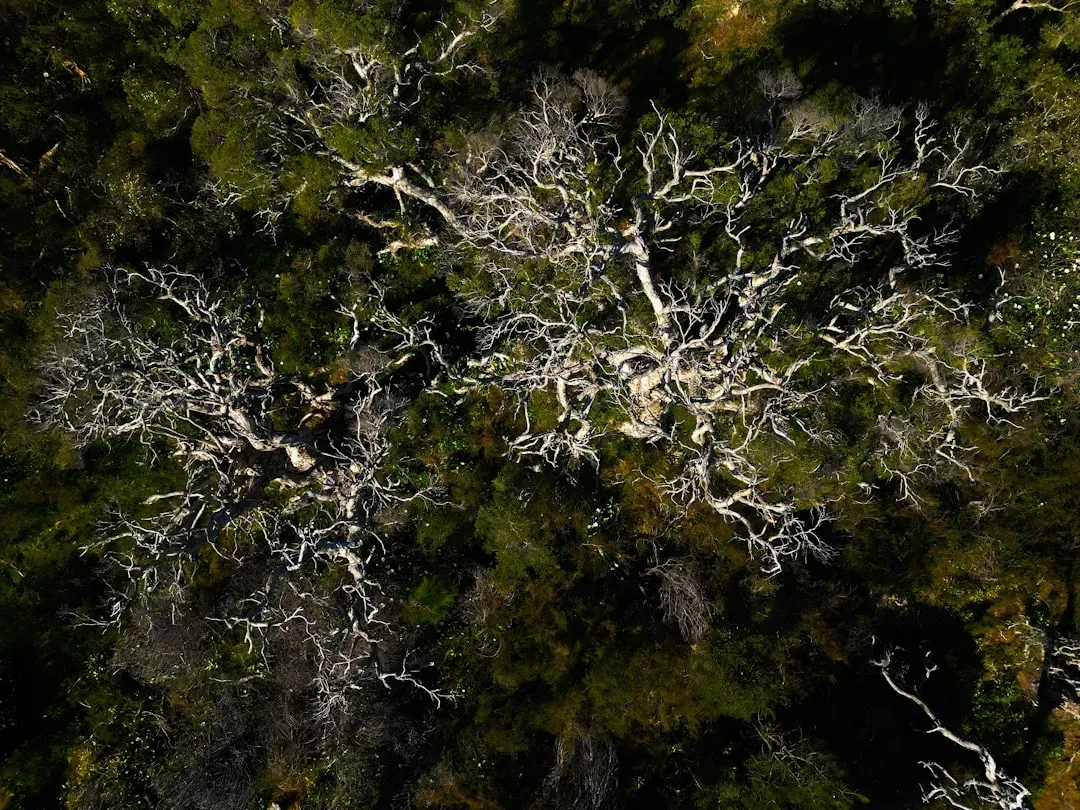
If electrical signalling sounds impressive, wait until you hear about what is happening beneath your feet in any healthy forest. A mycorrhizal network is an underground network found in forests and other plant communities, created by the hyphae of mycorrhizal fungi joining with plant roots. This network connects individual plants together. Scientists have affectionately dubbed it the “Wood Wide Web,” and the name is far more apt than it might first appear. Referencing an analogous function served by the World Wide Web in human communities, the many roles that mycorrhizal networks appear to play in woodland have earned them this colloquial nickname.
Mycorrhizal fungi colonise over roughly 80% of land plants’ roots and provide them with nutrients from the soil through a hyphal network. The sheer scale of this hidden infrastructure is staggering. Research has shown that mycelium can transfer a wide variety of compounds and signals among plants that can modify their behaviour to protect the network as a whole. Imagine every tree in a forest quietly sending status updates to its neighbours – that is essentially what is happening, even as you walk through, completely unaware of the chatter beneath your boots.
Mother Trees, Kin Recognition, and the Surprising Favouritism Underground
Research has painted a picture of individuals sharing with those in need, of “mother” trees sending carbon to seedlings, and of dying trees donating nutrients to their neighbours. It sounds almost impossibly poetic, like something borrowed from a fairy tale. Yet the data supporting this picture is real. For saplings growing in particularly shady areas, there is often not enough sunlight reaching their leaves to perform adequate photosynthesis. For survival, those saplings rely on nutrients and sugar from older, taller trees sent through the mycorrhizal network.
What is even more startling is that plants appear to recognise their relatives. Isotopically labelled carbon from host fig trees flowed predominantly into neighbouring fig seedlings, with very little detected in connected trees of different species. This implies that “kin recognition” may shape plant carbon allocation dynamics through species-specific fungal linkages. It is the botanical equivalent of a parent slipping their child a snack under the table, while barely acknowledging the other kids in the room. You have to wonder what else is going on down there that we have not yet figured out.
Plants Are Screaming – You Just Cannot Hear Them

This one genuinely changes things. Stressed plants emit airborne sounds that can be recorded from a distance. Researchers recorded ultrasonic sounds emitted by tomato and tobacco plants inside an acoustic chamber and in a greenhouse, while monitoring the plants’ physiological parameters. The sounds are not random noise either. The plant sounds resembled pops or clicks, and a single stressed plant emitted around 30 to 50 of these clicks per hour at frequencies of 40 to 80 kHz. These frequencies are far beyond the range of human hearing, but for many animals and insects, they land clearly within detection range.
What has stunned researchers even further is that these sounds appear to carry specific information. Machine learning models succeeded in identifying the condition of the plants, including dehydration level and injury, based solely on the emitted sounds. For the first time, a team of researchers in Israel documented that insects can hear and interpret plants’ acoustic distress signals. Specifically, the Egyptian cotton leafworm moth prefers to lay its eggs on quiet plants over ones emitting ultrasonic distress sounds. The insects are eavesdropping, and they are acting on what they hear.
Cross-Kingdom Conversations: When Plants Talk to Bacteria, Fungi, and Insects
Plants can communicate with each other and other living organisms in a very sophisticated manner. They use biological molecules and even physical cues to establish a molecular dialogue with beneficial organisms as well as with their predators and pathogens. This is bigger than just plant-to-plant communication – the conversation extends across entire kingdoms of life. Cross-kingdom communication is also emerging, with bacteria responding to plant flavonoids and fungi detecting plant stress volatiles, indicating an ecosystem-wide signalling network. Electrical and chemical signals coordinate responses across species, enhancing drought tolerance, nutrient allocation, and collective defence strategies.
In a study of tomato plants connected via a mycorrhizal network, a plant not infected by a fungal pathogen showed evidence of defensive priming when another plant in the network was infected, causing the uninfected plant to upregulate genes for key defence pathways. Aphid-free plants similarly expressed defensive resistance only when a mycorrhizal network connected them to infested plants, confirming that defensive infochemicals travel via the fungal network. The forest, it turns out, is not a collection of isolated individuals competing for resources. It is more like a community – complex, interconnected, and surprisingly coordinated.
What This Means for Agriculture, Science, and How You See the Natural World
Plant communication is a growing field in botanical research, uncovering airborne signals, underground fungal exchanges, and even vibrations that influence development. Understanding these hidden networks changes how we view plant intelligence and ecosystem dynamics, with implications for agriculture, forestry, and conservation in 2026 and beyond. Imagine a future where farmers listen to their crops – literally – using ultrasonic sensors that detect plant distress before visible symptoms even appear. That future is closer than you might think. This work opens avenues for understanding plants and their interactions with the environment and may have significant impact on agriculture.
Future research should explore methodologies such as real-time monitoring, AI models, and omics techniques to better understand how plant signalling mechanisms operate together. The integration of plant biology, biophysics, and environmental science is crucial for advancing our understanding of plant-environment interactions in the face of climate change. Let’s be real – science has barely scratched the surface here. The past three years have witnessed substantial progress in molecular plant science, driven by technological innovations and deepened mechanistic insights. Yet for every question answered, a dozen more appear, each one stranger and more fascinating than the last.
Conclusion: The Conversation Has Been Going On Without Us

There is something quietly humbling about all of this. We have spent centuries looking at forests and fields and seeing stillness, passivity, and silence. Meanwhile, plants have been buzzing with chemical whispers, electrical pulses, underground data transfers, and ultrasonic cries – all without us having even the faintest idea. Science is not just discovering new facts about plant biology. It is fundamentally reshaping the way we understand life itself.
What you now know about plant communication should change how you feel next time you step into a garden or walk between trees. You are not surrounded by passive organisms. You are moving through a living, signalling, communicating world. The question is not whether plants have a language. The question, it seems, is whether we will ever be clever enough to fully understand what they are saying. What do you think – does knowing this change how you see the natural world? We would love to hear your thoughts in the comments.