
Astronomy’s Next Frontier Under Siege (Image Credits: Cdn.mos.cms.futurecdn.net)
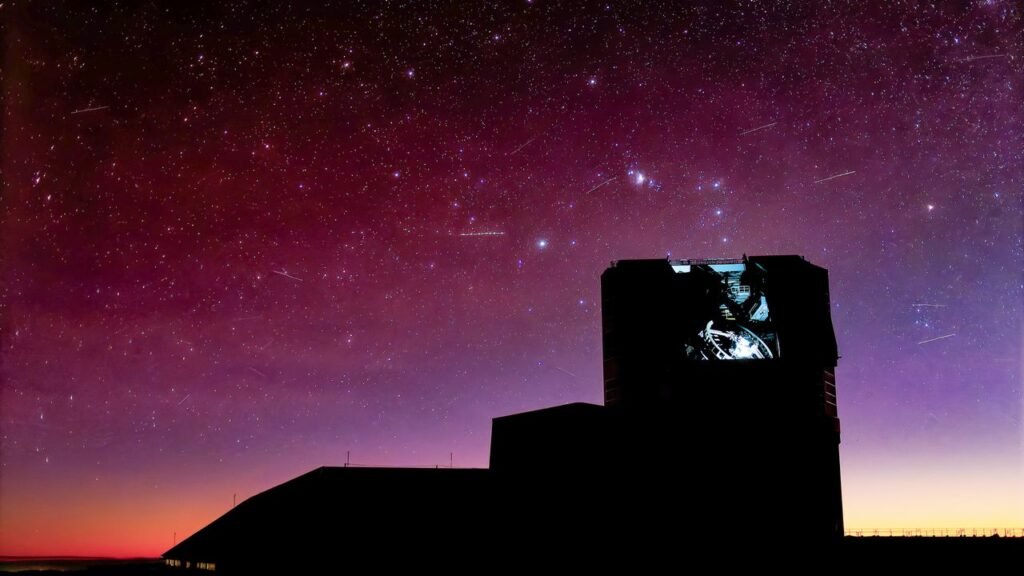
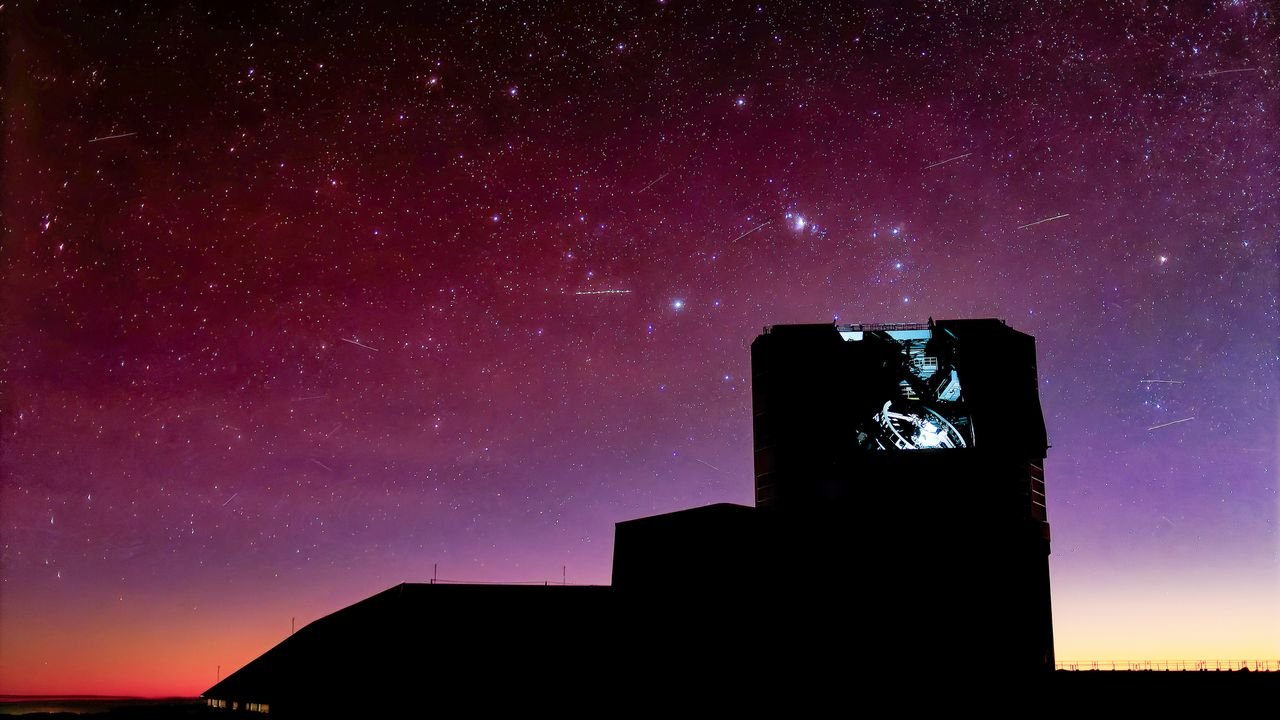
The Vera C. Rubin Observatory perched on Cerro Pachón promises unprecedented views of the southern sky, but proliferating satellites now cast long shadows over its ambitious decade-long mission.[1][2]
Astronomy’s Next Frontier Under Siege
Equipped with the world’s largest digital camera – a 3,200-megapixel powerhouse – the Rubin Observatory stands ready to scan the entire visible southern sky every few nights.[2] This Legacy Survey of Space and Time, or LSST, will generate a vast time-lapse record of cosmic events, from exploding stars to drifting asteroids.
Recent milestones marked progress toward full operations, including first imagery and real-time alert systems launched in early 2026.[1] Yet astronomers express frustration as bright trails from low-Earth orbit satellites slice through these pristine exposures.
Meredith Rawls, a research scientist with the LSST team, likened the intrusions to “bugs on a windshield,” noting that the observatory’s wide field of view captures far more of them than smaller telescopes.[2]
The Mounting Satellite Threat
Over 10,000 satellites currently orbit Earth, with projections exceeding 100,000 by 2030 amid expansions by networks like Starlink, Kuiper, and others.[3][2] These craft, reflecting sunlight at altitudes around 550 kilometers, appear as linear streaks during the observatory’s 30-second exposures.
Simulations predict streaks in about 10% of images, though some estimates reach 40% – potentially degrading 4 million of the mission’s 10 million exposures.[4][2] Low-surface-brightness features, vital for studies of galaxy evolution and cosmology, suffer most as faint “wings” from streaks mimic tidal streams or cluster light.
Bright satellites risk saturating detectors, while debris glints add further complications, though most go undetected.[4]
Experts Convene for Solutions
Astronomers gathered at a three-day workshop at UC Davis in August 2025 to tackle these disruptions head-on.[3] Participants, including a SpaceX engineer, assessed impacts across LSST science cases and drafted targeted recommendations.
The session revealed that all fields face harm, but faint-object searches bore the brunt, with streaks often evading detection algorithms and spawning false transients like supernovae.[3]
- Lower satellite orbits to 350 kilometers to blur streaks and cut bright intruders by 40%.
- Dim satellites below V-band magnitude 7 to enable artifact removal.
- Share public orbit data for precise avoidance scheduling.
- Regulate full satellite lifecycles, including deorbits that produce bright trails.
Mitigation Strategies Take Shape
Rubin teams already deploy streak-detection algorithms that mask affected pixels and filter bogus alerts without altering raw images.[4] Schedulers dodge high-density regions, potentially trading 10% of observing time to halve streaked exposures.
Collaborations push for darkening technologies, like specialized paints, and adherence to International Astronomical Union brightness limits.[2] Policymakers engage through UN forums and NSF-funded initiatives for predictive tools.[4]
Noelia Noël, an LSST astrophysicist, warned that unmitigated losses represent “a huge waste of taxpayers’ money,” given nightly costs exceeding $80,000.[2]
Key Takeaways
- Satellites threaten LSST’s faint-object science most severely, with streaks mimicking real phenomena.
- Workshop calls for dimmer, lower orbits and data sharing to protect data quality.
- Algorithms and scheduling offer near-term fixes, but industry cooperation proves essential.
While not fatal, unchecked growth risks eroding the observatory’s legacy. Astronomers urge swift action to preserve humanity’s clearest window into the cosmos. What steps should satellite firms take next? Share your thoughts in the comments.